Aesop's Fables
by Aesop
On This Page
Tags
Recommendations



















Member Reviews
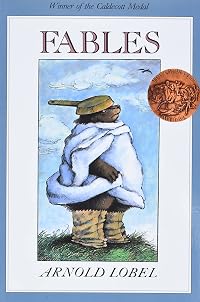
The illustrations are scribbly, but funny. The selection is dated... far too many are about being content with your lot, when what we need, especially now in a world far more populated & challenged than Untermeyer's, is to raise children to have aspirations.
Came with my new Kobo. Thought it'd be an interesting first read.
Half of the stories seem like good common sense, illustrated. The other half seem like out of date junk, with points of view far afield from current values.
I suspect everyone who's ever read them in the last couple thousand years says the same thing.
It's just which story is which that changes.
Half of the stories seem like good common sense, illustrated. The other half seem like out of date junk, with points of view far afield from current values.
I suspect everyone who's ever read them in the last couple thousand years says the same thing.
It's just which story is which that changes.
I consider this a re-read - I can't quite remember when I read this previously, but most of the 100 fables included in this collection were familiar. I always knew that each fable included a moral - it was interesting in reading these that sometimes I didn't think the moral fit all that well.
This translation with a long and wordy preface by Townsend, is a rather inelegant one. Nevertheless, I roared with laughter at the tale 'The Father and his Sons', because the scene from tv-series Bonanza sprang to mind immediately.
Many of the fables were already known to me, a couple were new.
Many of the fables were already known to me, a couple were new.
Another reviewer said it best when stating that he enjoyed Aesop's Fables for the lessons rather than the storytelling. I was surprised to see how many of today's maxims originated from this collection of stories, and even moreso to hear that they had been penned in the 5th century BC. Definitely worth a read.
Not sure if it was just the copy that I had but it seems that so many of the stories were the same or very similiar and there were also some that seemed to tell the same story but with different outcomes. I know that historians are pretty sure that other authors have added their own work to be included with Aesop's fables, and that made the repetitive stories a little easier to read. Individually though, most of the fables had a good lesson attached to it.
These stories are wonderful short fables that still enchant children. The teach valuable lessons of character, values and morals. Using animals in many is a great way to interest children. Perhaps they were not originally meant for that purpose, but they have held up through the ages for just that reason. Contrary to some, i believe I would rather use these little fables to teach my children values that to use Bart Simpson.
Members
- Recently Added By
Lists

Publisher's Weekly Bestsellers Prior to 1895 in Chronological Order
95 works; 6 members

The Joe Rogan Experience Library
254 works; 3 members

Read For Your Life
157 works; 1 member
Author Information

1,051+ Works 24,266 Members
Though many modern scholars dispute his existence, Aesop's life was chronicled by first century Greek historians who wrote that Aesop, or Aethiop, was born into Greek slavery in 620 B.C. Freed because of his wit and wisdom, Aesop supposedly traveled throughout Greece and was employed at various times by the governments of Athens and Corinth. Some show more of Aesop's most recognized fables are The Tortoise and the Hare, The Fox and the Grapes, and The Ant and the Grasshopper. His simple but effective morals are widely used and illustrated for children. (Bowker Author Biography) show less
Work Relationships
Inspired
Common Knowledge
- Original publication date
- c.564 BCE
Classifications
- Genres
- Fiction and Literature, Children's Books
- DDC/MDS
- 398.2 — Society, government, & culture Customs, etiquette & folklore Folklore & Folktales Folk literature
- LCC
- PA3855 .E5 .J3 — Language and Literature Greek language and literature. Latin language and literature Greek literature Individual authors Aesop
Statistics
- Members
- 812
- Popularity
- 34,053
- Reviews
- 16
- Rating
- (3.52)
- Languages
- English, Spanish
- Media
- Paper, Audiobook, Ebook
- ISBNs
- 2
- ASINs
- 50