
Joseph Jacobs (1) (1854–1916)
Author of Celtic Fairy Tales
For other authors named Joseph Jacobs, see the disambiguation page.
About the Author
Joseph Jacobs was born in Sydney, Australia on August 29, 1854. After graduating from Cambridge University in 1876, he pursued a full and varied career, writing many essays for various periodicals including a famous series in 1882 on the Russian persecutions of the Jews. He also made his influence show more felt as a Jew by editing the first issues of The Jewish Yearbook (1896--99), serving as president of the Jewish Historical Society, and editing The Jewish Encyclopedia. He later served as professor of English at the Jewish Theological Seminary in New York City. His interest in folklore grew out of his studies in anthropology. From 1890 to 1893, he edited Folk Lore, a British journal on the subject. He also edited the Arabian Nights and Aesop's Fables and produced a series of fairy tale books. These fairy tale collections were the result of regular research in folklore, literature, anthropology, and other fields, and they are, perhaps, the works for which he is best remembered today. While other collectors of English folk tales rewrote or left out the crude language of the originals, he brought the vigor of colloquial English into his folk tale collections, and such memorable phrases as Fee-fi-fo-fum and chinny chin chin remain the strength of his contributions. He died on January 30, 1916. (Bowker Author Biography) show less
Image credit: Yesterday's Classics, LLC
Series
Works by Joseph Jacobs
Celtic Myths and Legends: Ancient Tales of Gods, Heroes and Otherworldly Folk (Arcturus Gilded Classics) (2024) 11 copies
Contos de fadas celtas [paperback] Jacobs, Joseph; Lasaitis, Cristina; Ugeda Coscodai, Mirtes and Braga Simon, Fernanda R. (2021) 9 copies, 1 review
Cuentos clásicos para leer y contar (PRIMEROS LECTORES (1-5 años) - Cuentos clásicos para leer y contar) (2017) 4 copies
Bruxas, Bruxos E Os Feiticos Mais Crueis Que Se Podem Imaginar (Em Portuguese do Brasil) (2012) 4 copies
Contos de fadas indianos [paperback] Jacobs, Joseph; Souto Maior, Flávia; S. Quadros, Cleusa and Ribeiro, Karine (2021) 4 copies
Jack and the Beanstalk (Illustrated) 4 copies
Young Learners Classic Readers: Jack and the Magic Beans (Beginning Level 2 w/MP3 Audio CD) (2012) 3 copies
Yiddish-English manual 3 copies
Bruxas, Bruxos e os Feitiços Mais Cruéis que Se Podem Imaginar - Volume 2 (Em Portuguese do Brasil) (2013) 3 copies
Favorite Fairy Tales (The Three Little Pigs, The Three Bears, The Wolf and the Seven Kids): Illustrated Edition (2014) 3 copies
Baśnie angielskie 2 copies
The Jewish Question, 1875-1884: Bibliographical Hand-List (Classic Reprint) (German Edition) (2018) 2 copies
Studies in Biblical Archæology 2 copies
The Jews of Angevin England : documents and records from Latin and Hebrew sources, printed and manuscript (1977) 2 copies
Trzy Niedźwiadki 1 copy
Molly Whuppie 1 copy
Whittington And His Cat 1 copy
Los tres chanchitos 1 copy
Little Gingerbread Man 1 copy
Yiddish - English Manual 1 copy
the three sillies 1 copy
Teeny-Tiny 1 copy
Folklore 1 copy
The Grey Fairy Book 1 copy
The Jews of Angevin England 1 copy
Fables Of Aesop, The 1 copy
The Frog and the Ox (ILLUSTRATED AESOP'S FABLES - LIFE LESSONS IN TODAY'S ENGLISH) (2011) 1 copy, 1 review
The Field of Boliauns 1 copy
Dick Whittington and His Cat 1 copy
Associated Works
A Treasury of Irish Fairy and Folk Tales (Barnes & Noble Leatherbound Classic Collection) (1825) — Contributor — 612 copies, 1 review
The Illustrated Treasury of Children's Literature, Volumes 1-2 (1955) — Contributor — 521 copies, 4 reviews
The Young Folks' Shelf of Books, Volume 02: Once Upon a Time (1993) — Contributor — 212 copies, 1 review
Beauty and the Beast: Classic Tales About Animal Brides and Grooms from Around the World (2017) — Contributor — 129 copies, 2 reviews
The Book of Irish Weirdness: A Treasury of Classic Tales of the Supernatural, Spooky and Strange (1997) — Contributor — 107 copies, 1 review
Workers' Tales: Socialist Fairy Tales, Fables, and Allegories from Great Britain (2018) — Contributor — 60 copies
Irish Ghost Stories (Tales of Mystery & The Supernatural) (2011) — Contributor — 42 copies, 1 review
Fairies, Pookas, and Changelings: A Complete Guide to the Wild and Wicked Enchanted Realm (2017) — Contributor — 33 copies
Clever Cooks: A Concoction of Stories, Charms, Recipes & Riddles (1973) — Contributor — 22 copies, 1 review
Terrifying Transformations: An Anthology of Victorian Werewolf Fiction, 1838-1896 (2012) — Contributor — 22 copies
Goldsmith's Comedies — Editor, some editions — 2 copies
Tagged
Common Knowledge
- Canonical name
- Jacobs, Joseph
- Birthdate
- 1854-08-29
- Date of death
- 1916-01-30
- Gender
- male
- Education
- Sydney Grammar School
University of Sydney
St John's College, Cambridge (BA|1876)
University of Berlin - Occupations
- editor
scholar
folklorist - Organizations
- Society of Hebrew Literature
Jewish Historical Society
Jewish Publication Society of America
American Jewish Historical Society
Jewish Theological Seminary of America - Awards and honors
- Corresponding Member, Royal Academy of History at Madrid (1888)
- Nationality
- UK
- Birthplace
- Sydney, New South Wales, Australia
- Places of residence
- London, Middlesex, England, UK
Yonkers, New York, USA
Berlin, Prussia, German Empire - Place of death
- Yonkers, New York, USA
Members
Discussions
book with giants and 3 girls in Name that Book (November 2010)
Reviews

Noted 19th-century folklorist and literary critic Joseph Jacobs, the editor of many collections of tales, turned in this 1895 volume to the medieval story of Reynard the Fox. Determined to "provide a text which children could read with ease and pleasure," he turned to the work of Felix Summerly (AKA Sir Henry Cole), and based his own telling on that author's 1846 The Most Delectable History of Reynard the Fox. Jacobs' text is slightly altered, but in all of the major respects it follows the show more Summerly closely, chronicling all of the important incidents of the story, in which the wily fox triumphs against his many enemies, most especially, against Isegrim the wolf...
Because it follows the Summerly so closely, there was little that I found new or noteworthy in Jacobs' The Most Delectable History of Reynard the Fox, when examined from a storytelling perspective. The chief interest for me, when I was conducting research for my masters dissertation, written on three centuries of Reynard retellings for children in the Anglophone world, was the scholarly introduction that Jacobs penned for the book. The melding of folkloric and literary styles in Reynard - the former providing much of the humor, the latter the satire - the influence of Aesopic fables on the story, these and other ideas are explored. I particularly liked what Jacobs had to say about the appeal of the Reynard story, and his statement that "Man may be the most interesting things to Man, but animals are more interesting to men of childlike mind." Perhaps this explains the popularity of the tale as a children's story, over the centuries, despite its many elements that might otherwise exclude it from such a use. Jacobs also has some astute things to say about the appeal of Reynard in general, and the way in which his story speaks to our instinctive sympathy for rebels and underdogs: "It is the adventurous, shifty, eponymous Hero who captures our interest. We have all a sneaking regard for the crafty villain who can control Circumstance... When brute force unblushingly ruled the world cunning was your only remedy against the tyrant." All in all, a Reynard retelling worth seeking out, if one is interested in the story. I suspect I would have enjoyed it more, had I not already read the Summerly (and the Roscoe upon which the Summerly is based). show less
Because it follows the Summerly so closely, there was little that I found new or noteworthy in Jacobs' The Most Delectable History of Reynard the Fox, when examined from a storytelling perspective. The chief interest for me, when I was conducting research for my masters dissertation, written on three centuries of Reynard retellings for children in the Anglophone world, was the scholarly introduction that Jacobs penned for the book. The melding of folkloric and literary styles in Reynard - the former providing much of the humor, the latter the satire - the influence of Aesopic fables on the story, these and other ideas are explored. I particularly liked what Jacobs had to say about the appeal of the Reynard story, and his statement that "Man may be the most interesting things to Man, but animals are more interesting to men of childlike mind." Perhaps this explains the popularity of the tale as a children's story, over the centuries, despite its many elements that might otherwise exclude it from such a use. Jacobs also has some astute things to say about the appeal of Reynard in general, and the way in which his story speaks to our instinctive sympathy for rebels and underdogs: "It is the adventurous, shifty, eponymous Hero who captures our interest. We have all a sneaking regard for the crafty villain who can control Circumstance... When brute force unblushingly ruled the world cunning was your only remedy against the tyrant." All in all, a Reynard retelling worth seeking out, if one is interested in the story. I suspect I would have enjoyed it more, had I not already read the Summerly (and the Roscoe upon which the Summerly is based). show less
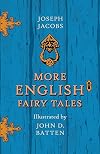
The thought of offering up older, obscure titles in new, affordable form is a delightful one. While the format of the book (trade paperback with less-than-perfect print quality) is not as conducive to a positive reading experience as would be a richly made hardcover, the point here is accessibility and I think Pook Press has moderately succeeded.
The tales themselves are a mix of the familiar ("The Pied Piper") and the forgotten ("The Stars in the Sky"). As was typical of Victorian folk tale show more collections, Jacobs claims as English many tales that have a considerably more international heritage ("The Black Bull of Norroway" is one example, but also represented here are tales like "Tattercoats" and others whose twins appear in Grimm, etc.). It's pleasant to revisit old friends here and equally enjoyable to find new acquaintances. Jacobs' attempt at local dialects -- again typical of his era -- can be occasionally annoying to the modern reader, but always make for fun reading aloud.
While this isn't the first fairy tale book I would hand a child, I do think it's worthy of any good collection. show less
The tales themselves are a mix of the familiar ("The Pied Piper") and the forgotten ("The Stars in the Sky"). As was typical of Victorian folk tale show more collections, Jacobs claims as English many tales that have a considerably more international heritage ("The Black Bull of Norroway" is one example, but also represented here are tales like "Tattercoats" and others whose twins appear in Grimm, etc.). It's pleasant to revisit old friends here and equally enjoyable to find new acquaintances. Jacobs' attempt at local dialects -- again typical of his era -- can be occasionally annoying to the modern reader, but always make for fun reading aloud.
While this isn't the first fairy tale book I would hand a child, I do think it's worthy of any good collection. show less
 This review was written for LibraryThing Early Reviewers.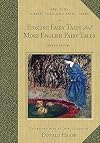
Oy. Definitely more for scholars than for families. Oh the beatings and other cruelties. Oh the inequities. Some stories just about impossible to decode, what with dialect and/or high-falutin' language. Second book in the omnibus, published the year after [a:Robert Browning|24391|Robert Browning|https://images.gr-assets.com/authors/1198543063p2/24391.jpg] died, includes a prose 'theft' of his poem [b:Pied Piper Of Hamelin|896434|Pied Piper Of Hamelin|Robert show more Browning|https://i.gr-assets.com/images/S/compressed.photo.goodreads.com/books/1348439910l/896434._SX50_.jpg|2041215].* Just not a pleasure for me to read... the best stories are well-known and available to ordinary readers in other anthologies and picture-books, and most of the others are better off forgotten.
That being said, I did get a kick out of "Coat o' Clay."
And I think authors of original wonder tales & SF, and of adaptations, could find inspiration here.
*Noted that there are older sources of the tale... but come on, Browning's is the one that counts.
Skimmed February 2022. show less
That being said, I did get a kick out of "Coat o' Clay."
And I think authors of original wonder tales & SF, and of adaptations, could find inspiration here.
*Noted that there are older sources of the tale... but come on, Browning's is the one that counts.
Skimmed February 2022. show less

The Fables of Aesop by Joseph Jacobs
It is my understanding that Jacobs' main thesis concerning the fables of Aesop - that they were derived from and influenced by the animal fables of ancient India - has been discredited by more current scholarship. Interestingly enough, I recently came across some discussion of a possible connection to the Sumerian tradition, in Barbara Bader's introduction to Aesop & Company With Scenes From His Legendary Life.
However that may be (and I'm not sure I'm well show more enough informed to venture an opinion), Jacobs' notes on the eighty-two fables contained herein are still useful, even if one ignores the Indian "connection." As someone intending to read the two classical sources for "Aesop's" fables, Babrius and Phaedrus, Jacobs' work in tracing each selection back to one of these authors is most helpful, as is his history of their medieval transmission.
I'm not sure just how far I want to take my recent Aesop "project" - whether I want to go beyond Babrius and Phaedrus, and really get into the scholarship in the area. Still, the process of reading these many adaptations and retellings has given me some added insight, both into the adaptability of such stories, and into the transmission (or lack thereof) of ancient literature. That alone has made it worthwhile... show less
It is my understanding that Jacobs' main thesis concerning the fables of Aesop - that they were derived from and influenced by the animal fables of ancient India - has been discredited by more current scholarship. Interestingly enough, I recently came across some discussion of a possible connection to the Sumerian tradition, in Barbara Bader's introduction to Aesop & Company With Scenes From His Legendary Life.
However that may be (and I'm not sure I'm well show more enough informed to venture an opinion), Jacobs' notes on the eighty-two fables contained herein are still useful, even if one ignores the Indian "connection." As someone intending to read the two classical sources for "Aesop's" fables, Babrius and Phaedrus, Jacobs' work in tracing each selection back to one of these authors is most helpful, as is his history of their medieval transmission.
I'm not sure just how far I want to take my recent Aesop "project" - whether I want to go beyond Babrius and Phaedrus, and really get into the scholarship in the area. Still, the process of reading these many adaptations and retellings has given me some added insight, both into the adaptability of such stories, and into the transmission (or lack thereof) of ancient literature. That alone has made it worthwhile... show less
Lists
Ambleside Year 3 (1)
Ambleside Y3 (1)
Awards

You May Also Like


Associated Authors
Statistics
- Works
- 136
- Also by
- 40
- Members
- 4,920
- Popularity
- #5,100
- Rating
- 4.1
- Reviews
- 58
- ISBNs
- 465
- Languages
- 11
- Favorited
- 3

