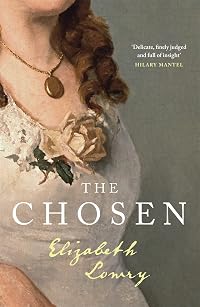
The Chosen
by Elizabeth Lowry
On This Page
Description
One Wednesday morning in November 1912 the ageing Thomas Hardy, entombed by paper and books and increasingly estranged from his wife Emma, finds her dying in her bedroom. Between his speaking to her and taking her in his arms, she has gone. The day before, he and Emma had exchanged bitter words - leading Hardy to wonder whether all husbands and wives end up as enemies to each other. His family and Florence Dugdale, the much younger woman with whom he has been in a relationship, assume that show more he will be happy and relieved to be set free. But he is left shattered by the loss. Hardy's bewilderment only increases when, sorting through Emma's effects, he comes across a set of diaries that she had secretly kept about their life together, ominously titled 'What I Think of My Husband'. He discovers what Emma had truly felt - that he had been cold, remote and incapable of ordinary human affection, and had kept her childless, a virtual prisoner for forty years. Why did they ever marry? He is consumed by something worse than grief: a chaos in which all his certainties have been obliterated. He has to re-evaluate himself, and reimagine his unhappy wife as she was when they first met. show lessTags
Recommendations














Member Reviews
A new novel by Elizabeth Lowry has to be an event of some note, the anticipation is palpable.
If her previous two books could be categorised by an extravagance of language, expansive prose, vivid imagery that makes your heart sing then The Chosen is subtly different. The language is there but pared down so that the impact of the book seems to be extracted from the spaces in between the words, the silences following a sentence, what is unspoken rather than what is. A peculiar paradox maybe but how clever!? How skilful is the writer who can achieve such a thing?
Ostensibly the novel examines the aftermath of Thomas Hardy losing his wife, Emma. An unexpected loss that shakes Hardy to his core. The progress of the novel follows the days show more following her death. Hardy finds some letters and diaries from his late wife that exposes the fractures within their marriage.
Hardy’s confusion is palpable as he meanders his way through the days following his loss. He resorts to much soul-searching of his self and his art. He dreams and one senses at times that he finds his waking life dreamlike as he discovers how much he misses Emma, how often he believes he sees her, discerns her ghostly presence, There is a sense of the languid in the narrative. Ms Lowry has effectively captured those dolorous, wading through treacle, type sensations experienced after an unexpected death that throws your life into slow motion.
The historical research is, as ever, impeccable. It’s palpable. You can almost hear the creak of the stairs and smell the woodwork at Max Gate, Hardy’s house. The attention to detail is perfection. But again that’s part of telling a story. And somehow the everyday details of life add to the funereal mind set that Hardy is engulfed in. But this wouldn’t be an Elizabeth Lowry book if it didn’t have more to say than merely telling us a story! This book has much to say memory and motivation, about life and art, about writing and the life of a writer. The effect of that profession on relationships and, in particular, marriage.I would go so far as to say it returns to some themes explored in Dark Water, concerning freedom.
I couldn’t help but compare this passage…..
“Sometimes I think the whole of literature is a prison, erected on vanity & illusion. It has a thousand gaudy rooms & a million turrets & a grand front to lure the gullible, but it’s a prison all the same, prison that takes constant shoring up and tending.“
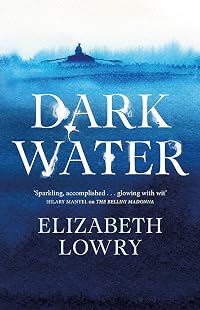
…..with this one from Dark Water and wondering whether literature is a freedom disguised as a prison.
“Ma’am, I sense terror in the everyday. And I don’t believe we’ve solved the problem of how to live.We’ve made that terror safe, merely by going along with the old ways and the old forms. We should be free to question, we should be free to reinvent, we should be free to feel that terror, the terrible freedom of being uncertain - but we aren’t; we cling to our false certainty and call it freedom and we can’t see what we’ve really created out of freedom is a prison.”
As I found with the author’s previous books there are so many quotable maxims that seem to hit the nail on the head and offer the reader so much food for thought.
“ He understands, now, that the past hasn’t ended. It lies all around him, of a piece with the present, concealed behind the most innocent things.“
“ Art is just the secret of knowing how to use a false thing to create the effect of a true one.”
“ He’s trying to write books in which the world can shelter, books that have the same red-brick solidity as his house, but all he seems to manage ida lean-to or a hut.“
The imagery, too, is magnificent. They stand well alone but taken in context they are perfection.
‘A cobweb shivers from the banister, brilliant and fresh.‘
‘ His study is chill, but trembling with a shy radiance.‘
‘The house is always hungry.’
But if this seems as if it might be a little too sombre then rest assured for this author’s wit, which is evident in all of her novels, is always present. Sometimes it’s direct, sometimes tongue in cheek, at other times it’s nestling in the spaces between words.
‘Everyone likes to read novels, but I doubt they quite know what to think about novelists.‘
There is an element of risk I imagine, when you base an entire fiction on real people. Thomas Hardy is “recent’ enough for there to be a wealth of information, written and pictorial, about him. The characterisation in this book is just exactly how you would imagine Hardy to be. I love the interaction between Hardy and both his sisters, it was so believable it felt as if I was actually eavesdropping upon their conversations.
This is a book of superior quality. Writing of the highest calibre and astute observations about marriage, relationships, literature, art, regrets, reminiscences all neatly expressed in a fiction about one of English literature’s most revered writers.
Elizabeth Lowry doesn’t ‘just’ write books, she writes literature.
My thanks to Ana McLaughlin at riverrun for a gifted proof. show less
If her previous two books could be categorised by an extravagance of language, expansive prose, vivid imagery that makes your heart sing then The Chosen is subtly different. The language is there but pared down so that the impact of the book seems to be extracted from the spaces in between the words, the silences following a sentence, what is unspoken rather than what is. A peculiar paradox maybe but how clever!? How skilful is the writer who can achieve such a thing?
Ostensibly the novel examines the aftermath of Thomas Hardy losing his wife, Emma. An unexpected loss that shakes Hardy to his core. The progress of the novel follows the days show more following her death. Hardy finds some letters and diaries from his late wife that exposes the fractures within their marriage.
Hardy’s confusion is palpable as he meanders his way through the days following his loss. He resorts to much soul-searching of his self and his art. He dreams and one senses at times that he finds his waking life dreamlike as he discovers how much he misses Emma, how often he believes he sees her, discerns her ghostly presence, There is a sense of the languid in the narrative. Ms Lowry has effectively captured those dolorous, wading through treacle, type sensations experienced after an unexpected death that throws your life into slow motion.
The historical research is, as ever, impeccable. It’s palpable. You can almost hear the creak of the stairs and smell the woodwork at Max Gate, Hardy’s house. The attention to detail is perfection. But again that’s part of telling a story. And somehow the everyday details of life add to the funereal mind set that Hardy is engulfed in. But this wouldn’t be an Elizabeth Lowry book if it didn’t have more to say than merely telling us a story! This book has much to say memory and motivation, about life and art, about writing and the life of a writer. The effect of that profession on relationships and, in particular, marriage.I would go so far as to say it returns to some themes explored in Dark Water, concerning freedom.
I couldn’t help but compare this passage…..
“Sometimes I think the whole of literature is a prison, erected on vanity & illusion. It has a thousand gaudy rooms & a million turrets & a grand front to lure the gullible, but it’s a prison all the same, prison that takes constant shoring up and tending.“
…..with this one from Dark Water and wondering whether literature is a freedom disguised as a prison.
“Ma’am, I sense terror in the everyday. And I don’t believe we’ve solved the problem of how to live.We’ve made that terror safe, merely by going along with the old ways and the old forms. We should be free to question, we should be free to reinvent, we should be free to feel that terror, the terrible freedom of being uncertain - but we aren’t; we cling to our false certainty and call it freedom and we can’t see what we’ve really created out of freedom is a prison.”
As I found with the author’s previous books there are so many quotable maxims that seem to hit the nail on the head and offer the reader so much food for thought.
“ He understands, now, that the past hasn’t ended. It lies all around him, of a piece with the present, concealed behind the most innocent things.“
“ Art is just the secret of knowing how to use a false thing to create the effect of a true one.”
“ He’s trying to write books in which the world can shelter, books that have the same red-brick solidity as his house, but all he seems to manage ida lean-to or a hut.“
The imagery, too, is magnificent. They stand well alone but taken in context they are perfection.
‘A cobweb shivers from the banister, brilliant and fresh.‘
‘ His study is chill, but trembling with a shy radiance.‘
‘The house is always hungry.’
But if this seems as if it might be a little too sombre then rest assured for this author’s wit, which is evident in all of her novels, is always present. Sometimes it’s direct, sometimes tongue in cheek, at other times it’s nestling in the spaces between words.
‘Everyone likes to read novels, but I doubt they quite know what to think about novelists.‘
There is an element of risk I imagine, when you base an entire fiction on real people. Thomas Hardy is “recent’ enough for there to be a wealth of information, written and pictorial, about him. The characterisation in this book is just exactly how you would imagine Hardy to be. I love the interaction between Hardy and both his sisters, it was so believable it felt as if I was actually eavesdropping upon their conversations.
This is a book of superior quality. Writing of the highest calibre and astute observations about marriage, relationships, literature, art, regrets, reminiscences all neatly expressed in a fiction about one of English literature’s most revered writers.
Elizabeth Lowry doesn’t ‘just’ write books, she writes literature.
My thanks to Ana McLaughlin at riverrun for a gifted proof. show less
For many years, celebrated novelist and poet Thomas Hardy (1840-1928) and his “mad” first wife, Emma, had led bitterly separate lives. Yet when Emma passes away unexpectedly at the age of 72, the depths of Thomas’s grief and regret astonish him. At first he wishes that he and Emma could magically return to the early days of their marriage, before misunderstandings and resentments hardened their hearts. But then, among his dead wife’s papers, he finds a damning series of notebooks ominously labeled “What I Think of My Husband.”
In this well-researched but rather ponderous narrative, author Elizabeth Lowry sketches an unsettling portrait of Thomas Hardy as a self-pitying man who is adept at using words and creating characters, show more but who doesn’t know “what it means to live.”
For readers of literary fiction. show less
In this well-researched but rather ponderous narrative, author Elizabeth Lowry sketches an unsettling portrait of Thomas Hardy as a self-pitying man who is adept at using words and creating characters, show more but who doesn’t know “what it means to live.”
For readers of literary fiction. show less
Ratings
Members
- Recently Added By
Lists

WBS - Book Club
71 works; 1 member
Author Information

5+ Works 178 Members
Awards and Honors
Awards
Distinctions
The Guardian Book of the Day (2022-05-12)
Common Knowledge
- Canonical title
- The Chosen
Classifications
Statistics
- Members
- 49
- Popularity
- 615,883
- Reviews
- 2
- Rating
- (4.09)
- Languages
- English
- Media
- Paper, Ebook
- ISBNs
- 3
- ASINs
- 1