
Stephen May (1) (1964–)
Author of Writing a Novel (Teach Yourself Series)
For other authors named Stephen May, see the disambiguation page.
Works by Stephen May
Tagged
Common Knowledge
- Birthdate
- 1964
- Gender
- male
- Education
- University of Essex
- Occupations
- novelist
- Organizations
- Arts Council England
- Nationality
- UK
- Birthplace
- Bedford, Bedfordshire, England, UK
- Places of residence
- West Yorkshire, England, UK
- Associated Place (for map)
- England, UK
Members
Reviews
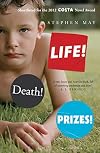
When Billy's mother is killed in a bungled street robbery, the now orphaned nineteen year old boy is determined to look after his six year old step-brother Oscar, despite the advice of his aunt and the reappearance on the scene of Oscar's natural father who belatedly wants to claim him. In his own way Billy, who is doing a gap year before going off to university, does his best, but is is enough, especially once Social Services become involved?
The most heartening aspect of Life! Death! show more Prizes! is Billy's one thought to care for Oscar, and he does all he can to make Oscar happy; and Oscar responds with obvious love for his older brother. There are some delightful episodes: after Billy has been encouraging Oscar to take more responsibility for their easy lifestyle and late nights Oscar responds "but Billy, I'm only six".
There is a darker side here too, plagued by thoughts of his mother's now hunted killer, the wayward Aidan Jebb, Billy gradually builds a picture of the youth, and frequently catches glimpses of him as if he is being stalked. But Billy's obsession is in danger of getting out of hand and looks to be heading for tragedy.
This is a delightful read, sometimes you may want to shake Billy and tell him to get it together, and you may not always approve of his free lifestyle, or perhaps more pointedly the free-living way his radical mother raised him, but he is all heart and full of good intentions, and has almost endless time and patience for Oscar. It's a lovely premise for a novel, the bothers' determination to stay together, and Stephen May makes of it a lively, imaginative and often funny account which while frequently touching is never is in danger of getting mawkish. show less
The most heartening aspect of Life! Death! show more Prizes! is Billy's one thought to care for Oscar, and he does all he can to make Oscar happy; and Oscar responds with obvious love for his older brother. There are some delightful episodes: after Billy has been encouraging Oscar to take more responsibility for their easy lifestyle and late nights Oscar responds "but Billy, I'm only six".
There is a darker side here too, plagued by thoughts of his mother's now hunted killer, the wayward Aidan Jebb, Billy gradually builds a picture of the youth, and frequently catches glimpses of him as if he is being stalked. But Billy's obsession is in danger of getting out of hand and looks to be heading for tragedy.
This is a delightful read, sometimes you may want to shake Billy and tell him to get it together, and you may not always approve of his free lifestyle, or perhaps more pointedly the free-living way his radical mother raised him, but he is all heart and full of good intentions, and has almost endless time and patience for Oscar. It's a lovely premise for a novel, the bothers' determination to stay together, and Stephen May makes of it a lively, imaginative and often funny account which while frequently touching is never is in danger of getting mawkish. show less
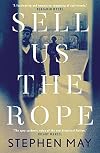
A new novel about the congress of the Russian Social Democratic Labour Party of 1907? Starring Lenin, Trotsky, Stalin and Rosa Luxemburg? What’s not to like?
And the book’s premise — that Stalin was a long-term, paid informer for the tsarist secret police (the Okhrana) — made the book especially interesting for me. The fact that it had a positive review in The New York Times — that was icing on the cake.
Sadly, this is a very disappointing book. The research seems to consist of the show more author reading (more likely — skimming) a single book from a couple of decades ago that argued Stalin had been an agent of the tsarist police. The author of that book, Roman Brackman, built his case on the testimony of NKVD General Alexander Orlov, who was perhaps the least trustworthy source imaginable. (Following his defection to the West in the late 1930s, Orlov neglected to tell his FBI handlers that during his time in England, he recruited the infamous Cambridge spy ring.)
There is little evidence that Stephen May read anything else about the colourful history of the Russian revolutionary movement — and anyone with a passing knowledge of that history will spot the bloopers from early on.
For example, the Okhrana super-spy Ievno Azef, was not “the former head of the party’s combat organisation”. He was the head of a different party’s combat organisation, a party which was a rival to the Social Democrats. It was called the Social Revolutionary Party.
Another example: to describe Rosa Luxemburg as the “influential theorist of permanent revolution” is completely wrong. Permanent revolution was a theory created by the little-remembered Parvus (Helphand) and embraced by Trotsky.
And the idea that Stalin consorted with Trotsky in London was absurd. Trotsky wrote about meeting Stalin briefly — noting that he could barely remember the man. His disdain for Stalin was one of the reasons the future Soviet dictator hated Trotsky and eventually had him killed.
The characterisation of Rosa Luxemburg is actually offensive. She is depicted in this book in the same way as the anarchist Emma Goldman was portrayed in E.L. Doctorow’s Ragtime, which was a far superior book. Rosa is shown as a sexually liberated woman giving life lessons to a younger female comrade while bathing together. You’d not imagine such a character as the author of dense economic works such as The Accumulation of Capital, or The Industrial Development of Poland. In this book, Luxemburg seems to have hardly any interest in politics, and like Trotsky she seems to be one of Lenin’s Bolsheviks (which neither of them actually were — certainly not in 1907).
The most important figures in the Russian revolutionary movement, including Plekhanov and Martov, are treated as buffoons.
All this could be forgiven if there was an interesting story to tell. But there is no story. Nothing happens. Romances that might have taken off go nowhere. People whose lives appear to be under threat are rescued. In the end, everyone attends a congress — about which we learn almost nothing — and then goes home.
Historically illiterate, offensive in its treatment of key intellectual figures on the Russian Left, and devoid of any drama or tension, this is a completely vacuous work.
Meanwhile, the true story of the young Stalin and his relationship with the tsarist police remains to be written. show less
And the book’s premise — that Stalin was a long-term, paid informer for the tsarist secret police (the Okhrana) — made the book especially interesting for me. The fact that it had a positive review in The New York Times — that was icing on the cake.
Sadly, this is a very disappointing book. The research seems to consist of the show more author reading (more likely — skimming) a single book from a couple of decades ago that argued Stalin had been an agent of the tsarist police. The author of that book, Roman Brackman, built his case on the testimony of NKVD General Alexander Orlov, who was perhaps the least trustworthy source imaginable. (Following his defection to the West in the late 1930s, Orlov neglected to tell his FBI handlers that during his time in England, he recruited the infamous Cambridge spy ring.)
There is little evidence that Stephen May read anything else about the colourful history of the Russian revolutionary movement — and anyone with a passing knowledge of that history will spot the bloopers from early on.
For example, the Okhrana super-spy Ievno Azef, was not “the former head of the party’s combat organisation”. He was the head of a different party’s combat organisation, a party which was a rival to the Social Democrats. It was called the Social Revolutionary Party.
Another example: to describe Rosa Luxemburg as the “influential theorist of permanent revolution” is completely wrong. Permanent revolution was a theory created by the little-remembered Parvus (Helphand) and embraced by Trotsky.
And the idea that Stalin consorted with Trotsky in London was absurd. Trotsky wrote about meeting Stalin briefly — noting that he could barely remember the man. His disdain for Stalin was one of the reasons the future Soviet dictator hated Trotsky and eventually had him killed.
The characterisation of Rosa Luxemburg is actually offensive. She is depicted in this book in the same way as the anarchist Emma Goldman was portrayed in E.L. Doctorow’s Ragtime, which was a far superior book. Rosa is shown as a sexually liberated woman giving life lessons to a younger female comrade while bathing together. You’d not imagine such a character as the author of dense economic works such as The Accumulation of Capital, or The Industrial Development of Poland. In this book, Luxemburg seems to have hardly any interest in politics, and like Trotsky she seems to be one of Lenin’s Bolsheviks (which neither of them actually were — certainly not in 1907).
The most important figures in the Russian revolutionary movement, including Plekhanov and Martov, are treated as buffoons.
All this could be forgiven if there was an interesting story to tell. But there is no story. Nothing happens. Romances that might have taken off go nowhere. People whose lives appear to be under threat are rescued. In the end, everyone attends a congress — about which we learn almost nothing — and then goes home.
Historically illiterate, offensive in its treatment of key intellectual figures on the Russian Left, and devoid of any drama or tension, this is a completely vacuous work.
Meanwhile, the true story of the young Stalin and his relationship with the tsarist police remains to be written. show less
it’s about. Where does the term ‘prizes’ fit in to a story about a grieving pair of brothers? Why are there exclamation marks?
Now, just for a moment, step aside from this masterful piece by Stephen May. Pretend you’re in a doctor or dentist’s surgery, at your grandmother’s or browsing magazines at the newsagent’s. Think about titles such as That’s Life! and Take 5 in Australia; Pick Me Up or Take a Break in the UK. What do all these magazines have in common? That’s right, show more stories of survival, death and the opportunity to win a cuckoo clock by doing puzzles. And that's what's happening in Billy's world...
Billy, whose point of view this story is told, has been an avid reader of these magazines since his mum died. You see, the way in which she died is worthy of an article in one of the Life! Death! Prizes! magazines – she was trying to stop a bag snatcher from stealing her Netbook when she was killed. And now Billy is left to look after his half-brother, Oscar. Aunt Toni is sniffing around and Dean, Oscar’s absentee father is trying to make a comeback, but Billy knows that he can give Oscar what he needs – tuition in playing the RPG Empire and Super Maximum Explode washing machine rides.
You might think that you’ve read this kind of thing before, but I want to tell you: you haven’t. May handles Billy’s situation with brutal honesty, never sugar coating the bad – Billy drinks a bit, smokes the odd joint and prefers takeaway to lasagne from the freezer. Billy’s a flawed character, but May writes in such a way that you’re sympathetic with his plight. Whether Billy’s dealing with a hangover, trying to overrun the world as a RPG dictator, sneaking out to the supermarket while Oscar sleeps or trying to deal with his feelings for the attached Lucy, he’s a real guy. His character just leaps off the page.
The setting is another thing that May nails – from the dreary boredom of suburbia to the slight desperation to enjoy life with a fixed grin at the Fun Junction, where Billy meets his mother’s killer. This book will have you laughing, grimacing and cheering Billy on, as he ultimately tries his best to care for Oscar.
May’s razor sharp wit and realistic view of life, especially of a young person grieving while trying to figure out where they fit in the world, is simply fantastic. I couldn’t put this one down – to the point where I was reading while walking to find out what happened to Billy and Oscar.
http://samstillreading.wordpress.com show less
Now, just for a moment, step aside from this masterful piece by Stephen May. Pretend you’re in a doctor or dentist’s surgery, at your grandmother’s or browsing magazines at the newsagent’s. Think about titles such as That’s Life! and Take 5 in Australia; Pick Me Up or Take a Break in the UK. What do all these magazines have in common? That’s right, show more stories of survival, death and the opportunity to win a cuckoo clock by doing puzzles. And that's what's happening in Billy's world...
Billy, whose point of view this story is told, has been an avid reader of these magazines since his mum died. You see, the way in which she died is worthy of an article in one of the Life! Death! Prizes! magazines – she was trying to stop a bag snatcher from stealing her Netbook when she was killed. And now Billy is left to look after his half-brother, Oscar. Aunt Toni is sniffing around and Dean, Oscar’s absentee father is trying to make a comeback, but Billy knows that he can give Oscar what he needs – tuition in playing the RPG Empire and Super Maximum Explode washing machine rides.
You might think that you’ve read this kind of thing before, but I want to tell you: you haven’t. May handles Billy’s situation with brutal honesty, never sugar coating the bad – Billy drinks a bit, smokes the odd joint and prefers takeaway to lasagne from the freezer. Billy’s a flawed character, but May writes in such a way that you’re sympathetic with his plight. Whether Billy’s dealing with a hangover, trying to overrun the world as a RPG dictator, sneaking out to the supermarket while Oscar sleeps or trying to deal with his feelings for the attached Lucy, he’s a real guy. His character just leaps off the page.
The setting is another thing that May nails – from the dreary boredom of suburbia to the slight desperation to enjoy life with a fixed grin at the Fun Junction, where Billy meets his mother’s killer. This book will have you laughing, grimacing and cheering Billy on, as he ultimately tries his best to care for Oscar.
May’s razor sharp wit and realistic view of life, especially of a young person grieving while trying to figure out where they fit in the world, is simply fantastic. I couldn’t put this one down – to the point where I was reading while walking to find out what happened to Billy and Oscar.
http://samstillreading.wordpress.com show less
19 year old Billy Smith's mum was knocked to the ground and killed in a street robbery gone wrong. Billy is left to look after his 6 year old brother, Oscar, and try and cope with all that life is throwing at him now his mum isn't around.
This is a touching story of a teenage lad's struggle to care for Oscar on his own. You can tell that he's making mistakes even though he thinks he's doing great, but as the reader I found myself wanting him to succeed. This book also has its funny bits, as show more Billy tells the story himself and he has quite a sarcastic tone of voice that made me smile and laugh out loud at stages. The title of the book relates to the kind of magazines that feature Life! Death! Prizes! as something on the cover to draw people in, and inside there are bizarre tales that seem to be made up they are so odd. Billy uses them as a way of rationalising what happened to his own mother, sort of a way of seeing how mundane it was. His relationship with Oscar is lovely and he really does try to make it work.
I really enjoyed this story. It's very contemporary in style and kind of raw. It's very well written too and drew me right into Billy and Oscar's world. show less
This is a touching story of a teenage lad's struggle to care for Oscar on his own. You can tell that he's making mistakes even though he thinks he's doing great, but as the reader I found myself wanting him to succeed. This book also has its funny bits, as show more Billy tells the story himself and he has quite a sarcastic tone of voice that made me smile and laugh out loud at stages. The title of the book relates to the kind of magazines that feature Life! Death! Prizes! as something on the cover to draw people in, and inside there are bizarre tales that seem to be made up they are so odd. Billy uses them as a way of rationalising what happened to his own mother, sort of a way of seeing how mundane it was. His relationship with Oscar is lovely and he really does try to make it work.
I really enjoyed this story. It's very contemporary in style and kind of raw. It's very well written too and drew me right into Billy and Oscar's world. show less
Lists
Awards


You May Also Like


Associated Authors
Statistics
- Works
- 10
- Members
- 507
- Popularity
- #48,897
- Rating
- 3.5
- Reviews
- 11
- ISBNs
- 103
- Languages
- 2