

Claire McGowan
Author of What You Did
About the Author
Disambiguation Notice:
Claire McGowan writes crime fiction under that name, and "women's fiction" as Eva Woods.
Series
Works by Claire McGowan
Her Last Christmas 10 copies
Deux vérités, un mensonge 4 copies
Your Number One Fan 1 copy
livro algo como ser feliz 1 copy
Associated Works
Tagged
Common Knowledge
- Other names
- Woods, Eva
- Birthdate
- 1981
- Gender
- female
- Education
- University of Oxford
- Occupations
- teacher of creative writing
- Agent
- DHH Literary Agency
- Nationality
- UK
- Birthplace
- Newry, Northern Ireland, UK
- Places of residence
- London, Middlesex, England, UK
- Map Location
- Northern Ireland, UK
- Disambiguation notice
- Claire McGowan writes crime fiction under that name, and "women's fiction" as Eva Woods.
Members
Reviews

Two families in Northern Ireland had lived next to each other for a long time but because of being on different sides during the Troubles, they rarely talk to each other except to have yet another bitter argument. But somehow, in a classic Romeo and Juliet style, the children of the two families are in love and the fathers become friends. Except that there is a lot of history - and it comes to the light during the night before the wedding.
First they find a skeleton of a woman while trying show more to tear down the fence between the two properties - a real one. Before long it becomes clear that it is the missing mother of the bride - who disappeared 20 years earlier and had always been presumed drowned - especially after a note being found. Back then the two lovers were young adults, already dating but the disappearance and presumed suicide changes things and Michael had left for school and another marriage. And just when they are about to finally put all the past behind them, the skeleton shows up - with a bullet in its head.
And that opens the memories and the locked mouths of everyone in both households. The other mother is also dead at this point (having died a few years after the suicide from cancer) so it is just the to-be-wed couple and the fathers. And each of them has a tale to tell - of lying to the police, of hiding evidence, of trying to protect someone else. And the skeletons of the past start tumbling down -- jealousy and affairs, half-forgotten attempts to leave and shocking accusations. All seems to get resolved until one last thought, one last memory throws everything we know back into turmoil - the story the 4 of them pieced together works if only it was not for one last question, one last secret - and language lessons taken in private.
The play is a tightly plotted mystery full of surprising turns and ending with the kind of shocking endings you expect from this style. And yet - it comes as a surprise - because for awhile there, it feels as if they all want to find a way to explain everything and get the peace back - even if may not fit all the evidence. Until a word shatters it.
An awesome play and BBC Northern Ireland production makes it come alive. But it would have worked even on paper. show less
First they find a skeleton of a woman while trying show more to tear down the fence between the two properties - a real one. Before long it becomes clear that it is the missing mother of the bride - who disappeared 20 years earlier and had always been presumed drowned - especially after a note being found. Back then the two lovers were young adults, already dating but the disappearance and presumed suicide changes things and Michael had left for school and another marriage. And just when they are about to finally put all the past behind them, the skeleton shows up - with a bullet in its head.
And that opens the memories and the locked mouths of everyone in both households. The other mother is also dead at this point (having died a few years after the suicide from cancer) so it is just the to-be-wed couple and the fathers. And each of them has a tale to tell - of lying to the police, of hiding evidence, of trying to protect someone else. And the skeletons of the past start tumbling down -- jealousy and affairs, half-forgotten attempts to leave and shocking accusations. All seems to get resolved until one last thought, one last memory throws everything we know back into turmoil - the story the 4 of them pieced together works if only it was not for one last question, one last secret - and language lessons taken in private.
The play is a tightly plotted mystery full of surprising turns and ending with the kind of shocking endings you expect from this style. And yet - it comes as a surprise - because for awhile there, it feels as if they all want to find a way to explain everything and get the peace back - even if may not fit all the evidence. Until a word shatters it.
An awesome play and BBC Northern Ireland production makes it come alive. But it would have worked even on paper. show less
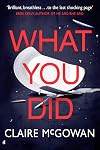
It's both a contemporary thriller (emphasis on contemporary) and a novel about any number of things: how we construct the world we want, oblivious to those things that don't match our specs; about the meaning of consent; and about all the things we do that change both our and others' lives.
The setup is six college friends gathering to celebrate knowing each other for 25 years. Their intense friendship has been bolstered over the year by two marriages within the group. After an evening of show more drinking and smoking weed, however, everything goes wildly awry, and the police are called.
There are twists and turns, yes, but really that's just window dressing for a deep, intense, novel. By far more interesting to me was the effect of the intense college friendships on subsequent lives. show less
The setup is six college friends gathering to celebrate knowing each other for 25 years. Their intense friendship has been bolstered over the year by two marriages within the group. After an evening of show more drinking and smoking weed, however, everything goes wildly awry, and the police are called.
There are twists and turns, yes, but really that's just window dressing for a deep, intense, novel. By far more interesting to me was the effect of the intense college friendships on subsequent lives. show less
Review of Advance reader’s Copy/Uncorrected Proof eBook
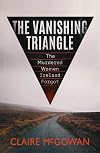
In 2018, as a young woman got off a bus in Carlow, someone snatched her, stuffed her into a car, and drove away. Eighteen years later, a similar attack occurred, but a witness with a mobile phone called the police, and the attacker was located. A bloodstained note revealed the location of the victim; however, the twenty-four-year-old woman was dead . . . raped, and strangled . . . she’d died within forty-five minutes of her show more abduction.
Sadly, these events weren’t unusual in Dublin, Ireland where between 1993 and 1998 eight women disappeared in an area some eighty miles surrounding Dublin . . . the “vanishing triangle” referred to in the title of this true crime publication.
Was a serial killer at work in Ireland in the 1990s? Why, when so many women vanished, were the Gardia unable to solve any of the cases, unable to locate the missing women, even years after they’d vanished?
=========
The author, who grew up in Northern Island, reveals how several women vanished, but no one in authority seemed to care. Cases went unsolved, often for years, until the discovery of a body. But, for many of the families, there are no answers, no bodies to bury, no person to hold accountable.
There are no answers for the families of the missing, but the author provides the socio-political context for those years, a time of social upheaval, a time when women had no access to contraceptives, when abortion was illegal, and when, according to the author, “homophobia and intolerance remained rife.”
The stories of so many women missing, with little or no effort to find them, make this a difficult book to read. It is dark and disturbing, especially when the reader realizes that, at its heart, the culture, the society, and the politics of the time are a large part of the problem. Blaming women for what happened to them is nothing less than an insidious excuse for a failure of due diligence, a failure to conduct proper investigations for the missing women. Justice for the missing, and for their families, requires a significant change in the manner of investigation.
The stories of these women are compelling; the book, thought-provoking. There is much here for readers to consider, much that will remain with them long after turning the final page.
Recommended.
I received a free copy of this eBook from Amazon Publishing UK, Little A and NetGalley
#TheVanishingTriangle #NetGalley show less
In 2018, as a young woman got off a bus in Carlow, someone snatched her, stuffed her into a car, and drove away. Eighteen years later, a similar attack occurred, but a witness with a mobile phone called the police, and the attacker was located. A bloodstained note revealed the location of the victim; however, the twenty-four-year-old woman was dead . . . raped, and strangled . . . she’d died within forty-five minutes of her show more abduction.
Sadly, these events weren’t unusual in Dublin, Ireland where between 1993 and 1998 eight women disappeared in an area some eighty miles surrounding Dublin . . . the “vanishing triangle” referred to in the title of this true crime publication.
Was a serial killer at work in Ireland in the 1990s? Why, when so many women vanished, were the Gardia unable to solve any of the cases, unable to locate the missing women, even years after they’d vanished?
=========
The author, who grew up in Northern Island, reveals how several women vanished, but no one in authority seemed to care. Cases went unsolved, often for years, until the discovery of a body. But, for many of the families, there are no answers, no bodies to bury, no person to hold accountable.
There are no answers for the families of the missing, but the author provides the socio-political context for those years, a time of social upheaval, a time when women had no access to contraceptives, when abortion was illegal, and when, according to the author, “homophobia and intolerance remained rife.”
The stories of so many women missing, with little or no effort to find them, make this a difficult book to read. It is dark and disturbing, especially when the reader realizes that, at its heart, the culture, the society, and the politics of the time are a large part of the problem. Blaming women for what happened to them is nothing less than an insidious excuse for a failure of due diligence, a failure to conduct proper investigations for the missing women. Justice for the missing, and for their families, requires a significant change in the manner of investigation.
The stories of these women are compelling; the book, thought-provoking. There is much here for readers to consider, much that will remain with them long after turning the final page.
Recommended.
I received a free copy of this eBook from Amazon Publishing UK, Little A and NetGalley
#TheVanishingTriangle #NetGalley show less
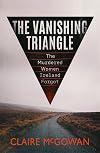
Crime writer Claire McGowan has grown up in a small town in Northern Ireland which she always perceived as a safe place despite the Troubles. Of course, the news daily reported about bombings and people killed but what she hadn’t been aware of was the incredibly high number of girls and women who were abducted or simply vanished in both Northern and the Republic of Ireland. Some of the cases happened close to where she lived, happened to girls her age who roamed the same places when she show more did but she has never even heard of it. Only rarely was a suspect arrested and even more seldom convicted for rape or murder. How could the country have such a high number of women murdered and except for their families nobody seems to care?
I have enjoyed Claire McGowan’s crime novels for some years now, not only because the plots are suspenseful and complex, but also because she manages to capture the atmosphere of a place, to create a special mood that can only exist there. With her deep understanding for the people and the places they live and which shape their thinking and acting, I was curious to read her true crime investigation of femicides.
What her enquiry uncovers is not the Ireland that has attracted tourists and business for decades. It is a country that was shaped by the Catholic church and whose legislation was far behind other European countries in terms of women’s rights. With the Troubles, it was often safer not to have seen anything and, first and foremost, not to say anything, thus atrocious crimes could happen in broad daylight in front of everybody’s eyes. The deeper she digs the more cases she finds and can link to a small area, the so called “Vanishing Triangle”, where an astonishing number of woman have disappeared and whose cases remain unsolved.
McGowan tells the women’s stories, lists the evidence and also provides reasons why their bodies are still missing or why prime suspects still walk free. All this grants a look in the country’s state in the 1980s and 1990s – a lot has changed since, but still society and police often fail female victims today.
A read which is as interesting as it is disturbing. I really enjoy listening to true crime podcasts thus the topic attracted me immediately. What I really appreciated was that Claire McGowan did not take a neutral position towards her account but you can sense her anger and the incredulity with which she looks at her findings and which makes you wonder why not more people shout out because of this. show less
I have enjoyed Claire McGowan’s crime novels for some years now, not only because the plots are suspenseful and complex, but also because she manages to capture the atmosphere of a place, to create a special mood that can only exist there. With her deep understanding for the people and the places they live and which shape their thinking and acting, I was curious to read her true crime investigation of femicides.
What her enquiry uncovers is not the Ireland that has attracted tourists and business for decades. It is a country that was shaped by the Catholic church and whose legislation was far behind other European countries in terms of women’s rights. With the Troubles, it was often safer not to have seen anything and, first and foremost, not to say anything, thus atrocious crimes could happen in broad daylight in front of everybody’s eyes. The deeper she digs the more cases she finds and can link to a small area, the so called “Vanishing Triangle”, where an astonishing number of woman have disappeared and whose cases remain unsolved.
McGowan tells the women’s stories, lists the evidence and also provides reasons why their bodies are still missing or why prime suspects still walk free. All this grants a look in the country’s state in the 1980s and 1990s – a lot has changed since, but still society and police often fail female victims today.
A read which is as interesting as it is disturbing. I really enjoy listening to true crime podcasts thus the topic attracted me immediately. What I really appreciated was that Claire McGowan did not take a neutral position towards her account but you can sense her anger and the incredulity with which she looks at her findings and which makes you wonder why not more people shout out because of this. show less
Lists
You May Also Like


Associated Authors
Statistics
- Works
- 34
- Also by
- 3
- Members
- 1,789
- Popularity
- #14,390
- Rating
- 3.7
- Reviews
- 104
- ISBNs
- 157
- Languages
- 7

