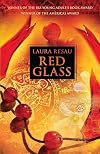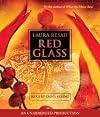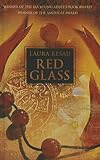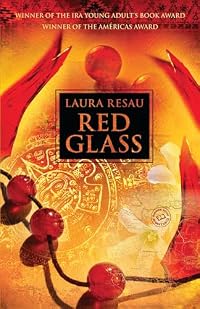
Red Glass
by Laura Resau
On This Page
Description
Sixteen-year-old Sophie has been frail and delicate since her premature birth, but discovers her true strength during a journey through Mexico, where the six-year-old orphan her family hopes to adopt was born, and to Guatemala, where her would-be boyfriend hopes to find his mother and plans to remain.Tags
Recommendations






















Member Recommendations


Member Reviews
Rating: 3.5
16-year-old Sophie’s stepdad, Juan, is Mexican-American. He gained legal status when he married her mom nine years before. An importer, he has many connections with his home country. Late one February night, the family receives a phone call from Border Patrol. A group of migrants has been found dead in the desert outside of Tucson, Arizona—where the family lives. There’s a single survivor: a traumatized little boy, Pablo, who is about five. Sophie’s stepdad’s business card was found in one of the boy’s pants pockets. While Juan has helped migrants in the past, feeding and housing them overnight in emergency situations, he denies knowing anything about this group or this particular child.
When the family arrives at show more the hospital to see the boy and meet with a Border Patrol officer, Sophie’s Great-Aunt Dika, herself a traumatized refugee of the Bosnian war (whom Sophie’s family has taken in), decides they must foster this child. Eventually, Juan makes contact with the boy’s surviving relatives in Oaxaca, Mexico. It is decided that Pablo, who barely speaks and who insists on sleeping outdoors with the chickens, will stay in Tucson for the school year. Then, in the summer, he will be reunited with his Mexican relatives and make a decision about whether to stay in the US or return to his homeland.
The story mostly revolves around the road trip Sophie, Dika, and Pablo take in a VW van with Dika’s boyfriend, Lorenzo, and his teenage son, Angel. Lorenzo and Angel made their own dangerous trek across the desert years before, fleeing extreme violence in Guatemala. Lorenzo was, in fact, tortured by government soldiers. Angel feels there’s a chance that his mother may still be alive. He also wants to retrieve her “jewels”, which he saw her bury years before. Possibly, too, he may stay in Guatemala, set up a business there, as he has never felt at home in America. The plan is for the father and son to drop off the women and Pablo at the boy’s Oaxacan village and then proceed by bus to Guatemala. The men are to return in a week for Dika, Sophie, and possibly Pablo (should he decide to live in America). They will then drive back to the US. However, things go very wrong for Lorenzo and Angel in Guatemala, and it falls upon Sophie to travel south to assist.
Resau’s novel is mostly an engaging one. An anthropologist by training, she apparently taught in the Oaxaca region for two years, and it shows in her convincing descriptions of the landscape and in her understanding of Mexican culture and customs. A large part of the book focuses on Sophie’s growing love for Angel, which is also quite nicely done. At times the writing is a little forcedly lyrical. (There are, for example, a few scenes in which petals drop from flowering trees upon the young lovers.) Symbolism around red glass can be heavy handed as well. Characterization is sometimes less than subtle. Dika is slightly cartoonish, and Sophie’s anxiety issues (OCD) are sometimes described too fulsomely—and they resolve way too easily considering the unhygienic conditions, even squalor, that the girl encounters.
Resau makes considerable use of St. Exupery’s The Little Prince. Passages from that French novel appear as epigraphs for each part of Red Glass, and they work well to underscore themes and provide extra layers of meaning.
In the end, I generally liked this novel, though I found some plot developments implausible or too convenient. The concluding sections, in particular, seem a little too tidy, even for a young adult novel. show less
16-year-old Sophie’s stepdad, Juan, is Mexican-American. He gained legal status when he married her mom nine years before. An importer, he has many connections with his home country. Late one February night, the family receives a phone call from Border Patrol. A group of migrants has been found dead in the desert outside of Tucson, Arizona—where the family lives. There’s a single survivor: a traumatized little boy, Pablo, who is about five. Sophie’s stepdad’s business card was found in one of the boy’s pants pockets. While Juan has helped migrants in the past, feeding and housing them overnight in emergency situations, he denies knowing anything about this group or this particular child.
When the family arrives at show more the hospital to see the boy and meet with a Border Patrol officer, Sophie’s Great-Aunt Dika, herself a traumatized refugee of the Bosnian war (whom Sophie’s family has taken in), decides they must foster this child. Eventually, Juan makes contact with the boy’s surviving relatives in Oaxaca, Mexico. It is decided that Pablo, who barely speaks and who insists on sleeping outdoors with the chickens, will stay in Tucson for the school year. Then, in the summer, he will be reunited with his Mexican relatives and make a decision about whether to stay in the US or return to his homeland.
The story mostly revolves around the road trip Sophie, Dika, and Pablo take in a VW van with Dika’s boyfriend, Lorenzo, and his teenage son, Angel. Lorenzo and Angel made their own dangerous trek across the desert years before, fleeing extreme violence in Guatemala. Lorenzo was, in fact, tortured by government soldiers. Angel feels there’s a chance that his mother may still be alive. He also wants to retrieve her “jewels”, which he saw her bury years before. Possibly, too, he may stay in Guatemala, set up a business there, as he has never felt at home in America. The plan is for the father and son to drop off the women and Pablo at the boy’s Oaxacan village and then proceed by bus to Guatemala. The men are to return in a week for Dika, Sophie, and possibly Pablo (should he decide to live in America). They will then drive back to the US. However, things go very wrong for Lorenzo and Angel in Guatemala, and it falls upon Sophie to travel south to assist.
Resau’s novel is mostly an engaging one. An anthropologist by training, she apparently taught in the Oaxaca region for two years, and it shows in her convincing descriptions of the landscape and in her understanding of Mexican culture and customs. A large part of the book focuses on Sophie’s growing love for Angel, which is also quite nicely done. At times the writing is a little forcedly lyrical. (There are, for example, a few scenes in which petals drop from flowering trees upon the young lovers.) Symbolism around red glass can be heavy handed as well. Characterization is sometimes less than subtle. Dika is slightly cartoonish, and Sophie’s anxiety issues (OCD) are sometimes described too fulsomely—and they resolve way too easily considering the unhygienic conditions, even squalor, that the girl encounters.
Resau makes considerable use of St. Exupery’s The Little Prince. Passages from that French novel appear as epigraphs for each part of Red Glass, and they work well to underscore themes and provide extra layers of meaning.
In the end, I generally liked this novel, though I found some plot developments implausible or too convenient. The concluding sections, in particular, seem a little too tidy, even for a young adult novel. show less
Red Glass by Laura Resau is a YA coming of age book that both enchants and enthralls. The story is about a journey of transformation that a small group of people make deep into Mexico and some even further into Guatemala. Sophie, the main character, is an American girl who is timid and weak, she is germ phobic and afraid of most everything. She is accompanied by her great-aunt, Dika. Dika is a survivor from Bosnia. Also along are Dika’s boyfriend Mr. Lorenzo and his son, Angel. The purpose of their trip is to take Pablo, a refugee that has been living with Sophie’s family back to his relatives in Mexico. Sophie is hoping that Pablo decides to return to the States with her as she considers him her little brother. Mr. Lorenzo and show more Angel intend to journey back into Guatemala in order to recover some jewels that Mrs. Lorenzo buried. Angel is also hoping to find out exactly what happened to his Mother.
The story is almost like a morality tale. Goodness and light seem to follow Sophie and her friends and although some horrific things do happen over the course of the book, in all cases, a life lesson is learned and someone is turned down the right path. The book is very informative about food, customs and the people of Mexico and if it seems as if we are looking through rose colored glasses it was nice to read good things about poor people in a developing country.
I found Red Glass to be a rich, poetic read and a wonderful way to widen a young reader’s worldview. show less
The story is almost like a morality tale. Goodness and light seem to follow Sophie and her friends and although some horrific things do happen over the course of the book, in all cases, a life lesson is learned and someone is turned down the right path. The book is very informative about food, customs and the people of Mexico and if it seems as if we are looking through rose colored glasses it was nice to read good things about poor people in a developing country.
I found Red Glass to be a rich, poetic read and a wonderful way to widen a young reader’s worldview. show less
Sixteen-year-old Sophie is afraid of almost everything. When her boyfriend was attacked and robbed in Guatemala she decided to travel there from Mexico to rescue him, proving that she can overcome her fears. With characters from multiple countries and lifestyles the author maintained an unprejudiced view, showing a remarkable understanding of the mix of cultures. This beautiful story will inspire and encourage young adults as well as informing them that underprivileged people, even those from dangerous war-torn countries, can be just as generous, hospitable and friendly as anyone else.
Children's Books Too Cool for School
Sophie's unusual family group -- she lives with her English mother, Latino stepfather, and Bosnian refugee great aunt -- becomes a little more unusual when a small boy, Pablo, is found in the desert with Sophie's father's business card in his pocket. Poor little Pablo has seen his parents die trying to cross the border, and barely survived himself. Sophie, whose favorite book is The Little Prince, decides that Pablo is her pricipito who came from parts unknown, and is thrilled when he becomes part of their family.
However, Pablo's surviving family is eventually located in a tiny Mexican village, and it is decided that Pablo should see his family, and make a very difficult decision for a very small show more boy.
It just so happens that Great Aunt Dika's boyfriend, and his son Angel, were planning a trip South of the border, and it seems an opportune time to make a road trip. Just one problem -- Sophie is afraid of almost everything. Germs, car-accidents, other people... This road trip will be another kind of journey for Sophie, as she learns a little bit about
herself, and the lives of others.
This book had an uphill battle, because I had just finished What is the What and that was
a tough act to follow. However, I was immediately engaged with the story, and couldn't bear to put it down.
The prose was so lyrical, and although Sophie is sort of your stereotypical, unsure, preteen heroine, she has a great voice that pushes past all that. The descriptions of people and places were intense and vivid, really putting one right in the story. And the characters -- well, that's the most important part. This is a very character-driven novel, and they all just sparkle.
One minor complaint: As usual in these books, Sophie will need a boy to convince her of her true worth. A boy which, I'm sure, we are supposed to be convinced is her teenaged soul mate, or something. However, I'll get over it. The story, if conventional, was beautifully told.
Very much a girl book for girls around Sophies age -- 13 to 16. show less
Sophie's unusual family group -- she lives with her English mother, Latino stepfather, and Bosnian refugee great aunt -- becomes a little more unusual when a small boy, Pablo, is found in the desert with Sophie's father's business card in his pocket. Poor little Pablo has seen his parents die trying to cross the border, and barely survived himself. Sophie, whose favorite book is The Little Prince, decides that Pablo is her pricipito who came from parts unknown, and is thrilled when he becomes part of their family.
However, Pablo's surviving family is eventually located in a tiny Mexican village, and it is decided that Pablo should see his family, and make a very difficult decision for a very small show more boy.
It just so happens that Great Aunt Dika's boyfriend, and his son Angel, were planning a trip South of the border, and it seems an opportune time to make a road trip. Just one problem -- Sophie is afraid of almost everything. Germs, car-accidents, other people... This road trip will be another kind of journey for Sophie, as she learns a little bit about
herself, and the lives of others.
This book had an uphill battle, because I had just finished What is the What and that was
a tough act to follow. However, I was immediately engaged with the story, and couldn't bear to put it down.
The prose was so lyrical, and although Sophie is sort of your stereotypical, unsure, preteen heroine, she has a great voice that pushes past all that. The descriptions of people and places were intense and vivid, really putting one right in the story. And the characters -- well, that's the most important part. This is a very character-driven novel, and they all just sparkle.
One minor complaint: As usual in these books, Sophie will need a boy to convince her of her true worth. A boy which, I'm sure, we are supposed to be convinced is her teenaged soul mate, or something. However, I'll get over it. The story, if conventional, was beautifully told.
Very much a girl book for girls around Sophies age -- 13 to 16. show less
Simply beautiful novel about love, courage and discovering what one is capable of, plus a dash of magical realism. The Latin American setting is also as essential a character in this romance as the main players.
In "Red Glass," Sophie undertakes many journeys: not only to Mexico and Guatemala, but to self-discovery, love, and a greater understanding of the world in which she lives. The excitement starts when Sophie's family takes in Pedro, a 6-year-old boy who lost his family during the treacherous trip from Mexico into America. After a year, they manage to make contact with Pedro's family in a remote Mexican village, and decide it's best to take Pedro there to decide where he would like to live.
A cast of diverse and artfully depicted characters accompanies Sophie in this amazing coming-of-age story. Sophie’s journey is exciting, funny, scary, and touching in perfectly balanced amounts. The writing is descriptive and lyrical and the plot is show more well paced, not to mention difficult to put down. Highly recommended for grades 8 – 12. show less
A cast of diverse and artfully depicted characters accompanies Sophie in this amazing coming-of-age story. Sophie’s journey is exciting, funny, scary, and touching in perfectly balanced amounts. The writing is descriptive and lyrical and the plot is show more well paced, not to mention difficult to put down. Highly recommended for grades 8 – 12. show less
Red Glass is a coming of age story following Campbell's hero's journey. I love books about healing and awakening and I'm fascinated with Mayan culture, unfortunately the main characters simply didn't come to life for me. While I realize this a young adult book, there was still too much teenage angst for me enjoy it. Resau tried too hard to put in the sexual tension and emergence of adolescence without getting too graphic. So while I think a younger teen would connect more with Sophie's fear and lack of confidence, I don't think it's completely appropriate for 12-14 year olds. I really enjoyed Resau's What The Moon Saw, but Red Glass just didn't reach me the same way. It was okay, but not superb.
Members
- Recently Added By
Lists

A Rainbow of Books: Colors in the Title
570 works; 24 members
Author Information

12+ Works 2,112 Members
Awards and Honors
Awards
Distinctions
Notable Lists
Common Knowledge
- Original publication date
- 2007
- Important places
- Guatemala
Classifications
Statistics
- Members
- 380
- Popularity
- 82,103
- Reviews
- 18
- Rating
- (3.97)
- Languages
- English
- Media
- Paper, Audiobook, Ebook
- ISBNs
- 13
- UPCs
- 2
- ASINs
- 3