On This Page
Description
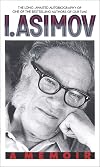
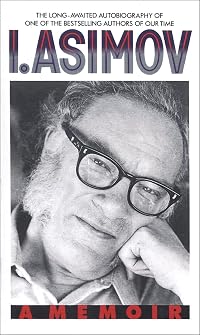
Arguably the greatest science fiction writer who ever lived, Isaac Asimov also possessed one of the most brilliant and original minds of our time. His accessible style and far-reaching interests in subjects ranging from science to humor to history earned him the nickname "the Great Explainer." I. Asimov is his personal story--vivid, open, and honest--as only Asimov himself could tell it. Here is the story of the paradoxical genius who wrote of travel to the stars yet refused to fly in show more airplanes; who imagined alien universes and vast galactic civilizations while staying home to write; who compulsively authored more than 470 books yet still found the time to share his ideas with some of the great minds of our century. Here are his wide-ranging thoughts and sharp-eyed observations on everything from religion to politics, love and divorce, friendship and Hollywood, fame and mortality. Here, too, is a riveting behind-the-scenes look at the varied personalities--Campbell, Ellison, Heinlein, Clarke, del Rey, Silverberg, and others--who along with Asimov helped shape science fiction. As unique and irrepressible as the man himself, I. Asimov is the candid memoir of an incomparable talent who entertained readers for nearly half a century and whose work will surely endure into the future he so vividly envisioned. show lessTags
Recommendations








Member Recommendations
Member Reviews
Asimov, Isaac. I, Asimov. Doubleday, 1994.
I, Asimov, an almost 600-page memoir, written when his health was failing and published after his death, won Isaac Asimov his final Hugo. It was his third published autobiography. It gives the reader a good feeling for what it must have been like to know him—at least a bit. His assessment of his own talent seems about right—that he was a writer who would always be known more for the quantity and variety of his work rather than for the quality of any single creation. He wrote obsessively. The book count mattered to him, and in the end he had more than 400 original book-length titles to his name. He never agreed with critics and readers about which were his best stories. Though he eventually show more became a tenured full professor at Boston University, he was never much interested in research and was best known for his lively lectures. He was much in demand as a public speaker, and he would have done more but for his fear of flying and general unwillingness to travel. He was well known for his sense of humor and adlib limericks to fit any occasion. The memoir tells us quite a lot about his public and professional life. He tells us of many enduring friendships with his competitors and colleagues. There are sketches of famous science fiction writers of his era, from Robert Heinlein to Robert Silverberg, and portraits of his many editors—especially of John Campbell, for whose Astounding magazine he wrote many of his most famous stories, including the bulk of the Foundation series. The memoir tells us much less about his intimate relationships and emotional life. For instance, we know almost nothing about his relationship with his son David, for whom he established a trust fund. Asimov completed the memoir just months before his death. His daughter Robyn provides an epilogue with the bare facts of his final illness and death, though she does not mention that he suffered from AIDS acquired from triple-bypass surgery in the early 1980s. As far as I can tell, there has been no major objective critical biography of his life and work. A book by Michael White seems to have been carelessly researched. Asimov has lately become the target of criticism for his boorish behavior towards women, which he seems to have thought was a loveable aspect of his character. It has been reported that the secretaries in his publisher’s office called him “the man with a hundred hands.” A few years after his death, Asimov’s son was arrested for possessing a large horde of child pornography. Finally, it would be enlightening to know his first wife’s side of the story of their failed marriage. Someone also needs to do a major critical assessment of his novels. Until these holes are filled, I Asimov will have to do. 4 stars. show less
I, Asimov, an almost 600-page memoir, written when his health was failing and published after his death, won Isaac Asimov his final Hugo. It was his third published autobiography. It gives the reader a good feeling for what it must have been like to know him—at least a bit. His assessment of his own talent seems about right—that he was a writer who would always be known more for the quantity and variety of his work rather than for the quality of any single creation. He wrote obsessively. The book count mattered to him, and in the end he had more than 400 original book-length titles to his name. He never agreed with critics and readers about which were his best stories. Though he eventually show more became a tenured full professor at Boston University, he was never much interested in research and was best known for his lively lectures. He was much in demand as a public speaker, and he would have done more but for his fear of flying and general unwillingness to travel. He was well known for his sense of humor and adlib limericks to fit any occasion. The memoir tells us quite a lot about his public and professional life. He tells us of many enduring friendships with his competitors and colleagues. There are sketches of famous science fiction writers of his era, from Robert Heinlein to Robert Silverberg, and portraits of his many editors—especially of John Campbell, for whose Astounding magazine he wrote many of his most famous stories, including the bulk of the Foundation series. The memoir tells us much less about his intimate relationships and emotional life. For instance, we know almost nothing about his relationship with his son David, for whom he established a trust fund. Asimov completed the memoir just months before his death. His daughter Robyn provides an epilogue with the bare facts of his final illness and death, though she does not mention that he suffered from AIDS acquired from triple-bypass surgery in the early 1980s. As far as I can tell, there has been no major objective critical biography of his life and work. A book by Michael White seems to have been carelessly researched. Asimov has lately become the target of criticism for his boorish behavior towards women, which he seems to have thought was a loveable aspect of his character. It has been reported that the secretaries in his publisher’s office called him “the man with a hundred hands.” A few years after his death, Asimov’s son was arrested for possessing a large horde of child pornography. Finally, it would be enlightening to know his first wife’s side of the story of their failed marriage. Someone also needs to do a major critical assessment of his novels. Until these holes are filled, I Asimov will have to do. 4 stars. show less
This is the third volume of autobiography produced by the great SF writer and scientist, a more thematic and distilled version of a two volume autobiography he had produced some ten years previously. It is very long, over 500 pages, divided into some 166 very short chapters, each dealing with a theme or a significant person in his life. For the most part, this style worked for me, though occasionally it felt a bit bitty. I only discovered Asimov's SF in 1987 and spent the next few years devouring them (the Foundation saga, then the empire novels, then the robot novels), with several of them becoming among my all time favourite novels. I was gutted when he was died in early 1992. This autobiography brings across well the vast range of show more his writing interests, and his desire for a simple and peaceful life, with an antipathy towards travelling. I found his descriptions of his declining years quite difficult to read. While he was 72 when he died, given a few differences, he could have lived longer and given us more great works. show less
Isaac Asimov died, to my sorrow, in 1992. He was one of my favorite science fiction writers (although he was more than that), and one of the most charming, personable and interesting. I have not yet had the chance to read his earlier two books of memoirs, and so jumped at this book. It did not disappoint. Asimov is always interesting and readable, even when writing on his favorite subject, himself (he always contended that technically he was not a vain man, since everything he claimed for himself he could back up). Indeed, I have decided to adopt the pattern of this book for my own intended memoirs one day - to break up one's life into influential events and people, and tell everything in that organizational pattern, rather than a show more straight chronological progression. The loss of Asimov has diminished humanity to a degree, but this book does some little to fill the hole. show less
Asimov certainly had no lack of self confidence but was quick to point out his own shortcomings. A nice, if long, read in which Asimov shares his memories and thoughts on his life. Reading about Lester del Rey, John Campbell, Pohl, Sprague de Camp, Heinlein and so many associated with the early years of science fiction through Asimov's lens adds to my list of authors I want to get to in the next few years (Asimov's Robot and Foundation arc in 2011, Heinlein now in 2012 and Clarke for 2013, then?)
Good stuff.
Good stuff.
I, Asimov by Isaac Asimov which won a Hugo in 1995 as Best Related Book. At over 560 pages, I thought that it would take me into the new year to finish but it was so interesting that I didn't want to put the book down and read every minute that I could. This memoir read very much as though the author was sitting in the room with me and telling interesting stories about himself, other authors, publishing, public speaking, and more. A good choice for someone interested in the history of American science fiction.
My Goodness, it's a pun! And also a reference to his principal hit! And that's isaac, maximizing his talents and giving us a pretty honest autobiography. The place that he held as a science popularizer will be very hard to fill, and the affection born in millions of fans will take a very long time to fade!
This late memoir differs from the late Asimov's two volume autobiography in that it is something of a commentary on his life rather than just the story of his life. It is interesting, among other things, for what the good Doctor Asimov reveals about his marital troubles, his medical history and his sore spots, e.g., the scars left by anti-Semitism in higher education and the cost of being intelligent enough to always be the youngest, often by several years, in high school and college.
Members
- Recently Added By
Lists

Science Fiction and Fantasy Autobiographies
38 works; 3 members

XB-1: Osobnosti zanru doporucuji
67 works; 1 member
Author Information

2,398+ Works 293,426 Members
Isaac Asimov was born in Petrovichi, Russia, on January 2, 1920. His family emigrated to the United States in 1923 and settled in Brooklyn, New York, where they owned and operated a candy store. Asimov became a naturalized U.S. citizen at the age of eight. As a youngster he discovered his talent for writing, producing his first original fiction at show more the age of eleven. He went on to become one of the world's most prolific writers, publishing nearly 500 books in his lifetime. Asimov was not only a writer; he also was a biochemist and an educator. He studied chemistry at Columbia University, earning a B.S., M.A. and Ph.D. In 1951, Asimov accepted a position as an instructor of biochemistry at Boston University's School of Medicine even though he had no practical experience in the field. His exceptional intelligence enabled him to master new systems rapidly, and he soon became a successful and distinguished professor at Columbia and even co-authored a biochemistry textbook within a few years. Asimov won numerous awards and honors for his books and stories, and he is considered to be a leading writer of the Golden Age of science fiction. While he did not invent science fiction, he helped to legitimize it by adding the narrative structure that had been missing from the traditional science fiction books of the period. He also introduced several innovative concepts, including the thematic concern for technological progress and its impact on humanity. Asimov is probably best known for his Foundation series, which includes Foundation, Foundation and Empire, and Second Foundation. In 1966, this trilogy won the Hugo award for best all-time science fiction series. In 1983, Asimov wrote an additional Foundation novel, Foundation's Edge, which won the Hugo for best novel of that year. Asimov also wrote a series of robot books that included I, Robot, and eventually he tied the two series together. He won three additional Hugos, including one awarded posthumously for the best non-fiction book of 1995, I. Asimov. "Nightfall" was chosen the best science fiction story of all time by the Science Fiction Writers of America. In 1979, Asimov wrote his autobiography, In Memory Yet Green. He continued writing until just a few years before his death from heart and kidney failure on April 6, 1992. (Bowker Author Biography) show less
Awards and Honors
Awards
Series

Belongs to Publisher Series
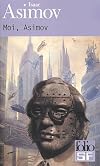
Gallimard, Folio SF (159)
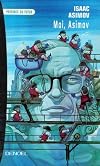
Présence du futur (630)
Common Knowledge
- Original publication date
- 1994
- People/Characters
- Isaac Asimov; Janet Jeppson Asimov; Gertrude Asimov; John W. Campbell; Robyn Asimov
- Dedication
- My dear wife, Janet, my partner in life and thought.
- First words
- In 1977, I wrote my autobiography.
- Last words
- (Click to show. Warning: May contain spoilers.)So I shall hope.
Classifications
Statistics
- Members
- 911
- Popularity
- 29,456
- Reviews
- 16
- Rating
- (4.06)
- Languages
- Czech, English, French, Spanish
- Media
- Paper, Audiobook, Ebook
- ISBNs
- 14
- ASINs
- 4