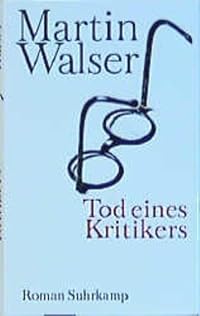
Tod eines Kritikers
by Martin Walser
On This Page
Description
The author, Hans Lach is accused of murdering a literary critic who previously gave a scathing review of Lach's new novelTags
Recommendations






























Member Reviews
One of the most frequently-heard pieces of advice to new writers is that you shouldn't let yourself get drawn into replying to criticisms of your work. This probably applies a fortiori when you've been in the business for the best part of half a century and the critic who's provoked your anger is the most famous arbiter of literary taste in the country. And even more so when your reply takes the form of a savage novel-length personal attack. But Walser was obviously in a William Tell mood in 2002, and must have seen himself as the only person in a position to bring the tyrant down...
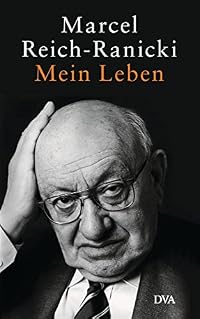
The target of his wrath was Marcel Reich-Ranicki (1920-2013), the most feared and celebrated German literary critic of modern times, well-known to the show more public as the host of the long-running TV show Literarisches Quartett, on which many distinguished authors saw their work mercilessly torn to shreds. By the time Tod eines Kritikers appeared, Reich-Ranicki and Walser had been skirmishing in public for longer than most viewers of the show had been alive. And it sounded as though they could happily go on doing so for as long as they both survived, like an old married couple.
Something obviously pushed Walser over the edge, though, and he produced this satirical roman-à-clef in which novelist Hans Lach finds himself accused of the murder of the tyrannical TV pundit André Ehrl-König (an obvious allusion to the sinister child-stealing figure in Goethe's poem). Lach's latest novel has just been scathingly dismissed on Ehrl-König's show - in an attack that has Reich-Ranicki's footprints all over it - and he has been heard threatening Ehrl-König at the after-show party. But Lach's neighbour, the historian Michael Landolf, doesn't believe he's capable of violent murder, and sets out to prove his innocence, in a quest that requires him to interview half of literary Munich.
There are a few good jokes, and some satisfyingly postmodern plot twists, and the central point about the relationship between the writer, the expert and the ordinary reader is worth making, but probably not at such length or with so much anger. As Walser lets Landolf discover, the reason Ehrl-König/Reich-Ranicki is so easy to parody is that he is a performer who has learnt to exaggerate his own character traits for the purposes of television. And, as we all know from current politics, people who use that strategy only get stronger when you try to make fun of them.
Walser has got into trouble about supposed antisemitism in his books on several occasions before, and that happened with this book as well. He obviously knew it would: in the book itself, he has journalists absurdly argue that Lach's crime is exacerbated by the fact that he has killed a Jewish critic, even though he didn't actually know that Ehrl-König was of Jewish descent. In real life, critics pointed to the echo of Hitler in Lach's threat "Ab heute nacht Null Uhr wird zurückgeschlagen" and to elements of negative Jewish stereotypes in the portrayal of Ehrl-König. It's probably impossible to say whether Walser is indulging his (supposed) prejudices or simply trolling the press here, particularly when you reflect on how Reich-Ranicki exploited the same kind of Jewish stereotypes to his advantage in his own TV persona. Probably best to leave this one to the German press to argue about. However, what is clear is that there's a lot too much lecherous-old-male fantasising about sex in the book, and that rapidly gets tedious. Female characters are either permanently offstage (like Lach's wife) or they are there to be the object of one or other male character's lust. Yawn! show less
The target of his wrath was Marcel Reich-Ranicki (1920-2013), the most feared and celebrated German literary critic of modern times, well-known to the show more public as the host of the long-running TV show Literarisches Quartett, on which many distinguished authors saw their work mercilessly torn to shreds. By the time Tod eines Kritikers appeared, Reich-Ranicki and Walser had been skirmishing in public for longer than most viewers of the show had been alive. And it sounded as though they could happily go on doing so for as long as they both survived, like an old married couple.
Something obviously pushed Walser over the edge, though, and he produced this satirical roman-à-clef in which novelist Hans Lach finds himself accused of the murder of the tyrannical TV pundit André Ehrl-König (an obvious allusion to the sinister child-stealing figure in Goethe's poem). Lach's latest novel has just been scathingly dismissed on Ehrl-König's show - in an attack that has Reich-Ranicki's footprints all over it - and he has been heard threatening Ehrl-König at the after-show party. But Lach's neighbour, the historian Michael Landolf, doesn't believe he's capable of violent murder, and sets out to prove his innocence, in a quest that requires him to interview half of literary Munich.
There are a few good jokes, and some satisfyingly postmodern plot twists, and the central point about the relationship between the writer, the expert and the ordinary reader is worth making, but probably not at such length or with so much anger. As Walser lets Landolf discover, the reason Ehrl-König/Reich-Ranicki is so easy to parody is that he is a performer who has learnt to exaggerate his own character traits for the purposes of television. And, as we all know from current politics, people who use that strategy only get stronger when you try to make fun of them.
Walser has got into trouble about supposed antisemitism in his books on several occasions before, and that happened with this book as well. He obviously knew it would: in the book itself, he has journalists absurdly argue that Lach's crime is exacerbated by the fact that he has killed a Jewish critic, even though he didn't actually know that Ehrl-König was of Jewish descent. In real life, critics pointed to the echo of Hitler in Lach's threat "Ab heute nacht Null Uhr wird zurückgeschlagen" and to elements of negative Jewish stereotypes in the portrayal of Ehrl-König. It's probably impossible to say whether Walser is indulging his (supposed) prejudices or simply trolling the press here, particularly when you reflect on how Reich-Ranicki exploited the same kind of Jewish stereotypes to his advantage in his own TV persona. Probably best to leave this one to the German press to argue about. However, what is clear is that there's a lot too much lecherous-old-male fantasising about sex in the book, and that rapidly gets tedious. Female characters are either permanently offstage (like Lach's wife) or they are there to be the object of one or other male character's lust. Yawn! show less
First of all, I am not a fan of Martin Walser. I think his work is overrated, possibly because he is the only major novelist from southwest Germany (if you are the only one, the you must be the best...). My feeling also is that his claim on fame, rests especially with controversial novels, which sparked a great debate, which detracted from more objective merits of his novels, especially with regard to, for example, Ein springender Brunnen, which is still on my tbr pile. This summer I read another novel which sparked a controversion, namely Tod eines Kritikers (English: "Death of a Critic".)
Apparently, Walser walked around with the idea of writing a novel like this for nearly two decades. His personal, pent-up anger is aimed at the one, show more most powerful literary critic in Germany, Marcel Reich-Ranicki. It helps quite a bit if you know who that is, or have seen him on TV, as he appears quite a bit of a toad, who, through his wielding power as the main, most influential critic, cultivates quite a personality cult.
I would say the novel is not much more than a clash between two equally vain and narcissistic personalities, neither of whom can admit to defeat or being wrong.
I would not describe Walser's novel as all that successful. It starts with a reception at which an author, Hans Lach, is seen having an argument with the famous critic, who then goes missing. A blood stained garment, leads to the suspicion that the critic has killed or murdered the critic, and readers are led to believe this story line for three quarters of the book, until, in the end the critic re-appears, alive and well. A weird structure. Apart from the uninteresting story, the book was very readable.
It is said that the supposed critic, presumably Reich-Ranicki, took very badly to the novel, and considered it a thinly veiled death threat. show less
Apparently, Walser walked around with the idea of writing a novel like this for nearly two decades. His personal, pent-up anger is aimed at the one, show more most powerful literary critic in Germany, Marcel Reich-Ranicki. It helps quite a bit if you know who that is, or have seen him on TV, as he appears quite a bit of a toad, who, through his wielding power as the main, most influential critic, cultivates quite a personality cult.
I would say the novel is not much more than a clash between two equally vain and narcissistic personalities, neither of whom can admit to defeat or being wrong.
I would not describe Walser's novel as all that successful. It starts with a reception at which an author, Hans Lach, is seen having an argument with the famous critic, who then goes missing. A blood stained garment, leads to the suspicion that the critic has killed or murdered the critic, and readers are led to believe this story line for three quarters of the book, until, in the end the critic re-appears, alive and well. A weird structure. Apart from the uninteresting story, the book was very readable.
It is said that the supposed critic, presumably Reich-Ranicki, took very badly to the novel, and considered it a thinly veiled death threat. show less
Beim Erscheinen wurde Walsers Buch heftig kritisiert, schon vor dem Erscheinen in der FAZ von Frank Schirrmacher als antisemitisch gebrandmarkt.
Die Kritik richtete sich daran, dass allzu deutlich Marcel Reich Ranicki als der porträtierte Kritiker erkennbar war, dass MRR Jude und Holocaust-Opfer war, dass Walser schon nach seiner zu recht sehr umstrittenen Paulskirchen-Rede leicht ein Antisemitismus-Vorwurf gemacht werden konnte- und natürlich gibt es Stellen im Buch, die sich dergestalt deuten lassen.
Meine eigene Meinung: Es ist klar und deutlich, dass es sich bei diesem Kritiker um MRR handelt. Vieles ist einfach viel zu treffend. Und wenn man das Buch dann so liest, dann ist vieles sehr klug und scharf beobachtet und manches sehr show more witzig. Insgesamt frage ich mich aber, wieso ein Autor vom Rang Martin Walsers seinen Witz, seine Intelligenz und sein Können dafür hergibt, eine derartig personifizierte Satire auf den Literaturbetrieb zu schreiben. Das Buch ist zumindet in den ersten drei Vierteln gut geschrieben - wäre nur das Thema ähnlich interessant und wichtig! Natürlich kannte damals jeder MRR, jeder das literarische Quartett, die Meinungsmacht, aber gerade deshalb hätte ich mir von Walser ein anderes Buch, ein weniger persönliches, zeitgebundenes gewünscht. So ist das Buch Satire, aber keine Literatur, wie ich denke. Eigentlich ist es doch billig, einen, wie Walser selbst schreibt, so leicht zu karikierenden Kritiker anzugreifen.
Das Buch ist grösstenteils kurzweilig und man kann es lesen, muss es aber nicht unbedingt. show less
Die Kritik richtete sich daran, dass allzu deutlich Marcel Reich Ranicki als der porträtierte Kritiker erkennbar war, dass MRR Jude und Holocaust-Opfer war, dass Walser schon nach seiner zu recht sehr umstrittenen Paulskirchen-Rede leicht ein Antisemitismus-Vorwurf gemacht werden konnte- und natürlich gibt es Stellen im Buch, die sich dergestalt deuten lassen.
Meine eigene Meinung: Es ist klar und deutlich, dass es sich bei diesem Kritiker um MRR handelt. Vieles ist einfach viel zu treffend. Und wenn man das Buch dann so liest, dann ist vieles sehr klug und scharf beobachtet und manches sehr show more witzig. Insgesamt frage ich mich aber, wieso ein Autor vom Rang Martin Walsers seinen Witz, seine Intelligenz und sein Können dafür hergibt, eine derartig personifizierte Satire auf den Literaturbetrieb zu schreiben. Das Buch ist zumindet in den ersten drei Vierteln gut geschrieben - wäre nur das Thema ähnlich interessant und wichtig! Natürlich kannte damals jeder MRR, jeder das literarische Quartett, die Meinungsmacht, aber gerade deshalb hätte ich mir von Walser ein anderes Buch, ein weniger persönliches, zeitgebundenes gewünscht. So ist das Buch Satire, aber keine Literatur, wie ich denke. Eigentlich ist es doch billig, einen, wie Walser selbst schreibt, so leicht zu karikierenden Kritiker anzugreifen.
Das Buch ist grösstenteils kurzweilig und man kann es lesen, muss es aber nicht unbedingt. show less
Sep 2, 2015 (Edited)German
Van sommige boeken gaat de portée van het verhaal totaal aan mij voorbij. Dit was daar één van. Op p. 215 heb ik er eindelijk de brui aan gegeven. Een op zich interessant verhaal, waar je overigens mijlen tevoren ziet aankomen dat de vermoorde niet dood is, maar met veel te veel totaal onbegrijpelijke passages.
Dec 5, 2023Dutch
Aus der Amazon.de-Redaktion
1993 erschien unter Literaturchef Frank Schirrmacher als Vorabdruck in der FAZ ein Roman, der im Münchner Literaturmilieu angesiedelt war. Dort trat ein unerbitterlicher Rezensent in Erscheinung, der den klingenden Namen Willi André König alias "Erlkönig" trug: denn die bloße Angst vor seinem Urteil reichte, um Bücher noch in den Armen ihrer Verfasser verdorren zu lassen. Ohne einander hieß der Roman, sein Autor Martin Walser. Reich-Ranicki, der schon manch hoffnungsfrohem Dichter durch vernichtende Urteile den feuilletonistischen Todesstoß versetzte, verriss das Buch: er hatte sich im Erlkönig wohl ein wenig wiedererkannt.
Jetzt hat Walser einen Roman geschrieben, der eine Variante seiner Königsfigur show more ins Zentrum der (man muss es immer wieder sagen: fiktiven) Handlung stellt. Und diesmal lehnte Schirrmacher den Vorabdruck unter dem Vorwurf "antisemitischer Klischees" kategorisch ab. Dünnhäutig sprach Reich-Ranicki gar von realen Mordfantasien Walsers gegen seine Person. In einer beispiellosen Literaturbeilagen-Kampagne schlug der (unterstellte) Rufmord an einem konkreten Kritiker in tatsächlichen Rufmord an Martin Walser um. Lesen Sie hierzu unseren Artikel zur "Walser-Debatte".
Dabei wird in Tod eines Kritikers niemand ermordet, auch Literaturpapst André Ehrl-König nicht. Der Fernsehstar der Bücher-Talkshow "Sprechstunde" hatte es gewagt, ein Buch des Schriftstellers Hans Lach publikumswirksam zu verreißen. Bei einer Party im Hause von Lachs Verleger treffen beide handgreiflich aufeinander. Als am nächsten Morgen Ehrl-Königs gelber Kaschmirpullover blutüberströmt, aber ohne menschlichen Inhalt, im Neuschnee liegt, gerät Lach unter Mordverdacht. Vorverurteilungen, auch seitens der Kriminalpolizei, sind die Folge. Nur der Münchner Historiker Michael Landolf will Lachs Unschuld beweisen. Bis plötzlich Ehrl-König unversehrt wieder auftaucht und sich alles entpuppt als groteske Liebesfarce -- und der vermeintliche Krimi als Possenspiel über die komischen Mechanismen öffentlicher Meinungsbildung.
Seit über 25 Jahren findet sich in Walsers Notizbüchern das Kürzel "T. e. Kr.", "Tod eines Kritikers", wieder. Beleg dafür, dass das eng mit seiner Beziehung zu Reich-Ranicki verknüpfte Thema den Autor schon seit langem quälte. Mit diesem Roman ("Für die, die meine Kollegen sind") hat er sich seine Wut über den absurden Literaturbetrieb von der Seele geschrieben, um selbst Opfer einer publizistischen Farce zu werden. Vielleicht hat sich Walser nur mit verbalen Mitteln gegen verbale Attacken zur Wehr gesetzt. Ob das letztlich ausreicht für ein gutes Buch, muss jeder für sich selbst entscheiden. --Thomas Köster show less
1993 erschien unter Literaturchef Frank Schirrmacher als Vorabdruck in der FAZ ein Roman, der im Münchner Literaturmilieu angesiedelt war. Dort trat ein unerbitterlicher Rezensent in Erscheinung, der den klingenden Namen Willi André König alias "Erlkönig" trug: denn die bloße Angst vor seinem Urteil reichte, um Bücher noch in den Armen ihrer Verfasser verdorren zu lassen. Ohne einander hieß der Roman, sein Autor Martin Walser. Reich-Ranicki, der schon manch hoffnungsfrohem Dichter durch vernichtende Urteile den feuilletonistischen Todesstoß versetzte, verriss das Buch: er hatte sich im Erlkönig wohl ein wenig wiedererkannt.
Jetzt hat Walser einen Roman geschrieben, der eine Variante seiner Königsfigur show more ins Zentrum der (man muss es immer wieder sagen: fiktiven) Handlung stellt. Und diesmal lehnte Schirrmacher den Vorabdruck unter dem Vorwurf "antisemitischer Klischees" kategorisch ab. Dünnhäutig sprach Reich-Ranicki gar von realen Mordfantasien Walsers gegen seine Person. In einer beispiellosen Literaturbeilagen-Kampagne schlug der (unterstellte) Rufmord an einem konkreten Kritiker in tatsächlichen Rufmord an Martin Walser um. Lesen Sie hierzu unseren Artikel zur "Walser-Debatte".
Dabei wird in Tod eines Kritikers niemand ermordet, auch Literaturpapst André Ehrl-König nicht. Der Fernsehstar der Bücher-Talkshow "Sprechstunde" hatte es gewagt, ein Buch des Schriftstellers Hans Lach publikumswirksam zu verreißen. Bei einer Party im Hause von Lachs Verleger treffen beide handgreiflich aufeinander. Als am nächsten Morgen Ehrl-Königs gelber Kaschmirpullover blutüberströmt, aber ohne menschlichen Inhalt, im Neuschnee liegt, gerät Lach unter Mordverdacht. Vorverurteilungen, auch seitens der Kriminalpolizei, sind die Folge. Nur der Münchner Historiker Michael Landolf will Lachs Unschuld beweisen. Bis plötzlich Ehrl-König unversehrt wieder auftaucht und sich alles entpuppt als groteske Liebesfarce -- und der vermeintliche Krimi als Possenspiel über die komischen Mechanismen öffentlicher Meinungsbildung.
Seit über 25 Jahren findet sich in Walsers Notizbüchern das Kürzel "T. e. Kr.", "Tod eines Kritikers", wieder. Beleg dafür, dass das eng mit seiner Beziehung zu Reich-Ranicki verknüpfte Thema den Autor schon seit langem quälte. Mit diesem Roman ("Für die, die meine Kollegen sind") hat er sich seine Wut über den absurden Literaturbetrieb von der Seele geschrieben, um selbst Opfer einer publizistischen Farce zu werden. Vielleicht hat sich Walser nur mit verbalen Mitteln gegen verbale Attacken zur Wehr gesetzt. Ob das letztlich ausreicht für ein gutes Buch, muss jeder für sich selbst entscheiden. --Thomas Köster show less
Jan 25, 2011German
Ratings
Members
- Recently Added By
Author Information

155+ Works 2,440 Members
Martin Johann Walser was born in Wasserburg-Bodensee, Germany on March 24, 1927. He attended Regensburg University. His works, including short stories, novels, essays, plays, and poetry, often depict a Germany both guilty over the past and optimistic about the future. He has won a number of awards, include the Hermann Hesse Prize, the Schiller show more Prize, the Buechner Prize, and the Peace Prize of the German Book Trade. (Bowker Author Biography) show less
Some Editions
Series
Belongs to Publisher Series
List Taschenbuch (60326)
rororo (25226)
Common Knowledge
- Canonical title*
- Dood van een criticus
- Original title
- Tod eines Kritikers : Roman
- Original publication date
- 2002 (Duits) (Duits); 2003 (Nederlands) (Nederlands)
- Important places
- Munich, Bavaria, Germany; Fuerteventura, Canary Islands, Spain
- Original language*
- Duits
*Some information comes from Common Knowledge in other languages. Click "Edit" for more information.
Classifications
Statistics
- Members
- 179
- Popularity
- 182,061
- Reviews
- 6
- Rating
- (2.89)
- Languages
- Dutch, English, German, Turkish
- Media
- Paper, Audiobook
- ISBNs
- 7
- ASINs
- 1