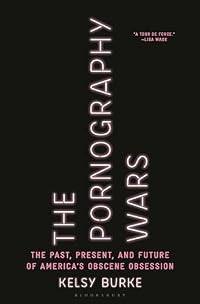
The Pornography Wars: The Past, Present, and Future of America's Obscene Obsession
by Kelsy Burke
On This Page
Description
"For readers of Peggy Orenstein and Rebecca Traister, an authoritative, big think look at pornography in all its facets--historical, religious, and cultural. In the 1960s, sex researchers Masters and Johnson declared the end of the fake orgasm. Nearly two decades later, in 1982, evangelical activist Tim LaHaye foretold that the entire pornography industry would soon be driven out of business. Neither prediction proved true. Instead, with the rise of the internet, pornography saturates the show more American conscience more than ever and has reshaped our understanding of sexuality, relationships, media, and even the nature of addiction. Dr. Kelsy Burke has spent the last five years researching and interviewing internet pornography's opponents and its sympathizers. In The Pornography Wars, Burke does a deep dive into the long history of pornography in America and then turns her gaze on our present society to examine the ways this industry touches on the most intimate parts of American lives. She offers a complete understanding of the major players in the debates around porn's place in society: everyone from sex workers, activists, therapists, religious leaders, and consumers. In doing so, she addresses and debunks the myths that surround porn and porn usage while showing how everything from the way we teach children about sex to the legal protections for what can be published is tied up in the deeply complicated battles over pornography. Sweeping, savvy, and deeply researched, The Pornography Wars is a necessary and comprehensive new look at pornography and American life"--Dust jacket flap. show lessTags
Recommendations


















Member Reviews
This book read more like a collection of academic manuscripts or a textbook instead of a novel (which this is not) or a collection of op-eds. Having said that, Dr. Burke should have included more citations within each chapter (maybe APA style) because the facts interwoven in sections needed them. I will say that the book did what I expected it to do, which is to continuously pressure me to think about the ethics of the pornography industry. I had watched The Deuce before reading this, too. I believe that a person can be addicted to sex and love (in the form of codependency) to the point where they spend all of their money on sex workers, blame computer viruses on an intern (I'm referring to the McQueen film Shame where Michael show more Fassbender ignores the problem), and become incapable of making human connections.
I also believe that sex work is work, which Burke describes clearly, and employees are worthy of employment protections such as fair wages, OSHA, insurance, and the right to unionize (depending on the state). What difference does it make whether a person makes sexual films for a living as opposed to action films? I do believe that human trafficking is real and that underage victims deserve representation if charging an agent or employer with robbery, harassment, or intimate partner violence. Provided that every person involved has consented, I embrace their work.
What we must understand is that porn acting is acting. What we see on the screen is a performance (unless someone is doing amateur or camming work). Expectations that all sex is like porn sex will lead to shock, disappointment, or fear. Not every person enjoys choking, gagging noises, or shrieks, and for those who do, that is fine.
I still waver about the choice to purchase ethical or feminist porn. I shop at Amazon frequently because of the convenience. MindGeek or PornHub fit these capitalist molds. I do not engage in frequent porn consumption, but perhaps I should invest or subscribe to feminist or ethical sites to support the people who work there. The sites could exist as more than only niche. However, I did look into some of the sites Burke visited along with other ethical- and feminist-advertised sites, and to my disappointment, they did not appear as inclusive as Andre Shakti's work, whom I wish to support. The sites Burke mentioned as feminist or ethical portrayed (mostly) white, cis, thin, and young women as the standards of desire. Yet people of all walks of life engage in sexual activity, and everyone deserves pleasure or to see themselves worthy of pleasure, provided that is what they are seeking. Then again, I have a conflicted point of view about DEIA in porn because as a woman of East Asian descent, I know that straight cis men have seen me as a sexual object only. I am not sure whether I would want an ethical or feminist site to perpetuate the fetisization of Asian-descent women if straight cis male consumption is necessary for profit.
Lastly, predators and people need to stop equating sexual crimes with addiction. A person who harasses, assaults, and rapes is not an addict. The person has the desire for power and hurting others. And the person knows it's wrong but views a victim as less than, so that's the reason to engage in violence. show less
I also believe that sex work is work, which Burke describes clearly, and employees are worthy of employment protections such as fair wages, OSHA, insurance, and the right to unionize (depending on the state). What difference does it make whether a person makes sexual films for a living as opposed to action films? I do believe that human trafficking is real and that underage victims deserve representation if charging an agent or employer with robbery, harassment, or intimate partner violence. Provided that every person involved has consented, I embrace their work.
What we must understand is that porn acting is acting. What we see on the screen is a performance (unless someone is doing amateur or camming work). Expectations that all sex is like porn sex will lead to shock, disappointment, or fear. Not every person enjoys choking, gagging noises, or shrieks, and for those who do, that is fine.
I still waver about the choice to purchase ethical or feminist porn. I shop at Amazon frequently because of the convenience. MindGeek or PornHub fit these capitalist molds. I do not engage in frequent porn consumption, but perhaps I should invest or subscribe to feminist or ethical sites to support the people who work there. The sites could exist as more than only niche. However, I did look into some of the sites Burke visited along with other ethical- and feminist-advertised sites, and to my disappointment, they did not appear as inclusive as Andre Shakti's work, whom I wish to support. The sites Burke mentioned as feminist or ethical portrayed (mostly) white, cis, thin, and young women as the standards of desire. Yet people of all walks of life engage in sexual activity, and everyone deserves pleasure or to see themselves worthy of pleasure, provided that is what they are seeking. Then again, I have a conflicted point of view about DEIA in porn because as a woman of East Asian descent, I know that straight cis men have seen me as a sexual object only. I am not sure whether I would want an ethical or feminist site to perpetuate the fetisization of Asian-descent women if straight cis male consumption is necessary for profit.
Lastly, predators and people need to stop equating sexual crimes with addiction. A person who harasses, assaults, and rapes is not an addict. The person has the desire for power and hurting others. And the person knows it's wrong but views a victim as less than, so that's the reason to engage in violence. show less
The Pornography Wars by Kelsey Burke is an excellent overview of how we got to where we are as well as showing the nuance in what many perceive to be monolithic and absolutely opposite views.
I was pleasantly surprised at both how engaging and how informative the historical background was presented. Many of us have read or heard about parts of the history but this makes it into a coherent narrative. Burke also made it very readable, which is more unusual than it sounds when the historical background is not the main purpose of a book.
The presentation of various viewpoints and arguments were far more fair and balanced than I expected. If you have any strong opinions at all you will likely find yourself thinking she is being slanted in the show more direction of the viewpoints you oppose. Take a deep breath and keep going, Burke is trying to give us the perspectives of the people on every side of these debates. By doing so we are ultimately shown that there is a lot more common ground than we probably thought, and probably more than we are initially comfortable acknowledging. When you want to argue with Burke, take a moment and look more closely at your biases and again at what is written. Maybe, as I often did, you will have to accept that it is less us vs them and more some of us vs some others of us. And in our polarized environment, that is a difficult concession to make.
One particular strength of the book, for me, was the broad approach to the debates around pornography. This is not about whether this or that video should be illegal. It is about how we live our lives, who can or cannot tell us how to live our lives, and what terms every side will use to dress up their argument in the most ethical and moral way while making others sound evil by comparison. So we look at the differences between obscenity and pornography, between trafficking in a strict sense and in the sense that incorporates every aspect of an industry. These various distinctions can gain supporters in some places while turning others off because they are so hyperbolic.
I would recommend this to anyone who wants to know and understand the "pornography wars" better, no matter where you might stand on any of the issues involved. I would especially recommend this to those who think of it as a black or white issue with no gray areas. We ca all benefit from more nuance and more understanding of what is at the core of the various positions.
Reviewed from a copy made available by the publisher via NetGalley. show less
I was pleasantly surprised at both how engaging and how informative the historical background was presented. Many of us have read or heard about parts of the history but this makes it into a coherent narrative. Burke also made it very readable, which is more unusual than it sounds when the historical background is not the main purpose of a book.
The presentation of various viewpoints and arguments were far more fair and balanced than I expected. If you have any strong opinions at all you will likely find yourself thinking she is being slanted in the show more direction of the viewpoints you oppose. Take a deep breath and keep going, Burke is trying to give us the perspectives of the people on every side of these debates. By doing so we are ultimately shown that there is a lot more common ground than we probably thought, and probably more than we are initially comfortable acknowledging. When you want to argue with Burke, take a moment and look more closely at your biases and again at what is written. Maybe, as I often did, you will have to accept that it is less us vs them and more some of us vs some others of us. And in our polarized environment, that is a difficult concession to make.
One particular strength of the book, for me, was the broad approach to the debates around pornography. This is not about whether this or that video should be illegal. It is about how we live our lives, who can or cannot tell us how to live our lives, and what terms every side will use to dress up their argument in the most ethical and moral way while making others sound evil by comparison. So we look at the differences between obscenity and pornography, between trafficking in a strict sense and in the sense that incorporates every aspect of an industry. These various distinctions can gain supporters in some places while turning others off because they are so hyperbolic.
I would recommend this to anyone who wants to know and understand the "pornography wars" better, no matter where you might stand on any of the issues involved. I would especially recommend this to those who think of it as a black or white issue with no gray areas. We ca all benefit from more nuance and more understanding of what is at the core of the various positions.
Reviewed from a copy made available by the publisher via NetGalley. show less
A very accessible, informative, balanced and nuanced look at pornography. The author traces it's history over the last hundred years or so. She then examines issues around making porn, and around watching it. She interviewed people on both sides of the debate about porn, including current and former sex workers. In reading this book, it became apparent that the two sides in the debate have more in common than is immediately evident. It explains how feminists seem to find themselves aligned with the Christian Right on the issue. It looks at sex workers' rights, whether one can become addicted to porn, and inclusion for diverse groups. I agree with the previous reviewer that the strength of this book is that is examines porn in the larger show more context of how we want to live our lives. Rather than a total ban or complete freedom, she argues for workers' rights and education for young people. A thought-provoking read. show less
This book read more like a collection of academic manuscripts or a textbook instead of a novel (which this is not) or a collection of op-eds. Having said that, Dr. Burke should have included more citations within each chapter (maybe APA style) because the facts interwoven in sections needed them. I will say that the book did what I expected it to do, which is to continuously pressure me to think about the ethics of the pornography industry. I had watched The Deuce before reading this, too. I believe that a person can be addicted to sex and love (in the form of codependency) to the point where they spend all of their money on sex workers, blame computer viruses on an intern (I'm referring to the McQueen film Shame where Michael show more Fassbender ignores the problem), and become incapable of making human connections.
I also believe that sex work is work, which Burke describes clearly, and employees are worthy of employment protections such as fair wages, OSHA, insurance, and the right to unionize (depending on the state). What difference does it make whether a person makes sexual films for a living as opposed to action films? I do believe that human trafficking is real and that underage victims deserve representation if charging an agent or employer with robbery, harassment, or intimate partner violence. Provided that every person involved has consented, I embrace their work.
What we must understand is that porn acting is acting. What we see on the screen is a performance (unless someone is doing amateur or camming work). Expectations that all sex is like porn sex will lead to shock, disappointment, or fear. Not every person enjoys choking, gagging noises, or shrieks, and for those who do, that is fine.
I still waver about the choice to purchase ethical or feminist porn. I shop at Amazon frequently because of the convenience. MindGeek or PornHub fit these capitalist molds. I do not engage in frequent porn consumption, but perhaps I should invest or subscribe to feminist or ethical sites to support the people who work there. The sites could exist as more than only niche. However, I did look into some of the sites Burke visited along with other ethical- and feminist-advertised sites, and to my disappointment, they did not appear as inclusive as Andre Shakti's work, whom I wish to support. The sites Burke mentioned as feminist or ethical portrayed (mostly) white, cis, thin, and young women as the standards of desire. Yet people of all walks of life engage in sexual activity, and everyone deserves pleasure or to see themselves worthy of pleasure, provided that is what they are seeking. Then again, I have a conflicted point of view about DEIA in porn because as a woman of East Asian descent, I know that straight cis men have seen me as a sexual object only. I am not sure whether I would want an ethical or feminist site to perpetuate the fetisization of Asian-descent women if straight cis male consumption is necessary for profit.
Lastly, predators and people need to stop equating sexual crimes with addiction. A person who harasses, assaults, and rapes is not an addict. The person has the desire for power and hurting others. And the person knows it's wrong but views a victim as less than, so that's the reason to engage in violence. show less
I also believe that sex work is work, which Burke describes clearly, and employees are worthy of employment protections such as fair wages, OSHA, insurance, and the right to unionize (depending on the state). What difference does it make whether a person makes sexual films for a living as opposed to action films? I do believe that human trafficking is real and that underage victims deserve representation if charging an agent or employer with robbery, harassment, or intimate partner violence. Provided that every person involved has consented, I embrace their work.
What we must understand is that porn acting is acting. What we see on the screen is a performance (unless someone is doing amateur or camming work). Expectations that all sex is like porn sex will lead to shock, disappointment, or fear. Not every person enjoys choking, gagging noises, or shrieks, and for those who do, that is fine.
I still waver about the choice to purchase ethical or feminist porn. I shop at Amazon frequently because of the convenience. MindGeek or PornHub fit these capitalist molds. I do not engage in frequent porn consumption, but perhaps I should invest or subscribe to feminist or ethical sites to support the people who work there. The sites could exist as more than only niche. However, I did look into some of the sites Burke visited along with other ethical- and feminist-advertised sites, and to my disappointment, they did not appear as inclusive as Andre Shakti's work, whom I wish to support. The sites Burke mentioned as feminist or ethical portrayed (mostly) white, cis, thin, and young women as the standards of desire. Yet people of all walks of life engage in sexual activity, and everyone deserves pleasure or to see themselves worthy of pleasure, provided that is what they are seeking. Then again, I have a conflicted point of view about DEIA in porn because as a woman of East Asian descent, I know that straight cis men have seen me as a sexual object only. I am not sure whether I would want an ethical or feminist site to perpetuate the fetisization of Asian-descent women if straight cis male consumption is necessary for profit.
Lastly, predators and people need to stop equating sexual crimes with addiction. A person who harasses, assaults, and rapes is not an addict. The person has the desire for power and hurting others. And the person knows it's wrong but views a victim as less than, so that's the reason to engage in violence. show less
Ratings
Members
- Recently Added By
Lists

Science: Social
9 works; 1 member
Author Information
2 Works 66 Members
Kelsy Burke is Assistant Professor of Sociology at St. Norbert College.
Common Knowledge
- Canonical title
- The Pornography Wars: The Past, Present, and Future of America's Obscene Obsession
- Dedication
- For Jacob, Sylvie, and Esme
- First words
- When I was fifteen, I became a born-again Christian.
- Last words
- (Click to show. Warning: May contain spoilers.)But the ability to experience our lives, sexual and otherwise, with as much intention, freedom, and integrity available to us is where the good place resides.
Classifications
- Genres
- Nonfiction, General Nonfiction, History, Sexuality and Gender Studies
- DDC/MDS
- 306.77 — Society, Government, and Culture Social sciences, sociology & anthropology Social Behavior - Dating, Marriage, Divorce Sexual relations Sexual and related practices
- LCC
- HQ472 .U6 .B87 — Social sciences The family. Marriage, Women and Sexuality The Family. Marriage. Women Erotica
- BISAC
Statistics
- Members
- 52
- Popularity
- 572,271
- Reviews
- 4
- Rating
- (4.10)
- Languages
- English
- Media
- Paper, Audiobook, Ebook
- ISBNs
- 2
- ASINs
- 2