The Jewish Messiah
by Arnon Grunberg
On This Page
Description
The new novel by the internationally acclaimed author- "a farce of nuclear proportions"(Vanity Fair) Arnon Grunberg is one of the most subtly outrageous provocateurs in world literature. The Jewish Messiah, which chronicles the evolution of one Xavier Radek from malcontent grandson of a former SS officer, to Jewish convert, to co- translator of Hitler's Mein Kampf into Yiddish, to Israeli politician and Israel's most unlikely prime minister, is his most outrageous work yet. Taking on the show more most well-guarded pieties and taboos of our age, The Jewish Messiah is both a great love story and a grotesque farce that forces a profound reckoning with the limits of human guilt, cruelty, and suffering. It is without question Arnon Grunberg's masterpiece. show lessTags
Recommendations







Member Reviews
Kellemetlen olvasmány. De milyen is lehetne egy könyv, amiben fejezeteken keresztül vagyunk kénytelenek elmerülni egy balul elsült körülmetélés ocsmány és fájdalmas következményeiben? Ehhez képest Zolát legjobb formájában is olyan olvasni, mint Vivaldit hallgatni és bonbont eszegetni közben, mert ez már nem is naturalizmus, ez hipernaturalizmus. Itt eufemizmus azzal jönni, hogy az író kimozgat minket a komfortzónánkból - helyesebb úgy megfogalmazni, hogy amennyiben a komfortzónánk egy kádnyi forró habfürdő, amiben relaxálni szoktunk, akkor Grunberg ezt a habfürdőt rothadó döglött halakkal és hatnapos napon érlelt csirkebelsőséggel pakolja tele.
Nyilván a történet is, ahogy mondani szokás: show more provokatív. Xavier, egy buzgó és hithű SS unokája elhatározza, hogy meg fogja vigasztalni a zsidókat, vagy ha úgy tetszik, ő lesz a Messiásuk. (Vagy ha nem tetszik úgy, akkor is.) De hogy lehet megvigasztalni egy népet, kérdezzük mi a földhözragadt elménkkel? Hm, hát ezt nehéz megmagyarázni. Mindenesetre a Mein Kampf jiddisre fordítása része kell legyen a tervnek, legalábbis Xavier szerint, aki (mint a fanatikusok általában) mesterien hidalja át a logikán tátongó szakadékokat pusztán az akarat erejével. Tekinthetjük ezt egyfajta tanmesének is a megszállottságról, amely a saját képére formálja a valóságot, és ami képes bármilyen pozitív célból embertelen őrületet előállítani.
Technikailag ez egy szatíra alapanyaga, és valóban, a szereplők karikatúraszerűsége, a groteszk helyzetek mind-mind arra utalnak, hogy Grunbergtől nem áll távol a műfaj. De ha szatíra is, végtelenül kellemetlen. Ennek elsődleges oka, azt hiszem, Grunberg stílusa, ez az érzelemmentes, távolságtartó nyelv. Úgy ábrázolja az erőszakot, úgy mondatja el szereplőivel a legszörnyűbb ideákat is, hogy azokat megfosztja minden erkölcsi vonatkozásuktól, mintha a tetteknek, gondolatoknak nem lenne morális értelemben következménye. Mintha nem is emberekről, hanem mondjuk hangyákról lenne szó. Ezzel tudatosan veszi el az olvasótól az azonosulás lehetőségét, mert egy hangyákról szóló könyvben szeretni a szereplőket csak akkor lehet, ha magunkat sem embernek, hanem hangyának tekintjük. Ami viszont valami kényelmetlen, viszkető érzéssel jár. Mintha hideg, idegen térben kóvályognánk, a kabátunk meg otthon maradt. show less
Nyilván a történet is, ahogy mondani szokás: show more provokatív. Xavier, egy buzgó és hithű SS unokája elhatározza, hogy meg fogja vigasztalni a zsidókat, vagy ha úgy tetszik, ő lesz a Messiásuk. (Vagy ha nem tetszik úgy, akkor is.) De hogy lehet megvigasztalni egy népet, kérdezzük mi a földhözragadt elménkkel? Hm, hát ezt nehéz megmagyarázni. Mindenesetre a Mein Kampf jiddisre fordítása része kell legyen a tervnek, legalábbis Xavier szerint, aki (mint a fanatikusok általában) mesterien hidalja át a logikán tátongó szakadékokat pusztán az akarat erejével. Tekinthetjük ezt egyfajta tanmesének is a megszállottságról, amely a saját képére formálja a valóságot, és ami képes bármilyen pozitív célból embertelen őrületet előállítani.
Technikailag ez egy szatíra alapanyaga, és valóban, a szereplők karikatúraszerűsége, a groteszk helyzetek mind-mind arra utalnak, hogy Grunbergtől nem áll távol a műfaj. De ha szatíra is, végtelenül kellemetlen. Ennek elsődleges oka, azt hiszem, Grunberg stílusa, ez az érzelemmentes, távolságtartó nyelv. Úgy ábrázolja az erőszakot, úgy mondatja el szereplőivel a legszörnyűbb ideákat is, hogy azokat megfosztja minden erkölcsi vonatkozásuktól, mintha a tetteknek, gondolatoknak nem lenne morális értelemben következménye. Mintha nem is emberekről, hanem mondjuk hangyákról lenne szó. Ezzel tudatosan veszi el az olvasótól az azonosulás lehetőségét, mert egy hangyákról szóló könyvben szeretni a szereplőket csak akkor lehet, ha magunkat sem embernek, hanem hangyának tekintjük. Ami viszont valami kényelmetlen, viszkető érzéssel jár. Mintha hideg, idegen térben kóvályognánk, a kabátunk meg otthon maradt. show less
Welcome to the world of Xavier Radek, teenage high schooler and grandson of a late Nazi SS officer living in Basel, Switzerland with a highly developed aesthetic sense and noble ambitions, his highest and most noble ambition, as it turns out, is taking on the role of comforter of the Jewish people. After enjoying two highly regarded Dutch novelists, Willem Frederik Hermans and Cees Nooteboom, I wanted to explore a contemporary Dutch author and came across Arnon Grunberg and his outrageous novel. I’m very glad I did since young Arnon tells Xavier Radek's provocative tale in a most accessible and easy-to-understand language at times lyrical and richly poetic.
In the first section of the novel we are introduced to main character Xavier's show more peculiar way of looking at the world, for example when he makes a public pronouncement at his school that the pursuit of beauty is his highest goal and observes how all of human suffering is but an emergency exit out of the realm of the beautiful. And then, sometime later, Xavier reflects on how beauty is a fine thing but a person needs a higher aim, and, in his case, that higher aim means aligning himself with Zionism as an ideal, an ideal, he judges, that fits him like a custom made suit. Of course, since Xavier was not raised Jewish and claims a grandfather who was a staunch member of the Nazi SS party, there is a strong irony at work here.
Rather than conveying any specifics of plot, let me simply note how this novel is laced with a good measure of not only irony but also satire and black comedy and how Arnon Grunberg introduces us to a number of characters surrounding Xavier, or, perhaps more precisely, character sketches surrounding Xavier, since a few telling details of each person is all the author needs to set the tone of his novel told with a light authorial touch as he touches on the dark subjects of violence, domination, sadism and masochism:
Awromele – Son of a Rabbi, Xavier's Jewish friend, companion and occasional lover, who tutors Xavier in Yiddish, who has dark hair and smooth, white skin and is seen by Xavier as having a drop of changeless beauty.
The Mother -- Xavier's mother, that is, who spends many hours in the kitchen and, as the story develops, acts out her masochistic and sadistic tendencies.
The Architect Father - Xavier's father, that is, a man who craves not only a high level of order in life but who also craves messages and saunas.
Marc - The mother's boyfriend who appears once the architect father leaves the scene, a man who fills his time with jazz and jet flight simulation and who also has powerful feelings for Xavier.
Dancia - Awromele's younger sister who becomes the object of bullying and abuse at school and then assumes the role of willing victim.
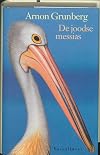
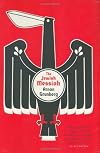
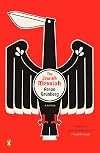
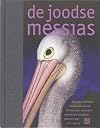
Rochele - Awromele's much younger sister who envisions the messiah as a pelican (thus the captivating cover of the book), a pelican who will fly her on its back to America.
The Egyptian - Sexy restaurant owner and falafel king, but, being an Arab, is a universal object of hatred.
Bettina - Sexually charged young lady who takes on a number of social causes along with her own cause of having lots of sex and keeping up with the current fashions.
Mr. Schwartz - Old half-blind Jewish businessman who trades in cheeses and offers his services to Xavior as a circumciser.
The Tall Boy - Leader of a schoolyard pack who quotes Kierkegaard and uses the Danish philosopher as a stand-in for the German Führer, or, as the novel's characters refer to him – ‘You-Know-Who'.
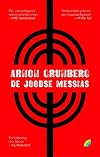
You-Know-Who - Although Hitler isn't an actual character in the novel, the Führer casts his shadow (thus the cover of the book – bold black and red with white trim). Indeed, the mentality of Nazism infects a number of characters.
The first 350 pages take place in Basel when Xavier is a 16-year old student, the next 50 pages continues with teenage Xavier in Amsterdam and the last 50 pages is a fast-forward, covering the subsequent 20 years of Xavier's life wherein his worldview of beauty and becoming the Jewish messiah plays itself out in unexpected and brutal ways. Such a meaty, thought-provoking novel, a book that would make an excellent choice for anybody wishing to ponder a number of challenging perennial and contemporary philosophical topics. Highly recommended.
Basel, Switzerland - Setting for the major portion of the novel show less
"If we start feeling anything we have to stop. As soon as we feel anything, we should never see each other again..."
In this 2008 farce of nuclear proportions, Dutch novelist Arnon Grunberg takes us on an epic adventure that is part love story, part philosophical treatise on human suffering.
The book focuses on Xavier Radek, who we first meet as a 16-year-old with a mission to eradicate the suffering of the Jews, the victims of his grandfather who was an SS officer under Hitler. Along the 400+ pages, we meet Xavier's mother who cheats on her lover with an Italian kitchen knife, her boyfriend Marc who admits he has a crush for his girlfriend's son, a Hamas leader with secret homosexual inclinations, and Xavier's personal Jew and lover, show more Awromele, who is also a major character in this love story wherein both promise never to feel anything for each other. And of course, as we find out, this is impossible. Indeed, as Grunberg argues in the novel, humans suffering is but feelings; the absurdity he explores, however, is the absurdity that there is no escape from such suffering since it through such pain that we comforted: "Our only comfort is destruction." The absurdness of Grunberg's writing--from a botched circumcision by a blind Communist to the frying of Arab resturant owner's feet as a form of mercy--shows how art can be used: as meaning to such suffering, and perhaps it is under such a thesis that writers such as Grunberg can exist.
Aside from such philosphy, while the story is long, Grunberg is a wordsmith whose sentences are like contemporary poetry mixed with influences from PG Wodehouse and the attitude of a half sane Tom Robbins (with none of the fun loss). While not all his ideas are tightly knitted together--indeed, as we come to the end, it feels like he moves too quickly to skip a few years of our character's lives--it doesn't matter because in the end you'll have fun reading it anyway. You'll laugh, you'll cry. It is the type of book that shouldn't end because you fall for the so well developed characters, but again, it must. show less
In this 2008 farce of nuclear proportions, Dutch novelist Arnon Grunberg takes us on an epic adventure that is part love story, part philosophical treatise on human suffering.
The book focuses on Xavier Radek, who we first meet as a 16-year-old with a mission to eradicate the suffering of the Jews, the victims of his grandfather who was an SS officer under Hitler. Along the 400+ pages, we meet Xavier's mother who cheats on her lover with an Italian kitchen knife, her boyfriend Marc who admits he has a crush for his girlfriend's son, a Hamas leader with secret homosexual inclinations, and Xavier's personal Jew and lover, show more Awromele, who is also a major character in this love story wherein both promise never to feel anything for each other. And of course, as we find out, this is impossible. Indeed, as Grunberg argues in the novel, humans suffering is but feelings; the absurdity he explores, however, is the absurdity that there is no escape from such suffering since it through such pain that we comforted: "Our only comfort is destruction." The absurdness of Grunberg's writing--from a botched circumcision by a blind Communist to the frying of Arab resturant owner's feet as a form of mercy--shows how art can be used: as meaning to such suffering, and perhaps it is under such a thesis that writers such as Grunberg can exist.
Aside from such philosphy, while the story is long, Grunberg is a wordsmith whose sentences are like contemporary poetry mixed with influences from PG Wodehouse and the attitude of a half sane Tom Robbins (with none of the fun loss). While not all his ideas are tightly knitted together--indeed, as we come to the end, it feels like he moves too quickly to skip a few years of our character's lives--it doesn't matter because in the end you'll have fun reading it anyway. You'll laugh, you'll cry. It is the type of book that shouldn't end because you fall for the so well developed characters, but again, it must. show less
Welcome to the world of Xavier Radek, teenage high schooler and grandson of a late Nazi SS officer living in Basel, Switzerland with a highly developed aesthetic sense and noble ambitions, his highest and most noble ambition, as it turns out, is taking on the role of comforter of the Jewish people. After enjoying two highly regarded Dutch novelists, Willem Frederik Hermans and Cees Nooteboom, I wanted to explore a contemporary Dutch author and came across Arnon Grunberg and his outrageous novel. I’m very glad I did since young Arnon tells Xavier Radek's provocative tale in a most accessible and easy-to-understand language at times lyrical and richly poetic.
In the first section of the novel we are introduced to main character Xavier's show more peculiar way of looking at the world, for example when he makes a public pronouncement at his school that the pursuit of beauty is his highest goal and observes how all of human suffering is but an emergency exit out of the realm of the beautiful. And then, sometime later, Xavier reflects on how beauty is a fine thing but a person needs a higher aim, and, in his case, that higher aim means aligning himself with Zionism as an ideal, an ideal, he judges, that fits him like a custom made suit. Of course, since Xavier was not raised Jewish and claims a grandfather who was a staunch member of the Nazi SS party, there is a strong irony at work here.
Rather than conveying any specifics of plot, let me simply note how this novel is laced with a good measure of not only irony but also satire and black comedy and how Arnon Grunberg introduces us to a number of characters surrounding Xavier, or, perhaps more precisely, character sketches surrounding Xavier, since a few telling details of each person is all the author needs to set the tone of his novel told with a light authorial touch as he touches on the dark subjects of violence, domination, sadism and masochism:
Awromele – Son of a Rabbi, Xavier's Jewish friend, companion and occasional lover, who tutors Xavier in Yiddish, who has dark hair and smooth, white skin and is seen by Xavier as having a drop of changeless beauty.
The Mother -- Xavier's mother, that is, who spends many hours in the kitchen and, as the story develops, acts out her masochistic and sadistic tendencies.
The Architect Father - Xavier's father, that is, a man who craves not only a high level of order in life but who also craves messages and saunas.
Marc - The mother's boyfriend who appears once the architect father leaves the scene, a man who fills his time with jazz and jet flight simulation and who also has powerful feelings for Xavier.
Dancia - Awromele's younger sister who becomes the object of bullying and abuse at school and then assumes the role of willing victim.
Rochele - Awromele's much younger sister who envisions the messiah as a pelican (thus the captivating cover of the book), a pelican who will fly her on its back to America.
The Egyptian - Sexy restaurant owner and falafel king, but, being an Arab, is a universal object of hatred.
Bettina - Sexually charged young lady who takes on a number of social causes along with her own cause of having lots of sex and keeping up with the current fashions.
Mr. Schwartz - Old half-blind Jewish businessman who trades in cheeses and offers his services to Xavior as a circumciser.
The Tall Boy - Leader of a schoolyard pack who quotes Kierkegaard and uses the Danish philosopher as a stand-in for the German Führer, or, as the novel's characters refer to him – ‘You-Know-Who'.
You-Know-Who - Although Hitler isn't an actual character in the novel, the Führer casts his shadow (thus the cover of the book – bold black and red with white trim). Indeed, the mentality of Nazism infects a number of characters.
The first 350 pages take place in Basel when Xavier is a 16-year old student, the next 50 pages continues with teenage Xavier in Amsterdam and the last 50 pages is a fast-forward, covering the subsequent 20 years of Xavier's life wherein his worldview of beauty and becoming the Jewish messiah plays itself out in unexpected and brutal ways. Such a meaty, thought-provoking novel, a book that would make an excellent choice for anybody wishing to ponder a number of challenging perennial and contemporary philosophical topics. Highly recommended.
Basel, Switzerland - Setting for the major portion of the novel show less
I thought I had been branching out after joining this site but I had really just played it close to home by going for pseudo-science over science fiction, pop bestselling fiction over epic fantasty, revisiting young adult fiction (although there are some new gems in that category, NOT Twilight), pop bestselling survival memoirs, miscellaneous library shelf culls...completely avoiding the huge huge huge universe of Literature. Like most American schoolchildren, I was forcefed a few of the acknowledged classics. Like most American schoolchildren, I had found them boring. Why were these adults forcing us to think about life and meaning? I just wanted an A, most others just wanted to get stoned and/or hang out (I imagine...). I remember one show more English teacher speaking of the story "The Dead" in Dubliners, straining with popping forehead vein and that one gesture where you hold your hand palm-up with fingertips bunched together, willing us to ponder the meaning of life with Joyce! Poor man.
Since those schooldays, I've read a few other acknowledged classics without a critical mind, classifying them into boring/not boring, maybe following the movie adaptation. For those who know Powell's Bookstore, I stuck to the Gold room later venturing into Green and Orange with occasional forays into Purple; in pursuit of Literature I will now add the Blue room. But in this new world, it's laughable that I read this so early on. I need to use metaphors: Talk about going from 0 to 60 with one pedal-to-the-metal, whiplashing-headsmack-against-the-seat, cheek-flapping acceleration. Dropped into the middle of the Pacific after the first swimming lesson and stretching the legs down, hoping to swish against a bottom that is fathoms below...well, bear with me as I hold my nose in thumb and forefinger and attempt to plumb these depths.
In my inexperience with Literature, this reads as heavy Ahrt.* A little incomprehensible but maybe some of that is because it's translated from Danish. The inside jacket blurb gave away plot points, similar to Invitation to a Beheading's backcover blurb; I'm getting the impression this is common in Literature (erm, based on my two data points).
Grunberg writes of sorrow, love, cruelty, family, etc. A would-be savior who mistakes ambition for altruism, love for...something else, I'm not sure what. A Jew who feels empty literally fills the void. A mother whose passionate side is neglected turns away from men to a knife. And on and on. A litany of gruesome, shock, disgust, terror, pity. Botched circumcision. Yeah. You know how some men have sympathy pains along with pregnant women, a sort of imaginary phantom womb thing? My phantom testicles retracted in sympathy pain. With all the horrors this book revels in throwing at the reader like monkey turds, I kept coming back to the pack of boys who beat Awromele that Xavier ran away from. I think it's no coincidence that they called their actions 'taking away loneliness' and 'communicating true friendship with their feet' as they kicked Awromele to pulp, that they were 'reassuring' him (they were quoting Kierkegaard? knowledge of K would probably help in understanding this episode); Xavier calling his ambition to 'comfort the Jews' sounded similar to my ears. These boys were described as having every advantage of stability and material good, but they came to the same point as Xavier with his messed up beginnings. Disturbing.
Interspersed with this mess of a story of messed up lives, there are phrases and sentences and paragraphs of beautiful...truths. At least they seem to ring out with truth. There are more phrases and sentences that elicit an "OMG!" of disgust (e.g. Just as some women were apparently asking to be raped, so, too, some Jews were apparently asking for a pogrom.).
I'm garbling this unforgiveably. Since I'm unable to cite other authors who have similar work or write intelligently about the 'political, economic, and religious' overtones (stock answer to expound upon in history class essays), I fall back on simile. Reading this, with the ending in mind, is like walking through a bombed shell of a city. The pavement is cracked and buckled, no building has a roof, everything is dead. As you walk around a corner you notice something white; it's human bone, a pelvis. When you look up, there is bleached bone everywhere (mostly pelvises though, this work of Literature seems to like to use that area of the body for shock...like ceramic Ahrtists* with their phalluses). But as you back away in horror and accidentally dislodge one of these bones from their rest, you uncover a spot of color, a flower. All around this husk of a city there is a beautiful meadow full of these flowers. But in this setting, surrounded by the charred remains of a once vital infrastructure, this one flower takes on an emotional significance, an added undefinable beauty. No doubt a walk through a meadow of flowers is preferrable, but perhaps it's good for the soul to trip through the bones and comtemplate the broken walls, find life and loveliness where you would not expect it, and think about who/what/when/where/why/how. That seems to be one of the things Literature is meant to do (uh, again from my two data points).
*Copied from karen's shelf name. show less
Since those schooldays, I've read a few other acknowledged classics without a critical mind, classifying them into boring/not boring, maybe following the movie adaptation. For those who know Powell's Bookstore, I stuck to the Gold room later venturing into Green and Orange with occasional forays into Purple; in pursuit of Literature I will now add the Blue room. But in this new world, it's laughable that I read this so early on. I need to use metaphors: Talk about going from 0 to 60 with one pedal-to-the-metal, whiplashing-headsmack-against-the-seat, cheek-flapping acceleration. Dropped into the middle of the Pacific after the first swimming lesson and stretching the legs down, hoping to swish against a bottom that is fathoms below...well, bear with me as I hold my nose in thumb and forefinger and attempt to plumb these depths.
In my inexperience with Literature, this reads as heavy Ahrt.* A little incomprehensible but maybe some of that is because it's translated from Danish. The inside jacket blurb gave away plot points, similar to Invitation to a Beheading's backcover blurb; I'm getting the impression this is common in Literature (erm, based on my two data points).
Grunberg writes of sorrow, love, cruelty, family, etc. A would-be savior who mistakes ambition for altruism, love for...something else, I'm not sure what. A Jew who feels empty literally fills the void. A mother whose passionate side is neglected turns away from men to a knife. And on and on. A litany of gruesome, shock, disgust, terror, pity. Botched circumcision. Yeah. You know how some men have sympathy pains along with pregnant women, a sort of imaginary phantom womb thing? My phantom testicles retracted in sympathy pain. With all the horrors this book revels in throwing at the reader like monkey turds, I kept coming back to the pack of boys who beat Awromele that Xavier ran away from. I think it's no coincidence that they called their actions 'taking away loneliness' and 'communicating true friendship with their feet' as they kicked Awromele to pulp, that they were 'reassuring' him (they were quoting Kierkegaard? knowledge of K would probably help in understanding this episode); Xavier calling his ambition to 'comfort the Jews' sounded similar to my ears. These boys were described as having every advantage of stability and material good, but they came to the same point as Xavier with his messed up beginnings. Disturbing.
Interspersed with this mess of a story of messed up lives, there are phrases and sentences and paragraphs of beautiful...truths. At least they seem to ring out with truth. There are more phrases and sentences that elicit an "OMG!" of disgust (e.g. Just as some women were apparently asking to be raped, so, too, some Jews were apparently asking for a pogrom.).
I'm garbling this unforgiveably. Since I'm unable to cite other authors who have similar work or write intelligently about the 'political, economic, and religious' overtones (stock answer to expound upon in history class essays), I fall back on simile. Reading this, with the ending in mind, is like walking through a bombed shell of a city. The pavement is cracked and buckled, no building has a roof, everything is dead. As you walk around a corner you notice something white; it's human bone, a pelvis. When you look up, there is bleached bone everywhere (mostly pelvises though, this work of Literature seems to like to use that area of the body for shock...like ceramic Ahrtists* with their phalluses). But as you back away in horror and accidentally dislodge one of these bones from their rest, you uncover a spot of color, a flower. All around this husk of a city there is a beautiful meadow full of these flowers. But in this setting, surrounded by the charred remains of a once vital infrastructure, this one flower takes on an emotional significance, an added undefinable beauty. No doubt a walk through a meadow of flowers is preferrable, but perhaps it's good for the soul to trip through the bones and comtemplate the broken walls, find life and loveliness where you would not expect it, and think about who/what/when/where/why/how. That seems to be one of the things Literature is meant to do (uh, again from my two data points).
*Copied from karen's shelf name. show less
I was surprised to read about an adult circumcision. I guess I knew that this procedure existed, but had never read about it in a novel before. After I calmed down from reading about some shocking acts of sadistic violence, I felt that I could start to see what themes the author was getting at: the only thing that is more screwed up than individual sadistic violence is the sadistic violence of whole societies. By the end of the book, we get a chance to see how one of the most advanced practitioners of it in the individual sphere gets a chance to become the prime minister of a major country. Not possible you say. But wait a minute, there are all kinds of countries around the world that have sadistic leaders. After the dust settles, I show more realized that the reality portrayed in the book is not all that different from the one that we live in right now. Maybe it was not a send-up or a farce, but rather it was truthful reportage, thinly veiled with made-up names. show less
In the Jewish Messiah Arnon Grunberg tells a cynical, absurd and comic story.
Some say that there are no "normal" persons in his work. He replied in an interview, saying that this is a matter of opinion. It depends on your worldview. Grunberg's worldview provided me with an interesting reading experience.
In the "absurd" there are interesting viewpoints to be found. That is why I like this book. The absurd makes sure that the "truth" is not cloaked by the comforting prejudices and thoughts through which we lead our daily lives. And our prejudices are put to the test. That is why I read literature, by the way.
For me, the following lines and quotes say the most:
"There exists an amount of meaningless pain, which is called humanity"
Artists, show more politicians (and humans) try to give meaning to the pain, but in the end that's futile. Hope is what dies last.
Not a happy story. But let me say two things to encourage you to go read the book; there is plenty of humor to digest the message and you are entitled to disagree with Grunberg's worldview.
(For those who can read Dutch I recommend:
http://www.nrcboeken.nl/recensie/het-...) show less
Some say that there are no "normal" persons in his work. He replied in an interview, saying that this is a matter of opinion. It depends on your worldview. Grunberg's worldview provided me with an interesting reading experience.
In the "absurd" there are interesting viewpoints to be found. That is why I like this book. The absurd makes sure that the "truth" is not cloaked by the comforting prejudices and thoughts through which we lead our daily lives. And our prejudices are put to the test. That is why I read literature, by the way.
For me, the following lines and quotes say the most:
"There exists an amount of meaningless pain, which is called humanity"
Artists, show more politicians (and humans) try to give meaning to the pain, but in the end that's futile. Hope is what dies last.
Not a happy story. But let me say two things to encourage you to go read the book; there is plenty of humor to digest the message and you are entitled to disagree with Grunberg's worldview.
(For those who can read Dutch I recommend:
http://www.nrcboeken.nl/recensie/het-...) show less
Members
- Recently Added By
Author Information

177+ Works 7,098 Members
Some Editions
Awards and Honors
Awards
Series
Belongs to Publisher Series
Common Knowledge
- Canonical title
- The Jewish Messiah
- Original title
- De joodse messias
- Alternate titles*
- Grote jiddische roman
- Original publication date
- 2004
- People/Characters
- Xavier Radek
- Important places
- Basel, Basel-Stadt, Switzerland
- Epigraph*
- Het laatste wat sterft is hoop
- First words
- Because his grandfather had served, with sincere enthusiasm and a great faith in what the future would bring, in the SS--the kind of man who wasn't afraid to roll up his sleeves, not the kind of wishy-washy grandpa who never ... (show all)got up from his desk, who stamped an official document now and then before hurrying home to his wife and children at five, no, a gentleman, one who understood death's handiwork without bothering his own family about, a man for whom words like "honor" and "loyalty" still meant something, a man of morals who clung faithfully to a vision even under brutal conditions when many of his buddies stripped off their uniforms and ran for it, but not him, a man who said, "A man of fiber knows his duty, a man of fiber doesn't just live from day to day," and, having said that, went on to fire every last round in his clip--the grandson wished to serve a movement with enthusiasm and faith in the future.
- Blurbers
- Coetzee, J.M.
- Disambiguation notice*
- Ook versch. o.d.t.: De joodse messias
*Some information comes from Common Knowledge in other languages. Click "Edit" for more information.
Classifications
- Genres
- General Fiction, Fiction and Literature
- DDC/MDS
- 839.31364 — Literature & rhetoric German & related literatures Other Germanic literatures Netherlandish literatures Dutch Dutch fiction 20th Century 1945-1999
- LCC
- PT5881.17 .R96 .J66 — Language and Literature German, Dutch and Scandinavian literatures Dutch literature Individual authors or works 1961-2000
- BISAC
Statistics
- Members
- 423
- Popularity
- 72,934
- Reviews
- 9
- Rating
- (3.46)
- Languages
- 7 — Dutch, English, French, German, Hungarian, Italian, Spanish
- Media
- Paper, Ebook
- ISBNs
- 19
- ASINs
- 5