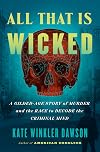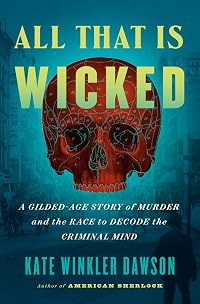
All That Is Wicked: A Gilded-Age Story of Murder and the Race to Decode the Criminal Mind
by Kate Winkler Dawson
On This Page
Description
"Acclaimed crime historian, podcaster, and author of American Sherlock Kate Winkler Dawson tells the thrilling story of Edward Rulloff-a serial murderer who was called "too intelligent to be killed"-and the array of 19th century investigators who were convinced his brain held the key to finally understanding the criminal mind"--Tags
Recommendations
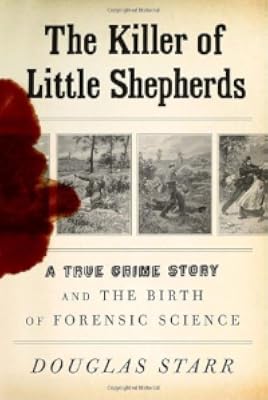
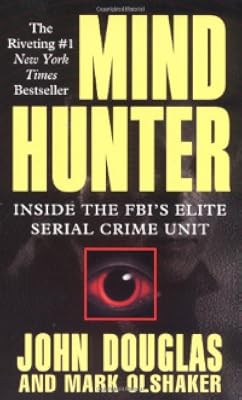
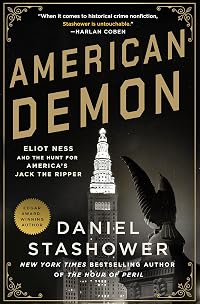
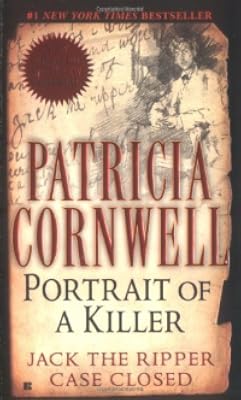


Member Reviews
Having admired Kate Winkler Dawson's previous books, I began reading "All that is Wicked" with great anticipation. This true story is set in the mid-to-late nineteenth century and focuses on Edward Rulloff, a fraud and a liar who could be charming and well-spoken when it suited his purposes. However, when someone dared to contradict him, he would often vent his fury in irrational outbursts. He was incapable of empathy and manipulated others to get what he wanted—personal favors, money, and admiration for his erudition. Although he never attended college, Rulloff was well-versed in Latin and Greek. He longed to be recognized in academia for his brilliance and worked for years on his magnum opus, an exploration of the origins of show more language.
Rulloff's archenemies were the Schutts, a close-knit family who lived in upstate New York. In 1843, Edward, then in his early twenties, wed seventeen-year-old Harriet Schutt. During their brief marriage, he abused his young wife verbally and physically. When she tried to free herself from him, he killed her and, it is widely believed, took the life of their infant daughter as well. Their bodies were never recovered.
The central theme of "All that is Wicked" is that, during the nineteenth century, psychopathy was imperfectly understood. The journalists, alienists, phrenologists, and neurologists who visited Edward in prison had contradictory opinions about his emotional state and intellect. Horace Greeley asserted that Edward was so brilliant that he should be kept alive so that he could continue working on his scholarly pursuits. Dawson describes Edward's outrageous conduct in detail. He belittled people he disliked, lied about his family background, stole, and committed arson. At his worst, Rulloff resorted to murder and expected to get away with his misdeeds.
Alas, this is a slow-moving and repetitious work of non-fiction in which we observe Rulloff pulling the wool over the eyes of those foolish enough to care about him. "All that is Wicked" is a disheartening demonstration of the gullibility and ignorance of so-called experts. Even today, behavioral profilers admit that there is much to be learned about human chameleons who may seem harmless, but are capable of unspeakable acts of violence. Kate Winkler Dawson has done her homework, but I closed this book with a feeling of distaste. I was happy to part ways with the repellent Edward Rulloff. show less
Rulloff's archenemies were the Schutts, a close-knit family who lived in upstate New York. In 1843, Edward, then in his early twenties, wed seventeen-year-old Harriet Schutt. During their brief marriage, he abused his young wife verbally and physically. When she tried to free herself from him, he killed her and, it is widely believed, took the life of their infant daughter as well. Their bodies were never recovered.
The central theme of "All that is Wicked" is that, during the nineteenth century, psychopathy was imperfectly understood. The journalists, alienists, phrenologists, and neurologists who visited Edward in prison had contradictory opinions about his emotional state and intellect. Horace Greeley asserted that Edward was so brilliant that he should be kept alive so that he could continue working on his scholarly pursuits. Dawson describes Edward's outrageous conduct in detail. He belittled people he disliked, lied about his family background, stole, and committed arson. At his worst, Rulloff resorted to murder and expected to get away with his misdeeds.
Alas, this is a slow-moving and repetitious work of non-fiction in which we observe Rulloff pulling the wool over the eyes of those foolish enough to care about him. "All that is Wicked" is a disheartening demonstration of the gullibility and ignorance of so-called experts. Even today, behavioral profilers admit that there is much to be learned about human chameleons who may seem harmless, but are capable of unspeakable acts of violence. Kate Winkler Dawson has done her homework, but I closed this book with a feeling of distaste. I was happy to part ways with the repellent Edward Rulloff. show less
"He was the embodiment of all that is wicked."
Researchers still try to explain why some people turn to a life of violence and crime. The case of Edward Rulloff is one that is still fascinating- not because his crimes were so unusual, they were not, unfortunately. What was unusual was that he convinced many prominent people (journalists, alienists, and linguists) that he was "too smart" to be executed. His reputation as a world-class scholar was based on his life-long work on a manuscript that explained the origin of all languages. His theory was debunked and rather than accept a diagnosis of madness, he was hung in 1871. His brain was studied and became part of the first "brain collection." Research on his brain was used by both show more phrenologists and neurologists to discover the origin of criminal behavior.
Very interesting and well researched. show less
Researchers still try to explain why some people turn to a life of violence and crime. The case of Edward Rulloff is one that is still fascinating- not because his crimes were so unusual, they were not, unfortunately. What was unusual was that he convinced many prominent people (journalists, alienists, and linguists) that he was "too smart" to be executed. His reputation as a world-class scholar was based on his life-long work on a manuscript that explained the origin of all languages. His theory was debunked and rather than accept a diagnosis of madness, he was hung in 1871. His brain was studied and became part of the first "brain collection." Research on his brain was used by both show more phrenologists and neurologists to discover the origin of criminal behavior.
Very interesting and well researched. show less
An interesting story about a fascinating 19th century criminal. It is the deeds of the man himself that make this book a worthwhile read. The author addresses the state of science of the mind between then and now yet could have done more to develop the context of the world at the time. Only some references were made, likely because of the lack of serious research into the period.
This book will appeal to a general reader who has no particular interest in the subject, but simply wants a very light introduction.
Inexplicably, at the close of the book the author makes various negative references to the Trump Administration, which were entirely unnecessary and devalue her credibility.
This book will appeal to a general reader who has no particular interest in the subject, but simply wants a very light introduction.
Inexplicably, at the close of the book the author makes various negative references to the Trump Administration, which were entirely unnecessary and devalue her credibility.
3.5 stars
I hate to go with my standard "it was a book" type of review when something was perfectly middle of the road for me, but I fear this has fallen in that stack. I was intrigued by the premise and by some parts of the story, but some parts felt a bit repetitive and I honestly just didn't find much about the person of interest interesting.
I hate to go with my standard "it was a book" type of review when something was perfectly middle of the road for me, but I fear this has fallen in that stack. I was intrigued by the premise and by some parts of the story, but some parts felt a bit repetitive and I honestly just didn't find much about the person of interest interesting.
Ratings
Members
- Recently Added By
Lists

True Crime
156 works; 1 member

TBR of Books I Don't Own
132 works; 1 member

Library Non-Fiction
164 works; 1 member
Author Information

5 Works 1,292 Members
Kate Winkler Dawson is a seasoned documentary producer, whose work has appeared in the New York Times, on WCBS News and ABC News Radio, Fox News Channel, UPI, PBS NewsHour, and Nighttime. She is a junior fellow with the British Studies Program and teaches journalism at The University of Texas at Austin. Dawson is also on the board of directors for show more the Texas Center for Actual Innocence, a nonprofit organization that investigates claims of wrongful convictions in the state of Texas. show less
Some Editions
Common Knowledge
- Original publication date
- 2022
- People/Characters
- Edward H. Rulloff
- Dedication
- To JWD, who deserves the dedication in every book I write
- First words
- It's strenuous work to saw through a skull.
- Last words
- (Click to show. Warning: May contain spoilers.)"If not insane, he was the incarnation of all that is wicked."
Classifications
- Genres
- History, Nonfiction, Politics and Government, General Nonfiction
- DDC/MDS
- 364.3 — Society, government, & culture Social problems and social services Crime Criminals
- LCC
- HV6113 .R85 .D39 — Social sciences Social pathology. Social and public welfare. Criminology Social pathology. Social and public welfare. Criminology Criminal anthropology
- BISAC
Statistics
- Members
- 171
- Popularity
- 191,656
- Reviews
- 4
- Rating
- (3.28)
- Languages
- English
- Media
- Paper, Audiobook, Ebook
- ISBNs
- 8
- ASINs
- 4