On This Page
Description
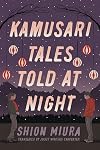
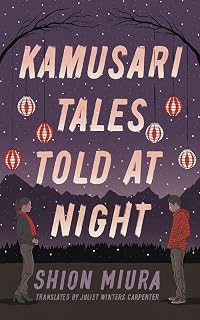
From Shion Miura, award-winning author of The Easy Life in Kamusari, comes a spirit-lifting novel about tradition, first love, and ancient lore in a Japanese mountain village. It's been a year since Yuki Hirano left home--or more precisely, was booted from it--to study forestry in the remote mountain village of Kamusari. Being a woodsman is not the future he imagined, but his name means "courage," and Yuki hopes to live up to it. He's adapting to his job and learning constantly. In between, show more he records local legends--tales pulsing with life, passion, and wondrous gods. Kamusari has other charms as well. One of them is Nao. Yuki's crush on the only other young single person in the village isn't a secret. Yet how impressed can she be with someone at least five years younger who makes less money and doesn't even own a car? More daunting, she's in love with another man. Finally finding his place among the villagers, a feeling deepened by his crush, Yuki seems headed for a dream life of adventure and camaraderie--and Nao could be the missing piece of that dream. show lessTags
Recommendations










































Member Reviews
Who loves Kamusari? Raise your hand!
I enjoyed The Easy Life in Kamusari very much, so I wanted to see what the sequel would bring.
Remember Yuki, the obnoxious teen who got “exiled” to a remote mountain village by his parents? (You should listen to your parents, ha ha.) Yuki is turning twenty, he is still living in Kamusari, still learning forestry. He observes people around him and writes down their stories.
This is a gentle, slow-paced, humane book. The mountains are beautiful, the mountains are tough. People who live there take care of each other and the nature around them. Traditions are important. Gods of the mountains are an important presence in everyone’s lives. There is no magical realism here, unlike the first book – show more but I already know that Kamusari is an enchanted place, so it’s ok. I chuckled when one of the characters referred to a local goddess’ face as ”aesthetically challenged” – because you should be nice to goddesses, just in case.
Yuki is still hopelessly in love with Nao, and behaves stupidly, as a clueless boy of twenty should. I cringed and facepalmed a lot. This plot line annoyed me! If I were Nao… Oh well.
The last two chapters are very sweet and touching “Christmas chapters”. It’s a nice coincidence that I picked up this book now!
Quotes:
”The smell of wet leaves. Rustle of dark mountain forests in the wind. Sharp, clean air filled with insect cries, some like wind chimes, others like the grinding of a pestle.”
”The desire to share something with someone in order to walk alongside them forever was new to me.” show less
I enjoyed The Easy Life in Kamusari very much, so I wanted to see what the sequel would bring.
Remember Yuki, the obnoxious teen who got “exiled” to a remote mountain village by his parents? (You should listen to your parents, ha ha.) Yuki is turning twenty, he is still living in Kamusari, still learning forestry. He observes people around him and writes down their stories.
This is a gentle, slow-paced, humane book. The mountains are beautiful, the mountains are tough. People who live there take care of each other and the nature around them. Traditions are important. Gods of the mountains are an important presence in everyone’s lives. There is no magical realism here, unlike the first book – show more but I already know that Kamusari is an enchanted place, so it’s ok. I chuckled when one of the characters referred to a local goddess’ face as ”aesthetically challenged” – because you should be nice to goddesses, just in case.
Yuki is still hopelessly in love with Nao, and behaves stupidly, as a clueless boy of twenty should. I cringed and facepalmed a lot. This plot line annoyed me! If I were Nao… Oh well.
The last two chapters are very sweet and touching “Christmas chapters”. It’s a nice coincidence that I picked up this book now!
Quotes:
”The smell of wet leaves. Rustle of dark mountain forests in the wind. Sharp, clean air filled with insect cries, some like wind chimes, others like the grinding of a pestle.”
”The desire to share something with someone in order to walk alongside them forever was new to me.” show less
I enjoyed this sequel, but I think I enjoyed the first novel a little more in terms of learning about the town and the forestry job. There were also some magical realism events that occurred in the first one that were interesting and weird, whereas in this one, they were treated more as legends or myths of the region. Still a nice, comforting read though.
Yuki Hirano does some more growing up in Kamusari.
A quick, engaging read. I'm curious how much is based on genuine Japanese folklore and custom and how much the author just made up.
A quick, engaging read. I'm curious how much is based on genuine Japanese folklore and custom and how much the author just made up.
Ratings
Members
- Recently Added By
Author Information

42 Works 1,254 Members
Series

Common Knowledge
- Canonical title
- Kamusari Tales Told at Night
- Original title
- 神去なあなあ夜話
- Original language
- Japanese
Classifications
- Genres
- General Fiction, Fiction and Literature, Romance
- DDC/MDS
- 895.636 — Literature & rhetoric Literatures of other languages Literatures of East and Southeast Asia Japanese Japanese fiction 2000–
- LCC
- PL873 .I85 — Language and Literature Languages and literatures of Eastern Asia, Africa, Oceania Languages of Eastern Asia, Africa, Oceania Japanese language and literature Japanese literature
- BISAC
Statistics
- Members
- 66
- Popularity
- 471,218
- Reviews
- 3
- Rating
- (3.71)
- Languages
- Chinese, traditional, English
- Media
- Paper, Audiobook, Ebook
- ISBNs
- 6
- ASINs
- 2