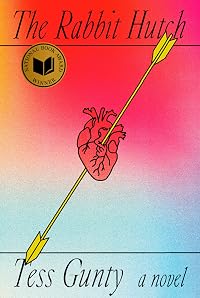
The Rabbit Hutch
by Tess Gunty
On This Page
Description
NEW YORK TIMES BESTSELLER * NATIONAL BOOK AWARD WINNER * The standout literary debut that everyone is talking about * "Inventive, heartbreaking and acutely funny."--The Guardian A BEST BOOK OF THE YEAR: The New York Times, TIME, NPR, Oprah Daily, People Blandine isn't like the other residents of her building. An online obituary writer. A young mother with a dark secret. A woman waging a solo campaign against rodents -- neighbors, separated only by the thin walls of a low-cost housing show more complex in the once bustling industrial center of Vacca Vale, Indiana. Welcome to the Rabbit Hutch. Ethereally beautiful and formidably intelligent, Blandine shares her apartment with three teenage boys she neither likes nor understands, all, like her, now aged out of the state foster care system that has repeatedly failed them, all searching for meaning in their lives. Set over one sweltering week in July and culminating in a bizarre act of violence that finally changes everything, The Rabbit Hutch is a savagely beautiful and bitingly funny snapshot of contemporary America, a gorgeous and provocative tale of loneliness and longing, entrapment and, ultimately, freedom. "Gunty writes with a keen, sensitive eye about all manner of intimacies―the kind we build with other people, and the kind we cultivate around ourselves and our tenuous, private aspirations."--Raven Leilani, author of Luster show lessTags
Recommendations







Member Reviews
...he tries to compute why he finds one person's distance alluring while he finds his wife's distance funereal. The faucet pummels water in the tub; he listens to his wife pull the metal valve and wonders how much water is lost as it is rerouted between the faucet and the showered. James never lost interest in his wife, even after the color drained from her hair and her laugh, but she lost interest in him...
Tess Gunty's debut novel is certainly the literary book-of-the-moment, winning the National Book Award and laudatory reviews everywhere. Set largely in a decaying low-income apartment building in the fictional Indiana city of Vacca Vale, the novel follows a few residents and others, but focuses on Blandine, a teenager who shares an show more apartment with three boys, all of whom are, like her, graduates from the foster system. Blandine is brilliant and oddly charismatic and beautiful in an off-beat way. She loves mystics, especially medieval women, and likes to rant in what sounds like lengthy twitter threads. Everyone is drawn to her, from her high school drama teacher to the three boys who live in the same apartment, to a middle-aged woman who speaks to her once. Gunty has a writing style that sometimes feels over-written and witty for the sake of being witty, but which flows nicely and she does have an eye for the interesting detail.
I struggled with this novel, I really did. I loved the sections that weren't about or told from the perspective of Blandine, which is to say, there were a handful of chapters I enjoyed. But Blandine is the focus of the novel and of the people in this novel. She's beautiful and brilliant, and quirky and unique, and everyone thinks about her all the time. I like novels with unlikeable protagonists and I like books with likable main characters, but here is an unlikeable character whom everyone genuflects to and thinks about all the time. Random people notice how beautiful she is as she passes them on the street. I was bored with her and a little baffled that being told over and over that this character is fascinating is enough for many readers to decide that yes, she is. Anyway, greater minds than mine loved this book. show less
Tess Gunty's debut novel is certainly the literary book-of-the-moment, winning the National Book Award and laudatory reviews everywhere. Set largely in a decaying low-income apartment building in the fictional Indiana city of Vacca Vale, the novel follows a few residents and others, but focuses on Blandine, a teenager who shares an show more apartment with three boys, all of whom are, like her, graduates from the foster system. Blandine is brilliant and oddly charismatic and beautiful in an off-beat way. She loves mystics, especially medieval women, and likes to rant in what sounds like lengthy twitter threads. Everyone is drawn to her, from her high school drama teacher to the three boys who live in the same apartment, to a middle-aged woman who speaks to her once. Gunty has a writing style that sometimes feels over-written and witty for the sake of being witty, but which flows nicely and she does have an eye for the interesting detail.
I struggled with this novel, I really did. I loved the sections that weren't about or told from the perspective of Blandine, which is to say, there were a handful of chapters I enjoyed. But Blandine is the focus of the novel and of the people in this novel. She's beautiful and brilliant, and quirky and unique, and everyone thinks about her all the time. I like novels with unlikeable protagonists and I like books with likable main characters, but here is an unlikeable character whom everyone genuflects to and thinks about all the time. Random people notice how beautiful she is as she passes them on the street. I was bored with her and a little baffled that being told over and over that this character is fascinating is enough for many readers to decide that yes, she is. Anyway, greater minds than mine loved this book. show less
"The automobile industry has abandoned Vacca Vale, Indiana, leaving the residents behind, too. In a run-down apartment building on the edge of town, commonly known as the Rabbit Hutch, a number of people now reside quietly, looking for ways to live in a dying city."
As you can imagine, this novel caught my eye at the mere mention of a run-down Indiana town. Having grown up in a town of exactly 315 residents (according to the 2010 census, at least) in middle-Indiana, surrounded by failing factories and struggling blue-collar families, I was both intrigued by this premise, and admittedly, eager to judge it. And, tldr; it did not fall short of my expectations.
Vacca Vale, though fictional, is a setting that's apt to look incredibly familiar show more to Midwestern natives, particularly those in crumbling towns that were once minor industrial hubs. Personally, it was refreshing to read a work that hit so close to home, especially when the next best thing is watching "Stranger Things", which, though set in Indiana, was filmed in Atlanta and feels like nothing familiar. I could picture Vacca Vale with an intense accuracy beyond what was simply being described in this already visceral work, and because the physical setting is so vital, this made for an incredibly enthralling read.
[SPOILERS AHEAD]
The Rabbit Hutch is a very cyclical work, to its (at least in my opinion) great credit. The novel begins with what the reader assumes for most of the work is the quintessential murder, rewinds to create the build-up to this pinnacle moment, and then brings us back around with a deeper understanding at the end. It almost prepares the audience for a sadness that never quite occurs, allowing the light tinge of melancholy to simply linger untouched, as it does for most of fictional Vacca Vale's residents and for the reader, too, long after the book itself is closed.
This work is also very self-referential, returning again and again to certain points in a way that shadows them just enough to keep from making these references startlingly obvious, and has a Station Eleven-esque way of flitting from character to character, seemingly unconnected, before letting the audience in on the joke: they were all intertwined all along. Time is very fluid here, too, and while there are days and times mentioned, they are nearly irrelevant to the story as a whole and leaves the reader with the sense of walking through a strange and never-ending dream. To be clear, I fully mean this as a high compliment. While none of this is exactly a new concept in literary fiction, it is a concept I enjoy when done well, as it was here.
One of the major themes of the novel is the idea that there is no such thing as a moral activity, and the subsequent contemplations of moral vs. immoral actions. Again, not a new consideration, but I enjoyed the author's take on it throughout the narrative's journey. The main character strives to right injustice to consider her own existence ethical. A jilted son attempts to validate his hatred of his mother, and the person it has turned him into. A crew of teenage boys lack communication skills in any way that isn't violence, which feels both unsettling and familiar. Nothing is justified, and yet everything is explained, even if the explanation is the very true-to-life result of emotional instability that occurs as the negative emotions build uninhibited and unexamined over time. It is a very human and very relatable way of approaching the existence of this town and its inhabitants.
My one qualm with this work is that it truly isn't anything new. Tess Gunty is an extremely talented writer with a flair for landscape, setting, ambience, moral considerations, and generally weaving together a compelling tale of life and death and everything in-between, but there were some repeated tropes here that felt recycled. Blandine's character, while intriguing, is a textbook manic pixie dream girl archetype. I could have done without the teacher-student relationship, and the idea of paying more attention to one another and the ways our stories intersect has been a hot topic in literary fiction lately as well. Again, I was enthralled with this work from start to finish and read it nearly in a single sitting, but this is entirely due to Gunty's storytelling and encompassing lyricism and not anything to do with the narrative itself.
That said, this is a debut novel and I am excited to see what else Gunty will produce in the future! Thank you to NetGalley and Knopf for providing an ARC (though I read it post-release, oops) in exchange for an honest review, and to Tess Gunty for putting more honest literature about the strange and shadowed world that is small-town Indiana into the world! I would recommend this for fans of The Secret History by Donna Tartt, Station Eleven by Emily St. John Mandel, and Everything I Never Told Youby Celeste Ng, as it strikes somewhere in the dead center of where those three oddly intersect. show less
As you can imagine, this novel caught my eye at the mere mention of a run-down Indiana town. Having grown up in a town of exactly 315 residents (according to the 2010 census, at least) in middle-Indiana, surrounded by failing factories and struggling blue-collar families, I was both intrigued by this premise, and admittedly, eager to judge it. And, tldr; it did not fall short of my expectations.
Vacca Vale, though fictional, is a setting that's apt to look incredibly familiar show more to Midwestern natives, particularly those in crumbling towns that were once minor industrial hubs. Personally, it was refreshing to read a work that hit so close to home, especially when the next best thing is watching "Stranger Things", which, though set in Indiana, was filmed in Atlanta and feels like nothing familiar. I could picture Vacca Vale with an intense accuracy beyond what was simply being described in this already visceral work, and because the physical setting is so vital, this made for an incredibly enthralling read.
[SPOILERS AHEAD]
The Rabbit Hutch is a very cyclical work, to its (at least in my opinion) great credit. The novel begins with what the reader assumes for most of the work is the quintessential murder, rewinds to create the build-up to this pinnacle moment, and then brings us back around with a deeper understanding at the end. It almost prepares the audience for a sadness that never quite occurs, allowing the light tinge of melancholy to simply linger untouched, as it does for most of fictional Vacca Vale's residents and for the reader, too, long after the book itself is closed.
This work is also very self-referential, returning again and again to certain points in a way that shadows them just enough to keep from making these references startlingly obvious, and has a Station Eleven-esque way of flitting from character to character, seemingly unconnected, before letting the audience in on the joke: they were all intertwined all along. Time is very fluid here, too, and while there are days and times mentioned, they are nearly irrelevant to the story as a whole and leaves the reader with the sense of walking through a strange and never-ending dream. To be clear, I fully mean this as a high compliment. While none of this is exactly a new concept in literary fiction, it is a concept I enjoy when done well, as it was here.
One of the major themes of the novel is the idea that there is no such thing as a moral activity, and the subsequent contemplations of moral vs. immoral actions. Again, not a new consideration, but I enjoyed the author's take on it throughout the narrative's journey. The main character strives to right injustice to consider her own existence ethical. A jilted son attempts to validate his hatred of his mother, and the person it has turned him into. A crew of teenage boys lack communication skills in any way that isn't violence, which feels both unsettling and familiar. Nothing is justified, and yet everything is explained, even if the explanation is the very true-to-life result of emotional instability that occurs as the negative emotions build uninhibited and unexamined over time. It is a very human and very relatable way of approaching the existence of this town and its inhabitants.
My one qualm with this work is that it truly isn't anything new. Tess Gunty is an extremely talented writer with a flair for landscape, setting, ambience, moral considerations, and generally weaving together a compelling tale of life and death and everything in-between, but there were some repeated tropes here that felt recycled. Blandine's character, while intriguing, is a textbook manic pixie dream girl archetype. I could have done without the teacher-student relationship, and the idea of paying more attention to one another and the ways our stories intersect has been a hot topic in literary fiction lately as well. Again, I was enthralled with this work from start to finish and read it nearly in a single sitting, but this is entirely due to Gunty's storytelling and encompassing lyricism and not anything to do with the narrative itself.
That said, this is a debut novel and I am excited to see what else Gunty will produce in the future! Thank you to NetGalley and Knopf for providing an ARC (though I read it post-release, oops) in exchange for an honest review, and to Tess Gunty for putting more honest literature about the strange and shadowed world that is small-town Indiana into the world! I would recommend this for fans of The Secret History by Donna Tartt, Station Eleven by Emily St. John Mandel, and Everything I Never Told Youby Celeste Ng, as it strikes somewhere in the dead center of where those three oddly intersect. show less
If you don’t sell them as pets, you got to get rid of them as meat … If you don’t have 10 separate cages for them, then they start fighting. Then the males castrate the other males … They chew their balls right off.”
The Rabbit Hutch
This was an excellent read. Tess Gurdy, at 30 won the National Book Award for this novel of vignettes depicting the lives of those living in a rundown apartment building --and yes it's called The Rabbit Hutch--in a run down Indiana town. The book is peppered with sentences that insist on being highlighted. And I did. In C4 is a brilliant 18 year old who according to the first line is exiting her body. Below her in C2 is a 40 year old who hears her screams, as does the 70 year old man above her as he show more shuffles down the stairs to leave a note and a dead mouse on another neighbor's door. There's a new mother in C10 who is afraid to tell her husband that she is afraid of her child's eyes; she won't look at them. The one outsider is a man named Moses who likes to spread glow stick gel over his body and scare his enemies in the middle of the night.
Gurdy grew up in Indiana and uses the backdrop of Vacca Vale as a model for South Bend, a town that also suffered from the closing of a once famous auto industry, the Studebaker. "the Rabbit Hutch itself, the apartment block where Blandine lives, a rust-belt relic of a place that, having outlived its usefulness to the motor industry, has been left to decay. Nothing but a scattering of incongruously grand buildings and a poisoned water table remain as testimony to the glory days of the Zorn automobile company. "(The Guardian)
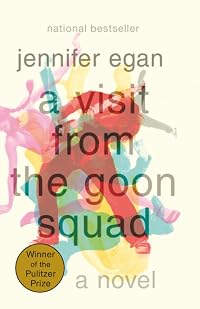
The character sketches are brilliant and the evolving plot makes for a compulsive read. I always love the interconnectedness of multiple characters coming together, ( i.e.Egan's Goon Squad, Orange's There,There, and McCann's Let the Great World Spin). Gurdy manages to do that as well. Highly recommend and look forward to her future work.
Lines:
Kara had a taste for neon clothing, cinnamon gum, and anguished men.
New mother: "Her breasts are swollen to celebrity
size, there are bolts of electricity zapping the powerlines of her brain, and without any assistance from coffee, her body has awakened itself to the pitch of animal vigilance. The hormones have turned the volume of the world all the way up, angling her ears babyward, forcing her to listen—always listen—for his new and spitty voice. She feels like a fox. Like a fox on Adderall"
The woman’s hair is the color of mouse fur, her bangs are cut short, and
she is wearing woolly knitted clothes despite the heat. Forty-something. She has the posture of a question mark, a stock face and a pair of 19th-century eyeglasses. Her solitude is as prominent as the cross around her neck.”
With his smile, and those jeans, it’s evident to Blandine that
no one has ever truly criticized this young man to his face, and that he’s a product of extreme parental love.
Shortly after the exchange, another man arrives, bell chinking behind him. Bound in a dark leather jacket, the odor of cigarettes, and a fresh tan, his presence exerts its own gravity. He’d be well suited for a men’s deodorant commercial, Blandine thinks: handsome enough to serve as a vessel for positive self-projection, but not so handsome as to threaten the consumer’s personal sense of masculinity. Blandine senses that he has many tattoos, although she can’t see them. He wears his testosterone like a strong cologne
Her fellow students live in the suburbs
and spend their lunches complaining about the cruises that their mothers foist upon them. They exchange How My Parents Surprised Me with My First Brand-New Car stories and wear coats from luxury outdoor brands, as though driving to high school is an extreme sport
Speaking of scandals, did you hear that Kayla gave three lacrosse guys pterodactyl? Oh my God, you haven’t heard of this? It’s three guys, one girl. The guys stand side by side, in a row. She blows the guy in the middle, then gives the other two hand jobs. So it looks like she’s trying to fly.
It’s designed to addict you, to prey on your insecurities and use them to make you stay. It exploits everybody’s loneliness and promises us community, approval, friendship. Honestly, in that sense, social media is a lot like the Church of Scientology. Or QAnon. Or Charles Manson. And then on top of that—weaponizing a person’s isolation isolation—it convinces every user that she is a minor celebrity, forcing her to curate some sparkly and artificial sampling of her best experiences, demanding a nonstop social performance that has little in
common with her inner life, intensifying her narcissism, multiplying her anxieties, narrowing her worldview. All while commodifying her, harvesting her data, and selling it to nefarious corporations so that they can peddle more shit that promises to make her prettier, smarter, more productive, more successful, more beloved.
Throughout the visit, his sister arranged her clothes, voice, and posture to communicate superiority, so proud of herself for leaving their town, as though it were a maximum-security prison. As though it took more than a plane ticket, a cosmetology degree, and a dainty face for her to find another life. show less
The Rabbit Hutch
This was an excellent read. Tess Gurdy, at 30 won the National Book Award for this novel of vignettes depicting the lives of those living in a rundown apartment building --and yes it's called The Rabbit Hutch--in a run down Indiana town. The book is peppered with sentences that insist on being highlighted. And I did. In C4 is a brilliant 18 year old who according to the first line is exiting her body. Below her in C2 is a 40 year old who hears her screams, as does the 70 year old man above her as he show more shuffles down the stairs to leave a note and a dead mouse on another neighbor's door. There's a new mother in C10 who is afraid to tell her husband that she is afraid of her child's eyes; she won't look at them. The one outsider is a man named Moses who likes to spread glow stick gel over his body and scare his enemies in the middle of the night.
Gurdy grew up in Indiana and uses the backdrop of Vacca Vale as a model for South Bend, a town that also suffered from the closing of a once famous auto industry, the Studebaker. "the Rabbit Hutch itself, the apartment block where Blandine lives, a rust-belt relic of a place that, having outlived its usefulness to the motor industry, has been left to decay. Nothing but a scattering of incongruously grand buildings and a poisoned water table remain as testimony to the glory days of the Zorn automobile company. "(The Guardian)
The character sketches are brilliant and the evolving plot makes for a compulsive read. I always love the interconnectedness of multiple characters coming together, ( i.e.Egan's Goon Squad, Orange's There,There, and McCann's Let the Great World Spin). Gurdy manages to do that as well. Highly recommend and look forward to her future work.
Lines:
Kara had a taste for neon clothing, cinnamon gum, and anguished men.
New mother: "Her breasts are swollen to celebrity
size, there are bolts of electricity zapping the powerlines of her brain, and without any assistance from coffee, her body has awakened itself to the pitch of animal vigilance. The hormones have turned the volume of the world all the way up, angling her ears babyward, forcing her to listen—always listen—for his new and spitty voice. She feels like a fox. Like a fox on Adderall"
The woman’s hair is the color of mouse fur, her bangs are cut short, and
she is wearing woolly knitted clothes despite the heat. Forty-something. She has the posture of a question mark, a stock face and a pair of 19th-century eyeglasses. Her solitude is as prominent as the cross around her neck.”
With his smile, and those jeans, it’s evident to Blandine that
no one has ever truly criticized this young man to his face, and that he’s a product of extreme parental love.
Shortly after the exchange, another man arrives, bell chinking behind him. Bound in a dark leather jacket, the odor of cigarettes, and a fresh tan, his presence exerts its own gravity. He’d be well suited for a men’s deodorant commercial, Blandine thinks: handsome enough to serve as a vessel for positive self-projection, but not so handsome as to threaten the consumer’s personal sense of masculinity. Blandine senses that he has many tattoos, although she can’t see them. He wears his testosterone like a strong cologne
Her fellow students live in the suburbs
and spend their lunches complaining about the cruises that their mothers foist upon them. They exchange How My Parents Surprised Me with My First Brand-New Car stories and wear coats from luxury outdoor brands, as though driving to high school is an extreme sport
Speaking of scandals, did you hear that Kayla gave three lacrosse guys pterodactyl? Oh my God, you haven’t heard of this? It’s three guys, one girl. The guys stand side by side, in a row. She blows the guy in the middle, then gives the other two hand jobs. So it looks like she’s trying to fly.
It’s designed to addict you, to prey on your insecurities and use them to make you stay. It exploits everybody’s loneliness and promises us community, approval, friendship. Honestly, in that sense, social media is a lot like the Church of Scientology. Or QAnon. Or Charles Manson. And then on top of that—weaponizing a person’s isolation isolation—it convinces every user that she is a minor celebrity, forcing her to curate some sparkly and artificial sampling of her best experiences, demanding a nonstop social performance that has little in
common with her inner life, intensifying her narcissism, multiplying her anxieties, narrowing her worldview. All while commodifying her, harvesting her data, and selling it to nefarious corporations so that they can peddle more shit that promises to make her prettier, smarter, more productive, more successful, more beloved.
Throughout the visit, his sister arranged her clothes, voice, and posture to communicate superiority, so proud of herself for leaving their town, as though it were a maximum-security prison. As though it took more than a plane ticket, a cosmetology degree, and a dainty face for her to find another life. show less
(60) "Weird, but good." This was the advice from a colleague who gave me this as an unsolicited lend, and in fact -- I agree completely. A brilliant teenager ages out of the foster care system by dropping out of a prestigious Catholic high school in suburban Indiana after a devastating affair with a teacher. She latches onto bizarre causes as a lifeline, such as environmental advocacy against a development planned in her (crappy) city, and the lives of young Catholic female martyrs such as St. Hildegard. I noticed the author went to Notre Dame and this does not go unnoticed. A liberal mind with a Catholic upbringing resonates with this reader and this drew me in to the book.
This young girl, self christened, Blandine, (after some martyr show more or other) lives in a housing complex with thin walls and many other humans living lives of quiet desperation. Readers are privy to the lives of the other complex dwellers. Sometimes via quick blurbs featuring just their apartment number - for example "3C: So and so gazed down at their newborn baby with fear, etc., etc...." And sometimes we were in the inhabitants of these apartments minds and lives, even if they intertwined loosely or not at all with the protagonist, Blandine. The old couple who both hated and loved one other was particularly effective. The climactic scene is biblical, and oh-so-bizarre. At one point the scene was narrated via one of the weird minor characters strange comic art.
Really? Normally, I would hate this postmodernist schtick. At one point, BTW, there is even a shout out to 'WTF is postmodernist anyway? Nevertheless, I enjoyed this. It harkened back to the literary lesson I learned from one of my favorite books of all time, Stegner's 'Angle of Repose.' This idea that we are all just where we landed trying to do the best job we can and just barely keeping our heads above water, regardless of our personal circumstances. Amen.
Maybe I underrated this book. But there were detractions, such as plot points that were too random or seemed too contrived. For example, all the excerpts from Hildegard's books. It didn't seem like Blandine was the type of smart young girl who would actually buy that hyper-religiosity. And then - I got confused - who was this Elsie person with the sloth obituary? Versus "Pinky" the guy that was doing the re-development? Versus the weird guy (the son of Elsie) who rubbed himself with glow-sticks? The author spiraled off one too many times for me to keep track of there. But that might just be a 'me' problem.
But the BEST thing about this book was that someone actually drew attention to the phenomenon that I thought only I experienced!! That tingly sensation that one may experience when someone is giving you close personal attention. For me, it typically has to be attention from a little child (?). And it does involve whispering or when the attention-giver seems to be totally concentrating on the task at hand.
WEIRD, BUT GOOD. Indeed. show less
This young girl, self christened, Blandine, (after some martyr show more or other) lives in a housing complex with thin walls and many other humans living lives of quiet desperation. Readers are privy to the lives of the other complex dwellers. Sometimes via quick blurbs featuring just their apartment number - for example "3C: So and so gazed down at their newborn baby with fear, etc., etc...." And sometimes we were in the inhabitants of these apartments minds and lives, even if they intertwined loosely or not at all with the protagonist, Blandine. The old couple who both hated and loved one other was particularly effective. The climactic scene is biblical, and oh-so-bizarre. At one point the scene was narrated via one of the weird minor characters strange comic art.
Really? Normally, I would hate this postmodernist schtick. At one point, BTW, there is even a shout out to 'WTF is postmodernist anyway? Nevertheless, I enjoyed this. It harkened back to the literary lesson I learned from one of my favorite books of all time, Stegner's 'Angle of Repose.' This idea that we are all just where we landed trying to do the best job we can and just barely keeping our heads above water, regardless of our personal circumstances. Amen.
Maybe I underrated this book. But there were detractions, such as plot points that were too random or seemed too contrived. For example, all the excerpts from Hildegard's books. It didn't seem like Blandine was the type of smart young girl who would actually buy that hyper-religiosity. And then - I got confused - who was this Elsie person with the sloth obituary? Versus "Pinky" the guy that was doing the re-development? Versus the weird guy (the son of Elsie) who rubbed himself with glow-sticks? The author spiraled off one too many times for me to keep track of there. But that might just be a 'me' problem.
But the BEST thing about this book was that someone actually drew attention to the phenomenon that I thought only I experienced!! That tingly sensation that one may experience when someone is giving you close personal attention. For me, it typically has to be attention from a little child (?). And it does involve whispering or when the attention-giver seems to be totally concentrating on the task at hand.
WEIRD, BUT GOOD. Indeed. show less
In The Rabbit Hutch, we meet Tiffany Watkins, a preternaturally smart and intuitive teenage girl living in Vacca Vale, a decaying industrial town in present-day northwest Indiana. She appears to have a lot going for her—including a coveted scholarship to the only private school in town—but, as the product of a broken home and several stops in the foster care system, she is lonely and isolated. When an illicit relationship with the one person who seems to understand her goes awry, Tiffany is so distraught that she quits school, takes a menial job, changes her name to Blandine after a martyred second-century French saint, and moves into a squalid apartment complex with Jack, Malik, and Todd, three other young people also longing to show more escape their foster lives.
The apartment building, named La Lapinière back in its elegant heyday but now dubbed “The Rabbit Hutch” for its rundown status, houses an eclectic assortment of troubled people who share their bad luck or their bad life decisions. As we are introduced to the residents—including a young mother afraid to look into her newborn’s eyes, a middle-aged woman whose life involves editing online obituaries, and an older couple unhappily married for many years—it becomes clear that loneliness is another thing they have in common. The action in the book involves two threads: Moses, the estranged son of a recently deceased actress, is offended by edits to his comments on his mother’s obituary and seeks revenge; and the three roommates fall in love with Blandine and try to impress her with the ritualistic killing of small animals. While these storylines do come together in the end, it is not giving away much to say that things do not end well.
I am really torn as to how to evaluate this novel. Overall, I did enjoy reading it, mostly because of the often-exquisite phrasing and language that first-time author Tess Gunty uses in telling the tale. Simply put, this is a beautifully written story that takes the reader between past and present events and from third-person to first-person narration in such a seamless manner that everything makes sense. Although the backstories of several of the supporting characters—most notably the roommates, unfortunately—are underdeveloped, we do get to understand very well what drives Blandine. On the other hand, not every detail in the tale makes total sense (Blandine’s whole Marxist relationship rant near the end, for instance) and the book does drag along to what becomes a very terse conclusion. So, although The Rabbit Hutch is a novel to recommend for the writing alone, it is a recommendation that comes with some qualifications. show less
The apartment building, named La Lapinière back in its elegant heyday but now dubbed “The Rabbit Hutch” for its rundown status, houses an eclectic assortment of troubled people who share their bad luck or their bad life decisions. As we are introduced to the residents—including a young mother afraid to look into her newborn’s eyes, a middle-aged woman whose life involves editing online obituaries, and an older couple unhappily married for many years—it becomes clear that loneliness is another thing they have in common. The action in the book involves two threads: Moses, the estranged son of a recently deceased actress, is offended by edits to his comments on his mother’s obituary and seeks revenge; and the three roommates fall in love with Blandine and try to impress her with the ritualistic killing of small animals. While these storylines do come together in the end, it is not giving away much to say that things do not end well.
I am really torn as to how to evaluate this novel. Overall, I did enjoy reading it, mostly because of the often-exquisite phrasing and language that first-time author Tess Gunty uses in telling the tale. Simply put, this is a beautifully written story that takes the reader between past and present events and from third-person to first-person narration in such a seamless manner that everything makes sense. Although the backstories of several of the supporting characters—most notably the roommates, unfortunately—are underdeveloped, we do get to understand very well what drives Blandine. On the other hand, not every detail in the tale makes total sense (Blandine’s whole Marxist relationship rant near the end, for instance) and the book does drag along to what becomes a very terse conclusion. So, although The Rabbit Hutch is a novel to recommend for the writing alone, it is a recommendation that comes with some qualifications. show less
This is a dark tale with many characters. I loved the continuing thread Tess Gunty wove through this book, subtly tying them all together. If you don't enjoy multiple POVs, you won't enjoy this book; it's not for those who love simple storylines, which made me love it even more. Tess Gunty has a unique voice, and I wanted to read more from her. I was disappointed to see that this is her only book. Tess, if you're reading this: we hunger for more of your words- please publish more!
Things I felt about this book:
The opening is a struggle. Not the beginning chapters necessarily but Act 1. I knew it'd be about a group of characters living in the same apartment complex, but it took more time than most readers will give it to connect with these people.
I went from reading to listening then back to reading. Reading was better to appreciate the writing. There are many brilliant sentences: beautiful and creative and darkly comic. Listening was too easy to zone out and miss the writing.
I’m glad I pushed through as the last third is great; it’s a story I will appreciate more upon reading again. Lots of big ideas here I want to ponder now that I have a sense of it.
It’s long (352 pages) and several of the random sections show more took me out of the story (Mr. Boddy's message and the Hildegard quotes, especially).
This is an ambitious novel. I appreciated how it went from ridiculous people and things--lavender lamb and black mold pie, noise-canceling headphones playing “Fourteen Ocean Waves to Soothe Your Baby” on high volume, and goat restoration--to a serious, depressing commentary on our country with themes of loneliness, disenfranchisement, depression, revitalization/gentrification, home, family, nature, the power of purpose and kindness.
I was rooting for Tiffany/Blandine and her wish for her life: “I just wish—sometimes I look out at my life, everything I’ve seen so far, and it all looks so—so grotesque. I look for the virtue, I don’t see any. I’m dying for proof of it, you know, proof of something good—something like divinity. But I don’t see it. I look at my life, and I see this warehouse of—of gargoyles. Why do vices get to be physical? Why do they get to clutter up the world? Why can’t I see any fucking virtues?”
I appreciated Joan's growth and loved her scene with Penny the homeless lady.
I loved the ending. It made the early struggle worth it!
Sentences that resonated:
“Vacca Vale is yet another American blemish—one of those disposable, expired towns responsible for electing the demagogues who reduce their country to a trash fire.”
“Because she has never left Vacca Vale, Blandine assumes that most of America is constructed this way--that is, disposably.”
“I’ll tell you one thing for sure: if there are good levels and bad levels, everybody gets sorted randomly. The same way we get sorted in real life.”
“The manifestations of this intergenerational neglect are always unpredictable, often funny, never affordable.”
“Human tenderness was not to be mocked. It was the last real thing.” show less
The opening is a struggle. Not the beginning chapters necessarily but Act 1. I knew it'd be about a group of characters living in the same apartment complex, but it took more time than most readers will give it to connect with these people.
I went from reading to listening then back to reading. Reading was better to appreciate the writing. There are many brilliant sentences: beautiful and creative and darkly comic. Listening was too easy to zone out and miss the writing.
I’m glad I pushed through as the last third is great; it’s a story I will appreciate more upon reading again. Lots of big ideas here I want to ponder now that I have a sense of it.
It’s long (352 pages) and several of the random sections show more took me out of the story (Mr. Boddy's message and the Hildegard quotes, especially).
This is an ambitious novel. I appreciated how it went from ridiculous people and things--lavender lamb and black mold pie, noise-canceling headphones playing “Fourteen Ocean Waves to Soothe Your Baby” on high volume, and goat restoration--to a serious, depressing commentary on our country with themes of loneliness, disenfranchisement, depression, revitalization/gentrification, home, family, nature, the power of purpose and kindness.
I was rooting for Tiffany/Blandine and her wish for her life: “I just wish—sometimes I look out at my life, everything I’ve seen so far, and it all looks so—so grotesque. I look for the virtue, I don’t see any. I’m dying for proof of it, you know, proof of something good—something like divinity. But I don’t see it. I look at my life, and I see this warehouse of—of gargoyles. Why do vices get to be physical? Why do they get to clutter up the world? Why can’t I see any fucking virtues?”
I appreciated Joan's growth and loved her scene with Penny the homeless lady.
I loved the ending. It made the early struggle worth it!
Sentences that resonated:
“Vacca Vale is yet another American blemish—one of those disposable, expired towns responsible for electing the demagogues who reduce their country to a trash fire.”
“Because she has never left Vacca Vale, Blandine assumes that most of America is constructed this way--that is, disposably.”
“I’ll tell you one thing for sure: if there are good levels and bad levels, everybody gets sorted randomly. The same way we get sorted in real life.”
“The manifestations of this intergenerational neglect are always unpredictable, often funny, never affordable.”
“Human tenderness was not to be mocked. It was the last real thing.” show less
Members
- Recently Added By
Lists

2023 Tournament of Books
18 works; 13 members

Books published and read in 2022
82 works; 5 members

National Book Award Finalists - Fiction
377 works; 12 members

Books Read in 2023
5,547 works; 145 members

Anticipated 2022 & Early 2023 Releases
209 works; 4 members

National Book Awards 2022 Longlist
50 works; 1 member

Books Read in 2022
5,168 works; 114 members

2023 Notable Books for Adults
26 works; 2 members

At the Library
217 works; 1 member

Still to Read 2023
5 works; 1 member
Author Information

5 Works 1,204 Members
Some Editions
Awards and Honors
Awards
Distinctions
Notable Lists
Series
Belongs to Publisher Series
Mirmanda (237)
Common Knowledge
- Canonical title
- The Rabbit Hutch
- Original publication date
- 2022
- Important places
- Indiana, USA
- Epigraph
- "If you don't sell them as pets, you got to get rid of them as meat. Them guys are all meat. But see, they start doing this to each other."
Woman points to rabbits.
"What's that?"
"Peeing on each... (show all) other and stuff like that, when they get older. If you don't have ten separate cages for them, then they start fighting. Then the males castrate the other males. They do. They chew their balls right off. Then you have a bloody mess. That's why you got to butcher them when they get a certain age, or you have a heck of a mess." -Rhonda Britton, Flint, Michigan, resident, 1989
Invisible and eternal things are made known through visible and temporal things. -Hildegard von Bingen, Benedictine abbess, 1151 - First words
- On a hot night in Apartment C4, Blandine Watkins exits her body. She is only eighteen years old, but she has spent most of her life wishing for this to happen. The agony is sweet, as the mystics promised. It's like your soul ... (show all)is being stabbed with light, the mystics said, and they were right about that, too. The mystics called this experience the Transverberation of the Heart, or the Seraph's Assault, but no angel appears to Blandine. There is, however, a bioluminescent man in his fifties, glowing like a firefly. He runs to her and yells. -The Opposite of Nothing
- Canonical DDC/MDS
- 813.6
- Canonical LCC
- PS3607.U54827 R33
Classifications
Statistics
- Members
- 1,202
- Popularity
- 20,711
- Reviews
- 44
- Rating
- (3.60)
- Languages
- 5 — Catalan, English, French, German, Spanish
- Media
- Paper, Audiobook, Ebook
- ISBNs
- 21
- ASINs
- 5