On This Page
Description
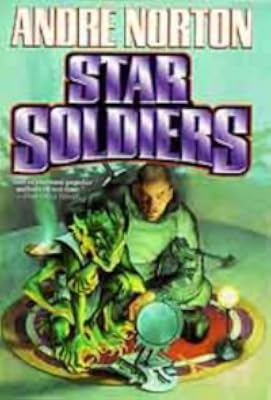
Only as interstellar mercenaries can humans go to the stars; the aliens who already dominate the galaxy allow no other recourse. But when Swordsman Third Class Kana Karr and his comrades-in-arms are betrayed and abandoned on a hostile world by their alien masters, the warriors from Earth begin a desperate but glorious march across a planet whose every sword is against them. Their actions may doom humanity's future ... or lead the way to an empire of their own! Four thousand years later, show more galactic civilization is collapsing, and the underfunded crew of an exploration starship is forced to set down on an uncharted planet: a mysterious, abandoned world that is achingly beautiful-and hauntingly familiar. Ranger Sergeant Kartr, telepath and stellar Patrolman, searches with his crewmates for the source of a beacon which may mean escape for them all. What he finds is far stranger: the first clue to what may become the greatest revelation in galactic history! The defining events of future history as only Andre Norton could tell them!. show lessTags
Recommendations





Member Reviews
While the first book in this duology (Star Guard) failed to impress me much, the second (Star Rangers) more than made up for it. A low-key piece of space opera with interesting characters and settings (I'm a sucker for ancient abandoned cities) and an ending which, while not exactly original, is presented in a fresh enough way to make it seem so. A good read.
I read several Andre Norton books when I was a kid. She wrote well over a hundred, mostly pulp space operas that were just what kids in the ‘space age’ wanted. Her tales of human space exploration, discovering other worlds, and meeting with strange aliens were simple but inspirational. We expected such tales to become a reality in the Twenty-First Century. Alas, things did not turn out so.
This Baen edition contains two of her earlier works: Star Guard (1955) and Star Rangers (1953).
Star Guard follows a platoon of “Archs,” human soldiers who serve as mercenaries in low-tech conflicts. They are hired to serve in a "police action" on a distant planet, which turns out to be much different than they expected, and they uncover secrets show more about humanity’s relationship with other galactic species and about human expansion to other worlds.
In Star Rangers (AKA The Last Planet), the multi-planet human empire is declining. Earth (Terra) is just a legend, its location forgotten. One of the last remaining Stellar Patrol ships crash lands on an unknown planet, and the survivors discover other castaways and the remnants of a lost civilization.
Although both stories were written over half a century ago, they stand up well. Some of the ‘high tech’ might seem antiquated to us now, but the characters remain believable and their adventures are still captivating (although serendipitous events do stretch one’s ability to suspend disbelief at times). With just a little rewriting, these would equal or surpass most of the popular science fiction adventure stories being published today.
What I tend to like about Norton’s books is that they often focus more on discovery than conflict, and they provide hopeful endings. These two stories do. Yes, things are bad, but there is hope for the future, and people can go on to do great things.
This is how many of us felt about the real world when these were written. The threat of nuclear annihilation hung over us, pollution clouded the skies of major cities, and there were fears of overpopulation and exhausting natural resources, but somehow we expected we’d overcome these challenges and go to the stars. Maybe we still will.
This free Baen edition for Kindle has some pretty sloppy editing, though. Both books have formatting issues and I noticed about half a dozen typos. There are so many well-written and well-edited free and low cost eBooks from indie authors, I find myself appalled when a traditional publisher cannot produce something with equally high quality.
Still, the stories are good, and I would recommend this compilation for all space opera fans. If you want to read more of Andre Norton’s books, several are available free from Project Gutenberg. show less
This Baen edition contains two of her earlier works: Star Guard (1955) and Star Rangers (1953).
Star Guard follows a platoon of “Archs,” human soldiers who serve as mercenaries in low-tech conflicts. They are hired to serve in a "police action" on a distant planet, which turns out to be much different than they expected, and they uncover secrets show more about humanity’s relationship with other galactic species and about human expansion to other worlds.
In Star Rangers (AKA The Last Planet), the multi-planet human empire is declining. Earth (Terra) is just a legend, its location forgotten. One of the last remaining Stellar Patrol ships crash lands on an unknown planet, and the survivors discover other castaways and the remnants of a lost civilization.
Although both stories were written over half a century ago, they stand up well. Some of the ‘high tech’ might seem antiquated to us now, but the characters remain believable and their adventures are still captivating (although serendipitous events do stretch one’s ability to suspend disbelief at times). With just a little rewriting, these would equal or surpass most of the popular science fiction adventure stories being published today.
What I tend to like about Norton’s books is that they often focus more on discovery than conflict, and they provide hopeful endings. These two stories do. Yes, things are bad, but there is hope for the future, and people can go on to do great things.
This is how many of us felt about the real world when these were written. The threat of nuclear annihilation hung over us, pollution clouded the skies of major cities, and there were fears of overpopulation and exhausting natural resources, but somehow we expected we’d overcome these challenges and go to the stars. Maybe we still will.
This free Baen edition for Kindle has some pretty sloppy editing, though. Both books have formatting issues and I noticed about half a dozen typos. There are so many well-written and well-edited free and low cost eBooks from indie authors, I find myself appalled when a traditional publisher cannot produce something with equally high quality.
Still, the stories are good, and I would recommend this compilation for all space opera fans. If you want to read more of Andre Norton’s books, several are available free from Project Gutenberg. show less
This is an omnibus of two of Norton's science fiction adventure stories. They tell the stories of the start of human space travel and interaction with established, intelligent, alien civilization, in Star Guard (1953), and, four thousand years later, a story that reflects the spreading collapse of that same galactic civilization in Star Rangers (1953), later reprinted under the title The Last Planet (1955).
In Star Guard, humans have achieved star flight, but found an exiting multispecies polity in which the government, "Central Control," deems humans too aggressive for full membership, and assigns them the role serving as mercenaries in the on-planet conflicts of other species. For more technologically advanced cultures, Terra provides show more "Mech" units, using things we'd recognize as really advanced tanks, airplanes, missiles, and energy weapons. For lower-tech cultures, they provide "Arch" units, using swords, spears, nothing more advanced than rifles, and some form of radio communication between units. Kana Karr, Swordsman Third Class, arrives at Prime to enlist for his first assignment off world. The first assignment offered him is allegedly a simple police action, a good way to get some basic experience without jumping in the deep end. It's on a planet called Fronn, and it's apparently his somewhat eccentric choice to take all the course he can on X-Tee, Alien Liaison service.
When he joins up with his unit, he soon learns that it includes an improbably high number of highly experienced, highly ranked Arch soldiers than there should ordinarily be any reason for on a simple police action. When Kana and his unit arrive on Fronn, at first things seem to be going fairly well, despite the fact that they've learned they're in fact supporting one side an dynastic struggle. Then strange things start to go wrong, and they find they are opposed not just by native troops or another Arch unit, but by a Mech unit, which legally shouldn't be on a planet like Fronn at all.
There's a dark conspiracy, or perhaps just a malicious plan, to slowly reduce the "problem" of these "aggressive" humans. That plan seems to be inside Central Control And perhaps there's a counter-conspiracy, if they can connect with it.
In Star Rangers, the previous great civilization is decaying. There have been sector wars, and some planets burnt to cinders, and the Galactic Patrol is underfunded and increasingly crippled. One particular Patrol ship is given the somewhat suspect order to go explore a particular, rather remote sector, with the supposed goal of reinvigorating the Patrol and its government. After the ship makes some rather challenging stops on its mission of reconnaissance, the reach a planet clearly habitable by humans and the few non-humans, or "Bemmys," who are part of the crew. They land, but part of their landing gear collapses, turning the landing into a crippling crash.
The ship's complement is composed of Patrol crewmen, and Patrol Rangers. The crew consider themselves the real Patrol, many of them from longtime Patrol families. They are the command staff, the pilots, engineers, other technical specialists, as well as the armed security. The Rangers, on the other hand, do their job when they reach a new planet that needs to be explored and assessed. They have different skills, on planet survival skills and related specialties, and one in particular, Ranger Sergeant Kartr, is a sensitive, a telepath. Kartr and Rolth, from a dimly lit planet where humans have developed exceptional night vision while being very vulnerable to the full daylight of most worlds, are human. The other two Rangers are "Bemmys," non-humans. Fyhl is of a species descended from birdlike ancestors, while Zinga is of reptilian ancestry.
We soon learn that there's real hostility among the Patrol crew toward Rangers in general, and Bemmys in particular.
They soon find that this planet is perfectly habitable for humans and their environmentally-compatible Bemmy Rangers, yet there are, at first, no signs of civilization. This doesn't last, of course, and they find themselves confronting an offshoot of the sector wars, and a stranded sector lord and the passengers and crew of the passenger ship that stranded him here. He's got plans of making himself the absolute ruler, with the hidden, surviving technology of this apparently abandoned plan et to make him powerful and his life comfortable.
In both stories, there's solid adventure and interesting characters, and also Norton's values of decency, honor, fairness, equality, and equity. She doesn't shun violence; she does dislike unnecessary violence, cruelty, and oppression. We don't see many women in her writing from this period, because she chose not to portray women in the way considered commercially viable in sf at the time. That changed later.
I love Norton's fiction, and have since I first discovered her in the local library. And in rereading her work recently, I'm finding that it still holds up.
Recommended.
I bought both the audiobook and the ebook, and flipped back and forth between the two based on convenience for this reread. show less
In Star Guard, humans have achieved star flight, but found an exiting multispecies polity in which the government, "Central Control," deems humans too aggressive for full membership, and assigns them the role serving as mercenaries in the on-planet conflicts of other species. For more technologically advanced cultures, Terra provides show more "Mech" units, using things we'd recognize as really advanced tanks, airplanes, missiles, and energy weapons. For lower-tech cultures, they provide "Arch" units, using swords, spears, nothing more advanced than rifles, and some form of radio communication between units. Kana Karr, Swordsman Third Class, arrives at Prime to enlist for his first assignment off world. The first assignment offered him is allegedly a simple police action, a good way to get some basic experience without jumping in the deep end. It's on a planet called Fronn, and it's apparently his somewhat eccentric choice to take all the course he can on X-Tee, Alien Liaison service.
When he joins up with his unit, he soon learns that it includes an improbably high number of highly experienced, highly ranked Arch soldiers than there should ordinarily be any reason for on a simple police action. When Kana and his unit arrive on Fronn, at first things seem to be going fairly well, despite the fact that they've learned they're in fact supporting one side an dynastic struggle. Then strange things start to go wrong, and they find they are opposed not just by native troops or another Arch unit, but by a Mech unit, which legally shouldn't be on a planet like Fronn at all.
There's a dark conspiracy, or perhaps just a malicious plan, to slowly reduce the "problem" of these "aggressive" humans. That plan seems to be inside Central Control And perhaps there's a counter-conspiracy, if they can connect with it.
In Star Rangers, the previous great civilization is decaying. There have been sector wars, and some planets burnt to cinders, and the Galactic Patrol is underfunded and increasingly crippled. One particular Patrol ship is given the somewhat suspect order to go explore a particular, rather remote sector, with the supposed goal of reinvigorating the Patrol and its government. After the ship makes some rather challenging stops on its mission of reconnaissance, the reach a planet clearly habitable by humans and the few non-humans, or "Bemmys," who are part of the crew. They land, but part of their landing gear collapses, turning the landing into a crippling crash.
The ship's complement is composed of Patrol crewmen, and Patrol Rangers. The crew consider themselves the real Patrol, many of them from longtime Patrol families. They are the command staff, the pilots, engineers, other technical specialists, as well as the armed security. The Rangers, on the other hand, do their job when they reach a new planet that needs to be explored and assessed. They have different skills, on planet survival skills and related specialties, and one in particular, Ranger Sergeant Kartr, is a sensitive, a telepath. Kartr and Rolth, from a dimly lit planet where humans have developed exceptional night vision while being very vulnerable to the full daylight of most worlds, are human. The other two Rangers are "Bemmys," non-humans. Fyhl is of a species descended from birdlike ancestors, while Zinga is of reptilian ancestry.
We soon learn that there's real hostility among the Patrol crew toward Rangers in general, and Bemmys in particular.
They soon find that this planet is perfectly habitable for humans and their environmentally-compatible Bemmy Rangers, yet there are, at first, no signs of civilization. This doesn't last, of course, and they find themselves confronting an offshoot of the sector wars, and a stranded sector lord and the passengers and crew of the passenger ship that stranded him here. He's got plans of making himself the absolute ruler, with the hidden, surviving technology of this apparently abandoned plan et to make him powerful and his life comfortable.
In both stories, there's solid adventure and interesting characters, and also Norton's values of decency, honor, fairness, equality, and equity. She doesn't shun violence; she does dislike unnecessary violence, cruelty, and oppression. We don't see many women in her writing from this period, because she chose not to portray women in the way considered commercially viable in sf at the time. That changed later.
I love Norton's fiction, and have since I first discovered her in the local library. And in rereading her work recently, I'm finding that it still holds up.
Recommended.
I bought both the audiobook and the ebook, and flipped back and forth between the two based on convenience for this reread. show less
Two stories from the grand dame of sci fi aimed at a younger audience that don’t quite hit the “enjoyable by any age” category, but enjoyable nonetheless.
The first story (Star Guard) is essentially about space knight mercenaries being betrayed by hi tech mercenaries and having to fight their way off the planet. And somehow it’s BORING!!!! The setup is great and looks to be action packed but a lot of this is just meandering through the woods. In line with this I think this would be a fun story to read camping as much of it takes place in the wild. There’s also a pretty good fugitive esque segment as the finale. Overall not particularly bad but definitely doesn’t live up to its potential.
The second story (Star Rangers) is show more still flawed but I much preferred it. A group of the galactic patrol crash land and have to battle the elements, the inhabitants of an abandoned city, and each other! That sounds much more intense than it actually is but roughly sums up the plot. There are cool aliens in this, telepathic characters, robots, and laser guns. The plot kind of just goes from one thing to another but that’s par for the course for this era. Plus there is great anti-racism allegory in this. Reading it I think Ms. Norton took some inspiration from Doc Smith’s lensmen works and the foundation trilogy. I think if you want to read a story with an old school sci fi feel, this fits the bill.
These stories sort of share a setting. In Star Guard humans are part of a massive empire but are only allowed to go to the stars as mercenaries. Thousands of years later in Star Rangers, humanity controls central control but it’s empire is collapsing and aliens are second class citizens. I would really enjoy seeing more of the world of both stories and I think these novels would spark a young readers imagination.
Overall I think this is a good choice for young sci fi readers but adults should only read if you enjoy classic/pulp sci fi show less
The first story (Star Guard) is essentially about space knight mercenaries being betrayed by hi tech mercenaries and having to fight their way off the planet. And somehow it’s BORING!!!! The setup is great and looks to be action packed but a lot of this is just meandering through the woods. In line with this I think this would be a fun story to read camping as much of it takes place in the wild. There’s also a pretty good fugitive esque segment as the finale. Overall not particularly bad but definitely doesn’t live up to its potential.
The second story (Star Rangers) is show more still flawed but I much preferred it. A group of the galactic patrol crash land and have to battle the elements, the inhabitants of an abandoned city, and each other! That sounds much more intense than it actually is but roughly sums up the plot. There are cool aliens in this, telepathic characters, robots, and laser guns. The plot kind of just goes from one thing to another but that’s par for the course for this era. Plus there is great anti-racism allegory in this. Reading it I think Ms. Norton took some inspiration from Doc Smith’s lensmen works and the foundation trilogy. I think if you want to read a story with an old school sci fi feel, this fits the bill.
These stories sort of share a setting. In Star Guard humans are part of a massive empire but are only allowed to go to the stars as mercenaries. Thousands of years later in Star Rangers, humanity controls central control but it’s empire is collapsing and aliens are second class citizens. I would really enjoy seeing more of the world of both stories and I think these novels would spark a young readers imagination.
Overall I think this is a good choice for young sci fi readers but adults should only read if you enjoy classic/pulp sci fi show less
I enjoyed this book and found it to be a relatively fast read. Star Soldiers is actually an omnibus of two books set in the same universe -- Star Guard and Star Rangers.
The first book is set some time after Earth has ventured into space and made contact with the rest of the galaxy. It turns out that Earth is somewhat late to the party – space is already populated by a diverse population of space-traveling aliens, and things are fairly civilized with rules in place to help keep it that way. The agency in charge deems humans to be too disruptive and aggressive to be given free rein in space, so the only way they’re permitted to travel into space is as mercenaries for hire by other planets to help them fight wars.
This premise was show more questionable to me. After all, if these other races needed mercenaries, then they clearly weren’t very peaceful either, right? Maybe the idea was that the hiring races were also barbaric and aggressive and not part of the inner circle of aliens allowed to travel space freely. However, I'm pretty sure we were told that humans were one of the few species being restricted in this manner. This basic premise was covered within the first couple of pages and was never fleshed out to my satisfaction.
Nevertheless, this was a pretty fun story if you can overlook the poorly-fleshed-out premise and the lack of a detailed setup for the current political situation. We’re reading from the perspective of a single character, Kana, who is a new recruit on his first mission as a mercenary. His team was hired by rebels on a remote planet about which little is known. Naturally, things go horribly wrong, but the threat isn’t what you might expect. I found Kana to be a pretty likeable character, as were several of his teammates. The story was an entertaining adventure that started off with a bit of a mystery as to just what was going on and why. There’s some military action, and the characters struggle to survive in harsh terrain with enemies hot on their tail. There are also several previously-unknown native threats which take them by surprise on the unfamiliar planet.
I enjoyed the story all the way through, but I started to get even more caught up in it toward the end. As the true nature of what was going on became apparent, I grew increasingly eager to learn about just how things would turn out. The story wrapped up the main action, but it left a lot of questions at the end about what would happen next. Additionally, I didn’t think the details were fleshed out well. There was a lot of action, but not much in the way of world-building. We’re told things are a certain way, and we just have to accept it without knowing why. I like to understand the motivation and history behind things, so this lack of detail bothered me. I was hopeful that the second story would answer my questions about what happened next and perhaps flesh out some of the details. I had the naïve expectation that the second book would follow up where the first book left off.
As it turned out, the second book took place 4000 years later and the universe had changed a great deal. There was a very brief prologue that summarized the current state of affairs in general terms, but the immediate aftermath of the first story wasn’t discussed. Things do kind of tie back to the first book eventually, but this second story had a completely different and separate plot.
Despite my initial frustration, I became interested in the second story pretty quickly and soon relinquished my frustration over not seeing the first story continued. The second story is also told from the perspective of a single character, Kartr, who is one of a handful of survivors from a crash landing on an unknown and distant planet. The story begins immediately after the crash. This book had the more interesting characters out of the two stories, I thought. The crew of the starship consisted of people from a variety of planets and there was more interaction and banter between the characters. This made the second book more enjoyable for me even though I also thought it was the weaker of the two in terms of logic and consistency. The conclusion of the story was pretty satisfactory, if excessively coincidental and convenient, and it served as a nice wrap-up for the entire omnibus.
The second book, however, did have some significant flaws. Some of the characters were telepathic, but there weren’t any clear and definite rules about how the telepathy could be used. It seemed to me like the telepathic abilities evolved throughout the story to meet whatever the current situation was. It was constantly being used in some new way, and its usage was not always consistent even when taking into account that different characters had different levels of telepathic skill. I also thought that, in both books, there were aspects of the stories that weren’t fleshed out or explained in a very believable way. In general, it seemed like the author freely introduced things as a convenience to move the story in the desired direction and didn’t pay too terribly much attention to whether or not they were consistent or logical. Most of these instances were small, niggling things that I might have been able to overlook if there were only one or two. But they accumulated until I was feeling rather frustrated with it by the end of the omnibus.
Another issue I found, especially in the second book, was with explanations that were provided in a wishy-washy manner. When the characters were trying to figure out why something had happened, they would throw out different ideas until suddenly the main character in whose head we were living would be certain that the most recent speculation “felt right”. From this point, future events or discoveries built on the assumption that this speculation was in fact true even though there wasn’t any concrete evidence to prove it true. In the real world, sometimes people think things “feel right” (or “feel wrong”) but they’re often proven completely wrong when the facts are uncovered. In this fictional world, the main character apparently possessed an omniscient gut. show less
The first book is set some time after Earth has ventured into space and made contact with the rest of the galaxy. It turns out that Earth is somewhat late to the party – space is already populated by a diverse population of space-traveling aliens, and things are fairly civilized with rules in place to help keep it that way. The agency in charge deems humans to be too disruptive and aggressive to be given free rein in space, so the only way they’re permitted to travel into space is as mercenaries for hire by other planets to help them fight wars.
This premise was show more questionable to me. After all, if these other races needed mercenaries, then they clearly weren’t very peaceful either, right? Maybe the idea was that the hiring races were also barbaric and aggressive and not part of the inner circle of aliens allowed to travel space freely. However, I'm pretty sure we were told that humans were one of the few species being restricted in this manner. This basic premise was covered within the first couple of pages and was never fleshed out to my satisfaction.
Nevertheless, this was a pretty fun story if you can overlook the poorly-fleshed-out premise and the lack of a detailed setup for the current political situation. We’re reading from the perspective of a single character, Kana, who is a new recruit on his first mission as a mercenary. His team was hired by rebels on a remote planet about which little is known. Naturally, things go horribly wrong, but the threat isn’t what you might expect. I found Kana to be a pretty likeable character, as were several of his teammates. The story was an entertaining adventure that started off with a bit of a mystery as to just what was going on and why. There’s some military action, and the characters struggle to survive in harsh terrain with enemies hot on their tail. There are also several previously-unknown native threats which take them by surprise on the unfamiliar planet.
I enjoyed the story all the way through, but I started to get even more caught up in it toward the end. As the true nature of what was going on became apparent, I grew increasingly eager to learn about just how things would turn out. The story wrapped up the main action, but it left a lot of questions at the end about what would happen next. Additionally, I didn’t think the details were fleshed out well. There was a lot of action, but not much in the way of world-building. We’re told things are a certain way, and we just have to accept it without knowing why. I like to understand the motivation and history behind things, so this lack of detail bothered me. I was hopeful that the second story would answer my questions about what happened next and perhaps flesh out some of the details. I had the naïve expectation that the second book would follow up where the first book left off.
As it turned out, the second book took place 4000 years later and the universe had changed a great deal. There was a very brief prologue that summarized the current state of affairs in general terms, but the immediate aftermath of the first story wasn’t discussed. Things do kind of tie back to the first book eventually, but this second story had a completely different and separate plot.
Despite my initial frustration, I became interested in the second story pretty quickly and soon relinquished my frustration over not seeing the first story continued. The second story is also told from the perspective of a single character, Kartr, who is one of a handful of survivors from a crash landing on an unknown and distant planet. The story begins immediately after the crash. This book had the more interesting characters out of the two stories, I thought. The crew of the starship consisted of people from a variety of planets and there was more interaction and banter between the characters. This made the second book more enjoyable for me even though I also thought it was the weaker of the two in terms of logic and consistency. The conclusion of the story was pretty satisfactory, if excessively coincidental and convenient, and it served as a nice wrap-up for the entire omnibus.
The second book, however, did have some significant flaws. Some of the characters were telepathic, but there weren’t any clear and definite rules about how the telepathy could be used. It seemed to me like the telepathic abilities evolved throughout the story to meet whatever the current situation was. It was constantly being used in some new way, and its usage was not always consistent even when taking into account that different characters had different levels of telepathic skill. I also thought that, in both books, there were aspects of the stories that weren’t fleshed out or explained in a very believable way. In general, it seemed like the author freely introduced things as a convenience to move the story in the desired direction and didn’t pay too terribly much attention to whether or not they were consistent or logical. Most of these instances were small, niggling things that I might have been able to overlook if there were only one or two. But they accumulated until I was feeling rather frustrated with it by the end of the omnibus.
Another issue I found, especially in the second book, was with explanations that were provided in a wishy-washy manner. When the characters were trying to figure out why something had happened, they would throw out different ideas until suddenly the main character in whose head we were living would be certain that the most recent speculation “felt right”. From this point, future events or discoveries built on the assumption that this speculation was in fact true even though there wasn’t any concrete evidence to prove it true. In the real world, sometimes people think things “feel right” (or “feel wrong”) but they’re often proven completely wrong when the facts are uncovered. In this fictional world, the main character apparently possessed an omniscient gut. show less
Two loosely linked tales of what happens when civilization reaches the starts... and then crumbles. In the first, after contact with aliens the more advanced races have deemed mankind suited to be mercenaries. For those who seek to explore the boundaries of space, the choice is simple: become a Mech or an Arch, and battle for any and on any planet that can afford your fee.
In the second, civilization has moved on once again, and as the galactic empire crumbles, the Patrol struggles to maintain its course amid the shattered remains. At the edges of known space, one tiny crew makes an amazing discovery...
These lack a bit only in the absence, at least until the very end, of the opposite sex. Otherwise, fun to reread after all these years.
In the second, civilization has moved on once again, and as the galactic empire crumbles, the Patrol struggles to maintain its course amid the shattered remains. At the edges of known space, one tiny crew makes an amazing discovery...
These lack a bit only in the absence, at least until the very end, of the opposite sex. Otherwise, fun to reread after all these years.
These two stories are set in Norton's Central Control universe; Star Guard near the beginning of human involvement in galactic civilization, and Star Rangers some three thousand years later as this civilization endures its final breakup. They are reasonably interesting, but definitely show their age (originally published in 1955 and 1953. respectively).
Star Guard is a fairly straightforward tale of a group of human mercenaries set up to fail on an alien world, and their trek across hostile territory to ultimate safety. The aliens are superficial and simplistic.
Star Rangers is a bit better conceived tale of a group of intergalactic police shipwrecked on a mysterious, but hospitable planet (with an ultimately rather predictable show more conclusion).
Reading them reminded me once again of the profound leap forward for the sci-fi genre that Asimov's Foundation Series represented. Still, the price was right (available as a free e-book through www.baen.com/library )! show less
Star Guard is a fairly straightforward tale of a group of human mercenaries set up to fail on an alien world, and their trek across hostile territory to ultimate safety. The aliens are superficial and simplistic.
Star Rangers is a bit better conceived tale of a group of intergalactic police shipwrecked on a mysterious, but hospitable planet (with an ultimately rather predictable show more conclusion).
Reading them reminded me once again of the profound leap forward for the sci-fi genre that Asimov's Foundation Series represented. Still, the price was right (available as a free e-book through www.baen.com/library )! show less
Members
- Recently Added By
Lists

Baen Free Library
72 works; 2 members
Author Information

435+ Works 76,490 Members
Born Alice Mary Norton on February 17, 1912 in Cleveland, Ohio, she legally changed her name to Andre Alice Norton in 1934. She attended the Flora Stone Mather College of Western Reserve University (now Case Western Reserve) for a year then took evening courses in journalism and writing that were offered by Cleveland College, the adult division of show more the same university. Norton was a librarian for the Cleveland Library System then a reader at Gnome Press. After that position, she became a full-time writer. She is most noted for writing fantasy, in particular the Witch World series. Her first book The Prince of Commands was published in 1934. Other titles include Ralestone Luck, Magic in Ithkar, Voorloper, Uncharted Stars, The Gifts of Asti and All Cats are Gray. She also wrote under the pen names Andre Norton, Andrew North and Allen Weston She was the first woman to receive the Gandalf Grand Master of Fantasy and the Nebula Grand Master Award. She has also received a Phoenix Award for overall writing achievement, a Jules Verne Award, and a Science Fiction Book Club Book of the Year Award for her title The Elvenbane. In 1997 she was inducted into the Science Fiction and Fantasy Hall of Fame. She died on March 17, 2005. (Bowker Author Biography) show less
Some Editions
Series

Work Relationships
Contains
Common Knowledge
Classifications
Statistics
- Members
- 562
- Popularity
- 52,627
- Reviews
- 14
- Rating
- (3.45)
- Languages
- English
- Media
- Paper, Audiobook, Ebook
- ISBNs
- 4
- ASINs
- 2