On This Page
Description
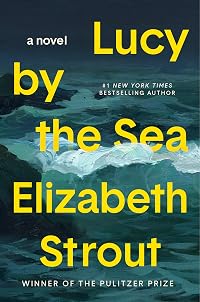
From Pulitzer Prize-winning, #1 New York Times bestselling author Elizabeth Strout comes a poignant, pitch-perfect novel about a divorced couple stuck together during lockdown--and the love, loss, despair, and hope that animate us even as the world seems to be falling apart. "No novelist working today has Strout's extraordinary capacity for radical empathy. . . . May droves of readers come to feel enlarged, comforted, and genuinely uplifted by Lucy's story."--The Boston Globe With her show more trademark spare, crystalline prose--a voice infused with "intimate, fragile, desperate humanness" (The Washington Post)--Elizabeth Strout turns her exquisitely tuned eye to the inner workings of the human heart, following the indomitable heroine of My Name Is Lucy Barton through the early days of the pandemic. As a panicked world goes into lockdown, Lucy Barton is uprooted from her life in Manhattan and bundled away to a small town in Maine by her ex-husband and on-again, off-again friend, William. For the next several months, it's just Lucy, William, and their complex past together in a little house nestled against the moody, swirling sea. Rich with empathy and emotion, Lucy by the Sea vividly captures the fear and struggles that come with isolation, as well as the hope, peace, and possibilities that those long, quiet days can inspire. At the heart of this story are the deep human connections that unite us even when we're apart--the pain of a beloved daughter's suffering, the emptiness that comes from the death of a loved one, the promise of a new friendship, and the comfort of an old, enduring love. show lessTags
Recommendations





Member Recommendations
Member Reviews
IN A NUTSHELL
‘Lucy by the Sea’ is a quietly told, introspective fictional memoir of Lucy Barton’s experience of the first COVID Lockdown and the changes, frustrations, fears and reassessments of priorities that came in its wake. It’s an undramatic, truthful account, focused on Lucy’s emotional landscape. It deals as much with ageing as it does with the stresses of Lockdown. Not so much the physical changes that ageing brings, but the changes in priorities and attitudes, the adjustment of long-term relationships: with her ex-husband and with her now adult daughters. For me, it ran a little long, but that was partly because this felt like a slice of life, albeit a life disrupted by Lockdown, rather than a story with a beginning, show more a middle and an end.
I relished the first two books in the Amgash series, ‘My Name Is Lucy Barton’ (2016) and ‘Anything Is Possible’ (2018). The writing was astonishingly good and exceptionally honest. Lucy Barthon’s voice was distinctive and engaging. They were novels that described life as we live it in a compelling and truthful way. Lucy Barton’s relationships showed all the signs of fracture and wear that you might expect from people who’ve lived through hard times. Lucy Barton grew up in extreme poverty. She is no longer poor, but she has never left the experience of poverty behind. I have the third book, ‘Oh William!’ (2021) on my shelves, but I skipped it to read the fourth book, ‘Lucy By The Sea’ (2022) out of sequence because it fits into my ‘Fiction in a Time of COVID’ reading challenge.
‘Lucy By The Sea’ was a quietly told fictional memoir of the emotions and reflections triggered by lockdown and the pandemic. It was not dramatic, but it was truthful, and the truths it shared, even though they were not my truths, summoned my own memories of lockdown: my rage at the loss of life that my incompetent government tolerated and the contrast between all that death and the relative comfort and safety of my lockdown.
Part of my fascination with the Lucy Barton character is that I have very little in common with her. She is empathetic, deeply curious about people and is good at intuiting their emotions. She’s often anxious, sometimes to a crippling degree. She’s so focused on her inner life that the mechanics of the world tend to pass her by. Through her, I finally understood how so many people failed to take in the scale of COVID and the likely length of lockdowns, even though all the relevant information was widely available by the beginning of March 2020.
The start of the novel, when Lucy accedes to her ex-husband’s request to leave NYC and live in Maine, was powerful and evocative. Lucy’s interior landscape and her shifting, increasingly fraught relationships with her daughters and her ex-husband felt authentic. Lockdown disrupted Lucy’s life, taking her from the familiar into the unknown, throwing her back into daily contact with her ex-husband while adding worries about, and restricting contact with, her daughters.
One of the things that resonated with me in Lucy’s reaction to the disruption of her life was her recognition that, when Lockdown was over, things would not go back to normal. Her life, and the lives of most of the people she knew, had been changed. Lucy recognises that she no longer has any desire to return to her Manhattan apartment or to the way of life she had there. Lockdown and the losses inflicted by COVID triggered this recognition, but they didn’t cause the change. They enforced a hiatus that enabled a reassessment of what was important. Lucy comes to recognise that she has entered old age and that what she wants for herself and from others is no longer what she wanted when she was young or middle-aged.
For me, the book ran a little long, perhaps because Elizabeth Strout wanted to show what the new normal looked like, or perhaps she wanted to show that life asserts itself even in the middle of a large-scale disruption. Whatever the reason, the final sections of the book felt to me like watching the tide go out on a gently sloping shore: not dramatic but easy to believe in.
Kimberly Farr’s narration was masterful. In my head, she is the voice of Lucy Barton, even when I read the text off the page. I recommend listening to the audiobook. Kimberley Farr’s narration added a level of intimacy to the reading experience. As I listened to her, it was easy to feel that she was sharing her thoughts and emotions only with me. Click on the YouTube link below to hear a sample.
https://youtu.be/AgU0C3NhUAI?si=QVeFbwmFSFWXqhu9
https://youtu.be/AgU0C3NhUAI?si=IMhiwgb__QRj8O_Q show less
‘Lucy by the Sea’ is a quietly told, introspective fictional memoir of Lucy Barton’s experience of the first COVID Lockdown and the changes, frustrations, fears and reassessments of priorities that came in its wake. It’s an undramatic, truthful account, focused on Lucy’s emotional landscape. It deals as much with ageing as it does with the stresses of Lockdown. Not so much the physical changes that ageing brings, but the changes in priorities and attitudes, the adjustment of long-term relationships: with her ex-husband and with her now adult daughters. For me, it ran a little long, but that was partly because this felt like a slice of life, albeit a life disrupted by Lockdown, rather than a story with a beginning, show more a middle and an end.
I relished the first two books in the Amgash series, ‘My Name Is Lucy Barton’ (2016) and ‘Anything Is Possible’ (2018). The writing was astonishingly good and exceptionally honest. Lucy Barthon’s voice was distinctive and engaging. They were novels that described life as we live it in a compelling and truthful way. Lucy Barton’s relationships showed all the signs of fracture and wear that you might expect from people who’ve lived through hard times. Lucy Barton grew up in extreme poverty. She is no longer poor, but she has never left the experience of poverty behind. I have the third book, ‘Oh William!’ (2021) on my shelves, but I skipped it to read the fourth book, ‘Lucy By The Sea’ (2022) out of sequence because it fits into my ‘Fiction in a Time of COVID’ reading challenge.
‘Lucy By The Sea’ was a quietly told fictional memoir of the emotions and reflections triggered by lockdown and the pandemic. It was not dramatic, but it was truthful, and the truths it shared, even though they were not my truths, summoned my own memories of lockdown: my rage at the loss of life that my incompetent government tolerated and the contrast between all that death and the relative comfort and safety of my lockdown.
Part of my fascination with the Lucy Barton character is that I have very little in common with her. She is empathetic, deeply curious about people and is good at intuiting their emotions. She’s often anxious, sometimes to a crippling degree. She’s so focused on her inner life that the mechanics of the world tend to pass her by. Through her, I finally understood how so many people failed to take in the scale of COVID and the likely length of lockdowns, even though all the relevant information was widely available by the beginning of March 2020.
The start of the novel, when Lucy accedes to her ex-husband’s request to leave NYC and live in Maine, was powerful and evocative. Lucy’s interior landscape and her shifting, increasingly fraught relationships with her daughters and her ex-husband felt authentic. Lockdown disrupted Lucy’s life, taking her from the familiar into the unknown, throwing her back into daily contact with her ex-husband while adding worries about, and restricting contact with, her daughters.
One of the things that resonated with me in Lucy’s reaction to the disruption of her life was her recognition that, when Lockdown was over, things would not go back to normal. Her life, and the lives of most of the people she knew, had been changed. Lucy recognises that she no longer has any desire to return to her Manhattan apartment or to the way of life she had there. Lockdown and the losses inflicted by COVID triggered this recognition, but they didn’t cause the change. They enforced a hiatus that enabled a reassessment of what was important. Lucy comes to recognise that she has entered old age and that what she wants for herself and from others is no longer what she wanted when she was young or middle-aged.
For me, the book ran a little long, perhaps because Elizabeth Strout wanted to show what the new normal looked like, or perhaps she wanted to show that life asserts itself even in the middle of a large-scale disruption. Whatever the reason, the final sections of the book felt to me like watching the tide go out on a gently sloping shore: not dramatic but easy to believe in.
Kimberly Farr’s narration was masterful. In my head, she is the voice of Lucy Barton, even when I read the text off the page. I recommend listening to the audiobook. Kimberley Farr’s narration added a level of intimacy to the reading experience. As I listened to her, it was easy to feel that she was sharing her thoughts and emotions only with me. Click on the YouTube link below to hear a sample.
https://youtu.be/AgU0C3NhUAI?si=QVeFbwmFSFWXqhu9
https://youtu.be/AgU0C3NhUAI?si=IMhiwgb__QRj8O_Q show less
Oh how I love Elizabeth Strout. And how amazingly she captured those crazy pandemic times: sitting 6 feet away from people, all masked, at picnic tables. The terror, not knowing at first how this virus actually spread, and how our isolation led to thoughts of death and getting old. This is the first, I suppose of many to come, pandemic novel I have read, and it felt so real to me - as if she read the journal I kept during that awful year.
Strout completely inhabits the women she writes about with her conversational style, and so one of my only criticisms, her overuse of "is what I'm saying," is really not a criticism because that's how Lucy has always talked.
The only other thing that mildly bothered me in this otherwise perfect book was show more the lack of any mention of the contentious, momentous, 2020 election. George Floyd and the subsequent demonstrations; the January 6 insurrection - both made it. But no mention of the defeat of the former president, whom she does not name, seemed odd.
Five stars, nevertheless. show less
Strout completely inhabits the women she writes about with her conversational style, and so one of my only criticisms, her overuse of "is what I'm saying," is really not a criticism because that's how Lucy has always talked.
The only other thing that mildly bothered me in this otherwise perfect book was show more the lack of any mention of the contentious, momentous, 2020 election. George Floyd and the subsequent demonstrations; the January 6 insurrection - both made it. But no mention of the defeat of the former president, whom she does not name, seemed odd.
Five stars, nevertheless. show less
This novel left me conflicted. In this fourth book following the life of Lucy Barton, Lucy is hustled out of her apartment in New York by her ex-husband and taken to a remote house on the coast of Maine to wait out the pandemic with him. Elizabeth Strout has been writing about Lucy's life for awhile and here we see what kind of old woman she is. It's interesting to see how people change (or fail to change) over time and I'm on board for this project of Strout's. There's even a look at Olive Kitteridge in this novel, now living in a retirement home. Looking at how Lucy is thinking more than ever about her childhood and about her siblings that she left behind as she fought to be free of background of deprivation certainly fits with the show more elderly people I know. And Lucy's situation is exacerbated by the isolation of the pandemic and by being isolated with William, her strong-willed and not hugely communicative ex-husband. Which is to say, Lucy's tendencies toward worry have solidified into a querulous focus on all the things that upset her, past and present.
Which brings me to my conflict with this novel; I appreciate the project Strout is finishing up here, with this final book about Lucy, and I love the earlier novels in this sequence (Anything is Possible is brilliant), but Lucy is just not that fun a character to spend time with. By pairing this fussy woman who overthinks some things while entirely overlooking other more obvious things, with a focus on events we are arguably still living through ourselves, this novel is often more frustrating that illuminating. I'm on board for how Lucy, no matter how secure and loved she is, can't help but focus on the same uncertainties that blighted her childhood. But this older Lucy, inured to the real lives of those less privileged than herself, just doesn't see how the solutions her family finds to the problems posed by the pandemic, are solutions only open to those with ample resources, from extra homes waiting for when they are needed, to the ability to simply pay others to take the risks deemed too dangerous for themselves. It's an odd blind spot in a character consumed by assessing how she is perceived by others.
I'm curious how this book will be seen in years removed from the current moment. It also leaves me with the same question I've been thinking about since 9/11; when are we ready to read fictitious accounts about events we ourselves lived through? And which accounts do we want to read? I found myself unsympathetic to characters whose difficulties during the pandemic were the most minimal, sheltered as they were by wealth and a willingness to use that wealth to escape, but I think that I would have enjoyed a novel told from the point of view of someone who lacked the ability to distance themselves. Or maybe I just need more distance from events to be able to engage with them in novels.
I'm looking forward to Strout's next project, whatever form that takes. show less
Which brings me to my conflict with this novel; I appreciate the project Strout is finishing up here, with this final book about Lucy, and I love the earlier novels in this sequence (Anything is Possible is brilliant), but Lucy is just not that fun a character to spend time with. By pairing this fussy woman who overthinks some things while entirely overlooking other more obvious things, with a focus on events we are arguably still living through ourselves, this novel is often more frustrating that illuminating. I'm on board for how Lucy, no matter how secure and loved she is, can't help but focus on the same uncertainties that blighted her childhood. But this older Lucy, inured to the real lives of those less privileged than herself, just doesn't see how the solutions her family finds to the problems posed by the pandemic, are solutions only open to those with ample resources, from extra homes waiting for when they are needed, to the ability to simply pay others to take the risks deemed too dangerous for themselves. It's an odd blind spot in a character consumed by assessing how she is perceived by others.
I'm curious how this book will be seen in years removed from the current moment. It also leaves me with the same question I've been thinking about since 9/11; when are we ready to read fictitious accounts about events we ourselves lived through? And which accounts do we want to read? I found myself unsympathetic to characters whose difficulties during the pandemic were the most minimal, sheltered as they were by wealth and a willingness to use that wealth to escape, but I think that I would have enjoyed a novel told from the point of view of someone who lacked the ability to distance themselves. Or maybe I just need more distance from events to be able to engage with them in novels.
I'm looking forward to Strout's next project, whatever form that takes. show less
Lucy Barton is a writer based in New York City, and in March, 2020 she is unaware and not prepared for the changes that will soon dramatically impact all aspects of life. If Lucy is somewhat in denial, her former husband William is not, and quickly takes steps to improve Lucy’s safety and that of their two adult daughters. Lucy agrees to share a rented house in Maine with William; their daughters make other arrangements. Everyone thinks this will only last a few weeks (didn’t we all?), but as time goes on they find new rhythms to their days. They also face loss in various forms, and at the same time forge new types of relationships with one another.
When My Name is Lucy Barton was released in 2016, I had no idea it would be part of a show more series, let alone a series I have consistently rated 4.5 stars. Each book has struck an emotional chord that surprised me given the somewhat unreliable first-person narration and relatively spare prose. But perhaps I shouldn’t be surprised, as there are aspects of Lucy’s life I can relate to; namely, trying to create deep and loving relationships with adult daughters, having had no role model growing up. Lucy stumbles and then tries again, sometimes making progress and sometimes setting them back a couple paces.
That said, readers need to be prepared for a pandemic-centric novel, and one that also covers several other major US events from what was, by all accounts, a fairly ghastly year. Strout’s depiction is spot on, and resurrected some memories that I would prefer not to dwell on. I hope to see more Lucy Barton novels and perhaps the next time there will be more good news. I vote for a meetup between Lucy and Strout’s other notable heroine, Olive Kitteridge. show less
When My Name is Lucy Barton was released in 2016, I had no idea it would be part of a show more series, let alone a series I have consistently rated 4.5 stars. Each book has struck an emotional chord that surprised me given the somewhat unreliable first-person narration and relatively spare prose. But perhaps I shouldn’t be surprised, as there are aspects of Lucy’s life I can relate to; namely, trying to create deep and loving relationships with adult daughters, having had no role model growing up. Lucy stumbles and then tries again, sometimes making progress and sometimes setting them back a couple paces.
That said, readers need to be prepared for a pandemic-centric novel, and one that also covers several other major US events from what was, by all accounts, a fairly ghastly year. Strout’s depiction is spot on, and resurrected some memories that I would prefer not to dwell on. I hope to see more Lucy Barton novels and perhaps the next time there will be more good news. I vote for a meetup between Lucy and Strout’s other notable heroine, Olive Kitteridge. show less
I should preface that I love Elizabeth Strout and would probably enjoy reading her grocery list! This is the third book in the Amgash series following My Name is Lucy Barton and Oh William! (Or it’s the fourth book if Strout’s story collection Anything is Possible is included.)
This book once again reunites Lucy and her philandering ex-husband and long-time friend William. He convinces Lucy to leave Manhattan and move to a small town in coastal Maine as New York City goes into lockdown because of COVID-19. The novel focuses on Lucy’s thoughts and feelings as she adjusts to
life during a pandemic. Though isolated from the rest of her family, she maintains contact with them and tries to help them through their own struggles and show more crises.
Because of its conversational tone and rambling narrative, reading the book is like meeting with a friend
and listening as she chats away, jumping from topic to topic: “Before I tell you about . . . let me say that
. . .” Since I have encountered Lucy in previous books, I felt like I were revisiting with an old friend.
Lucy captures perfectly life during the pandemic. Initially there is a sense of disbelief. Then as the
nature of the pandemic is understood, various emotions emerge: loneliness, sadness, uncertainty,
anxiety, and grief: “The sadness that rose and fell in me was like the tides.” Readers will certainly be
able to relate to Lucy’s feelings. I loved her description of feeling “as though each day was like a huge
stretch of ice I had to walk over . . . and I had to make it through each day without knowing when it
would stop, and it seemed it would not stop, and so I felt a great uneasiness.” I even found myself
chuckling at the small annoyances that plague us when we’re in forced isolation with another person:
Lucy hates William’s slurping when he eats, and he hates to see her floss her teeth. She describes
episodes of brain fog, “Covid mind” William calls it. For many people, the various traumas of the
pandemic served to amplify traumas of the past, and Lucy relives childhood traumas and the death of
her second husband. She also finds herself in situations that teach her about herself; for instance, her
failure to act in one situation has her admitting, “And I learned something that day. About myself and
people, and their self-interest.”
Despite her own weariness and sadness, Lucy does realize that things could be worse: “I thought of all
the people – old people and young people – who had lived out the pandemic in rooms . . . Alone.” She
does manage to find comfort in new friendships and in the beauty that surrounds her: “What a thing
the physical world is!” Perhaps Lucy’s friend expresses best a way to live: “’It’s our duty to bear the
burden . . . with as much grace as we can.’”
What I really appreciated is Lucy’s trying to understand people who are not like her and hold opposite
views. She mentions that a problem is that “Everyone thinks like themselves” so she makes a point of
considering things from others’ points of view. She and William discuss Trump supporters. William says,
“’They’re angry. Their lives have been hard.’” And Lucy makes friends with one of them and concludes,
“And what if I had continued to feel that my entire life, what if all the jobs I had taken in my life were
not enough to really make a living, what if I felt looked down upon all the time by the wealthier people
in this country . . . I saw what these people were feeling; they were like my sister Vicky, and I understood
them. They had been made to feel poorly about themselves, they were looked at with disdain, and they
could no longer stand it.” She even writes a story that “is sympathetic toward a white cop who liked the
old president and who does an act of violence and gets away with it” and she admits about her
protagonist, “I loved him.” It seems that Lucy tries to love everyone though she struggles with loving
herself.
Lucy knows that people are different: “We are born with a certain nature, I think. And then the world
takes its swings at us” and “some people are luckier than others.” But everyone suffers and experiences
sadness, pain, and fear: “money makes no difference in these kinds of things.” She realizes she may
have more in common with people than she wants to admit: for instance, she draws away from people
like Charlene and her sister Vicky who have “a faint odor of loneliness . . . because I had always been
afraid of giving off that odor myself.” She repeats that “Everyone needs to feel important.” She also
realizes that though “We are alone in these things that we suffer,” everyone is “only doing what we can
to get through.” In essence, “We are all in lockdown, all the time. We just don’t know it, that’s all. But
we do the best we can. Most of us are just trying to get through.”
I loved the many characteristics of Strout’s style: a truly introspective protagonist, the references to
characters from other books, and the short sentences which reveal a complex understanding of
relationships and the human condition. Readers should be warned, however, that this may be a painful
read since it serves as a reminder of pandemic experiences. Some people may prefer more distance
from a not-yet-over pandemic. I myself would take any opportunity to live in Lucy’s head for a while.
Note: I received a digital galley from the publisher via NetGalley.
Please check out my reader's blog (https://schatjesshelves.blogspot.com/) and follow me on Twitter (@DCYakabuski). show less
This book once again reunites Lucy and her philandering ex-husband and long-time friend William. He convinces Lucy to leave Manhattan and move to a small town in coastal Maine as New York City goes into lockdown because of COVID-19. The novel focuses on Lucy’s thoughts and feelings as she adjusts to
life during a pandemic. Though isolated from the rest of her family, she maintains contact with them and tries to help them through their own struggles and show more crises.
Because of its conversational tone and rambling narrative, reading the book is like meeting with a friend
and listening as she chats away, jumping from topic to topic: “Before I tell you about . . . let me say that
. . .” Since I have encountered Lucy in previous books, I felt like I were revisiting with an old friend.
Lucy captures perfectly life during the pandemic. Initially there is a sense of disbelief. Then as the
nature of the pandemic is understood, various emotions emerge: loneliness, sadness, uncertainty,
anxiety, and grief: “The sadness that rose and fell in me was like the tides.” Readers will certainly be
able to relate to Lucy’s feelings. I loved her description of feeling “as though each day was like a huge
stretch of ice I had to walk over . . . and I had to make it through each day without knowing when it
would stop, and it seemed it would not stop, and so I felt a great uneasiness.” I even found myself
chuckling at the small annoyances that plague us when we’re in forced isolation with another person:
Lucy hates William’s slurping when he eats, and he hates to see her floss her teeth. She describes
episodes of brain fog, “Covid mind” William calls it. For many people, the various traumas of the
pandemic served to amplify traumas of the past, and Lucy relives childhood traumas and the death of
her second husband. She also finds herself in situations that teach her about herself; for instance, her
failure to act in one situation has her admitting, “And I learned something that day. About myself and
people, and their self-interest.”
Despite her own weariness and sadness, Lucy does realize that things could be worse: “I thought of all
the people – old people and young people – who had lived out the pandemic in rooms . . . Alone.” She
does manage to find comfort in new friendships and in the beauty that surrounds her: “What a thing
the physical world is!” Perhaps Lucy’s friend expresses best a way to live: “’It’s our duty to bear the
burden . . . with as much grace as we can.’”
What I really appreciated is Lucy’s trying to understand people who are not like her and hold opposite
views. She mentions that a problem is that “Everyone thinks like themselves” so she makes a point of
considering things from others’ points of view. She and William discuss Trump supporters. William says,
“’They’re angry. Their lives have been hard.’” And Lucy makes friends with one of them and concludes,
“And what if I had continued to feel that my entire life, what if all the jobs I had taken in my life were
not enough to really make a living, what if I felt looked down upon all the time by the wealthier people
in this country . . . I saw what these people were feeling; they were like my sister Vicky, and I understood
them. They had been made to feel poorly about themselves, they were looked at with disdain, and they
could no longer stand it.” She even writes a story that “is sympathetic toward a white cop who liked the
old president and who does an act of violence and gets away with it” and she admits about her
protagonist, “I loved him.” It seems that Lucy tries to love everyone though she struggles with loving
herself.
Lucy knows that people are different: “We are born with a certain nature, I think. And then the world
takes its swings at us” and “some people are luckier than others.” But everyone suffers and experiences
sadness, pain, and fear: “money makes no difference in these kinds of things.” She realizes she may
have more in common with people than she wants to admit: for instance, she draws away from people
like Charlene and her sister Vicky who have “a faint odor of loneliness . . . because I had always been
afraid of giving off that odor myself.” She repeats that “Everyone needs to feel important.” She also
realizes that though “We are alone in these things that we suffer,” everyone is “only doing what we can
to get through.” In essence, “We are all in lockdown, all the time. We just don’t know it, that’s all. But
we do the best we can. Most of us are just trying to get through.”
I loved the many characteristics of Strout’s style: a truly introspective protagonist, the references to
characters from other books, and the short sentences which reveal a complex understanding of
relationships and the human condition. Readers should be warned, however, that this may be a painful
read since it serves as a reminder of pandemic experiences. Some people may prefer more distance
from a not-yet-over pandemic. I myself would take any opportunity to live in Lucy’s head for a while.
Note: I received a digital galley from the publisher via NetGalley.
Please check out my reader's blog (https://schatjesshelves.blogspot.com/) and follow me on Twitter (@DCYakabuski). show less
It is the early spring of 2020 and the whole world is about to shut down. Lucy Barton, a recent widow and a long-time resident of New York City, is on the verge of being stranded in a quarantined city until her first husband William convinces her to move with him to coastal Maine to ride out the Covid storm. There she begins her fish-out-of-water existence as a stranger in a place where she is not always welcome while also struggling to keep her family life together and resume her writing career. As the months pass, life does bring her some joys along with the many hardships, such as her budding friendship with Bob Burgess, a long-standing member of the community and someone William has known for many years.
Lucy by the Sea is author show more Elizabeth Strout’s fourth novel to feature what is perhaps her most beloved character. It is a very introspective story in which not much of consequence happens, but then that is really the point given the focus on the social isolation that the pandemic imposed on us all for so long. At the heart of the tale is the way in which Lucy addresses the grief of the recent loss of her second husband David, as well as the way she continues to reconnect with William and forgive him for his many past transgressions. If there is anything amounting to dramatic tension in the book, it comes from Lucy’s adult daughters, Chrissy and Becka, whose personal lives are a bit of a mess at the moment.
While the story falls a little short of being captivating, Strout’s writing is uniformly superb and her deep understanding of what makes Lucy tick is marvelous. This is an author who seems to be at the top of her game when it comes to insights into what makes us human and there is an admirable confidence about the way she allows Lucy’s inherent vulnerability to show through. She is even a little playful at times: there is a great line in which Becka quotes her failed poet husband in his attempt to insult Lucy by saying “He thought you were just an older white woman writing about older white women”. Of course, Strout could have been pointing at herself there, which is just one of the small surprises contained throughout this thoughtful volume. show less
Lucy by the Sea is author show more Elizabeth Strout’s fourth novel to feature what is perhaps her most beloved character. It is a very introspective story in which not much of consequence happens, but then that is really the point given the focus on the social isolation that the pandemic imposed on us all for so long. At the heart of the tale is the way in which Lucy addresses the grief of the recent loss of her second husband David, as well as the way she continues to reconnect with William and forgive him for his many past transgressions. If there is anything amounting to dramatic tension in the book, it comes from Lucy’s adult daughters, Chrissy and Becka, whose personal lives are a bit of a mess at the moment.
While the story falls a little short of being captivating, Strout’s writing is uniformly superb and her deep understanding of what makes Lucy tick is marvelous. This is an author who seems to be at the top of her game when it comes to insights into what makes us human and there is an admirable confidence about the way she allows Lucy’s inherent vulnerability to show through. She is even a little playful at times: there is a great line in which Becka quotes her failed poet husband in his attempt to insult Lucy by saying “He thought you were just an older white woman writing about older white women”. Of course, Strout could have been pointing at herself there, which is just one of the small surprises contained throughout this thoughtful volume. show less
Summary: Lucy Barton goes with her ex-husband William to a house on the coast of Maine during the COVID lockdown of 2020.
On a premonition, Lucy Barton cancelled her book tour in Europe. Then her ex-husband William, a parasitologist, shows up at her apartment and insists that she pack up and leave with him to get out of New York City to an out of the way place in Maine. It is early March of 2020 and COVID-19 has arrived in New York City. William has followed the epidemic and can foresee what is in store. He wants to get Lucy and their daughters out of the city. Reluctantly, she closes up her place and goes with him to an old house with character on the coast of Maine, found for them by an old friend, Bob Burgess.
Much of the book is show more Lucy’s interior monologue. We go through those early weeks that we all remember of hearing of the rapidly climbing number of infections, of friends getting sick, of worries about family, particularly Lucy’s younger daughter, who wants to stay in New York with her loser boyfriend. We re-live socially distanced and masked encounters. And we remember lives reduced to daily routines of household life, Zoom calls, walks outdoors, punctuated by the news. At points, like many of us, Lucy wonders if she is losing her mind, or at least her memory. We relive that growing recognition both of how bad things were and that this wouldn’t be solved by a few weeks of lockdown.
Sharing a house with your ex raises all kinds of memories for both of them. William had gone on to a number of affairs and failed marriages. Chastened by age and health issues, he takes stock of all the failures in his life. For both of them, as they watch one daughter in an unhealthy relationship and another unable to have children and going through a rocky period in their marriage, they relive their own failed relationship as they try to offer what help parents can and cannot do, as they re-negotiate their relationships with their adult children, and with each other. I will leave you to find out how being in lockdown together works out for them.
Bob Burgess, whose wife is the town minister, becomes Lucy’s sounding board as they take walks together. Like so many of us, Lucy has to sort out all her feelings about those who don’t wear masks, including a sister who has converted to a conservative form of Christianity, who nearly dies but doesn’t. for all those who support the current president, for those who refuse the vaccine including a woman who she works with at a food pantry.
What is striking is that we see both her interior reactions and a posture of listening, of just trying to understand and not change. Coming to terms with some of the wounds of her own past, she finds herself in a place of gentleness with others, something I wish I could have achieved at times during this period.
Strout portrays people who grew during the isolation of lockdown. They examined their own and other’s flawed and broken and yet unique lives, and the efforts to love as best as they could. They nurtured relationships even as it appeared the country was trying to tear itself apart.
This is not a book to read if you don’t want to relive those years. But I found that the reading reminded me of my own journey of trying to make sense of our radically changed lives and country. And I got to do this with this delightful woman, Lucy Barton. I wonder to what degree she is an alter ego of Elizabeth Strout. What I do know is that I’ve loved her Olive Kitteridge books and this as well (Olive makes a kind of cameo appearance!). And there was the delightful discovery, in writing this review, that there are several previous Lucy Barton books. You can bet that I will be on the lookout for them! show less
On a premonition, Lucy Barton cancelled her book tour in Europe. Then her ex-husband William, a parasitologist, shows up at her apartment and insists that she pack up and leave with him to get out of New York City to an out of the way place in Maine. It is early March of 2020 and COVID-19 has arrived in New York City. William has followed the epidemic and can foresee what is in store. He wants to get Lucy and their daughters out of the city. Reluctantly, she closes up her place and goes with him to an old house with character on the coast of Maine, found for them by an old friend, Bob Burgess.
Much of the book is show more Lucy’s interior monologue. We go through those early weeks that we all remember of hearing of the rapidly climbing number of infections, of friends getting sick, of worries about family, particularly Lucy’s younger daughter, who wants to stay in New York with her loser boyfriend. We re-live socially distanced and masked encounters. And we remember lives reduced to daily routines of household life, Zoom calls, walks outdoors, punctuated by the news. At points, like many of us, Lucy wonders if she is losing her mind, or at least her memory. We relive that growing recognition both of how bad things were and that this wouldn’t be solved by a few weeks of lockdown.
Sharing a house with your ex raises all kinds of memories for both of them. William had gone on to a number of affairs and failed marriages. Chastened by age and health issues, he takes stock of all the failures in his life. For both of them, as they watch one daughter in an unhealthy relationship and another unable to have children and going through a rocky period in their marriage, they relive their own failed relationship as they try to offer what help parents can and cannot do, as they re-negotiate their relationships with their adult children, and with each other. I will leave you to find out how being in lockdown together works out for them.
Bob Burgess, whose wife is the town minister, becomes Lucy’s sounding board as they take walks together. Like so many of us, Lucy has to sort out all her feelings about those who don’t wear masks, including a sister who has converted to a conservative form of Christianity, who nearly dies but doesn’t. for all those who support the current president, for those who refuse the vaccine including a woman who she works with at a food pantry.
What is striking is that we see both her interior reactions and a posture of listening, of just trying to understand and not change. Coming to terms with some of the wounds of her own past, she finds herself in a place of gentleness with others, something I wish I could have achieved at times during this period.
Strout portrays people who grew during the isolation of lockdown. They examined their own and other’s flawed and broken and yet unique lives, and the efforts to love as best as they could. They nurtured relationships even as it appeared the country was trying to tear itself apart.
This is not a book to read if you don’t want to relive those years. But I found that the reading reminded me of my own journey of trying to make sense of our radically changed lives and country. And I got to do this with this delightful woman, Lucy Barton. I wonder to what degree she is an alter ego of Elizabeth Strout. What I do know is that I’ve loved her Olive Kitteridge books and this as well (Olive makes a kind of cameo appearance!). And there was the delightful discovery, in writing this review, that there are several previous Lucy Barton books. You can bet that I will be on the lookout for them! show less
Members
- Recently Added By
Published Reviews
ThingScore 75
The disarming situation described at the opening of Elizabeth Strout’s new novel might seem fantastical, the stuff of a million post-apocalyptic movies, were it not for the fact that every single one of us has recently lived through it. And lockdown especially. Strout isn’t the first writer to go there, but she certainly makes magnificent and thrilling use of it in this, her most nuanced show more – and intensely moving – Lucy Barton novel yet show less
added by bergs47
Lists

Books published and read in 2022
82 works; 5 members

Books Read in 2023
5,638 works; 147 members

Books Read in 2022
5,226 works; 115 members

2022 GoodReads Choice Fiction Awards
20 works; 1 member

Llibres que he llegit el 2024
77 works; 1 member

Top Five Books of 2023
767 works; 317 members
Author Information

23+ Works 33,484 Members
Elizabeth Strout (born January 6, 1956) is an American author of fiction. She was born in Portland, Maine. After graduating from Bates College, she spent a year in Oxford, England. In 1982 she graduated with honors, and received both a law degree from the Syracuse University College of Law and a Certificate of Gerontology from the Syracuse School show more of Social Work. Strout wrote Amy and Isabelle over the course of six or seven years, which when published was shortlisted for the 2000 Orange Prize and nominated for the 2000 PEN/Faulkner Award for fiction. Amy and Isabelle was made into a television movie starring Elisabeth Shue and was produced by Oprah Winfrey's studio, Harpo Films. Strout was a NEH (National Endowment for the Humanities) professor at Colgate University during the Fall Semester of 2007, where she taught creative writing. She was also on the faculty of the MFA program at Queens University of Charlotte in Charlotte, North Carolina. In 2009 Strout was honored with a Pulitzer Prize for Fiction for Olive Kitteridge, a collection of connected short stories she wrote about a woman and her immediate family who lived on the coast of Maine. Strout also wrote The Burgess Boys in 2013 which made The New York Times Best Seller List. Ms. Strout's title, My name is Lucy Barton, made the New York Times Best Seller List in 2016. Her newest title, Anything is Possible (2017), won the 2018 Story Prize. (Bowker Author Biography) show less
All Editions
Some Editions
Awards and Honors
Awards
Distinctions
The Guardian Book of the Day (2022-09-29)
Series

Belongs to Publisher Series
Common Knowledge
- Canonical title
- Lucy by the Sea
- Original title
- Lucy by the sea
- Original publication date
- 2022
- People/Characters
- Lucy Barton; William Gerhardt; Chrissy; Becka; Bob Burgess; Estelle (show all 17); Bridget; Michael; Trey; Margaret Burgess; Melvin; Barbara; Lois Bubar; Charlene Bibber; Pete Barton; Vicky Barton; David
- Important places
- Crosby, Maine, USA; New York, New York, USA; Connecticut, USA
- Important events
- COVID-19 pandemic
- Dedication
- For my husband, Jim Tierney
And for my son-in-law, Will Flynt
With love and admiration for them both—- - First words
- Like many others, I did not see it coming.
- Quotations
- It's interesting how people endure things (15%)
Who knows why people are different? We are born with a certain nature, I think. And then the world takes its swings at us. (19%)
Grief is a private thing. God, is it a private thing. (21%)
But Becka seemed to disappear from me. I even felt she was avoiding me; I would call her and she would not call me back for a day or two. When she did speak to me her voice was rather flat. "Mom, I'm really okay, please don't... (show all) worry so much about me," she said. It hurt my heart with heaviness as though a damp and dirty dishcloth lay across it.
But of course she was grieving her marriage, no matter how unhappy she may have been in it—this thought finally arrived to me. And I thought, Lucy, you are so stupid not to have realized that. (32%)
I understood... that the childhood isolation of fear and lonliness would never leave one. (62%)
We are alone in the things that we suffer. (68%)
It is a gift in this life that we do not know what awaits us. (78%)
Everyone has to feel like they matter. I did not feel that I mattered. Because in a way I have never been able to feel that. And so the days were hard. (84%)
And then I remembered one time when I was pregnant with Chrissy, I had looked down at my big stomach and put my hand over it and thought: Whoever you are, you do not belong to me. My job is to help you get into the world, but... (show all) you do not belong to me. (98%)
There was a feeling of mutedness.
Like my ears were plugged up as though I was underwater.
he said his life was not much different with the pandemic. He said, "I've been socially distancing for sixty-six years."
It seemed strange to me that the world of New York would remain so beautiful as all those people were dying.
The question of why some people are luckier than others—I have no answer for this.
It has been said that the second year of widowhood is worse than the first—the idea being, I think, that the shock has worn off and now one has to simply live with the loss
I did not speak of this to William.
William likes to fix things, and this could not be fixed.
Almost always, there was that sense of being underwater; of things not being real.
I guess many of us have regrets, he wrote, but my regrets seem to grow as I get older.
The sadness that rose and fell in me was like the tides.
There was for me during this time a sense of being dazed. As though, in a way, I was not capable of taking in everything that was happening in this way.
We went by old cemeteries and we stopped at one and read the names and dates on the headstones. William, walking ahead of me, said, "Lucy, look at this." And I went to where he was standing, he swept his arm, and I saw that t... (show all)here were a number of tombstones that had death dates in 1918 and 1919, and they were not always old people who had died. "The flu epidemic," William said to me.
"They're angry. Their lives have been hard. Look at your sister, Vicky. She's working a dangerous job right now, because she has to. But she still can't get ahead." Then he said, "Lucy, people are in trouble. And those... (show all) who aren't in trouble, they just don't get it. Look how I just didn't get it—being surprised that this Charlene woman was working in a food pantry. And also, we make the people who are in trouble feel stupid. It's not good."
At the very beginning of the movie was a blue screen with many white ping-pong balls bouncing around it, and every so often a ping-pong ball would bounce into another ping-pong ball and then bounce off again. This went on, th... (show all)e ping-pong balls bouncing around randomly and randomly hitting into one another. And in my memory I thought—even back then, so young—I thought: That is like people.
My point is,if we are lucky we bounce into someone. But we always bounce away again, at least a little.
I had a sense then of being old, and William is even older; I thought how our time was almost done, and I had a real fear that William would die before me and I would be really lost.
We all live with people—and places—and things—that we have given weight to. But we are weightless, in the end.
It's funny the things we remember, even when we think we are not remembering well anymore.
The town was like a ghost town, but when William drove up to where the houses had been built for the millworkers, we saw a few people out in front of them. The houses were in terrible shape; they seemed to spew forth their gu... (show all)ts onto their front lawns.
I need to say: This is the question that has made me a writer; always that deep desire to know what it feels like to a different person.
But my brother's life had been, and still was, one of great solitariness. And he would arrive in my mind sometimes, as he did this night. I remembered that years ago my mother had told me—Pete would have been a grown man at... (show all) that point—that my brother would spend the night in the Pedersons' barn—this was a barn that was closest to us—to be with the pigs that were going to be taken to slaughter the next day.
and what I always remember is that my mother looked up at me and said with an odd smile, "Do you want some too?"
I also noticed how, in the afternoons, clouds might start to come in and they were gently autumnal; they made the world look quietly soft as though it was already getting ready to tuck itself in for the night.
There was a faint odor of loneliness that came from Charlene. And the awful truth is this: It had made me draw back just slightly inside myself. And I knew this was because I had always been afraid of giving off that odor mys... (show all)elf.
I thought how when a person is really excited about something, it can be contagious.
As is true with many people who feel poorly, there was a sense of shame that accompanied this.
And I thought: We are only doing what we can to get through.
I have always been frightened of doing something wrong, of being inconsiderate; it is a real fear I have.
I could not stop feeling that life as I had known it was gone.
But I have often thought that it made me a nicer person, I really do. When you are truly humbled, that can happen. I have come to notice this in life. You can become bigger or bitter, this is what I think. And as a result of ... (show all)that pain, I became bigger.
Because I would never have had an affair, I thought William would not either.
I had been thinking like myself.
And there they were, my beautiful daughters. By the duck pond were my two girls. But they were never really mine, I thought as I walked toward them, any more than New York City was ever really mine.
And then I remembered that one time, when I was pregnant with Chrissy, I had looked down at my big stomach and put my hand over it and thought: Whoever you are, you do not belong to me. My job is to help you get into the worl... (show all)d, but you do not belong to me. - Last words
- (Click to show. Warning: May contain spoilers.)And I stood there holding on to this man as though he were the very last person left on this sweet sad place that we call Earth.
- Original language*
- englanti
*Some information comes from Common Knowledge in other languages. Click "Edit" for more information.
Classifications
Statistics
- Members
- 1,554
- Popularity
- 14,755
- Reviews
- 91
- Rating
- (3.98)
- Languages
- 11 — Catalan, Dutch, English, Finnish, French, German, Greek, Italian, Polish, Spanish, Swedish
- Media
- Paper, Audiobook, Ebook
- ISBNs
- 34
- ASINs
- 10