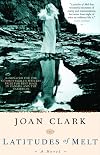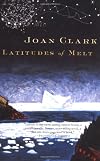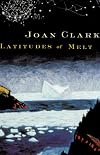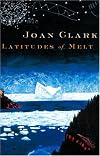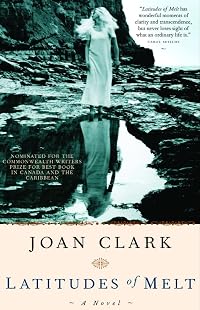
Latitudes of Melt
by Joan Clark
On This Page
Description
Found by a fisherman on an ice floe as an infant, Aurora is believed to be a changeling by the superstitious residents of Newfoundland, and it is not until she is an old woman that the truth of her origins is revealed.Tags
Recommendations
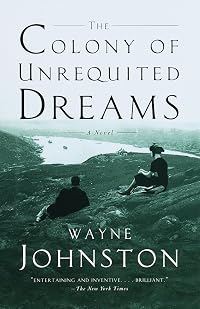
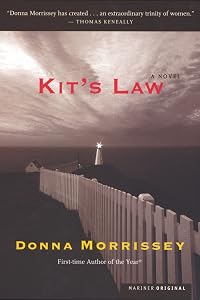
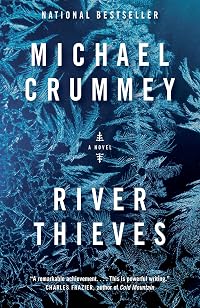
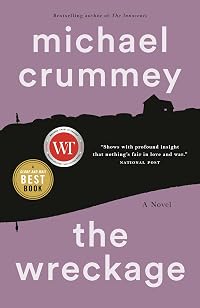
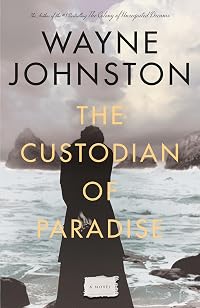
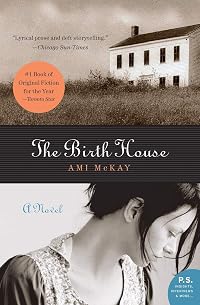
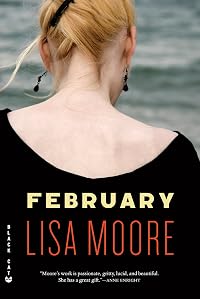
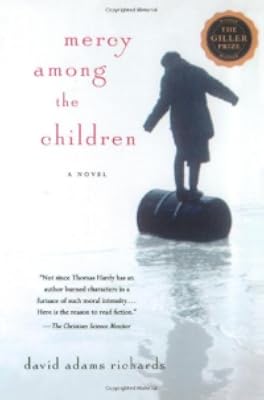

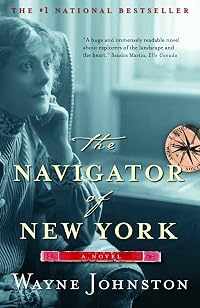

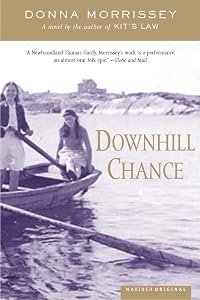
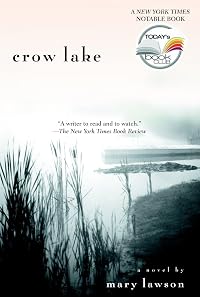
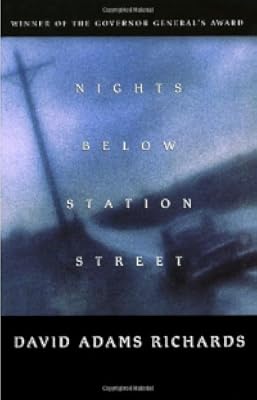
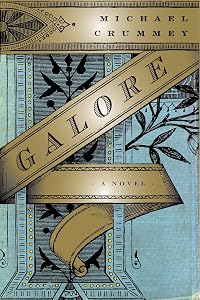
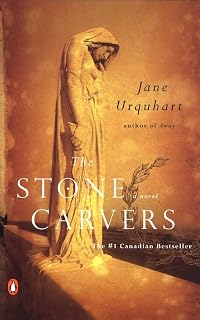
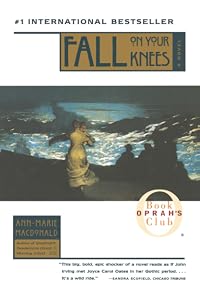
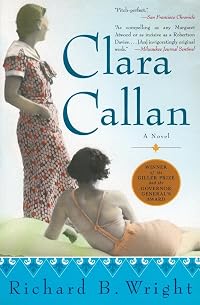



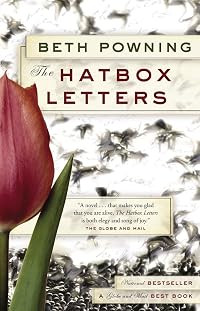
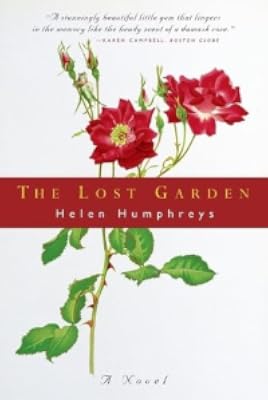


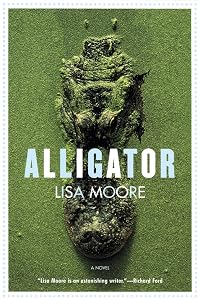

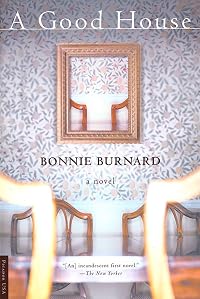


Member Recommendations
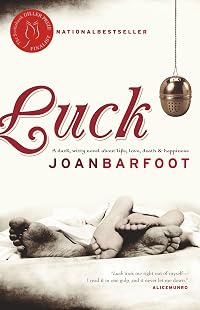
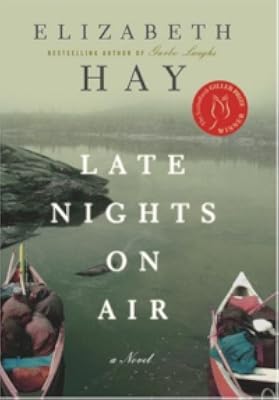
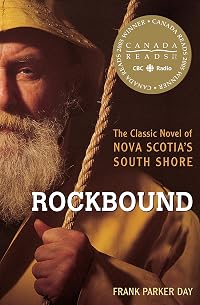
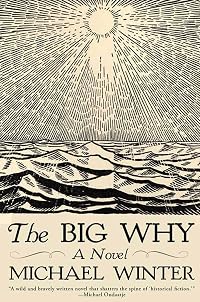
BookshelfMonstrosity A infant washes ashore on a remote island and is adopted by the locals, although the child's origins remain a mystery. Although Latitudes of Melt is set in Canada, not Australia, both character-driven historical novels are lush, detailed, and descriptive.

Member Reviews
Magnificent setting! Both the location itself and the descriptions employed to conjure it. The baby found adrift on an ice floe – fantastical improbability though it be – was the start of an interesting family saga. The child is raised by the family of the fisherman who found her, in a tiny seaside village on Newfoundland's south shore. Her childhood is covered very briefly, then her marriage, with most of the book covering her adult life, her children's adult lives, and then regressing to her birth parents' lives and the circumstances surrounding her drifting. Along the way, I learned a great deal about icebergs, lighthouses, Newfoundland, and small fishing villages.
I enjoyed reading about this foundling, her wanderings along the show more shore, belonging outdoors, the wild part of her nature, captured in her scrapbooks. This section just captures her life: I seldom look in the mirror. What is the point of looking when I'm not there? Since the day I took a long look at myself in the jagged kitchen mirror, {as a child} I've understood the futility of expecting to see myself in a reflection. I know no more about my appearance now than I did then and have gone all these years hanging clothes on my serviceable body, putting socks and shoes on my wandering feet, without ever knowing what I looked like, and it hasn't made any significant difference to my life.
If this book was a hot drink, it would be a huge mug of the very thickest cocoa. Tasting so flavorful, and going down so smoothly, its just an enjoyable experience. For me, though, it started getting cold and losing flavor during the last quarter of the book, which reading was tedium for me. Still, the rest of the story more than made up for those parts which I found less interesting. It was still a picture of a full life in all its phases, and extremely well captured.
Well worth the read. (3.7/5) show less
I enjoyed reading about this foundling, her wanderings along the show more shore, belonging outdoors, the wild part of her nature, captured in her scrapbooks. This section just captures her life: I seldom look in the mirror. What is the point of looking when I'm not there? Since the day I took a long look at myself in the jagged kitchen mirror, {as a child} I've understood the futility of expecting to see myself in a reflection. I know no more about my appearance now than I did then and have gone all these years hanging clothes on my serviceable body, putting socks and shoes on my wandering feet, without ever knowing what I looked like, and it hasn't made any significant difference to my life.
If this book was a hot drink, it would be a huge mug of the very thickest cocoa. Tasting so flavorful, and going down so smoothly, its just an enjoyable experience. For me, though, it started getting cold and losing flavor during the last quarter of the book, which reading was tedium for me. Still, the rest of the story more than made up for those parts which I found less interesting. It was still a picture of a full life in all its phases, and extremely well captured.
Well worth the read. (3.7/5) show less
Interesting storing of a baby found on an ice flow and raised in Newfoundland. It was such an enjoyable read. I thought all the characters were so charming. I liked that we learned a bit more about Newfoundland one of our most interesting provinces. For those who love canadiana, highly recommended
"Of the ten tousand icebergs calved in Greenland each year, nabout one tenth crossed the latitude of 48 degrees north, half that number made it to the latitude of 46 degrees, few of these would make it past the tail end of the Banks at t the latitude of 43 degees. Because Newfoundland was roughly between 46 and 51 degrees north, it was smack in the middle of the latitudes of melt. Every year icebergs drifted down the Labrador Current to ground the island's coves and bays."
The book tells the life of a woman, Born Annie Rose and renamed Aurora after her rescue as a little child. Nobody knows where she comes from and she is so content of her present life that she doesn't look for the other one. Only after her niece Sheila looks for her show more tracks back in Ireland, the truth about her origin is fully revealedand Aurora can have her Birthday's Party surrounded by her loving family, except for her late beloved husband Tom.
Played both in Newfoundland and Ireland, this book creates and amazing link with some of the great Canadian ancestors.
An awkward change in the narration:
pag.266 "She (Mary, Aurora's mother) survived the sinking and moved to the States. In any case she had no child."
pag. 305 "..... I mean, the wreck is her mother's (Mary) grave."
pag. 328 "....He (Stan, Aurora's son) thinks about his grandmother (Mary) who died in these waters" show less
The book tells the life of a woman, Born Annie Rose and renamed Aurora after her rescue as a little child. Nobody knows where she comes from and she is so content of her present life that she doesn't look for the other one. Only after her niece Sheila looks for her show more tracks back in Ireland, the truth about her origin is fully revealedand Aurora can have her Birthday's Party surrounded by her loving family, except for her late beloved husband Tom.
Played both in Newfoundland and Ireland, this book creates and amazing link with some of the great Canadian ancestors.
An awkward change in the narration:
pag.266 "She (Mary, Aurora's mother) survived the sinking and moved to the States. In any case she had no child."
pag. 305 "..... I mean, the wreck is her mother's (Mary) grave."
pag. 328 "....He (Stan, Aurora's son) thinks about his grandmother (Mary) who died in these waters" show less
"Of the ten tousand icebergs calved in Greenland each year, nabout one tenth crossed the latitude of 48 degrees north, half that number made it to the latitude of 46 degrees, few of these would make it past the tail end of the Banks at t the latitude of 43 degees. Because Newfoundland was roughly between 46 and 51 degrees north, it was smack in the middle of the latitudes of melt. Every year icebergs drifted down the Labrador Current to ground the island's coves and bays."
The book tells the life of a woman, Born Annie Rose and renamed Aurora after her rescue as a little child. Nobody knows where she comes from and she is so content of her present life that she doesn't look for the other one. Only after her niece Sheila looks for her show more tracks back in Ireland, the truth about her origin is fully revealedand Aurora can have her Birthday's Party surrounded by her loving family, except for her late beloved husband Tom.
Played both in Newfoundland and Ireland, this book creates and amazing link with some of the great Canadian ancestors.
An awkward change in the narration:
pag.266 "She (Mary, Aurora's mother) survived the sinking and moved to the States. In any case she had no child."
pag. 305 "..... I mean, the wreck is her mother's (Mary) grave."
pag. 328 "....He (Stan, Aurora's son) thinks about his grandmother (Mary) who died in these waters" show less
The book tells the life of a woman, Born Annie Rose and renamed Aurora after her rescue as a little child. Nobody knows where she comes from and she is so content of her present life that she doesn't look for the other one. Only after her niece Sheila looks for her show more tracks back in Ireland, the truth about her origin is fully revealedand Aurora can have her Birthday's Party surrounded by her loving family, except for her late beloved husband Tom.
Played both in Newfoundland and Ireland, this book creates and amazing link with some of the great Canadian ancestors.
An awkward change in the narration:
pag.266 "She (Mary, Aurora's mother) survived the sinking and moved to the States. In any case she had no child."
pag. 305 "..... I mean, the wreck is her mother's (Mary) grave."
pag. 328 "....He (Stan, Aurora's son) thinks about his grandmother (Mary) who died in these waters" show less
This is the best novel about Newfoundland that I have read. It captures the life of the people, particularly those who live on the Avalon Peninsula. It's the story of a foundling and his growing up in a fairly isolated community facing the Atlantci Ocean. It is a bit fantastical and has a Catholic sensibility.
Captivatingly simple depiction of one Newfoundland family's life--after finding a child on an ice floe. The story in centred on the whole life of the child. Some passages are so basic in their truth that one's breath is taken away to read them written with such passion. The end is worth the whole read.
I found this novel to be wonderfully evocative of the Newfoundland I lived in for a year and a half in the mid-1960's. It is laid in the Avalon peninsula in SE Newfoundland, unlike Proulx's "Shipping News" (the best known Nfld novel) that is laid in the NW of the island.
Members
- Recently Added By
Lists

Canadian Historical Fiction 🇨🇦
157 works; 8 members
Author Information

14+ Works 746 Members
Some Editions
Awards and Honors
Awards
Notable Lists
Common Knowledge
- Original publication date
- 2001-09-25
- People/Characters
- Francis St. Croix; Merla St. Croix; Aurora St. Croix; Tom Mulloy; Nancy Mulloy; Stanley Mulloy
- Important places
- Atlantic Ocean; Canada; Newfoundland, Canada; North Atlantic Ocean; Titanic (Steamship)
- Important events
- Gilded Age; Sinking of the Titanic (1912-04-14 | 1912-04-15)
- Epigraph
- The sea as it spends itself can teach us how to grieve - the way it rushes onto rock beach, seethes and sucks back, informationless the way it booms under a cliff, calling all things to their hollows. - Don McKay. "Grief and ... (show all)the Sea"
The polar wastes - no sounds except the grind Of ice, the cry of curlews and the lore Of winds from the mesas of eternal snow. - E.J. Pratt, "The Titanic"
The great and migthy sepulchre plunged downward to her doom, And the billows closed around her in the early morning gloom. And the seagulls chanted requiem o'er their silent resting place, Six hundres miles from Boston and fo... (show all)ur hundred from old Cape Race. - Collected and arranged by Eric West, "Sing Around This One" - Dedication
- In the memory of my grandmother Mary Roche.
- First words
- Francis St. Croix spotted it first, a black dot floating in an ocean of water and ice.
- Quotations
- Of the ten thousand icebergs calved in Greenland each year, about one-tenth crossed the latitude of 48 degrees north; half that number made it to the latitude of 46 degrees; few of these would make it past the tail end of the... (show all) Banks at the latitude of 43 degrees. Because Newfoundland was roughly between 46 and 51 degrees north, it was smack in the middle of the latitudes of melt. Every year, icebergs drifted down the Labrador Current to ground in the island's coves and bays.
”I'll tell you something important, girl. It's this: if we live long enough, we circle around to what we were.”
....until now he had never had a son whose grave was the sea. Louis's death shredded Francis's heart until it hung in such tatters that no amount of mending could ever make it whole.
Though I had been watching icebergs drift through the latitudes of melt for years, I had never viewed them with much interest. I had been brought up with the hard fact that icebergs were, as Francis put it, a frigging nuisan... (show all)ce, the way they fouled up fishing nets and traps. … I had never thought of ice as an archaeological deep-freeze or that it held a future from which both artefacts and water could one day be retrieved. - Last words
- (Click to show. Warning: May contain spoilers.)In an instant her face fades and he knows she's disappearing with the dawn, that she's taken that fantastic leap into the beyond where there are no maps or globes, where the untamed universe swirls with the essence of the born and the unborn in galaxies of unimaginable darkness and light.
- Blurbers
- Shields, Carol; Johnston, Wayne
Classifications
- Genres
- Fiction and Literature, General Fiction, Historical Fiction
- DDC/MDS
- 813.54 — Literature & rhetoric American literature in English American fiction in English 1900-1999 1945-1999
- LCC
- PR9199.3 .C5227 .L38 — Language and Literature English English Literature English literature: Provincial, local, etc.
- BISAC
Statistics
- Members
- 242
- Popularity
- 134,412
- Reviews
- 12
- Rating
- (4.08)
- Languages
- Dutch, English, Italian
- Media
- Paper, Ebook
- ISBNs
- 11
- ASINs
- 2