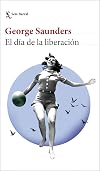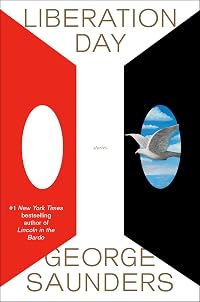
Liberation Day
by George Saunders
On This Page
Description
"The 'best short story writer in English' (Time) is back with a masterful collection that explores ideas of power, ethics, and justice, and cuts to the very heart of what it means to live in community with our fellow humans. With his trademark prose--wickedly funny, unsentimental, and perfectly tuned--Saunders continues to challenge and surprise: here is a collection of prismatic, deeply resonant stories that encompass joy and despair, oppression and revolution, bizarre fantasy and brutal show more reality. 'Love Letter' is a tender missive from grandfather to grandson, in the midst of a dystopian political situation in the not-too-distant future, that reminds us of our obligations to our ideals, ourselves, and each other. 'Ghoul' is set in a Hell-themed section of an underground amusement park in Colorado, and follows the exploits of a lonely, morally complex character named Brian, who comes to question everything he takes for granted about his 'reality.' In 'Mother's Day,' two women who loved the same man come to an existential reckoning in the middle of a hailstorm. And in 'Elliott Spencer,' our eighty-nine-year-old protagonist finds himself brainwashed--his memory 'scraped'--a victim of a scheme in which poor, vulnerable people are reprogrammed and deployed as political protesters. Together, these nine subversive, profound, and essential stories coalesce into a case for viewing the world with the same generosity and clear-eyed attention as Saunders does, even in the most absurd of circumstances"-- show lessTags
Recommendations




Member Reviews
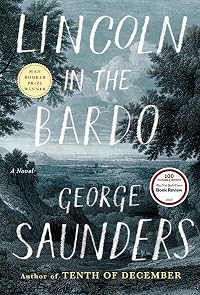
In George Saunders’ most recent collection of short stories, Liberation Day, published in 2022, he presents nine new works. This book follows his Lincoln In The Bardo, his first full-length novel which won the Booker Prize in 2017. While a number of these stories fall short of his earlier works in the genre, taken as whole the book lives up to expectations. The majority are set in a post-democratic America, featuring characters written off by society and caught up in events beyond their control. Some have undergone mind sweeps where their personalities have been erased, turning them into human robots. Even so, the essence of a former self remains, resulting in stubborn acts of rebellion, useless though they prove to be.
The story show more that stands out to me is Love Letter. In a future dystopian political situation, an uncle writes to his nephew, warning him to lay low and not risk arrest by speaking out against the government in office. While explaining and asking forgiveness for why he and his wife failed to resist when there was still an opportunity to do so, he points out the reasons for still finding joy in life. Another story, Ghoul, presents an underground amusement park where its actors continue their roles even though no visitors are present to witness the show they put on. For anyone who questions why they are doing so, the other actors are expected to kill these doubters.
A line in one of the stories stood out to me. A character tells another, “If you don’t wish to be dealt with harshly, don’t do anything wrong.” It suggests a situation in a dystopian world that now seems too real to be disbelieved. Saunders’ prose is rich and dazzling and laced with humor. But beneath the surface, the possible realities of a world stripped of free thought remains a haunting presence, without the catharsis of a happy ending. show less
The story show more that stands out to me is Love Letter. In a future dystopian political situation, an uncle writes to his nephew, warning him to lay low and not risk arrest by speaking out against the government in office. While explaining and asking forgiveness for why he and his wife failed to resist when there was still an opportunity to do so, he points out the reasons for still finding joy in life. Another story, Ghoul, presents an underground amusement park where its actors continue their roles even though no visitors are present to witness the show they put on. For anyone who questions why they are doing so, the other actors are expected to kill these doubters.
A line in one of the stories stood out to me. A character tells another, “If you don’t wish to be dealt with harshly, don’t do anything wrong.” It suggests a situation in a dystopian world that now seems too real to be disbelieved. Saunders’ prose is rich and dazzling and laced with humor. But beneath the surface, the possible realities of a world stripped of free thought remains a haunting presence, without the catharsis of a happy ending. show less
Nine stories are collected here and each one is a gem. No less than you’d expect from George Saunders. His distinctive voices are perfectly pitched even if the person speaking is ghoul #2. But it is the inner voices of his characters that so totally capture their character, as in, “The Mom of Bold Action,” or “Mother’s Day.” He also specializes in a certain kind of dystopia, as in the title story, “Liberation Day,” “Ghoul,” or “Elliott Spencer.” He is a writer of character, or rather moral character, so it is no surprise to find these stories delving either directly or metaphorically into deep issues such the nature of freedom, the finitude of our existence, or the pilfering of coffee packs in a workplace. But show more with his gentle humanist heart, it’s also probably understandable that he might be in despair over the state of his nation in recent years.
So easy to recommend. show less
So easy to recommend. show less
Another set of great short stories from George Saunders, nine in total, and not a bad one in the bunch. My favorites:
Liberation Day, which aside from combining some of Saunder’s favorite themes, dystopian technology and man’s inhumanity to man, also offered a history lesson of Custer and his army being wiped out by the Sioux defending themselves at Little Big Horn.
A Think at Work, which enters so well into the heads of three people in an office place and wickedly skewers all of them, the one with a sense of entitlement most of all.
Mother’s Day, which also switches perspectives between two women, satirizing both the past parenting of a grumpy old woman, as well as the behavior of a new age, virtue-signaling neighbor.
Also show more notable:
Love Letter, an imagined letter of someone writing their grandson years after a fascist government has taken power in America, looking back sadly at its rise amidst complacency, obviously highly relevant to this difficult period we find ourselves in thanks to MAGA.
Ghoul, which features a dystopian amusement park with trapped people as part of the exhibits – this certainly felt like familiar ground for Saunders, and something I kind of wish he broke away from a bit more at this point, and yet, after reading it, I couldn’t stop thinking about the revelation, that there is no ascension out of the place, and how symbolic that was.
Quotes:
On Americans, from Love Letter:
“We were spoiled, I think I am trying to say. As were those on the other side: willing to tear it all down because they had been so thoroughly nourished by the vacuous plenty in which we all lived, a bountiful condition that allowed people to thrive and opine and swagger around like kings and queens while remaining ignorant of their own history.”
On the sublime moments in life, from Liberation Day:
“Here is what I wish to say, dearest one, trapped as I am on this desolate, godless hillside, surrounded by demons who wish to destroy me: because I have known such a moment with you (the firelight playing across the walls; the dog asleep against the door; the bed shifting beneath us, as if making approving commentary in its own unique language), I may die now, if I must die, knowing I have truly lived.” show less
Liberation Day, which aside from combining some of Saunder’s favorite themes, dystopian technology and man’s inhumanity to man, also offered a history lesson of Custer and his army being wiped out by the Sioux defending themselves at Little Big Horn.
A Think at Work, which enters so well into the heads of three people in an office place and wickedly skewers all of them, the one with a sense of entitlement most of all.
Mother’s Day, which also switches perspectives between two women, satirizing both the past parenting of a grumpy old woman, as well as the behavior of a new age, virtue-signaling neighbor.
Also show more notable:
Love Letter, an imagined letter of someone writing their grandson years after a fascist government has taken power in America, looking back sadly at its rise amidst complacency, obviously highly relevant to this difficult period we find ourselves in thanks to MAGA.
Ghoul, which features a dystopian amusement park with trapped people as part of the exhibits – this certainly felt like familiar ground for Saunders, and something I kind of wish he broke away from a bit more at this point, and yet, after reading it, I couldn’t stop thinking about the revelation, that there is no ascension out of the place, and how symbolic that was.
Quotes:
On Americans, from Love Letter:
“We were spoiled, I think I am trying to say. As were those on the other side: willing to tear it all down because they had been so thoroughly nourished by the vacuous plenty in which we all lived, a bountiful condition that allowed people to thrive and opine and swagger around like kings and queens while remaining ignorant of their own history.”
On the sublime moments in life, from Liberation Day:
“Here is what I wish to say, dearest one, trapped as I am on this desolate, godless hillside, surrounded by demons who wish to destroy me: because I have known such a moment with you (the firelight playing across the walls; the dog asleep against the door; the bed shifting beneath us, as if making approving commentary in its own unique language), I may die now, if I must die, knowing I have truly lived.” show less
In a dystopian future, a man creates a reenactment of the Battle of Little Bighorn in his home using actors and singers whose past lives have been erased. The parents of a young boy assaulted by a homeless person seek revenge but target the wrong man. A grandfather writes an emotional letter to his grandson about how to view and live life. An imbalanced woman steals office supplies and winds up on the wrong end of some nasty workplace politics. Two people without much going on separately find love and strength as a couple. A ghoulish amusement park is created beneath a Colorado town for the ostensible purpose of preserving humanity. Two mothers with a long-standing feud are clueless about how they are impacting their children. A violent show more man whose memories have been scraped is used as a pawn in other people’s political agenda. A man tries to buy the house of his dreams from a reluctant owner before he dies.
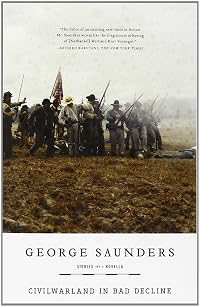
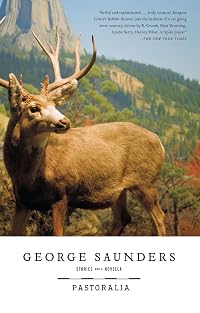
These are the themes summarizing the nine tales comprising Liberation Day by George Saunders, an author widely acknowledged as a master of the short story format. I can certainly attest to that mastery, having read and thoroughly enjoyed several past collections of his short fiction (CivilWarLand in Bad Decline, Pastoralia, Tenth of December), as well as Saunders’ absolutely brilliant exploration of how the best short stories are written and should be read (A Swim in a Pond in the Rain), based on his “other” career as a literature professor. Those were all highly satisfying books to read as they showcased just how insightful and inventive of a writer he can be, while still mixing in a surprising combination of thoughtful, disturbing, and outright funny elements for good measure.
By contrast, I found Liberation Day to fall somewhat short of the very high bar those earlier works have set. To be sure, there was really nothing wrong with the volume—Saunders’ craftsmanship and imagination are as strong as ever—but I found few of the stories to be particularly entertaining or memorable. While the myriad plotlines listed above make expressing a connecting theme difficult, it can be said that two-thirds of the tales take place in realistic settings with the other three being of the slightly-alternate-world variety. These latter works, including the title story (which, at a quarter of the book’s total length, is almost a novella), ‘Ghoul’, and ‘Elliot Spencer’, were the ones I found to be the most complete and affecting. On the other hand, ‘Love Letter’, ‘Sparrow’, and ‘My House’ were quite forgettable, despite the brief moments of poignancy they provide. So, while this uneven collection certainly merits attention, it is not the best place to go to understand just how brilliant this author is. show less
These are the themes summarizing the nine tales comprising Liberation Day by George Saunders, an author widely acknowledged as a master of the short story format. I can certainly attest to that mastery, having read and thoroughly enjoyed several past collections of his short fiction (CivilWarLand in Bad Decline, Pastoralia, Tenth of December), as well as Saunders’ absolutely brilliant exploration of how the best short stories are written and should be read (A Swim in a Pond in the Rain), based on his “other” career as a literature professor. Those were all highly satisfying books to read as they showcased just how insightful and inventive of a writer he can be, while still mixing in a surprising combination of thoughtful, disturbing, and outright funny elements for good measure.
By contrast, I found Liberation Day to fall somewhat short of the very high bar those earlier works have set. To be sure, there was really nothing wrong with the volume—Saunders’ craftsmanship and imagination are as strong as ever—but I found few of the stories to be particularly entertaining or memorable. While the myriad plotlines listed above make expressing a connecting theme difficult, it can be said that two-thirds of the tales take place in realistic settings with the other three being of the slightly-alternate-world variety. These latter works, including the title story (which, at a quarter of the book’s total length, is almost a novella), ‘Ghoul’, and ‘Elliot Spencer’, were the ones I found to be the most complete and affecting. On the other hand, ‘Love Letter’, ‘Sparrow’, and ‘My House’ were quite forgettable, despite the brief moments of poignancy they provide. So, while this uneven collection certainly merits attention, it is not the best place to go to understand just how brilliant this author is. show less
There are some great short story writers who place characters in challenging real-life situations and pose challenges that focus on the foundational choices of life. Think Raymond Carver, for example.
George Saunders isn’t like that. He does get to those foundational choices, and also to political themes, but he does it with wildly imaginative situations that isolate the variables, almost like science experiments. He zeroes us in on themes of freedom, dignity, privilege, and oppression.
Take the title track of this book, Liberation Day. The main character, Jeremy, is one of several story-tellers “pinioned” to the wall in a “Listening Room”, at the house of a wealthy, privileged family, the Untermeyers. They perform for the show more Untermeyers and their friends.
The performers have no actual lives of their own, other than their programmed story-telling function. In so far as he has a mental life of his own, Jeremy takes pride in his story-telling performances, and he lives and dies by his owners’ and their audiences’ reactions.
The family’s son, who detests the story-telling spectacle, brings in a group that liberates story-tellers like these, and they attempt a liberation during, ironically, a telling of Custer’s Last Stand.
But Jeremy doesn’t want to be liberated!
He’s loyal to his owners and he loves his job, and besides that, he even has an illicit affair going on with Mrs. Untermeyer. Liberation would destroy everything he knows and finds his special place in.
Obviously, there’s a lot of metaphorical scope here. The scenario Saunders paints is extreme, but it’s an extreme of something we recognize — class, the power of wealth, the complicity of the oppressed, the challenges of dignity, . . .
Other stories set themselves in similarly fantastic but metaphorically real situations. Ghoul picks up on a Saunders speciality — lives a little too immersed in amusement park simulations (remember CivilWarLand or Pastoralia).
Here the “amusement” is a simulation of hell. But it’s a little too much like hell — no escape from a heavily monitored, heavily constrained life, where the punishment for critical thoughts is being kicked to death by your peers. And your peers better kick you enthusiastically, or they’re next.
Maybe the most disturbing story, to me, is Elliot Spencer. Elliot’s real life and memories have been erased (he is now “Craig” or “89.” He is programmed to trained to be an angry mob member, senselessly shouting the same string of epithets at targets. You can make the metaphorical comparison for yourself.
Not all the stories are as dire and unsettling. But I have to say most are. Saunders doesn’t write nice in this one. If you’ve read A Swim in a Pond in the Rain, you know how focused Saunders is on the experience of the reader. He means to give you the shakes with this one. show less
George Saunders isn’t like that. He does get to those foundational choices, and also to political themes, but he does it with wildly imaginative situations that isolate the variables, almost like science experiments. He zeroes us in on themes of freedom, dignity, privilege, and oppression.
Take the title track of this book, Liberation Day. The main character, Jeremy, is one of several story-tellers “pinioned” to the wall in a “Listening Room”, at the house of a wealthy, privileged family, the Untermeyers. They perform for the show more Untermeyers and their friends.
The performers have no actual lives of their own, other than their programmed story-telling function. In so far as he has a mental life of his own, Jeremy takes pride in his story-telling performances, and he lives and dies by his owners’ and their audiences’ reactions.
The family’s son, who detests the story-telling spectacle, brings in a group that liberates story-tellers like these, and they attempt a liberation during, ironically, a telling of Custer’s Last Stand.
But Jeremy doesn’t want to be liberated!
He’s loyal to his owners and he loves his job, and besides that, he even has an illicit affair going on with Mrs. Untermeyer. Liberation would destroy everything he knows and finds his special place in.
Obviously, there’s a lot of metaphorical scope here. The scenario Saunders paints is extreme, but it’s an extreme of something we recognize — class, the power of wealth, the complicity of the oppressed, the challenges of dignity, . . .
Other stories set themselves in similarly fantastic but metaphorically real situations. Ghoul picks up on a Saunders speciality — lives a little too immersed in amusement park simulations (remember CivilWarLand or Pastoralia).
Here the “amusement” is a simulation of hell. But it’s a little too much like hell — no escape from a heavily monitored, heavily constrained life, where the punishment for critical thoughts is being kicked to death by your peers. And your peers better kick you enthusiastically, or they’re next.
Maybe the most disturbing story, to me, is Elliot Spencer. Elliot’s real life and memories have been erased (he is now “Craig” or “89.” He is programmed to trained to be an angry mob member, senselessly shouting the same string of epithets at targets. You can make the metaphorical comparison for yourself.
Not all the stories are as dire and unsettling. But I have to say most are. Saunders doesn’t write nice in this one. If you’ve read A Swim in a Pond in the Rain, you know how focused Saunders is on the experience of the reader. He means to give you the shakes with this one. show less
I really like George Saunders. I like and admire him as a person, a writer, and a fellow Buddhist. I love his advice to other writers, his life's philosophy, and the amazing company he keeps (Mary Karr, Jeff Tweedy, Nick Offerman, to name a few). And I liked 2/3rds of the stories in this book.
I keep coming back to the line often used in relationships, "it's not you, it's me." I don't think it's George's writing that comes up short for me in three of these stories, I think it's my inability to access them. Six of the stories track as pretty straightforward short fiction in the spirit of Raymond Carver or T.C. Boyle. Three (the title story, Ghoul, and Elliott Spencer) fall into a more sci-fi/fantasy genre that my mind just can't find the show more rhythm or the patience for.
I read another review that talked about how reading Saunders can require some patience and discipline (not on the level of, say, Joyce or Wallace, mind you), but the reward is mighty. The best artists insist we come to their level, not meet us at ours. I appreciate that, and see it as the case here.
I'll continue to return to George Saunders because of all he is. But until I find an affinity for dystopian storytelling and fantasy, I may find myself reading most, not all, of his collected works.
With that major caveat, the remaining stories (The Mom of Bold Action, Love Letter, Sparrow, Mother's Day, etc) were, for me, terrific and masterful. He knows how to stop short of catharsis, leaving readers with a lasting emotional imprint.
I recommend Liberation Day, and hope to return to it when I am more prepared to dive into stories of reprogrammed humans, memory erasure, and other imagined future societal struggles. show less
I keep coming back to the line often used in relationships, "it's not you, it's me." I don't think it's George's writing that comes up short for me in three of these stories, I think it's my inability to access them. Six of the stories track as pretty straightforward short fiction in the spirit of Raymond Carver or T.C. Boyle. Three (the title story, Ghoul, and Elliott Spencer) fall into a more sci-fi/fantasy genre that my mind just can't find the show more rhythm or the patience for.
I read another review that talked about how reading Saunders can require some patience and discipline (not on the level of, say, Joyce or Wallace, mind you), but the reward is mighty. The best artists insist we come to their level, not meet us at ours. I appreciate that, and see it as the case here.
I'll continue to return to George Saunders because of all he is. But until I find an affinity for dystopian storytelling and fantasy, I may find myself reading most, not all, of his collected works.
With that major caveat, the remaining stories (The Mom of Bold Action, Love Letter, Sparrow, Mother's Day, etc) were, for me, terrific and masterful. He knows how to stop short of catharsis, leaving readers with a lasting emotional imprint.
I recommend Liberation Day, and hope to return to it when I am more prepared to dive into stories of reprogrammed humans, memory erasure, and other imagined future societal struggles. show less
Having delighted in Saunders’s A Swim in a Pond in the Rain, his engaging dive into the Russian masters of the short story, I feel utterly unable to apply his friendly and astute analytical skills to this collection of nine stories, and apologize for the failure. It might even help me gain better appreciation of the stories I simply didn’t “get” (“Ghoul,” “Elliott Spencer”), and surely would only enhance it for those I savored (the rest of them).
But this is the thing about Saunders that makes him so appealing. He is so… kind. Tolerant. Generous in spirit. So willing to take a shot at developing some weird idea that occurs to him, to see if he can make it work as a story. Maybe it won’t, and that’s okay. Or maybe, show more as the publisher is impatiently awaiting his proofed copy, Saunders will discover a sentence or an idea that will sharpen, brighten, or deepen the story, and make the tweaks at the last minute. His stories range from other-worldly little cliques of people with their own argot and technology, to the tightly-wound, anxiety-driven mind of an overwhelmed woman, a performing arts powerhouse of story-telling fueled by terrible exploitation, to a slice of life belonging to people we mostly don’t notice, and the disappointed yearning of a man for whom resolution comes too late. What runs through all of them is a deep humanity, a sincere interest in trying to understand and honestly depict what these often odd people do or say – and why. What drove Alma, the vile-tempered crone of “Mother’s Day” to become who she is? And prompts some kind of reckoning as her heart fails her, while the neighbor who loathes her perseverates on her own grievances, only to impulsively offer help – and be rebuffed, and yet fall quiet when it all gets really serious. The tragedy of the abused performers of “Liberation Day” is suffused with the deep joy they sometimes get from their own artistry; the “Mom of Bold Action” whose fictional flights of imagination send her to commit an act leading to violence, must confront her act and choose which path will cause the least harm – by her lights, anyway. And a terse, drily told tale of love in the aisles of a dollar store delicately shows us the “sparrows” who rise to romance and devotion, even as no one pays any attention.
We’re all a mess. Saunders knows this. But he helps us see why, and that sometimes it’s an accident, an oversight, a simple misfortune or bad timing. That the people around us are all carrying burdens, coping as they are able to, and may yet be capable of regret, of generosity, of transcendent moments… and of falling back into the muck. And so… we must just keep trying.
* Thanks to NetGalley and Random House for an ARC in exchange for an honest review.* show less
But this is the thing about Saunders that makes him so appealing. He is so… kind. Tolerant. Generous in spirit. So willing to take a shot at developing some weird idea that occurs to him, to see if he can make it work as a story. Maybe it won’t, and that’s okay. Or maybe, show more as the publisher is impatiently awaiting his proofed copy, Saunders will discover a sentence or an idea that will sharpen, brighten, or deepen the story, and make the tweaks at the last minute. His stories range from other-worldly little cliques of people with their own argot and technology, to the tightly-wound, anxiety-driven mind of an overwhelmed woman, a performing arts powerhouse of story-telling fueled by terrible exploitation, to a slice of life belonging to people we mostly don’t notice, and the disappointed yearning of a man for whom resolution comes too late. What runs through all of them is a deep humanity, a sincere interest in trying to understand and honestly depict what these often odd people do or say – and why. What drove Alma, the vile-tempered crone of “Mother’s Day” to become who she is? And prompts some kind of reckoning as her heart fails her, while the neighbor who loathes her perseverates on her own grievances, only to impulsively offer help – and be rebuffed, and yet fall quiet when it all gets really serious. The tragedy of the abused performers of “Liberation Day” is suffused with the deep joy they sometimes get from their own artistry; the “Mom of Bold Action” whose fictional flights of imagination send her to commit an act leading to violence, must confront her act and choose which path will cause the least harm – by her lights, anyway. And a terse, drily told tale of love in the aisles of a dollar store delicately shows us the “sparrows” who rise to romance and devotion, even as no one pays any attention.
We’re all a mess. Saunders knows this. But he helps us see why, and that sometimes it’s an accident, an oversight, a simple misfortune or bad timing. That the people around us are all carrying burdens, coping as they are able to, and may yet be capable of regret, of generosity, of transcendent moments… and of falling back into the muck. And so… we must just keep trying.
* Thanks to NetGalley and Random House for an ARC in exchange for an honest review.* show less
Members
- Recently Added By
Published Reviews
It will surprise few readers of contemporary fiction to learn that George Saunders’ new collection of short stories, Liberation Day, is very good indeed. At this stage, reviews can only confirm his talent, not reveal it, and should consequently focus on other issues. Once one has established that Liberation Day is as good as one would expect (it is), and that it only strengthens Saunders’ show more position as a major contemporary writer (it does), one must consider how it intervenes in current debates and what it contributes. It is a compelling, witty book but it is not just entertainment; there is a considerable amount at stake in its inventiveness, its dexterity, and its skillful use of the fantastic. Political in the broad sense, it not only demands that we explore the relationships between individual moral failings and social injustice, but also exposes the acts of evasion, rationalization, complicity, and plain cowardice that enable us to avoid this. One of the most important functions of art is to challenge the comforting illusions we live by, which are too often not only unquestioned but unnoticed. Literature disrupts what we think we know, insisting on complexity, ambiguity, nuance. Liberation Day is a pleasure, but—like all the best books—an unsettling one, denying its readers simple consolations. show less
added by Lemeritus
A decade can change a writer’s work, without the writer changing at all. The world can catch up with what they’ve always been doing, and something like that is happening with George Saunders. In 2013, when he published his last story collection, “Tenth of December,” he was a beloved satirist, poking fun at the peculiarities of corporate-speak, theme parks and suburbia. He was the show more smirking successor of Vonnegut and Barthelme, a big-idea humorist with some postmodern acrobatics tossed in. The settings and subjects haven’t changed much in his new collection, “Liberation Day,” but Saunders’s career-long strategies have acquired a deeper intensity, focus and bite. He’s always been a moralist, concerned with our obligations to one another; now, an ongoing and intense debate over democracy and its threats has further exposed that.... Saunders has long tended to approach matters of power, ethics and compassion more indirectly and universally, and with better jokes, too. “Liberation Day” is different only in that the humor is a little blacker, the fears of our exploitation more intense.... 2022 has made his precision more meaningful, the stakes higher. In “Ghoul,” a group of diligent workers — laboring underground for unexplained reasons — discovers they’ve been going about their business under false pretenses. They fumble for direction, a reason to do what they do. A character asks of his tribe, much as Saunders asks of us: “We must believe in something, mustn’t we?” show less
added by Lemeritus
Throughout “Liberation Day,” language is never entirely the characters’ own; in their thoughts and speech the inescapable, proliferating jargon of American capitalist monoculture — corporate acronyms and slogans, brand names, marketing lingo, therapy-speak and self-help nostrums — vies with the slang and adages of ordinary American vernacular.... Saunders is no longer so sure about show more the possibility of transformative heroism or resistance, or what that might even mean. The prevailing mood throughout is much more muted and uncertain, with a concomitant diminution in linguistic vivacity. The language the characters speak and think in is flatter, deader, at once more anodyne and anguished....“Liberation Day” is a spiky, at times difficult collection, seldom providing the reader with much in the way of catharsis. But these are stories worth reading, the best of them as thought-provoking and resonant as a fan of Saunders might expect. Eschewing the speculatively richer, more dramatic question of what happens after the system comes crashing down, Saunders focuses instead on the queasy, knotty consequences of our present dilemma: What if it doesn’t? show less
added by Lemeritus
Lists

Top Five Books of 2022
736 works; 272 members

Books recommended by Barack Obama
295 works; 29 members

Obama Reads
181 works; 3 members

TBR - Older Books
92 works; 1 member

Books Read in 2025
4,128 works; 98 members

Top Five Books of 2025
954 works; 303 members
Author Information

George Saunders is the author of CivilWarLand in Bad Decline and Pastoralia. (Publisher Provided) George Saunders was born in Amarillo, Texas on December 2, 1958. He received a bachelor's degree in geophysical engineering and a master's degree in creative writing from Syracuse University. He is a professor at Syracuse University and a writer of show more short stories, essays, novellas, and children's books. He won the National Magazine Award for fiction in 1994, 1996, 2000, and 2004 His books include CivilWarLand in Bad Decline, Pastoralia, The Very Persistent Gappers of Frip, The Brief and Frightening Reign of Phil, In Persuasion Nation, and Tenth of December: Stories, which won the inaugural Folio Prize in 2014. His debut novel, Lincoln in the Bardo, received the Man Booker Prize in 2017. (Bowker Author Biography) show less
Some Editions
Awards and Honors
Series
Belongs to Publisher Series
Mirmanda (242)
Work Relationships
Common Knowledge
- Canonical title
- Liberation Day
- Original title
- Liberation Day : Stories
- Original publication date
- 2022-10-18
- First words
- It is third day of Interim, -Liberation Day
- Canonical DDC/MDS
- 813.54
- Canonical LCC
- PS3569.A7897
Classifications
Statistics
- Members
- 951
- Popularity
- 28,000
- Reviews
- 34
- Rating
- (3.89)
- Languages
- 7 — Catalan, Dutch, English, German, Portuguese, Spanish, Swedish
- Media
- Paper, Audiobook, Ebook
- ISBNs
- 22
- ASINs
- 6