The Book of Goose
by Yiyun Li
On This Page
Description
A magnificent, beguiling tale winding from the postwar rural provinces to Paris, from an English boarding school, to the quiet Pennsylvania home where a woman can live without her past, The Book of Goose is a story of disturbing intimacy and obsession, of exploitation and strength of will, by the celebrated author Yiyun Li. Fabienne is dead. Her childhood best friend, Agnès, receives the news in America, far from the French countryside where the two girls were raised--the place that show more Fabienne helped Agnès escape ten years ago. Now, Agnès is free to tell her story. As children in a war-ravaged, backwater town, they'd built a private world, invisible to everyone but themselves--until Fabienne hatched the plan that would change everything, launching Agnès on an epic trajectory through fame, fortune, and terrible loss. show lessTags
Recommendations





Member Reviews
An absolutely lovely novel that takes a premise that's already pretty interesting on its face -- a pair of French country girls conspire to write a book of short stories shortly after the end of the Second World War -- and goes to unexpectedly deep, and often sad, places. It's clear from the book's opening that Agnés and Fabienne are a pair: Agnés, our narrator, even cops to being Fabienne's "whetstone." But while Fabienne is the duo's real talent, she's also barely literate: Agnés acts as both her amanuensis and as her public face. Later events suggest that the girls' literary experiment doesn't work when Agnés is left on her own, but that just provides an opportunity for the author to get at her deeper themes. This isn't just a show more book about fake child prodigies, and there's a lot more going on here than a friendship between two lonely, talented girls.
There's also the tricky question of time. The girls' friendship is intense, but I suspect it might not be any less intense than the friendships that many other girls' their age have before the rest of their lives -- love, sex, work, responsibility and maybe children -- rushes in. In "The Book of Goose" Fabienne and Agnés exist in a sort of liminal space between childhood and adulthood, and what they have is necessarily fragile and fleeting. They're both smart enough to know it. What impressed me most about "The Book of Goose" is that Fabienne's talent is also framed in similar terms. Fabienne has no real desire to be a famous literary type: for her, telling stories is a game. But the game that the girls are playing cannot survive its own inherent contradictions: both separation and exposure would spell its end.
There's a larger story here about the nature of genius and the precarity of all of our lives. The author presents genius as a wondrous, alchemical quality, dependent both on raw talent and on the emotional and social resources that are necessary to give it shape. Fabienne seems to have the sort of detachment that great writers often display in their works, but the fact that she can't really take ownership of her own voice is telling. It's also worth noting that Agnés and Fabienne's story is further marked by other seemingly random tragedies. While the end of their precocious literary career can be seen as another sort of tragedy, the book's two main protagonists are no strangers to misfortune or injustice. By the time we reach the end of the book, it seems a small miracle that Fabienne's untutored literary mind and the girls' difficult life circumstances produced so much as a book of short stories and a close friendship. The world that Li describes in "The Book of Goose" is one that constantly forecloses on our most dazzling possibilities even as it offers us other ways to survive. To say that I found this book unbearably sad verges, if that's possible, on understatement.
I also noted that Li herself is a Chinese-American, currently on the faculty at Princeton, who has lived an interesting and in many ways accomplished life. I could find anything in her biography, however, that might connect her to this novel's rural French setting. Seen from that perspective, "The Book of Goose" is a truly impressive product of the imagination. I was deeply impressed by how well the author evoked a time in which the French countryside felt worlds away from any place of real importance. To avoid all of the usual "life in Provence" clichés would have been more than enough, but this one's a real time machine. It's is one of those works that examines the question of literary talent while, at the same time, announcing its presence. In other words, "The Book of Goose" is a very good novel, and Yiyun Li is the real thing. show less
There's also the tricky question of time. The girls' friendship is intense, but I suspect it might not be any less intense than the friendships that many other girls' their age have before the rest of their lives -- love, sex, work, responsibility and maybe children -- rushes in. In "The Book of Goose" Fabienne and Agnés exist in a sort of liminal space between childhood and adulthood, and what they have is necessarily fragile and fleeting. They're both smart enough to know it. What impressed me most about "The Book of Goose" is that Fabienne's talent is also framed in similar terms. Fabienne has no real desire to be a famous literary type: for her, telling stories is a game. But the game that the girls are playing cannot survive its own inherent contradictions: both separation and exposure would spell its end.
There's a larger story here about the nature of genius and the precarity of all of our lives. The author presents genius as a wondrous, alchemical quality, dependent both on raw talent and on the emotional and social resources that are necessary to give it shape. Fabienne seems to have the sort of detachment that great writers often display in their works, but the fact that she can't really take ownership of her own voice is telling. It's also worth noting that Agnés and Fabienne's story is further marked by other seemingly random tragedies. While the end of their precocious literary career can be seen as another sort of tragedy, the book's two main protagonists are no strangers to misfortune or injustice. By the time we reach the end of the book, it seems a small miracle that Fabienne's untutored literary mind and the girls' difficult life circumstances produced so much as a book of short stories and a close friendship. The world that Li describes in "The Book of Goose" is one that constantly forecloses on our most dazzling possibilities even as it offers us other ways to survive. To say that I found this book unbearably sad verges, if that's possible, on understatement.
I also noted that Li herself is a Chinese-American, currently on the faculty at Princeton, who has lived an interesting and in many ways accomplished life. I could find anything in her biography, however, that might connect her to this novel's rural French setting. Seen from that perspective, "The Book of Goose" is a truly impressive product of the imagination. I was deeply impressed by how well the author evoked a time in which the French countryside felt worlds away from any place of real importance. To avoid all of the usual "life in Provence" clichés would have been more than enough, but this one's a real time machine. It's is one of those works that examines the question of literary talent while, at the same time, announcing its presence. In other words, "The Book of Goose" is a very good novel, and Yiyun Li is the real thing. show less
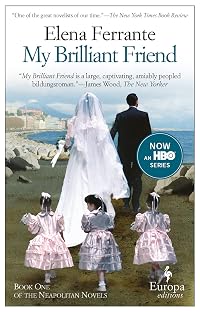
What if someone wrote My Brilliant Friend about psychopaths? It might look a lot like this book, which tells the story of a girl living in a poor French village soon after the end of WWII, whose best friend, Fabienne, is cleverer than she is and the leader of the two, but also a girl who has left formal schooling early and lacks even the small opportunities that Agnes has. When one of Fabienne's ideas leads Agnes away from the village and their friendship, neither girl knows what the repercussions will be.
Told from the point of view of an adult Agnes, this novel evokes the intensity of childhood friendships and the impossibility of returning to a life once you've left it. The games the girls play to amuse themselves, are games in which show more the emotions, and even the fates, of the people they target are utterly unimportant to them and these are girls whose precocity allows them to do real damage. This is a book about how two girls, utterly powerless to affect anything and stuck in the roles they were born into, took charge of their lives using their wits and their willingness to do what they needed to do. Their actions were often monstrous, but also necessary to their survival, even if in one case it wasn't enough.
I loved this book with its deeply flawed characters and beautiful writing. It's not a book for everyone, but if you're comfortable feeling uneasy, you might love it, too. show less
Told from the point of view of an adult Agnes, this novel evokes the intensity of childhood friendships and the impossibility of returning to a life once you've left it. The games the girls play to amuse themselves, are games in which show more the emotions, and even the fates, of the people they target are utterly unimportant to them and these are girls whose precocity allows them to do real damage. This is a book about how two girls, utterly powerless to affect anything and stuck in the roles they were born into, took charge of their lives using their wits and their willingness to do what they needed to do. Their actions were often monstrous, but also necessary to their survival, even if in one case it wasn't enough.
I loved this book with its deeply flawed characters and beautiful writing. It's not a book for everyone, but if you're comfortable feeling uneasy, you might love it, too. show less
Two French peasant girls in postwar France publish a book of disturbing short stories. A decade later, one of the girls looks back on the events after her friend dies and decides to tell the whole story of how this "game" changed their lives. I did not like this book at all, for so many reasons.
I don't really like books about toxic female friendships, so that was one strike. (I could barely finish My Beautiful Friend, and this was WAY worse in terms of how bizarre and ugly these women were to each other.)
The prose was ridiculous and over-the-top. You cannot cut an apple with an apple? Okay. I almost gave up after that opening line. And then it was repeated like 5 more times over the course of the book. So pretentious. What does it even show more mean?
Finally, the setting and timing were all off. My mother lived in a remote French village during this time period and... they definitely had indoor plumbing and electricity and stuff. They even had radios and motorcycles! But this village where Agnes and Fabienne lived seemed to exist in some nineteenth-century time warp. At the latest, it feels like it's set in post WWI France, rather than the 1950s. This really threw me off and seemed like an odd and distracting choice. I know it's minor, but it completely messed with my sense of chronology throughout the whole book. And when you realize the narrator is looking back on these events with something like ten whole years of hindsight, I guess it makes more sense that she doesn't seem to have gained any insight from the experience.
In short, I did not get along with this book and I was extremely happy when it was over. show less
I don't really like books about toxic female friendships, so that was one strike. (I could barely finish My Beautiful Friend, and this was WAY worse in terms of how bizarre and ugly these women were to each other.)
The prose was ridiculous and over-the-top. You cannot cut an apple with an apple? Okay. I almost gave up after that opening line. And then it was repeated like 5 more times over the course of the book. So pretentious. What does it even show more mean?
Finally, the setting and timing were all off. My mother lived in a remote French village during this time period and... they definitely had indoor plumbing and electricity and stuff. They even had radios and motorcycles! But this village where Agnes and Fabienne lived seemed to exist in some nineteenth-century time warp. At the latest, it feels like it's set in post WWI France, rather than the 1950s. This really threw me off and seemed like an odd and distracting choice. I know it's minor, but it completely messed with my sense of chronology throughout the whole book. And when you realize the narrator is looking back on these events with something like ten whole years of hindsight, I guess it makes more sense that she doesn't seem to have gained any insight from the experience.
In short, I did not get along with this book and I was extremely happy when it was over. show less
Agnés and Fabienne were wild children, outcasts by choice, daring all, at least in their own minds. Years later, Agnés reflects on what made Fabienne so special and how their hopes and dreams, which were really Fabienne’s hopes and dreams, got tangled in the grasping aspirations of adults in the “real” world. Even the lovely idea of writing a book together gets corrupted. Though perhaps Fabienne could see what might be coming when she chose to insist that no one know of her involvement in Agnés’ stories.
Most of this novel is a linear remembrance by Agnés of those few years of their youth when she catapulted to fame as a supposed child prodigy author. But her greatest regret was that their game ended up separating these two show more bosom friends. Agnés endures mistreatment and worse at the hands of adults in Paris and later in England. Always though she longs to return to her friend, Fabienne.
This is wonderful writing by Yiyun Li. Fresh and alive, yet as might be expected, full of insight into the very nature of composition and creativity and more. I found Agnés’ story to be fully captivating, though I wished there were more of Fabienne especially in the latter half of the novel. Her driving force, once removed, cuts both Agnés and the novel adrift, at the mercy of a thoroughly unpleasant character in Mrs Townsend. And this probably contributes to the feeling that the ending is less than what one might hope. Even you can’t put your finger on exactly what it is you were hoping for.
Easily recommended, though with slight reservations. show less
Most of this novel is a linear remembrance by Agnés of those few years of their youth when she catapulted to fame as a supposed child prodigy author. But her greatest regret was that their game ended up separating these two show more bosom friends. Agnés endures mistreatment and worse at the hands of adults in Paris and later in England. Always though she longs to return to her friend, Fabienne.
This is wonderful writing by Yiyun Li. Fresh and alive, yet as might be expected, full of insight into the very nature of composition and creativity and more. I found Agnés’ story to be fully captivating, though I wished there were more of Fabienne especially in the latter half of the novel. Her driving force, once removed, cuts both Agnés and the novel adrift, at the mercy of a thoroughly unpleasant character in Mrs Townsend. And this probably contributes to the feeling that the ending is less than what one might hope. Even you can’t put your finger on exactly what it is you were hoping for.
Easily recommended, though with slight reservations. show less
A potent but uncomfortable story about the dysfunctional relationship between two young girls growing up in a small village in post-war France.
I say uncomfortable, because the main characters are neither familiar types nor particularly empathetic. Fabienne is at times aggressive, manipulative, manic, and self-destructive. Her BFF Agnes, by contrast, is submissive and unambitious. Their relationship definitely isn’t a healthy thing, but it does feel authentic and the arc of their friendship makes for a compelling read.
Doomed by fate to lives constrained by poverty, hunger, lovelessness, death, and general awfulness, the girls cope in very different ways, Fabienne’s frustration and darkness diametrically opposed to Agnes’s passive show more compliance. Yet together they create for themselves a sort of co-dependent sanctuary bounded by imagination, games, and shared understanding. This fragile balance is disrupted when one of their “games” results in Agnes being plucked out of their little village and given a chance to live a larger life as a critically acclaimed child author. How will this experience reshape the way they interact with the world and each other? Let’s just say, it’s complicated.
The author, Yiyun Li, definitely isn't interested in exploring familiar stereotypes or tropes. If you’re comfortable with that, then there’s much to enjoy here: Li is a gifted writer and the “differentness” of this is refreshing and compelling. Just know what you’re getting into! show less
I say uncomfortable, because the main characters are neither familiar types nor particularly empathetic. Fabienne is at times aggressive, manipulative, manic, and self-destructive. Her BFF Agnes, by contrast, is submissive and unambitious. Their relationship definitely isn’t a healthy thing, but it does feel authentic and the arc of their friendship makes for a compelling read.
Doomed by fate to lives constrained by poverty, hunger, lovelessness, death, and general awfulness, the girls cope in very different ways, Fabienne’s frustration and darkness diametrically opposed to Agnes’s passive show more compliance. Yet together they create for themselves a sort of co-dependent sanctuary bounded by imagination, games, and shared understanding. This fragile balance is disrupted when one of their “games” results in Agnes being plucked out of their little village and given a chance to live a larger life as a critically acclaimed child author. How will this experience reshape the way they interact with the world and each other? Let’s just say, it’s complicated.
The author, Yiyun Li, definitely isn't interested in exploring familiar stereotypes or tropes. If you’re comfortable with that, then there’s much to enjoy here: Li is a gifted writer and the “differentness” of this is refreshing and compelling. Just know what you’re getting into! show less
The Book of Goose is about two 14-year-old girls, Fabienne and Agnes, living in a small town in France around the 1950s who get bored and decide to start a new game; they're going to write a book together. However, it's more like Fabienne creating the stories and Agnes writing them down. Because Agnes is writing it and Fabienne has no desire to be known for the stories, she tells Agnes to be the only name on the book when it is published. Because of this, she explodes, is declared a child prodigy, and is taken on the road to fame.
This book felt so personal. Its told by Agnes when she is much older in America and after Fabienne has died. Someone said this was the French version of My Brilliant Friend by Elena Ferrante, and they were spot show more on! And I mean that in the best of ways! This book is written in a way where you can feel the strength of this friendship. This book brought me back to my first close friendship from when I was a child, my first attempts to understand the world around me, and my first realization as an adult that I had never succeeded in understanding what was going on.
Despite everything, this was such a delightful book because of how well it emulates a child’s life, wonder for the world, and false confidence that we know everything. show less
This book felt so personal. Its told by Agnes when she is much older in America and after Fabienne has died. Someone said this was the French version of My Brilliant Friend by Elena Ferrante, and they were spot show more on! And I mean that in the best of ways! This book is written in a way where you can feel the strength of this friendship. This book brought me back to my first close friendship from when I was a child, my first attempts to understand the world around me, and my first realization as an adult that I had never succeeded in understanding what was going on.
Despite everything, this was such a delightful book because of how well it emulates a child’s life, wonder for the world, and false confidence that we know everything. show less
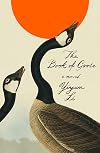
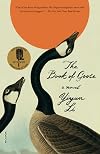
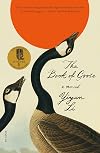
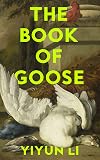
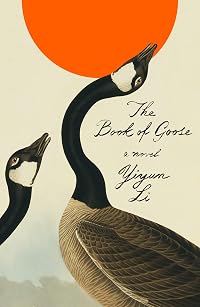
A beauty of a book in cover and in content. In post-WWII France in a small country village, two young girls Fabienne and Agnes, contemplate their future. Well, Fabienne does, but Agnes (silly goose!) can only follow her lead. The two have been playmates for ages, but now are on the cusp of teen years and have responsibilities for caring for the goats, chickens and geese. The current game that Fabienne has dreamed up is ‘making stories.’ Her imagination is as wild as she is, but Agnes actually goes to school, and has beautiful penmanship, so she writes it all down. Through many more of Fabienne’s machinations, the stories become a book, and the book is published and Agnes is ‘discovered!’ A mere goat-herd becomes a writer! She show more is whisked off to Paris and then an English boarding school. And she is miserable. She misses Fabienne, terribly. Miss Townsend, the Headmistress is horrible and has her own designs on Agnes' talent - wanting her to write a pleasant tale about the school. Agnes has not ever really thought for herself, and will need to develop some autonomy, which is a painful part of growth. So is facing reality, especially for unschooled girls in rural towns in the early 1950s. This definitely has coming-of-age elements, though it is recounted in retrospect from Agnes' middle age, in detail enough to make is seem concurrent. And there is a slight sinister air to it all - the underlying necessary violence of subsistence on farm animals, and the dark side of childhood that lurks in imagination. ("Imagination of happiness, after all, is more fragile than most other imaginations.") Beautifully written (loved the French accent in audio) and an insightful unique way of characterizing their friendship: "The only person who could leave a scratch on me--then, and now--is Fabienne.
You cannot cut an apple with an apple. You cannot cut an orange with an orange. All those years we had made ourselves believe that we were two apples hanging next to each other on the same branch, or that we were two oranges nestled in a crate, or, even, that we were born with joined selves, like one of those oddly shaped radishes or potatoes, two bodies in one. But that was only our make-believe. The truth was, Fabienne and I were two separate beings. I was a whetstone to Fabienne's blade. There was no point asking which one of us was made of harder material." show less
You cannot cut an apple with an apple. You cannot cut an orange with an orange. All those years we had made ourselves believe that we were two apples hanging next to each other on the same branch, or that we were two oranges nestled in a crate, or, even, that we were born with joined selves, like one of those oddly shaped radishes or potatoes, two bodies in one. But that was only our make-believe. The truth was, Fabienne and I were two separate beings. I was a whetstone to Fabienne's blade. There was no point asking which one of us was made of harder material." show less
Members
- Recently Added By
Lists

2023 Tournament of Books
18 works; 13 members

Books Read in 2023
5,547 works; 145 members

Anticipated 2022 & Early 2023 Releases
209 works; 4 members

Books Read in 2022
5,168 works; 114 members

Borrowed Books 2023 (Books We Have Read BUT do NOT Own)
41 works; 1 member

Top Five Books of 2023
767 works; 317 members

Top Five Books of 2024
795 works; 264 members
Author Information

29+ Works 4,575 Members
Some Editions
Awards and Honors
Common Knowledge
- Canonical title
- The Book of Goose
- Dedication
- For Dapeng and James and for Vincent, a monumental child
- First words
- You cannot cut an apple with an apple.
- Last words
- (Click to show. Warning: May contain spoilers.)I have interrupted that living to write: the story of a faux-prodigy, which is the real story of Fabienne and Agnès, as real as on that day when we were in the graveyard, wanting, and unable, to kill each other; wanting, and unable, to save each other.
- Canonical DDC/MDS
- 813.6
- Canonical LCC
- PS3612.I16
Classifications
Statistics
- Members
- 649
- Popularity
- 44,266
- Reviews
- 25
- Rating
- (3.68)
- Languages
- English, Turkish
- Media
- Paper, Audiobook, Ebook
- ISBNs
- 11
- ASINs
- 3