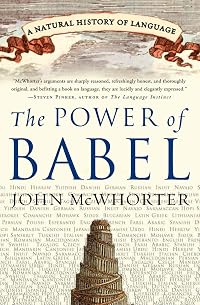
The Power of Babel: A Natural History of Language
by John McWhorter
On This Page
Description
"There are approximately six thousand languages on Earth today, each a descendant of the tongue first spoken by Homo sapiens some 150,000 years ago. How did they all develop? What happened to the first language?" "In this tour of territory too often claimed by stodgy grammarians, linguistics professor John McWhorter ranges across linguistic theory, geography, history, and pop culture to tell the fascinating story of how thousands of very different languages have evolved from a single, show more original source in a natural process similar to biological evolution. While laying out how languages mix and mutate over time, he reminds us of the variety within the species that speaks them, and argues that, contrary to popular perception, language is not immutable and hidebound, but a living, dynamic entity that adapts itself to an ever-changing human environment. Full of humor and imaginative insight, The Power of Babel draws its illustrative examples from languages around the world, including pidgins, creoles, and nonstandard dialects. McWhorter also discusses current theories on what the first language might have been like, why dialects should not be considered "bad speech," and why most of today's languages will be extinct within one hundred years. The first book written for the layperson about the natural history of language, The Power of Babel is a dazzling tour de force that will leave readers anything but speechless."--Jacket. show lessTags
Recommendations




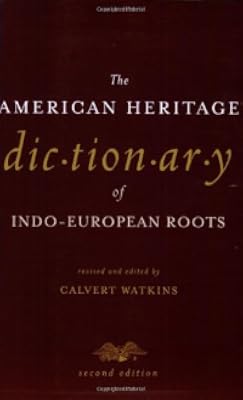
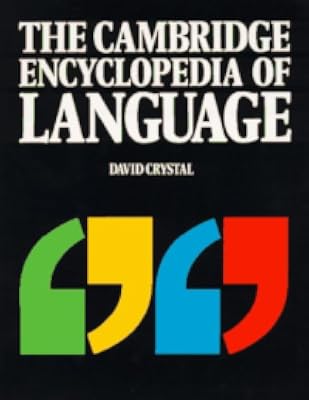

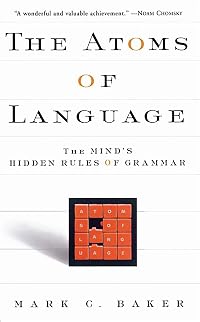


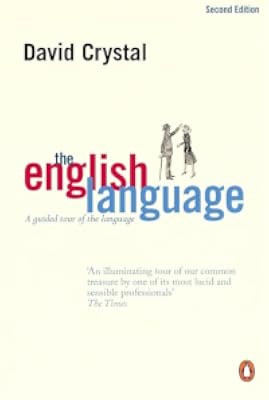









Member Recommendations
Bastard Tongues: A Trailblazing Linguist Finds Clues to Our Common Humanity in the World's Lowliest Languages by Derek Bickerton
lorax McWhorter talks a bit about creoles as clues to the structure of the first human language; Bickerton's book covers creoles in much more detail. Overall Bickerton's book isn't quite as good but still well worth reading.
83
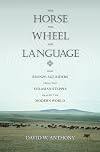
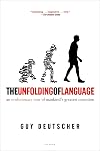
keristars Great companion books - two perspectives of virtually the same thing. McWhorter's looks more at the sheer variety (or lack thereof) of languages, while Deutscher's looks at the complexity within a single language.
Member Reviews
In this wonderful book about how languages develop John McWhorter does a excellent job of showing the complexity and diversity of the forms of human verbal communication. The book is subtitled “A Natural History of Language” and McWhorter uses the analogy with biological evolution and biodiversity throughout, describing how language has developed over the millennia since the first language arose (probably in East Africa) parallels the slower branching of lifeforms from the first single celled organisms.
He gives many examples of how languages have changed and formed new languages, even within modern recorded history – especially amongst the patois created by the enforced mixing of people speaking different tongues that was a result show more of the slave trade. Explaining how pidgins develop in situations where the basics of communication are needed, he then shows how these become creoles – that is, languages formed from the constituent parts of others languages, often words from one or more language tacked onto the simplified grammar of another – and how it is a short step to these developing into full languagehood themselves – indeed, many languages that are designated 'creoles' are, in actual fact, fully-fledged languages but are retain the image either from historical precedent (that is, it began as a creole) or that the use of, for example, English words embedded into a different grammar sound 'simplistic' to the ears of a native English speaker (in a slightly different context he gives the example of an old-fashioned Hollywood Red Indian saying “white man say no kill buffalo, heap big lie”, which is actually how many Native Americans did speak English, and is perfectly acceptable grammar in many Amerindian languages).
Of course, while languages change by growth, accreting grammatical and linguistic flourishes that often seem massively redundant and (especially to the new learner) completely pointless as well as adopting and borrowing from other languages, language also changes by the speakers dropping sounds. McWhorter gives many examples of this, most notably in French and Italian which, while both equally descended from Latin, have changed in quite random ways in the sounds that have been dropped and the words that have been contracted into each other. A fairly recent example in English is also the word “every”, which well into the period of modern English was too separate words “ever each”, and from which the final “-ch” sound was easily dropped.
Recent history has also seen languages tending to be classified as 'advanced' or 'simple', those doing the classifying being from the Western world and, of course, classing their own language families as the advanced ones (indeed, this isn't just a recent phenomenon; the word 'barbarian' comes from the fact that the ancient Greeks thought the language of the Northern savages sounded like 'bar-bar-bar-bar'), while in actual fact developed world languages tend to be simpler than others for the simple reason that technology ossifies a language at a given moment, and both puts limits on what is acceptable grammar and vocabulary and slows down the rate of diversification and change. This begins to happen as soon as language is codified into a written form, but accelerates markedly with the introduction of printing. This is also, of course, the reason that many cultures differentiate 'proper' language from dialects of the language; McWhorter also goes to some length to argue that there are only dialects, it is simply that the particular dialect of a region which gained political and economic leverage at a moment in history becomes codified as the 'correct' form to which those of other regions are considered pale, inferior, brutish imitations. That there is really no difference between a language and a dialect – McWhorter's refrain is that there is only dialect – is, to anyone who has studied language at all in the past thirty years, not news and he does belabour the point slightly, although perhaps this is necessary for some of the audience. This is also where his extended metaphor breaks down somewhat; while in biological evolution survival is dependent upon 'fitness' to a situation, in the terms of language it is pure chance – both in terms of which languages / dialects gain prominence and power AND in how a language evolves. McWhorter goes to great pains to show that ere is no such thing as an inferior language – even to the point of stating that “Black English”, as spoken by many of young people of all colours in America and the UK, is a perfectly valid linguistic form, however it might make some people cringe – without ever recognising this slight flaw in his analogy.
However, this is a very, very minor quibble. This is a superb book that anyone with an interest in language should read. McWhorter writes from a position of immense knowledge with a gift for explanation and an eye for humour (trust me, there are some real laughs to be had herein), even if his gag reflex does occasionally get the better of him. More importantly, his passion for language – all language – suffuses every page. I wanted to say that his writing as as clear as Crystal, for my money Cambridge language expert David Crystal is perhaps the most lucid writer on language around, but the joy and enthusiasm that McWhorter brings to the subject is quite unmatched. show less
He gives many examples of how languages have changed and formed new languages, even within modern recorded history – especially amongst the patois created by the enforced mixing of people speaking different tongues that was a result show more of the slave trade. Explaining how pidgins develop in situations where the basics of communication are needed, he then shows how these become creoles – that is, languages formed from the constituent parts of others languages, often words from one or more language tacked onto the simplified grammar of another – and how it is a short step to these developing into full languagehood themselves – indeed, many languages that are designated 'creoles' are, in actual fact, fully-fledged languages but are retain the image either from historical precedent (that is, it began as a creole) or that the use of, for example, English words embedded into a different grammar sound 'simplistic' to the ears of a native English speaker (in a slightly different context he gives the example of an old-fashioned Hollywood Red Indian saying “white man say no kill buffalo, heap big lie”, which is actually how many Native Americans did speak English, and is perfectly acceptable grammar in many Amerindian languages).
Of course, while languages change by growth, accreting grammatical and linguistic flourishes that often seem massively redundant and (especially to the new learner) completely pointless as well as adopting and borrowing from other languages, language also changes by the speakers dropping sounds. McWhorter gives many examples of this, most notably in French and Italian which, while both equally descended from Latin, have changed in quite random ways in the sounds that have been dropped and the words that have been contracted into each other. A fairly recent example in English is also the word “every”, which well into the period of modern English was too separate words “ever each”, and from which the final “-ch” sound was easily dropped.
Recent history has also seen languages tending to be classified as 'advanced' or 'simple', those doing the classifying being from the Western world and, of course, classing their own language families as the advanced ones (indeed, this isn't just a recent phenomenon; the word 'barbarian' comes from the fact that the ancient Greeks thought the language of the Northern savages sounded like 'bar-bar-bar-bar'), while in actual fact developed world languages tend to be simpler than others for the simple reason that technology ossifies a language at a given moment, and both puts limits on what is acceptable grammar and vocabulary and slows down the rate of diversification and change. This begins to happen as soon as language is codified into a written form, but accelerates markedly with the introduction of printing. This is also, of course, the reason that many cultures differentiate 'proper' language from dialects of the language; McWhorter also goes to some length to argue that there are only dialects, it is simply that the particular dialect of a region which gained political and economic leverage at a moment in history becomes codified as the 'correct' form to which those of other regions are considered pale, inferior, brutish imitations. That there is really no difference between a language and a dialect – McWhorter's refrain is that there is only dialect – is, to anyone who has studied language at all in the past thirty years, not news and he does belabour the point slightly, although perhaps this is necessary for some of the audience. This is also where his extended metaphor breaks down somewhat; while in biological evolution survival is dependent upon 'fitness' to a situation, in the terms of language it is pure chance – both in terms of which languages / dialects gain prominence and power AND in how a language evolves. McWhorter goes to great pains to show that ere is no such thing as an inferior language – even to the point of stating that “Black English”, as spoken by many of young people of all colours in America and the UK, is a perfectly valid linguistic form, however it might make some people cringe – without ever recognising this slight flaw in his analogy.
However, this is a very, very minor quibble. This is a superb book that anyone with an interest in language should read. McWhorter writes from a position of immense knowledge with a gift for explanation and an eye for humour (trust me, there are some real laughs to be had herein), even if his gag reflex does occasionally get the better of him. More importantly, his passion for language – all language – suffuses every page. I wanted to say that his writing as as clear as Crystal, for my money Cambridge language expert David Crystal is perhaps the most lucid writer on language around, but the joy and enthusiasm that McWhorter brings to the subject is quite unmatched. show less
John McWhorter will dazzle you with insights into what language is and what it is not. Many of our assumptions are just wrong. Language is verbal behavior that tends to change over time. We may feel compelled to follow the rules made up by grammarians, but deep down language is arbitrary; most languages are festooned with grammatical frills that are unnecessary to basic communication. So-called primitive languages are often more elaborate and complicated than languages spoken by what McWhorter calls "tall building" cultures. Also languages that live next to each other tend to pick up each other's traits.
Language tends to have surprisingly little to do with culture and more to do with accidents and the erosion of words in the native show more speaker's mouth. Much of what I thought I knew about language turns out to be wrong. show less
Language tends to have surprisingly little to do with culture and more to do with accidents and the erosion of words in the native show more speaker's mouth. Much of what I thought I knew about language turns out to be wrong. show less
This is another fun language book by McWhorter. This volume is organized around looking at all the ways that languages change and evolve over time. McWhorter describes a rich variety of changes that languages and dialects can undergo. We've all heard and read about how languages can change in pronunciation over time, and how word meanings can evolve. But that is only the start of McWhorter's entertaining and informative tour through the evolution of language.
Complex language features---such as inflection or the use of tone---come and go over time, and McWhorter provides some fascinating insights into how and why this type of change happens. He also describes a variety of other complexities that arise in the world's languages, but are show more generally unfamiliar to folks like me who are mostly only familiar with Romance or Indo-European languages.
There is a large (and interesting) section of the book devoted to pidgins and creoles. Creoles are essentially new languages that spring into being when people who use a much simpler pidgin are compelled to rely almost exclusively on that pidgin for communication of a long period of time. The resulting Creole is a true language with a grammar and vocabulary that provide sufficient expressiveness for the full range of human communications. McWhorter argues that since Creoles are less evolved, the common features across creole languages are probably a good indication of the types of features that would have been present in the earliest human language.
Another interesting aspect of the book was the contrasting of more isolated, regional languages and more wide-spread languages such as English, Hindi, Chinese, or Arabic. The truly bizarre and hard to grasp linguistic complexities are much more likely to be found in the more isolated languages, where most if not all speakers learn the language natively as children. Once a language gets big enough that many people are learning it as a second language, those rough edges get softened over time. Thus, for example, Swahili, a language adopted by many adults as a second language, is generally considered the "easiest" of the Bantu languages.
There are many other interesting aspects of language evolution in this book. How do languages change when the mix with each other, whether due to migration, trade, or conquest? What happens when a language starts getting written down? How do languages change as they die out? Do we have any hope of reconstructing the original human language?
The book is full of interesting examples English and other languages readers may know, such as French, German, and Russian, and from languages readers are unlikely to have heard of, such as Ngan'gityemerri, an Aborigine language from northern Australia. And McWhorter tells his story with enthusiasm and a pleasant sprinkling of personal anecdotes and asides, both relevant (such as his personal experience grappling with different German dialects) and merely entertaining (such as his musings on the quality of art in turn-of-the-century comic strips). show less
Complex language features---such as inflection or the use of tone---come and go over time, and McWhorter provides some fascinating insights into how and why this type of change happens. He also describes a variety of other complexities that arise in the world's languages, but are show more generally unfamiliar to folks like me who are mostly only familiar with Romance or Indo-European languages.
There is a large (and interesting) section of the book devoted to pidgins and creoles. Creoles are essentially new languages that spring into being when people who use a much simpler pidgin are compelled to rely almost exclusively on that pidgin for communication of a long period of time. The resulting Creole is a true language with a grammar and vocabulary that provide sufficient expressiveness for the full range of human communications. McWhorter argues that since Creoles are less evolved, the common features across creole languages are probably a good indication of the types of features that would have been present in the earliest human language.
Another interesting aspect of the book was the contrasting of more isolated, regional languages and more wide-spread languages such as English, Hindi, Chinese, or Arabic. The truly bizarre and hard to grasp linguistic complexities are much more likely to be found in the more isolated languages, where most if not all speakers learn the language natively as children. Once a language gets big enough that many people are learning it as a second language, those rough edges get softened over time. Thus, for example, Swahili, a language adopted by many adults as a second language, is generally considered the "easiest" of the Bantu languages.
There are many other interesting aspects of language evolution in this book. How do languages change when the mix with each other, whether due to migration, trade, or conquest? What happens when a language starts getting written down? How do languages change as they die out? Do we have any hope of reconstructing the original human language?
The book is full of interesting examples English and other languages readers may know, such as French, German, and Russian, and from languages readers are unlikely to have heard of, such as Ngan'gityemerri, an Aborigine language from northern Australia. And McWhorter tells his story with enthusiasm and a pleasant sprinkling of personal anecdotes and asides, both relevant (such as his personal experience grappling with different German dialects) and merely entertaining (such as his musings on the quality of art in turn-of-the-century comic strips). show less
This is an interesting look at how the world went from one language to the roughly 6000 we have today. At times, it was a bit too much "in the weeds" for me, with details of wording endings or how a particular word evolved. But, the author has a wonderful sense of humour which comes through to banish any boredom.
The power of Babel. A natural history of language is an extended introduction to historical linguistics, particularly addressing the phenomenon on language change. The main idea proposed in the book is frightfully simple: there is no such thing as "a language", i.e. there is so much variation and language change going on at the same time, that it is hard to pin-point any language in a "finished" or fully-realized state.
Despite the very simple main idea of the book, The power of Babel. A natural history of language is hard to read, and, actually, rather boring. The author really goes over-board in giving examples. It seems the author's intention in writing the book was to include examples from as many languages as possible. Other show more authors, notably Jean Aitchinson's Language Change: Progress or Decay, explain the theory giving a limited number of examples. Thus, McWhorter's book includes all classic examples, such as Tok Pisin, in addition to a very large selection of other languages, pidgins, creoles and dialects.
The author repeatedly draws comparisons between the evolution of languages and evolution in the natural world, including concepts such as fossilization, survival and language death. Particularly the last chapter, about language death, attempts to preserve and document languages and the call to make efforts to rescue languages, closely resembles David Crystal's book Language Death.
McWhorter's fascination with the multitude of languages and the chaos in development is best expressed through the titles of his chapters, as they are, for instance, "The First Language Morphs into Six Thousand New Ones" (Chapter 1), "The Six Thousand Languages Develop into Clusters of Sublanguages" (Chapter 2), "The Thousands of Dialects Mix with One Another" (Chapter 3) and "The Thousands of Dialects of Thousands of Languages All Develop Far Beyond the Call of Duty" (Chapter 5).
Readers who share a fascination for language variety may enjoy the multiple upon multiple examples from many well-known and many exotic languages. However, for the reader interested in a good introduction into the subject, it may be advisable to read a book that is clear, without offering an over-kill of examples. There any many similar books about this subject available. show less
Despite the very simple main idea of the book, The power of Babel. A natural history of language is hard to read, and, actually, rather boring. The author really goes over-board in giving examples. It seems the author's intention in writing the book was to include examples from as many languages as possible. Other show more authors, notably Jean Aitchinson's Language Change: Progress or Decay, explain the theory giving a limited number of examples. Thus, McWhorter's book includes all classic examples, such as Tok Pisin, in addition to a very large selection of other languages, pidgins, creoles and dialects.
The author repeatedly draws comparisons between the evolution of languages and evolution in the natural world, including concepts such as fossilization, survival and language death. Particularly the last chapter, about language death, attempts to preserve and document languages and the call to make efforts to rescue languages, closely resembles David Crystal's book Language Death.
McWhorter's fascination with the multitude of languages and the chaos in development is best expressed through the titles of his chapters, as they are, for instance, "The First Language Morphs into Six Thousand New Ones" (Chapter 1), "The Six Thousand Languages Develop into Clusters of Sublanguages" (Chapter 2), "The Thousands of Dialects Mix with One Another" (Chapter 3) and "The Thousands of Dialects of Thousands of Languages All Develop Far Beyond the Call of Duty" (Chapter 5).
Readers who share a fascination for language variety may enjoy the multiple upon multiple examples from many well-known and many exotic languages. However, for the reader interested in a good introduction into the subject, it may be advisable to read a book that is clear, without offering an over-kill of examples. There any many similar books about this subject available. show less
An exceptional book. It changed my understanding of linguistics completely (every classics grad student picks up a bit, but it's often quite outdated). The discussion of creoles was particularly engaging. McWhorter is a gem.
An enjoyable foray into historical linguistics written with the layperson in mind. McWhorter writes in an easy to understand language, constantly trying to show what he means through the use of examples from real life languages. Historical linguistics is a dry topic. Let's face it: it is just not that sexy. Most people find the endless comparisons of lists of words or bits of grammar completely boring. Though this is for the layperson this book is full of such things, so you have to be a bit of a language geek to properly appreciate this book. But you don't have to have a lot of knowledge beforehand as McWhorter does explain everything rather thoroughly. If you aren't interested in the inflections of some obscure Indian language and how show more it compares to the inflections of some obscure South East Asian language, then this book is not for you. But if you are into grammar and other linguistic topics then it is a delightful read. If the book had been better structured I'd given it 5 stars. show less
Members
- Recently Added By
Lists

Great Books About Language
73 works; 48 members

Reading list
170 works; 1 member
Author Information

69+ Works 7,086 Members
John H. McWhorter is Associate Professor of Linguistics at the University of California, Berkeley.
Common Knowledge
- Original publication date
- 2001
- First words
- I fell in love for the first time at four years old.
- Last words
- (Click to show. Warning: May contain spoilers.)The living languages most like the parent of all six thousand are spoken in places as little known to most of the world as Surinam, islands off the west coast of Africa, and Papua New Guinea.
- Blurbers
- Pinker, Steven
Classifications
- Genres
- Anthropology, General Nonfiction, Nonfiction, History, Science & Nature
- DDC/MDS
- 417.7 — Language Linguistics Dialectology and historical linguistics Historical linguistics (Diachronic linguistics)
- LCC
- P140 .M34 — Language and Literature Philology. Linguistics Language. Linguistic theory. Comparative grammar Science of language (Linguistics)
- BISAC
Statistics
- Members
- 1,551
- Popularity
- 14,775
- Reviews
- 33
- Rating
- (3.84)
- Languages
- English
- Media
- Paper, Ebook
- ISBNs
- 5
- ASINs
- 4