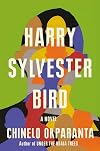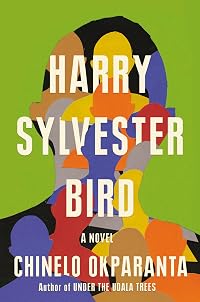
Harry Sylvester Bird
by Chinelo Okparanta
On This Page
Description
"Harry leaves his racist, xenophobic, and financially incompetent parents in Pennsylvania and moves to Manhattan where he falls in love with a young Nigerian woman who forces him to confront his identity."--Tags
Recommendations



Member Reviews
Harry Sylvester Bird is a satire about a young white man who thinks he is transracial (Black). He finds his parents' overt racism to be embarrassing, and when he leaves them for college and starts dating Maryam, a Black woman, he tries to "find himself" as the person he thinks he is.
The book itself is a cringe-fest - if you're not up for that kind of satire, this might not be the one for you. It's very clear early on that Harry is a caricature, and that the reader is not supposed to like him or root for him. Because of this, I can see readers either being quickly fed up with him or, as I did, become unable to look away from the trainwreck happening before them.
Still, Okparanta treads the line of satire well without falling into the show more trap of making the entire book eyeroll-inducing. Neither the plot nor the characters quite veer into farce territory, and the setting itself is eerily reminiscent of where the United States as a society is now without being over-the-top for comedic effect. I find it can be a delicate balance to make satire feel like a real critique versus satire for satire's sake, and Okparanta's ability to craft character and environment make for a read that is a great example of the genre.
Overall, I think if you know what to expect going in, you'll get more out of the book. The summary blurb might be a little misleading, as it's not as clear that you're getting a cringe-inducing satire here, and a good one at that. However, because of this, I don't think the re-readability is high; it's definitely worth a read, but not enough to make space on an already-full bookshelf (not speaking from experience here at all...).
Thank you to Mariner and NetGalley for providing a copy for review. show less
The book itself is a cringe-fest - if you're not up for that kind of satire, this might not be the one for you. It's very clear early on that Harry is a caricature, and that the reader is not supposed to like him or root for him. Because of this, I can see readers either being quickly fed up with him or, as I did, become unable to look away from the trainwreck happening before them.
Still, Okparanta treads the line of satire well without falling into the show more trap of making the entire book eyeroll-inducing. Neither the plot nor the characters quite veer into farce territory, and the setting itself is eerily reminiscent of where the United States as a society is now without being over-the-top for comedic effect. I find it can be a delicate balance to make satire feel like a real critique versus satire for satire's sake, and Okparanta's ability to craft character and environment make for a read that is a great example of the genre.
Overall, I think if you know what to expect going in, you'll get more out of the book. The summary blurb might be a little misleading, as it's not as clear that you're getting a cringe-inducing satire here, and a good one at that. However, because of this, I don't think the re-readability is high; it's definitely worth a read, but not enough to make space on an already-full bookshelf (not speaking from experience here at all...).
Thank you to Mariner and NetGalley for providing a copy for review. show less
I picked up this novel because it had been suggested as speculative fiction, but only a small element might qualify as such. Instead, it was the story of a young White man, figuratively and literally uncomfortable in his skin, who wants only to escape his obnoxious, racist parents by “becoming” Black. Yet he carries his own racism with him through a relationship with a young Black woman and a semester spent in Ghana. It is interesting to me that the author, a Nigerian-American woman, decided to write a first-person young White male. I found him as unlikeable as his parents and wondered what his fictional girlfriend saw in him. In the end, I found the racism attributed to the characters so blatant that the lack of subtlety detracted show more from the book. show less
Could just be that I'm not ready to read a book yet that takes place during the pandemic. The story lost me when it moved into the near future (late 2022, into 2023, 2025). I couldn't suspend my disbelief. Quit on page 216.
Ratings
Members
- Recently Added By
Lists

Literary Hub Summer 2022 Reading List
19 works; 1 member
Author Information

3+ Works 1,048 Members
Chinelo Okparanta was born in Port Harcourt, Nigeria. She was ten years old when her family moved to the United States. She is a graduate of Pennsylvania State University (Bachelors of Science), Rutgers University (Master of Arts), and the Iowa Writers' Workshop (Masters of Fine Arts). Her short stories have been published in Granta, The New show more Yorker, Tin House, The Kenyon Review, The Southern Review TriQuarterly, Conjunctions, Subtropics and The Coffin Factory. Her first short story collection, Happiness, Like Water, won the 2014 Lambda Literary Award for Lesbian Fiction and was named one of The Guardian's Best African Fiction of 2013. Her essays have appeared in Granta AGNI, The Story Prize blog, and the University of Iowa International Writing Program blog. Her first novel, Under the Udala Trees, was published in 2015 and won the 2016 Lambda Literary Award in the General Lesbian Fiction category. (Bowker Author Biography) show less
Awards and Honors
Awards
Notable Lists
Classifications
Statistics
- Members
- 60
- Popularity
- 515,864
- Reviews
- 3
- Rating
- (2.69)
- Languages
- English
- Media
- Paper, Audiobook, Ebook
- ISBNs
- 5
- ASINs
- 2