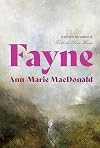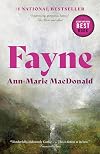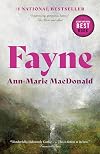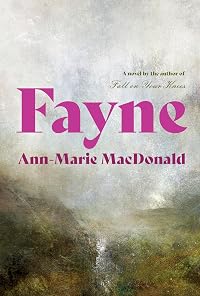
Fayne
by Ann-Marie MacDonald
On This Page
Description
Fayne, a vast moated castle, lies to the misty southern border of Scotland, ruled by the Lord Henry Bell, Seventeenth Baron of the DC de Fayne, Peer of Her Majesty's Realm of the United Kingdom of Great Britain and Ireland. The mysterious Lord Bell keeps to his rooms by day, appearing briefly at night to dote over his beloved and peculiarly gifted child. But even with all her gifts - intelligence, wit and strength of character - can Charlotte overcome the violently strict boundaries of show more contemporary society and establish her own place in the world? show lessTags
Recommendations






Member Reviews
Fayne is as close to literary magic as it gets. What an incredibly complex and well-written book! It is epic. After the last page, which I read at 4 am cause I just couldn't put this down, I thought this deserved a standing ovation.
Fayne is massive, more than 700 pages, and like the isolated estate whose name it bears, it is full of secrets and mystery. It is by no means perfect, but nature prefers making things different, not perfect by human standards, as one of the characters states in the book.
Charlotte Bell is a daughter of a seclusive aristocrat growing up on this ancient estate in the late 19th century, hidden from the world due to her "condition". She grows up thirsty for knowledge, hoping to one day be admitted to a university show more where she could continue her studies despite such a thing being unheard of for women of her social class. Charlotte's mother is a rich American heiress, who we learn about in letters she wrote as a young bride. She supposedly died after giving birth to Charlotte, soon after the death of her elder brother Charles. Other characters living at Fayne and Charlotte's spinster aunt living in Edinburgh also have their secrets that will slowly start to unfold.
There are many characters in the story, all very well-developed. There are also some great, unexpected twists. The big twist concerning the main character was not that difficult to guess, but it didn't take away the magic of the story. The atmosphere is phenomenal, almost gothic and fairytale-like at the same time while at Fayne, but we are often pulled out and thrown into the real world.
The range of topics Fayne covers is very broad, in the tradition of great Victorian novels; science, social class, traditional roles, class, morality, marriage, education... Had there been trigger warnings about it, I might have never picked it up. Some parts were very difficult to read due to the emotion bursting from the pages. But, I am so glad I did. show less
Fayne is massive, more than 700 pages, and like the isolated estate whose name it bears, it is full of secrets and mystery. It is by no means perfect, but nature prefers making things different, not perfect by human standards, as one of the characters states in the book.
Charlotte Bell is a daughter of a seclusive aristocrat growing up on this ancient estate in the late 19th century, hidden from the world due to her "condition". She grows up thirsty for knowledge, hoping to one day be admitted to a university show more where she could continue her studies despite such a thing being unheard of for women of her social class. Charlotte's mother is a rich American heiress, who we learn about in letters she wrote as a young bride. She supposedly died after giving birth to Charlotte, soon after the death of her elder brother Charles. Other characters living at Fayne and Charlotte's spinster aunt living in Edinburgh also have their secrets that will slowly start to unfold.
There are many characters in the story, all very well-developed. There are also some great, unexpected twists. The big twist concerning the main character was not that difficult to guess, but it didn't take away the magic of the story. The atmosphere is phenomenal, almost gothic and fairytale-like at the same time while at Fayne, but we are often pulled out and thrown into the real world.
The range of topics Fayne covers is very broad, in the tradition of great Victorian novels; science, social class, traditional roles, class, morality, marriage, education... Had there been trigger warnings about it, I might have never picked it up. Some parts were very difficult to read due to the emotion bursting from the pages. But, I am so glad I did. show less
Loved it. Such beautiful writing and complex characters. Characters where you can hate their actions and deliberate ignorance yet love their motivations or their strength in one particular area.
The story reminded me of the writing of Dickens and the Bronte sisters. The writing is gothic with all the trappings of that genre -- a "castle", an ancient prophecy, women in distress, a beast within, high tension and stormy weather. Yet it deals with very 21st century issues of inclusion, intersex and homosexual rights and the freedom to be who you are.
It is about duality. A county that is in neither England or Scotland but somehow in both. Charlotte and Charles who exist in one person and who wants acknowledgement of their duality.
There were show more aspects of magical realism that, for me, weren't necessary: Byrn, regeneration, extended lives. There were times when modern sensibilities snuck into the Victoria time period: having Fayne declared a person, accepting titles such as Lord Charlotte and Lady Charles. And the ending seemed to, paradoxically, move too quickly and drag on a bit. But none of that mattered by the end of the book because of the engrossing story so richly populated with great characters and told in amazing writing. show less
The story reminded me of the writing of Dickens and the Bronte sisters. The writing is gothic with all the trappings of that genre -- a "castle", an ancient prophecy, women in distress, a beast within, high tension and stormy weather. Yet it deals with very 21st century issues of inclusion, intersex and homosexual rights and the freedom to be who you are.
It is about duality. A county that is in neither England or Scotland but somehow in both. Charlotte and Charles who exist in one person and who wants acknowledgement of their duality.
There were show more aspects of magical realism that, for me, weren't necessary: Byrn, regeneration, extended lives. There were times when modern sensibilities snuck into the Victoria time period: having Fayne declared a person, accepting titles such as Lord Charlotte and Lady Charles. And the ending seemed to, paradoxically, move too quickly and drag on a bit. But none of that mattered by the end of the book because of the engrossing story so richly populated with great characters and told in amazing writing. show less
While Fayne, by Ann-Marie MacDonald, can best be categorized as historical fiction, the ideas the writer contemplates reach well beyond the mid-1800s when much of the story takes place. MacDonald's novel calls into question and turns on their multiple heads many of the most intractable, most infuriating, most frustrating concepts which are, sadly, still being espoused in the 21st century.
The author's slow moving tale, which is very lightly peppered with archaic syntax, will challenge modern readers as the pace set by the novel and its word choice reflect the lives of the characters in the novel. The many injustices faced by the characters, such as classism and misogyny (not to mention hatred of Irish immigrants) are practiced blithely show more and unconsciously by supposedly good people. All this may drive the reader to distraction, despite knowing full well that most people then are as most people now, that is, subjects of their time.
Key to accepting the conclusions posed by MacDonald's novel is to realize, as one doctor says that "Nature doesnae deal in mistakes so much as differences. You never know when one of them might wind up saving our skin." I couldn't put this novel down. show less
The author's slow moving tale, which is very lightly peppered with archaic syntax, will challenge modern readers as the pace set by the novel and its word choice reflect the lives of the characters in the novel. The many injustices faced by the characters, such as classism and misogyny (not to mention hatred of Irish immigrants) are practiced blithely show more and unconsciously by supposedly good people. All this may drive the reader to distraction, despite knowing full well that most people then are as most people now, that is, subjects of their time.
Key to accepting the conclusions posed by MacDonald's novel is to realize, as one doctor says that "Nature doesnae deal in mistakes so much as differences. You never know when one of them might wind up saving our skin." I couldn't put this novel down. show less
In the late 19th century, 12-year old Charlotte lives with her father at Fayne (in Scotland or England). Her mother died in childbirth and her brother died when she was young, as well (Charlotte does not remember her brother). Charlotte is extremely smart and her father hires a tutor for her (who is initially perturbed that he was brought to tutor a girl). She wants to attend university.
This did not turn out as I’d expected. It was very long and I’m rating it ok. There were parts I liked (more toward the beginning of the book), but whenever we switched perspectives, I felt like I was starting over (even though after the first couple of times, we were mostly going back and continuing from where the last switch left off), and show more wasn’t interested for the first bit (of every switch). It took time to get interested again, but just as that happened, we switched again.
So, the other perspective is Charlotte’s mother. I honestly didn’t find this nearly as interesting, overall, as Charlotte herself. Though, after a bit, I was interested (then… switch!). Clarissa (Charlotte’s aunt) was a piece of work, wow! I didn’t like her from the start. The end was a bit weird: Did Charlotte live to about 140 years old!? show less
This did not turn out as I’d expected. It was very long and I’m rating it ok. There were parts I liked (more toward the beginning of the book), but whenever we switched perspectives, I felt like I was starting over (even though after the first couple of times, we were mostly going back and continuing from where the last switch left off), and show more wasn’t interested for the first bit (of every switch). It took time to get interested again, but just as that happened, we switched again.
So, the other perspective is Charlotte’s mother. I honestly didn’t find this nearly as interesting, overall, as Charlotte herself. Though, after a bit, I was interested (then… switch!). Clarissa (Charlotte’s aunt) was a piece of work, wow! I didn’t like her from the start. The end was a bit weird:
No one writes like Ann-Marie MacDonald, and no one characterizes like her either. This book is no exception, but the storyline is quite different from her usual format. The book is set in Scotland in the late 19th century, and Ms. MacDonald takes on topics that were not spoken of during that time. This is very definitely an LGBTAQ book and it is a fantasy soaked in history as it runs through generations. Time is elastic in this book, and Ms. MacDonald jumps from point-of-view to point-of-view and through different timeframes over and over. During the course of this story The characters are full of life and pathos. Even the mysticism is realistic. The main character is young Charlotte Bell who, when we meet her, she is living in a huge show more castle with her father and an assortment of servants and village folk. Charlotte has been kept isolated because of a condition that is not explained to us. I was given this book to read and review by Net Galley, and I have to admit that the length of it was a bit daunting, even for me. It managed to keep me enthralled, and I read with bated breath as young Charlotte discovers her history and we experience with her all the trials and tribulations as her father and mother struggle with what to do about Charlotte. She is an extremely intelligent young girl with a photographic memory. Not much gets past Charlotte except her well-veiled history. This is a coming-of-age story of sorts with magic and mysticism liberally sprinkled throughout. Fans of Ann-Marie MacDonald will gobble this up. It's a book to lose yourself in. show less
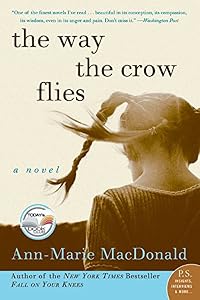
I loved Ann-Marie MacDonald’s previous novels, particularly Fall on Your Knees and The Way the Crow Flies. This one didn’t wow me as much, though I’m willing to admit that this is my second consecutive 700+page book so I might be fatigued.
Charlotte Bell lives on the large estate known as Fayne on the English/Scottish border. Her childhood has been without friends her own age; she has been kept isolated by her father, Lord Henry, because she has a mysterious illness which she has been told leaves her “morbidly susceptible to germs.” Her mother died giving birth to Charlotte, and her older brother Charles, who would have been the heir to the estate and the title, died at the age of two. Charlotte loves the bogs and moors and show more spends a great deal of time with Byrn, an old hired man who teaches her about the fen. She also educates herself by reading through her father’s library, but for her twelfth birthday, her father gifts her a tutor.
The arrival of that tutor changes her life. She decides she wants to attend university, though that is not really an option for women in the late 19th century. Her father takes her to Edinburgh for an examination which she assumes is the first step towards admission, but it turns out to be entirely different from what she foresees. The treatment for her ailment is also something she never imagined. Thus begins the unravelling of deep and dark family secrets.
Charlotte is a very intelligent girl who knows “Latin, Logic, Rhetoric, and . . . a tolerable grasp of Greek,” but she is also naive; because she has been so sheltered, she misunderstands so much. For instance, when she visits an area in Edinburgh known for its fallen women, she “scanned the street for a fallen woman, but all were upright.” There are also topics which are never discussed with her, so she has little understanding of her body and sexuality. I did find myself at times wondering if such a perceptive and curious girl would not realize sooner what is really happening to her and around her.
The novel has dual time lines. Charlotte’s story is interspersed with that of her mother. Via flashbacks, we meet Lady Marie when she first meets Lord Henry who has been given strict instructions by his sister Clarissa to find a wife and produce an heir. Unfortunately, this approach results in some repetition: the same event is repeated, though from the perspective of a different character.
There are a lot of plot twists, so readers shouldn’t read too many reviews of the book beforehand; some reviewers tend to divulge events and thereby lessen their impact on readers. Some of the twists revolve around connections between characters which seem rather coincidental. For instance, the mothers of two characters are revealed to be characters previously featured in the book. Key discoveries are made so conveniently just in time.
Characters are developed in great detail and very realistically. As I continued to read, my feelings about characters changed, as more and more was revealed. A positive impression might not remain so and the same is true for characters who give a poor impression initially. For both Lord Henry and Lady Marie, in particular, I felt various emotions. Even for a villain, I could not but feel some sympathy because the reader is made privy to thoughts not openly expressed. Given the time period, women were not able pursue dreams, and a life lived in a secondary role may cause bitterness.
There are elements of magic realism which I didn’t appeal to me. Likewise, the philosophical musings at the end of the book seem superfluous. At 700+ pages, the book could use some trimming, and I don’t think the magic realism is needed to develop theme.
The book has a number of themes: role of women, gender and identity, and even humanity’s abuse of the earth. The novel, therefore, is very relevant, despite its setting. The main message for me is that we should accept and appreciate all of nature and nature’s creations. One man says, “’Nature doesnae deal in mistakes so much as differences.’” The bird that Charlotte and her father create from bits and pieces of other birds serves as a symbol of our unwillingness to accept differences. Lord Henry says, “’It is a chimera. . . . other birds would peck it to death’” and Charlotte feels “a pang of pathos at how the creature was innocent of its own monstrosity.”
There is a great deal in this book to analyze and applaud. Its examination of dualities alone is worthy of an essay. Unfortunately, the book just felt too long for me. As I stated at the beginning, I may have been suffering reader fatigue. I certainly recommend the book to those who have enjoyed Ann-Marie MacDonald’s previous novels.
Note: I received a digital galley from the publisher via NetGalley.
Please check out my reader's blog (https://schatjesshelves.blogspot.com/) and follow me on Twitter (@DCYakabuski). show less
Charlotte Bell lives on the large estate known as Fayne on the English/Scottish border. Her childhood has been without friends her own age; she has been kept isolated by her father, Lord Henry, because she has a mysterious illness which she has been told leaves her “morbidly susceptible to germs.” Her mother died giving birth to Charlotte, and her older brother Charles, who would have been the heir to the estate and the title, died at the age of two. Charlotte loves the bogs and moors and show more spends a great deal of time with Byrn, an old hired man who teaches her about the fen. She also educates herself by reading through her father’s library, but for her twelfth birthday, her father gifts her a tutor.
The arrival of that tutor changes her life. She decides she wants to attend university, though that is not really an option for women in the late 19th century. Her father takes her to Edinburgh for an examination which she assumes is the first step towards admission, but it turns out to be entirely different from what she foresees. The treatment for her ailment is also something she never imagined. Thus begins the unravelling of deep and dark family secrets.
Charlotte is a very intelligent girl who knows “Latin, Logic, Rhetoric, and . . . a tolerable grasp of Greek,” but she is also naive; because she has been so sheltered, she misunderstands so much. For instance, when she visits an area in Edinburgh known for its fallen women, she “scanned the street for a fallen woman, but all were upright.” There are also topics which are never discussed with her, so she has little understanding of her body and sexuality. I did find myself at times wondering if such a perceptive and curious girl would not realize sooner what is really happening to her and around her.
The novel has dual time lines. Charlotte’s story is interspersed with that of her mother. Via flashbacks, we meet Lady Marie when she first meets Lord Henry who has been given strict instructions by his sister Clarissa to find a wife and produce an heir. Unfortunately, this approach results in some repetition: the same event is repeated, though from the perspective of a different character.
There are a lot of plot twists, so readers shouldn’t read too many reviews of the book beforehand; some reviewers tend to divulge events and thereby lessen their impact on readers. Some of the twists revolve around connections between characters which seem rather coincidental. For instance, the mothers of two characters are revealed to be characters previously featured in the book. Key discoveries are made so conveniently just in time.
Characters are developed in great detail and very realistically. As I continued to read, my feelings about characters changed, as more and more was revealed. A positive impression might not remain so and the same is true for characters who give a poor impression initially. For both Lord Henry and Lady Marie, in particular, I felt various emotions. Even for a villain, I could not but feel some sympathy because the reader is made privy to thoughts not openly expressed. Given the time period, women were not able pursue dreams, and a life lived in a secondary role may cause bitterness.
There are elements of magic realism which I didn’t appeal to me. Likewise, the philosophical musings at the end of the book seem superfluous. At 700+ pages, the book could use some trimming, and I don’t think the magic realism is needed to develop theme.
The book has a number of themes: role of women, gender and identity, and even humanity’s abuse of the earth. The novel, therefore, is very relevant, despite its setting. The main message for me is that we should accept and appreciate all of nature and nature’s creations. One man says, “’Nature doesnae deal in mistakes so much as differences.’” The bird that Charlotte and her father create from bits and pieces of other birds serves as a symbol of our unwillingness to accept differences. Lord Henry says, “’It is a chimera. . . . other birds would peck it to death’” and Charlotte feels “a pang of pathos at how the creature was innocent of its own monstrosity.”
There is a great deal in this book to analyze and applaud. Its examination of dualities alone is worthy of an essay. Unfortunately, the book just felt too long for me. As I stated at the beginning, I may have been suffering reader fatigue. I certainly recommend the book to those who have enjoyed Ann-Marie MacDonald’s previous novels.
Note: I received a digital galley from the publisher via NetGalley.
Please check out my reader's blog (https://schatjesshelves.blogspot.com/) and follow me on Twitter (@DCYakabuski). show less
Fayne
This is an excellent book and extremely well written by Anne Marie MacDonald.
Its atmosphere is very gothic as it takes place primarily in the moors of the Fayne Estate somewhere on the Scottish/English border in the 1870s. The story is divided into several parts with each describing a different period in the life of Charlotte Bell, the daughter of Baron Henry Bell and his wife Marie Corcoran, a wealthy American from Boston.
At the start, Charlotte is being raised by her father and servants. She has a “condition” which has kept her isolated from other children so her tutor is her father who schools her in the classics. Her companions are the animals and the staff of manor, in particular Byrn, the handyman, farmer, who is a very show more peculiar but important part of her life. Charlotte seems to be a savant and is extremely precocious for a teenager.
With each part, we discover more about Marie and her marriage to Henry, her miscarriages and her mental health struggles as she deals with the reality of life at Fayne and Edinburgh.
Clarissa, Henry’s sister, who occupies One Bell Lane in Edinburgh is akin to Lady Macbeth as she tries to ensure that the family line will continue with a male heir.
The other characters in the story are so well developed and interesting it is a pleasure to discover their backgrounds and their ties to the Fayne and the Bells.
The natural, mythical and mystical worlds and the relationship of the characters to these play an integral aspect of the book. I won’t mention the LGBTQ and transgender themes that permeate the story as this would ruin the plot.
It’s 700 pages long and I had trouble putting it down. show less
This is an excellent book and extremely well written by Anne Marie MacDonald.
Its atmosphere is very gothic as it takes place primarily in the moors of the Fayne Estate somewhere on the Scottish/English border in the 1870s. The story is divided into several parts with each describing a different period in the life of Charlotte Bell, the daughter of Baron Henry Bell and his wife Marie Corcoran, a wealthy American from Boston.
At the start, Charlotte is being raised by her father and servants. She has a “condition” which has kept her isolated from other children so her tutor is her father who schools her in the classics. Her companions are the animals and the staff of manor, in particular Byrn, the handyman, farmer, who is a very show more peculiar but important part of her life. Charlotte seems to be a savant and is extremely precocious for a teenager.
With each part, we discover more about Marie and her marriage to Henry, her miscarriages and her mental health struggles as she deals with the reality of life at Fayne and Edinburgh.
Clarissa, Henry’s sister, who occupies One Bell Lane in Edinburgh is akin to Lady Macbeth as she tries to ensure that the family line will continue with a male heir.
The other characters in the story are so well developed and interesting it is a pleasure to discover their backgrounds and their ties to the Fayne and the Bells.
The natural, mythical and mystical worlds and the relationship of the characters to these play an integral aspect of the book. I won’t mention the LGBTQ and transgender themes that permeate the story as this would ruin the plot.
It’s 700 pages long and I had trouble putting it down. show less
Members
- Recently Added By
Published Reviews
In Fayne, MacDonald has succeeded in crafting a narrative that maintains a propulsive pace throughout its whopping seven-hundred-plus pages. Unfortunately, it sometimes sacrifices in-depth investigations of the nuances of gender, sexuality and identity that feel central to this story in favour of creating suspense. ...Fayne is a mammoth book with momentum. Lovers of Victorian gothic fiction show more will appreciate how MacDonald pays homage to the genre both through the novel’s vividly eerie setting, and the allusions to many of the classics peppered throughout. However, in places it feels as though the protagonist’s intersexuality is used as a plot device and that makes it difficult to fully believe in Charlotte as a character, and to appreciate the rich world MacDonald has created show less
added by vancouverdeb
Lists

Globe and Mail | Canadian Fiction: October 22, 2022
10 works; 1 member

Globe and Mail | Canadian Fiction: October 29, 2022
10 works; 1 member

Globe and Mail | Canadian Fiction: December 17, 2022
10 works; 1 member

Globe and Mail | Canadian Fiction: November 5, 2022
10 works; 1 member
Globe and Mail | Canadian Fiction: December 24, 2022
10 works; 1 member

Globe and Mail | Canadian Fiction: November 26, 2022
10 works; 1 member
Globe and Mail | Canadian Fiction: December 3, 2022
10 works; 1 member
Globe and Mail | Canadian Fiction: December 10, 2022
10 works; 1 member
Globe and Mail | Canadian Fiction: November 19, 2022
10 works; 1 member
Globe and Mail | Canadian Fiction: November 12, 2022
10 works; 1 member
Globe and Mail | Canadian Fiction: January 7, 2023
10 works; 1 member
Globe and Mail | Canadian Fiction: January 14, 2023
10 works; 1 member

Globe and Mail | Canadian Fiction: April 6, 2024
10 works; 1 member

Globe and Mail | Canadian Fiction: May 4, 2024
10 works; 1 member
Author Information

12+ Works 9,184 Members
Ann-Marie MacDonald was born in Baden Sölingen, in the former West Germany on October 29, 1958. She attended Carleton University before moving to Montreal to train as an actor at the National Theatre School of Canada, where she graduated in 1980. She has performed in theatres across Canada, and continues to act in film, television and theatre. show more She has appeared in several independent Canadian films including The Wars and Better Than Chocolate. She won a Gemini Award for her role in the film Where the Spirit Lives and was nominated for a Genie for her role in I've Heard the Mermaids Singing. Her play Goodnight Desdemona (Good Morning Juliet) won the Governor General's Award for Drama, the Chalmers Award for Outstanding Play, and the Canadian Authors' Association Award for Drama. Her first novel, Fall on Your Knees, was published in 1996. Her other novels include The Way the Crow Flies and Adult Onset (Bowker Author Biography) show less
Awards and Honors
Common Knowledge
- Canonical title
- Fayne
- People/Characters
- Charlotte Bell; Henry Bell, Baron of the D.C. of Fayne; Mae/Mary/Marie Bell; Clarissa Bell; Charles Bell; Knox (show all 10); Byrn; Gwendolyn Haas; Isador Margalo; Rosamund Gourley
- Epigraph
- I am different. Let this not upset you. --Philippus Aureolus Theophrastus, Bombastus Von Hohenheim, A.R.A. Paracelsus
As a courtesy to those whose sole aim in opening this book be to obtain an answer to the question most often posed me, to wit, "What is the secret of long life coupled with mental vigour?"; and to spare them fruitless perusal... (show all) of these pages, herewith my answer: I am immortal.
The latter assertion may cause the reader to question my claim to "mental vigour"; but where is the proof that I am mortal? I have not yet died. And if you are reading this, neither have you. - First words
- Comprising upwards of twelve-thousand acres of swelling moorland, the estate of Fayne is situated on the southern border of Scotland -- or the northern border of England, as the case may be.
"Father, I have an idea." - Last words
- (Click to show. Warning: May contain spoilers.)It is laughing. So am I.
Classifications
Statistics
- Members
- 217
- Popularity
- 151,063
- Reviews
- 11
- Rating
- (4.26)
- Languages
- Dutch, English, French
- Media
- Paper, Audiobook, Ebook
- ISBNs
- 10
- ASINs
- 3