On This Page
Description
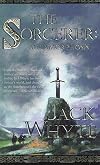
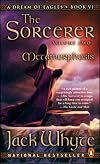
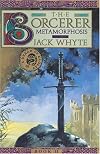
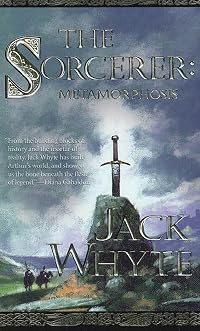
Throughout the widely praised Camulod Chronicles, Merlyn Britannicus has been driven by one sacred dream--to see Britain united under one just, powerful king. In The Sorcerer: Metamorphosis, it is time for the Sorcerer to fulfill his promise--to present the battle-proven Arthur as the Riothamus, the High King of Britain. When Arthur miraculously withdraws the Sword of Kingship from the stone in which it is set, he proves himself the true and deserving king--sworn to defend the Christian show more faith against invaders, and to preserve Britain as a powerful, united force. The Sorcerer has fulfilled his promise. The King is crowned, Britain is united--and the face of history and legend is forever changed. show lessTags
Recommendations



Member Reviews
SPOILERS AHEAD.
This is the sixth book in the Camulod Chronicles. The story takes up back to Camulod where war is brewing on two fronts. Ambrose takes one force (and Arthur) in one direction, while Merlyn takes another force in the opposite direction. Ambrose learns that things are still well with Vortigern and the following Autumn, Merlyn goes to accompany Bishop Germanus to Verulamium as in on of the previous books, for the Pelagian heresy had been completely rooted out. Things go awry and Merlyn returns home in a hurry and on the journey loses his wife and many of his men. He blames Peter Ironhair for all this and undergoes his metamorphosis, into that sorcerer we know him best as. This is out of revenge, which he does not attain in show more full, for Ironhair is killed by another's hand. He is also gravely injured on this quest, and the leprosy he feared seems to be real, although his old friend Lucanus had assured him this was not so.
I have complained before about how in the previous books so much seems to go so well for the people of Camulod and Merlyn in particular, with a few large exceptions. It seems Whyte was saving all his bad mojo for this book, where Merlyn loses not only his wife, but his brother, and for a time, his sanity. He goes down a dark path and even by the end of the book, he does not truly come back into the light. Perhaps he never will.
The draw for me in Arthurian Legend is Arthur himself. Not Lancelot or Guenivere or even Merlyn. In this series we have seen precious little of Arthur. And that's fine: This isn't his story. It's that of Camulod, told by those who knew it best, Publius Varrus and Merlyn. So, when this book reached it's end with Arthur being proclaimed High King and pulling the sword from the stone three times, my heart filled with the happy. This was familiar territory and a hint that the next selections in the series may have a bit more of my favorite character, I hope.
On the whole, I enjoyed this book and recommend the series to any who enjoy Arthurian Legend. This series puts it in an almost plausible historical setting, subtracting the magic and miracles from the legend. One can imagine that if Arthur and Merlyn really lived, that this may have been how it could have happened. (Saying that, of course, reminds me of the ending of Clue where there are three different ways the story could have ended.) show less
This is the sixth book in the Camulod Chronicles. The story takes up back to Camulod where war is brewing on two fronts. Ambrose takes one force (and Arthur) in one direction, while Merlyn takes another force in the opposite direction. Ambrose learns that things are still well with Vortigern and the following Autumn, Merlyn goes to accompany Bishop Germanus to Verulamium as in on of the previous books, for the Pelagian heresy had been completely rooted out. Things go awry and Merlyn returns home in a hurry and on the journey loses his wife and many of his men. He blames Peter Ironhair for all this and undergoes his metamorphosis, into that sorcerer we know him best as. This is out of revenge, which he does not attain in show more full, for Ironhair is killed by another's hand. He is also gravely injured on this quest, and the leprosy he feared seems to be real, although his old friend Lucanus had assured him this was not so.
I have complained before about how in the previous books so much seems to go so well for the people of Camulod and Merlyn in particular, with a few large exceptions. It seems Whyte was saving all his bad mojo for this book, where Merlyn loses not only his wife, but his brother, and for a time, his sanity. He goes down a dark path and even by the end of the book, he does not truly come back into the light. Perhaps he never will.
The draw for me in Arthurian Legend is Arthur himself. Not Lancelot or Guenivere or even Merlyn. In this series we have seen precious little of Arthur. And that's fine: This isn't his story. It's that of Camulod, told by those who knew it best, Publius Varrus and Merlyn. So, when this book reached it's end with Arthur being proclaimed High King and pulling the sword from the stone three times, my heart filled with the happy. This was familiar territory and a hint that the next selections in the series may have a bit more of my favorite character, I hope.
On the whole, I enjoyed this book and recommend the series to any who enjoy Arthurian Legend. This series puts it in an almost plausible historical setting, subtracting the magic and miracles from the legend. One can imagine that if Arthur and Merlyn really lived, that this may have been how it could have happened. (Saying that, of course, reminds me of the ending of Clue where there are three different ways the story could have ended.) show less
As I age, I have become less interested in Jack Whyte's Arthuriana. His research into the fifth century world is not up to scholarly standards, and his grasp of fifth century technologies is weak. Seeing an image of the knightly warrior, he leaps from the fifth century for legend to the thirteenth for technology, and expects his audience to accept that. Well, I don't. The reviewers of his earlier books call them "Historical", and while the period is dimly lit, one should be able to get through it without major injury. His archery is very weak, as he claims a quarter mile range for a longbow, his insistence on the morning star flail as a horseman's weapon, and his introduction of the stirrup into western Europe three and a half centuries show more before there is any evidence for it, transform his works into the realm of fantasy rather than historical fiction. Now, in the area of "Those things too true to be real"? His love stories are weak, and the female characters have little motivation or conflicts in the feminine ream. His battle scenes are very conventional, and too complex to be engaging. But, he does like to describe complex ritual, and lay out guest lists for parties. These are not interesting except, perhaps for caterers. show less
This is the sixth book in the "Camulod Chronicles" a realistic, historically grounded telling of the King Arthur legends. Although there are further books in the series, this was initially planned to be the culmination of the series. In a preface to one of the earlier books Whyte explains how the kernel for this series was his idea of just how a young Arthur pulled off pulling the sword from the stone, and it's that act that acts as the climax of this book and a series that began with its forging--from a skystone--a meteor.
And that in itself gives you a flavor of the books. It's not magic that makes Excalibur special--but metallurgy and craftmanship. A lot of this series could be called military fiction, and through the books we've been show more taken through the introduction of the stirrup, the invention of the flail and lance, and here the conception of knighthood. In a way, ultimately, I find that a bit disappointing. I've read a lot of books based on King Arthur. In Gillian Bradshaw's series, Camelot is conceived to be a "firebreak" that seeks to preserve the flame of civilization from antiquity. In T.H. White's, admittedly anachronistic conception, Camelot wasn't an attempt to preserve the past, but a premature glimpse of the future--of Marta Carter and a conception of the rule of law. In the end Whyte seems a bit more prosaic, orthodox, that I might like.
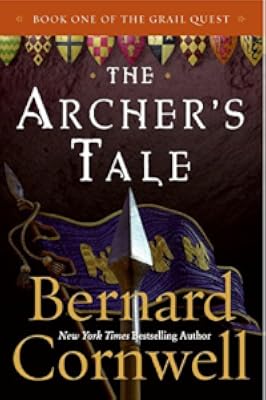
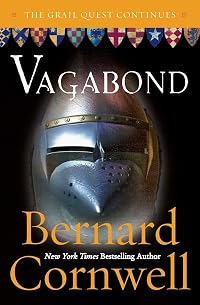
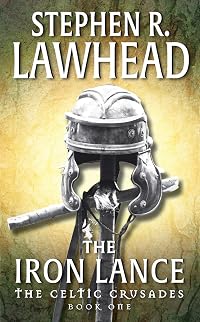
I do still like how this does work with the legend to give us a Camelot and King Arthur that might have existed during the Dark Ages and was part of the transition from antiquity to the medieval. In that I don't feel a sense of tragedy for what could have been. Because Whyte's Camulod is simply one of many transitions to what will be. But I definitely thought it worth a read. I'm told Bernard Cornwell and Stephen Lawhead also wrote historically-basted Arthurian tales, but for now at least Whyte's books stand as unique in its historical grounding. There are Arthurian books with stronger prose and characters, but the attempt to eschew all magical elements certainly makes this one unique. And I did grow to care enough about this version of Merlin (he carries the narrative in all but the first two books) that I do feel I'm going to miss this world, although I think I'll stop here, where Whyte first intended. show less
And that in itself gives you a flavor of the books. It's not magic that makes Excalibur special--but metallurgy and craftmanship. A lot of this series could be called military fiction, and through the books we've been show more taken through the introduction of the stirrup, the invention of the flail and lance, and here the conception of knighthood. In a way, ultimately, I find that a bit disappointing. I've read a lot of books based on King Arthur. In Gillian Bradshaw's series, Camelot is conceived to be a "firebreak" that seeks to preserve the flame of civilization from antiquity. In T.H. White's, admittedly anachronistic conception, Camelot wasn't an attempt to preserve the past, but a premature glimpse of the future--of Marta Carter and a conception of the rule of law. In the end Whyte seems a bit more prosaic, orthodox, that I might like.
I do still like how this does work with the legend to give us a Camelot and King Arthur that might have existed during the Dark Ages and was part of the transition from antiquity to the medieval. In that I don't feel a sense of tragedy for what could have been. Because Whyte's Camulod is simply one of many transitions to what will be. But I definitely thought it worth a read. I'm told Bernard Cornwell and Stephen Lawhead also wrote historically-basted Arthurian tales, but for now at least Whyte's books stand as unique in its historical grounding. There are Arthurian books with stronger prose and characters, but the attempt to eschew all magical elements certainly makes this one unique. And I did grow to care enough about this version of Merlin (he carries the narrative in all but the first two books) that I do feel I'm going to miss this world, although I think I'll stop here, where Whyte first intended. show less
Better than most of the rest of the series, possibly because it finally puts Merlyn in his place and seems to make several statements to co firm that the author is not a rampant homophobe. Yay!
Di gran lunga il libro più triste della serie... e con triste non intendo brutto. La parte finale in particolare è un susseguirsi di emozioni e di eventi, la maggior parte dei quali ben poco piacevoli.
Un libro intenso e gravato dalla consapevolezza di quello che il lettore già sa, conoscendo la leggenda arturiana, ovvero che certe cose per certi personaggi sicuramente finiranno male.
Un libro intenso e gravato dalla consapevolezza di quello che il lettore già sa, conoscendo la leggenda arturiana, ovvero che certe cose per certi personaggi sicuramente finiranno male.
This was awesome. The last couple of books and the beginning of this one seemed a little slow, but read on; you'll be glad you did!
This is an historical fiction series about King Arthur, and they are my favorite books of ALL time. Whyte is an amazing author, and his descriptions are amazing. The books tell a realistic story of King Arthur, without all of the magic and sorcery we see in modern myths. These books start off with King Arthur's great great grandfather, and chronicle the family until the death of King Arthur. The charectors are so well developed you feel as if you know them. The other great thing about these books is that they are written in journal-like form. So as different members of the family are "writing" the different books, the writing style and methods change slightly.
Members
- Recently Added By
Author Information

37 Works 11,743 Members
Writer Jack Whyte was born in Scotland in 1940. He was raised in Scotland, but educated in England and France before migrating to Canada in 1967. He spent one year teaching English in high school, before focusing on a career as a professional singer, musician, and actor. He wrote, directed and appeared in a one man show about Scotland's national show more poet Robert Burns in the early 1970's. Due to the show's success, he started writing for CBC national television and eventually went into advertising. He is the author of The Camulod Chronicles or A Dream of Eagles series which sets the tales of King Arthur in Roman Britain and Templar Trilogy which deals with the rise and fall of the Order of the Knights of the Temple of Solomon. (Bowker Author Biography) show less
Some Editions
Series

Work Relationships
Common Knowledge
- Canonical title
- Metamorphosis
- Original title
- The Sorcerer Part 2: Metamorphosis
- Original publication date
- 1997
Classifications
- Genres
- Fiction and Literature, General Fiction, Fantasy, Historical Fiction
- DDC/MDS
- 813.54 — Literature & rhetoric American literature in English American fiction in English 1900-1999 1945-1999
- LCC
- PR9199.3 .W4589 .S67 — Language and Literature English English Literature English literature: Provincial, local, etc.
- BISAC
Statistics
- Members
- 944
- Popularity
- 28,149
- Reviews
- 13
- Rating
- (4.07)
- Languages
- English, Italian
- Media
- Paper, Audiobook, Ebook
- ISBNs
- 16
- ASINs
- 11