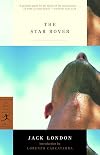
The Star Rover
by Jack London
On This Page
Description
An inmate sentenced to life at San Quentin escapes the horrors of his incarceration through astral travel in this boldly imaginative work by a master storyteller. Darrell Standing endures the agonies of beatings and extended periods in a straitjacket by withdrawing into intense dreams of his past lives. Standing's fantasies transport him from his harrowing confinement to identities as a nobleman in medieval France, a shipwrecked seal-hunter, an Englishman in 17th-century Korea, and an show more advisor to Pontius Pilate. This final novel by the author of The Call of the Wild is both a tale of life in solitary confinement and an epic journey across space, time, and history. Jack London delivers a moving indictment of the brutality and corruption of the prison system that is also a celebration of the power of imagination to rise above misery and to keep hope alive. show lessTags
Recommendations






























Member Reviews
Warden Atherton, after a hard struggle, managed to insert his forefinger between the lacing and my back. He brought his foot to bear upon me, with the weight of his body added to his foot, and pulled, but failed to get any fraction of an inch of slack.
“I take my hat off to you, Hutchins,” he said. “You know your job. Now roll him over and let’s look at him.”
They rolled me over on my back. I stared up at them with bulging eyes. This I know: Had they laced me in such fashion the first time I went into the jacket, I should surely have died in the first ten minutes. But I was well trained. I had behind me the thousands of hours in the jacket and, plus that, I had faith in what Morrell had told me.
“Now, laugh, damn you, laugh,” show more said the warden to me. “Start that smile you’ve been bragging about.”
So, while my lungs panted for a little air, while my heart threatened to burst, while my mind reeled, nevertheless I was able to smile up into the warden’s face.
—The Star Rover by Jack London
After over three weeks I was able to run for thirty-five minutes on that oh-so-freshly healed (heeled—Ha!) left calf muscle; if run it could be called. A new coat of paint applied to the shady side of a garage midwinter dries quicker. However, since mind and body are so inextricably tied to my human persona (oh, you know alien flesh wriggles beneath such thin skin, to be sure), that bloated half hour felt like a major victory. Honestly, I can’t believe the paint dried in that blizzard.
This miniature masterpiece by Jack London helped me get through. My job, too, since sometimes I feel straight-jacketed to the VPN and constant need upon need upon need. I’d lost ultimate faith in humanity back when I’d read Orwell’s “1984” (as if there’s another). “The Star Rover” has given me back my belief in the indomitability of the human spirit. And written over one-hundred years ago. Quite a feat. Kind of like astral projecting, beating on globes of gas with sticks, zipping through past lives like most people churn through whatever steaming plate of pabulum prime time is currently serving. And I’ll keep limping behind that whizzing soul until I catch up with him. show less
“I take my hat off to you, Hutchins,” he said. “You know your job. Now roll him over and let’s look at him.”
They rolled me over on my back. I stared up at them with bulging eyes. This I know: Had they laced me in such fashion the first time I went into the jacket, I should surely have died in the first ten minutes. But I was well trained. I had behind me the thousands of hours in the jacket and, plus that, I had faith in what Morrell had told me.
“Now, laugh, damn you, laugh,” show more said the warden to me. “Start that smile you’ve been bragging about.”
So, while my lungs panted for a little air, while my heart threatened to burst, while my mind reeled, nevertheless I was able to smile up into the warden’s face.
—The Star Rover by Jack London
After over three weeks I was able to run for thirty-five minutes on that oh-so-freshly healed (heeled—Ha!) left calf muscle; if run it could be called. A new coat of paint applied to the shady side of a garage midwinter dries quicker. However, since mind and body are so inextricably tied to my human persona (oh, you know alien flesh wriggles beneath such thin skin, to be sure), that bloated half hour felt like a major victory. Honestly, I can’t believe the paint dried in that blizzard.
This miniature masterpiece by Jack London helped me get through. My job, too, since sometimes I feel straight-jacketed to the VPN and constant need upon need upon need. I’d lost ultimate faith in humanity back when I’d read Orwell’s “1984” (as if there’s another). “The Star Rover” has given me back my belief in the indomitability of the human spirit. And written over one-hundred years ago. Quite a feat. Kind of like astral projecting, beating on globes of gas with sticks, zipping through past lives like most people churn through whatever steaming plate of pabulum prime time is currently serving. And I’ll keep limping behind that whizzing soul until I catch up with him. show less
Jack London's 1915 novel about the paranormal visions of a condemned prisoner is a strange mixture indeed. As editor Fiedler points out, London didn't actually have any personal belief in the metaphysical phenomena that the story portrays. These include both bilocational projection of consciousness (the sort sometimes now characterized as "remote viewing") and magical memory, or recollection of previous incarnations. The latter dominates the tale, with a wide range of para-autobiographies, each allegedly pieced together by the writing prisoner from various random instances of visionary recall.
There are some uniformities among the sub-narratives. All of the protagonists are male. Even though London's narrator Standing claims at one show more point to have experienced prior incarnation as a woman, the lives that he provides with detail are all boys and men. In fact, near the end of the story, he hypostasizes gender into a spiritual principle, claiming his own identity with all men as the One Man, and offering a paean to his love of the One Woman. What's more, his alter-egos are all white. Even when the setting is Korea, the experiences are those of a European explorer. In the (requisite?) episode set in first-century Roman Palestine, the Standing incarnation serving as a soldier under the authority of Pontius Pilate is actually a recruit from the barbarian north. This particular consistency seems to reflect an acceptance of Aryanist racial theory, when Standing later claims to have been "an Aryan master in old Egypt" and "a builder of Aryan monuments under Aryan kings in old Java and old Sumatra." (298-9) And yet the implied notion of "race memory" does not preclude the story of a boy murdered at the age of six.
The frame story offers some round denunciation of modern carceral practices and capital punishment, but there is no call for socialist revolution, such as London might offer elsewhere, and the assessment of efforts at liberal reform is bitterly pessimistic. Standing is an atypical protagonist for London: a college professor, whose murder offense is never fully detailed, and who is abused into profound ill-health. Although it sometimes seems that the more realized of Standing's prior incarnations might have been abortive stories of their own from London's pen, the composite effect is not without some merit, giving the reader added opportunities to reflect on the ultimate nature of freedom and the human capacity for justice. show less
There are some uniformities among the sub-narratives. All of the protagonists are male. Even though London's narrator Standing claims at one show more point to have experienced prior incarnation as a woman, the lives that he provides with detail are all boys and men. In fact, near the end of the story, he hypostasizes gender into a spiritual principle, claiming his own identity with all men as the One Man, and offering a paean to his love of the One Woman. What's more, his alter-egos are all white. Even when the setting is Korea, the experiences are those of a European explorer. In the (requisite?) episode set in first-century Roman Palestine, the Standing incarnation serving as a soldier under the authority of Pontius Pilate is actually a recruit from the barbarian north. This particular consistency seems to reflect an acceptance of Aryanist racial theory, when Standing later claims to have been "an Aryan master in old Egypt" and "a builder of Aryan monuments under Aryan kings in old Java and old Sumatra." (298-9) And yet the implied notion of "race memory" does not preclude the story of a boy murdered at the age of six.
The frame story offers some round denunciation of modern carceral practices and capital punishment, but there is no call for socialist revolution, such as London might offer elsewhere, and the assessment of efforts at liberal reform is bitterly pessimistic. Standing is an atypical protagonist for London: a college professor, whose murder offense is never fully detailed, and who is abused into profound ill-health. Although it sometimes seems that the more realized of Standing's prior incarnations might have been abortive stories of their own from London's pen, the composite effect is not without some merit, giving the reader added opportunities to reflect on the ultimate nature of freedom and the human capacity for justice. show less
Bellissimo e credo che non ci sia bisogno di altre parole per definirlo, perché è un vero e proprio capolavoro.
Un atto di accusa contro la pena di morte, contro un sistema carcerario che riconosceva unicamente la tortura e la prevaricazione dei reclusi, e dove l’annientamento dell’essere era l’unica religione praticata. Jack London con questo libro riesce a regalarci, pur nella spietatezza della trama, storie fantastiche che riescono ad illuminare anche la scena più buia.
Darrell Standing è detenuto nel carcere di San Quentin per l’omicidio del Professor Haskell. È sempre stato temuto e considerato un detenuto incorreggibile, fortemente odiato dal direttore del carcere, e per questo sottoposto costantemente alla tortura show more della camicia di forza. Dalla cella della morte, dove sta attendendo di essere portato alla forca - ma non per il delitto per cui è stato imprigionato - ci racconta di come ha superato simili brutalità narrandoci delle sue vite precedenti. Sono queste storie, che attraversano le epoche, che trasformano la durezza e la crudeltà della detenzione in viaggi fantastici e avventurosi.
Un libro che ti cattura e dove riesci a perderti tra le pagine con storie e personaggi unici. La forza e la potenza della mente non vengono scalfite neanche dalla più crudele delle torture, ed è grazie a loro che è possibile viaggiare oltre ogni confine, anche al di là di quelle buie, fredde e sporche mura di una cella. Perché quando non è possibile evadere con il corpo, niente può fermare il nostro spirito, né una cella, né delle catene o una camicia di forza. show less
Un atto di accusa contro la pena di morte, contro un sistema carcerario che riconosceva unicamente la tortura e la prevaricazione dei reclusi, e dove l’annientamento dell’essere era l’unica religione praticata. Jack London con questo libro riesce a regalarci, pur nella spietatezza della trama, storie fantastiche che riescono ad illuminare anche la scena più buia.
Darrell Standing è detenuto nel carcere di San Quentin per l’omicidio del Professor Haskell. È sempre stato temuto e considerato un detenuto incorreggibile, fortemente odiato dal direttore del carcere, e per questo sottoposto costantemente alla tortura show more della camicia di forza. Dalla cella della morte, dove sta attendendo di essere portato alla forca - ma non per il delitto per cui è stato imprigionato - ci racconta di come ha superato simili brutalità narrandoci delle sue vite precedenti. Sono queste storie, che attraversano le epoche, che trasformano la durezza e la crudeltà della detenzione in viaggi fantastici e avventurosi.
Un libro che ti cattura e dove riesci a perderti tra le pagine con storie e personaggi unici. La forza e la potenza della mente non vengono scalfite neanche dalla più crudele delle torture, ed è grazie a loro che è possibile viaggiare oltre ogni confine, anche al di là di quelle buie, fredde e sporche mura di una cella. Perché quando non è possibile evadere con il corpo, niente può fermare il nostro spirito, né una cella, né delle catene o una camicia di forza. show less
Jack London is a master of creating homosocial worlds. The book's got all the inevitable drawbacks of something bathed in Western, patriarchal, hetero centrism, but it's also real weird. Clearly, the book's strange narrative conceit (a prisoner in solitary regressing back through past lives and then making sweeping religious, scientific, and philosophical claims) and uneven pacing explain why it's fallen out of favor. Still, if you like Jack London here's further proof that he's a little gay* and a little kinky**.
*as all men in a world where only men are people must be
**as everyone who glories in rugged, masochistic masculinities is likely to be
*as all men in a world where only men are people must be
**as everyone who glories in rugged, masochistic masculinities is likely to be
Jack London's output never ceases to surprise me with its diversity. There's a lot more to him than stories about dogs and the Arctic. For example, the sailing adventure cum debate about evil, [b:The Sea Wolf|43049|The Sea Wolf|Jack London|http://photo.goodreads.com/books/1288293088s/43049.jpg|2062963], autobiographically inspired story of a self-educated writer, [b:Martin Eden|929782|Martin Eden|Jack London|http://photo.goodreads.com/books/1328105218s/929782.jpg|1702482], pro-Communist revolutionary tale, [b:The Iron Heel|929783|The Iron Heel|Jack London|http://photo.goodreads.com/books/1334104139s/929783.jpg|951056], tongue-in-cheek philosophical action adventure,[b:The Assassination Bureau, Ltd.|156834|The Assassination Bureau, show more Ltd.|Jack London|http://photo.goodreads.com/books/1328016644s/156834.jpg|1546451], and various science fiction shorts (many of them also pro-Communist) including ones with pre-historic settings. This book takes us into another area again; specific and direct social protest, specifically regarding the California penal system circa 1910. It also covers quite a bit of ground overlapping with the works mentioned above, including two sea-tales and a story set in pre-history. Historical fiction can be added to the list and even a Wild West story. Which might seem a little odd, considering this is ostensibly a novel.
In fact it is a collection of short stories linked by being found in the memoirs of a Folsom Death Row inmate. Said inmate, who openly admits to being guilty of murder, rapidly gains our sympathy when he describes his experiences in a California prison where he is beaten, abused, threatened and tortured. The torture comes primarily in the form of solitary confinement whilst strait-jacketed for days at a stretch. This jacketing is not to prevent self-harm; the protagonist is not an inmate of a secure psychiatric facility; he is simply being punished for perceived willful refusal to co-operate with the prison authorities. I have no idea how accurate a depiction of the California prisons of the time this is, but it reminds me very strongly of [a:Oscar Wilde|3565|Oscar Wilde|http://photo.goodreads.com/authors/1316521008p2/3565.jpg]'s Ballad of Reading Gaol in both intent and power to move. It also provides cogent arguments against capital punishment, including the fact that it is institutionalised revenge that makes all tax payers of the State involved no better than the murderers usually subject to it. Reducing the entire populace to the level of its worst criminals seems to me a peculiar form of justice. I'm a victim of it; when I lived in Illinois, the USA Federal moratorium on executions ended. I paid, in part, to kill a man for crimes I know nothing of. Of course, that is nothing compared to my forced complicity in the various resource wars of recent years...
But back to the book. The fact is that the material warrants only a short story, not a full length novel, but a full length novel is what we have. The bulk is made up of the experiences the protagonist has whilst strait-jacketed. He puts himself into a trance during these days-at-a-stretch sessions in the jacket and relives previous lives. London seems to have taken everything he has ever read or heard about mystical trances, sensory deprivation and hypnotic regression and mixed it all up for these passages about how the protagonist resists the prison governor and escapes his abusers whilst squeezed more than half to death in a basement solitary cell where he was kept for a period of years. And this is how we come to get such a varied collection of settings and stories within a novel that has almost no plot of its own.
The prison material is powerful but limited and repetitive, which eventually weakens it. The various past-life-retold adventures are almost as varied in interest as the they are in setting. Personal taste will no doubt vary, but my favourite was the desert island survival story. London was the Grand Master of survival stories and knew the oceans from direct experience. The Roman perspective on the Christ story was primarily interesting for its take on Pontius Pilate's character and motivations. The historical Korean story vies with the pre-historic story as my least favourite. (See how crazily diverse they are?)
Despite the clever and powerful framing, this book really feels too episodic for its own good. I found it very easy to put down and I read a handful of other novels in the time I was also reading this. Nevertheless, it is worthwhile and I recommend it to anyone who ever liked anything else by Jack London. His capacity to mix philosophical and moral musings with adventure stories was his great strength and it is on show once again here. show less
In fact it is a collection of short stories linked by being found in the memoirs of a Folsom Death Row inmate. Said inmate, who openly admits to being guilty of murder, rapidly gains our sympathy when he describes his experiences in a California prison where he is beaten, abused, threatened and tortured. The torture comes primarily in the form of solitary confinement whilst strait-jacketed for days at a stretch. This jacketing is not to prevent self-harm; the protagonist is not an inmate of a secure psychiatric facility; he is simply being punished for perceived willful refusal to co-operate with the prison authorities. I have no idea how accurate a depiction of the California prisons of the time this is, but it reminds me very strongly of [a:Oscar Wilde|3565|Oscar Wilde|http://photo.goodreads.com/authors/1316521008p2/3565.jpg]'s Ballad of Reading Gaol in both intent and power to move. It also provides cogent arguments against capital punishment, including the fact that it is institutionalised revenge that makes all tax payers of the State involved no better than the murderers usually subject to it. Reducing the entire populace to the level of its worst criminals seems to me a peculiar form of justice. I'm a victim of it; when I lived in Illinois, the USA Federal moratorium on executions ended. I paid, in part, to kill a man for crimes I know nothing of. Of course, that is nothing compared to my forced complicity in the various resource wars of recent years...
But back to the book. The fact is that the material warrants only a short story, not a full length novel, but a full length novel is what we have. The bulk is made up of the experiences the protagonist has whilst strait-jacketed. He puts himself into a trance during these days-at-a-stretch sessions in the jacket and relives previous lives. London seems to have taken everything he has ever read or heard about mystical trances, sensory deprivation and hypnotic regression and mixed it all up for these passages about how the protagonist resists the prison governor and escapes his abusers whilst squeezed more than half to death in a basement solitary cell where he was kept for a period of years. And this is how we come to get such a varied collection of settings and stories within a novel that has almost no plot of its own.
The prison material is powerful but limited and repetitive, which eventually weakens it. The various past-life-retold adventures are almost as varied in interest as the they are in setting. Personal taste will no doubt vary, but my favourite was the desert island survival story. London was the Grand Master of survival stories and knew the oceans from direct experience. The Roman perspective on the Christ story was primarily interesting for its take on Pontius Pilate's character and motivations. The historical Korean story vies with the pre-historic story as my least favourite. (See how crazily diverse they are?)
Despite the clever and powerful framing, this book really feels too episodic for its own good. I found it very easy to put down and I read a handful of other novels in the time I was also reading this. Nevertheless, it is worthwhile and I recommend it to anyone who ever liked anything else by Jack London. His capacity to mix philosophical and moral musings with adventure stories was his great strength and it is on show once again here. show less
The main character Darrell Standing either A) hallucinates a whole lot while awaiting his execution, or B) actually experiences a series of his past lives. Either way, London presents the idea in the most boring way possible.
Let's get option A out of the way first, because there's definitely a dismissive tone toward this possibility in the book. Could this be a case of unreliable narrator? Sure, but London does nothing to emphasize this point or explore it in any interesting way, so I'd say the tired "unreliable narrator" angle, while not falsifiable, is definitely less favored by the text. If it is supposed to be what was happening in this book then London fails because Standing's hallucinations tell us nothing about him. show more Hallucinations are necessarily representative of the character who has them, but yet after reading a book of Standing's hallucinations he's just as much of an uninteresting standard male narrator as ever. If London wanted to give us an interesting story of hallucinations brought on by extended confinement he should have written a less bland protagonist.
The other option more favored by the text (albeit this comes from the text being narrated by the character) is that the visions he has are of real past lives. If this is the case, London's error was in giving the narrator some terribly boring past lives. Standing basically has been a Western European male for the majority of his past lives, even when his past self makes his way to Asia it's in the form of a shipwrecked white guy. There's one throwaway line where Standing mentions one of his past lives being a woman, but otherwise the past lives of Standing are strikingly similar to him. The result is that, instead of these visions forcing Standing to have a deeper understanding of the existence of all people and the roles in society we have Standing use the visions as basically a really immersive television that he can use to entertain himself in prison. In the end he doesn't fear execution since he'll just get another life after this one, but that's such a basic and boring realization to get- he could have figured that out from the very first time he experienced a past life, so having lived dozens of lives seemingly caused absolutely no growth as a human being.
It's a potentially interesting concept that Jack London does absolutely nothing of interest with, and Jack's writing ability is far too weak to save it. The Star Rover is decidedly below average. show less
Let's get option A out of the way first, because there's definitely a dismissive tone toward this possibility in the book. Could this be a case of unreliable narrator? Sure, but London does nothing to emphasize this point or explore it in any interesting way, so I'd say the tired "unreliable narrator" angle, while not falsifiable, is definitely less favored by the text. If it is supposed to be what was happening in this book then London fails because Standing's hallucinations tell us nothing about him. show more Hallucinations are necessarily representative of the character who has them, but yet after reading a book of Standing's hallucinations he's just as much of an uninteresting standard male narrator as ever. If London wanted to give us an interesting story of hallucinations brought on by extended confinement he should have written a less bland protagonist.
The other option more favored by the text (albeit this comes from the text being narrated by the character) is that the visions he has are of real past lives. If this is the case, London's error was in giving the narrator some terribly boring past lives. Standing basically has been a Western European male for the majority of his past lives, even when his past self makes his way to Asia it's in the form of a shipwrecked white guy. There's one throwaway line where Standing mentions one of his past lives being a woman, but otherwise the past lives of Standing are strikingly similar to him. The result is that, instead of these visions forcing Standing to have a deeper understanding of the existence of all people and the roles in society we have Standing use the visions as basically a really immersive television that he can use to entertain himself in prison. In the end he doesn't fear execution since he'll just get another life after this one, but that's such a basic and boring realization to get- he could have figured that out from the very first time he experienced a past life, so having lived dozens of lives seemingly caused absolutely no growth as a human being.
It's a potentially interesting concept that Jack London does absolutely nothing of interest with, and Jack's writing ability is far too weak to save it. The Star Rover is decidedly below average. show less
Ah, what royal memories are mine, as I flutter through the aeons of the long ago. In single jacket trances I have lived the many lives involved in the thousand-years-long Odysseys of the early drifts of men. Heavens, before I was of the flaxen-haired Aesir, who dwelt in Asgard, and before I was of the red-haired Vanir, who dwelt in Vanaheim, long before those times I have memories (living memories) of earlier drifts, when, like thistledown before the breeze, we drifted south before the face of the descending polar ice-cap.
I have died of frost and famine, fight and flood. I have picked berries on the bleak backbone of the world, and I have dug roots to eat from the fat-soiled fens and meadows. I have scratched the reindeer’s semblance show more and the semblance of the hairy mammoth on ivory tusks gotten of the chase and on the rock walls of cave shelters when the winter storms moaned outside. I have cracked marrow-bones on the sites of kingly cities that had perished centuries before my time or that were destined to be builded centuries after my passing. And I have left the bones of my transient carcasses in pond bottoms, and glacial gravels, and asphaltum lakes.
I have lived through the ages known to-day among the scientists as the Paleolithic, the Neolithic, and the Bronze. I remember when with our domesticated wolves we herded our reindeer to pasture on the north shore of the Mediterranean where now are France and Italy and Spain. This was before the ice-sheet melted backward toward the pole. Many processions of the equinoxes have I lived through and died in, my reader . . . only that I remember and that you do not.
This story is supposedly a biographical tale written by Darrell Standing, a prisoner on death row who will shortly be hanged. It tells the story of his time in prison and what happened in many of his previous lives, which he has experienced via a type of astral projection during his time in solitary confinement where he was punished for his intransigence by spending long periods of time in a strait-jacket. To start with I was finding it quite hard-going as prison stories aren't really my cup of tea, but one it got past his description of a past life that ended in him fighting three duels in one night in Mediaeval France, and on to more interesting lives, I started to enjoy it much more.
The British title for this book is "The Jacket" and that title makes sense as it is the story of a prisoner in solitary confinement who is punished by longer and longer times spent in a strait-jacket, but I for most of the book I was wondering why the American title is "The Star Rover", since Darryl Standing's journeys are back into his previous lives rather than into the stars, and it is only near the end, while discussing man's eternal need of woman that it becomes clear: Always has woman crouched close to earth like a partridge hen mothering her young; always has my wantonness of roving led me out on the shining ways; and always have my star-paths returned me to her, the figure everlasting, the woman, the one woman, for whose arms I had such need that clasped in them I have forgotten the stars. show less
I have died of frost and famine, fight and flood. I have picked berries on the bleak backbone of the world, and I have dug roots to eat from the fat-soiled fens and meadows. I have scratched the reindeer’s semblance show more and the semblance of the hairy mammoth on ivory tusks gotten of the chase and on the rock walls of cave shelters when the winter storms moaned outside. I have cracked marrow-bones on the sites of kingly cities that had perished centuries before my time or that were destined to be builded centuries after my passing. And I have left the bones of my transient carcasses in pond bottoms, and glacial gravels, and asphaltum lakes.
I have lived through the ages known to-day among the scientists as the Paleolithic, the Neolithic, and the Bronze. I remember when with our domesticated wolves we herded our reindeer to pasture on the north shore of the Mediterranean where now are France and Italy and Spain. This was before the ice-sheet melted backward toward the pole. Many processions of the equinoxes have I lived through and died in, my reader . . . only that I remember and that you do not.
This story is supposedly a biographical tale written by Darrell Standing, a prisoner on death row who will shortly be hanged. It tells the story of his time in prison and what happened in many of his previous lives, which he has experienced via a type of astral projection during his time in solitary confinement where he was punished for his intransigence by spending long periods of time in a strait-jacket. To start with I was finding it quite hard-going as prison stories aren't really my cup of tea, but one it got past his description of a past life that ended in him fighting three duels in one night in Mediaeval France, and on to more interesting lives, I started to enjoy it much more.
The British title for this book is "The Jacket" and that title makes sense as it is the story of a prisoner in solitary confinement who is punished by longer and longer times spent in a strait-jacket, but I for most of the book I was wondering why the American title is "The Star Rover", since Darryl Standing's journeys are back into his previous lives rather than into the stars, and it is only near the end, while discussing man's eternal need of woman that it becomes clear: Always has woman crouched close to earth like a partridge hen mothering her young; always has my wantonness of roving led me out on the shining ways; and always have my star-paths returned me to her, the figure everlasting, the woman, the one woman, for whose arms I had such need that clasped in them I have forgotten the stars. show less
Members
- Recently Added By
Lists

Hidden Classics
73 works; 15 members

The Works of Jack London
44 works; 1 member

First published in 1915
87 works; 11 members

The "A" List
67 works; 8 members
Author Information

1,802+ Works 81,570 Members
One of the pioneers of 20th century American literature, Jack London specialized in tales of adventure inspired by his own experiences. London was born in San Francisco in 1876. At 14, he quit school and became an "oyster pirate," robbing oyster beds to sell his booty to the bars and restaurants in Oakland. Later, he turned on his pirate show more associates and joined the local Fish Patrol, resulting in some hair-raising waterfront battles. Other youthful activities included sailing on a seal-hunting ship, traveling the United States as a railroad tramp, a jail term for vagrancy and a hazardous winter in the Klondike during the 1897 gold rush. Those experiences converted him to socialism, as he educated himself through prolific reading and began to write fiction. After a struggling apprenticeship, London hit literary paydirt by combining memories of his adventures with Darwinian and Spencerian evolutionary theory, the Nietzchean concept of the "superman" and a Kipling-influenced narrative style. "The Son of the Wolf"(1900) was his first popular success, followed by 'The Call of the Wild" (1903), "The Sea-Wolf" (1904) and "White Fang" (1906). He also wrote nonfiction, including reportage of the Russo-Japanese War and Mexican revolution, as well as "The Cruise of the Snark" (1911), an account of an eventful South Pacific sea voyage with his wife, Charmian, and a rather motley crew. London's body broke down prematurely from his rugged lifestyle and hard drinking, and he died of uremic poisoning - possibly helped along by a morphine overdose - at his California ranch in 1916. Though his massive output is uneven, his best works - particularly "The Call of the Wild" and "White Fang" - have endured because of their rich subject matter and vigorous prose. (Bowker Author Biography) show less
Some Editions
Series
Belongs to Publisher Series
Work Relationships
Common Knowledge
- Canonical title*
- Tvangstrøen
- Original title
- The Star Rover
- Original publication date
- 1915
- People/Characters
- Darrell Standing
- Important places
- San Quentin Prison, California, USA
- Related movies
- The Star Rover (1920 | IMDb); The Jacket (2005 | IMDb)
- First words
- All my life I have had an awareness of other times and places.
- Last words
- (Click to show. Warning: May contain spoilers.)What shall I be when I live again? I wonder. I wonder....
- Original language
- English
- Canonical DDC/MDS
- 813.087621
*Some information comes from Common Knowledge in other languages. Click "Edit" for more information.
Classifications
- Genres
- Fiction and Literature, General Fiction, Science Fiction
- DDC/MDS
- 813.087621 — Literature & rhetoric American literature in English American fiction in English By type Genre fiction Adventure fiction Speculative fiction Science fiction Time travel
- LCC
- PS3523 .O46 .S8 — Language and Literature American literature American literature Individual authors 1900-1960
- BISAC
Statistics
- Members
- 823
- Popularity
- 33,416
- Reviews
- 28
- Rating
- (3.93)
- Languages
- 14 — Czech, Danish, English, French, German, Greek, Hungarian, Italian, Norwegian (Bokmål), Norwegian, Portuguese, Spanish, Swedish, Turkish
- Media
- Paper, Audiobook, Ebook
- ISBNs
- 154
- UPCs
- 2
- ASINs
- 39