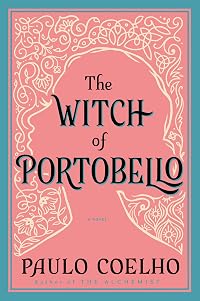
The Witch of Portobello
by Paulo Coelho
On This Page
Description
How do we find the courage to always be true to ourselves-even if we are unsure of who we are? That is the central question of international bestselling author Paulo Coelho's profound new work, The Witch of Portobello. It is the story of a mysterious woman named Athena, told by the many who knew her well-or hardly at all. Like The Alchemist, The Witch of Portobello is the kind of story that will transform the way readers think about love, passion, joy, and sacrifice.Tags
Recommendations
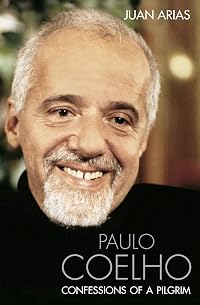

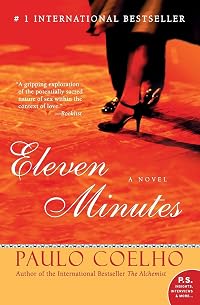

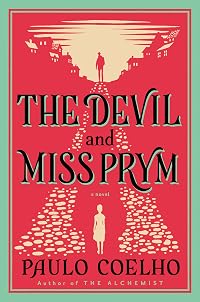


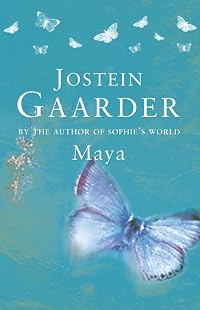
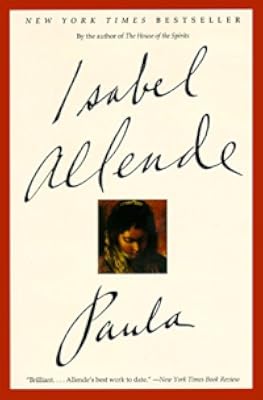
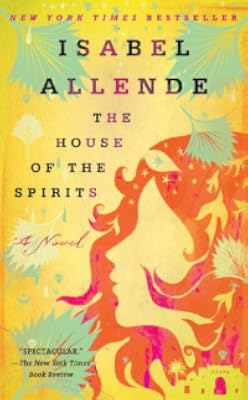
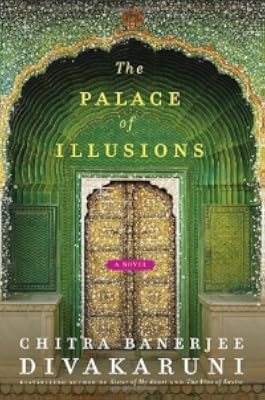


Member Recommendations
leosabana Tiene frases realmente hermosas, que te ayudarán en el día a día; que te aportarán ánimos cuando no veas luz.
Member Reviews
This is a small book that wrestles with big, existential questions. I wouldn’t have picked it up on my own, but the prospect of reading it with a book club made it more appealing, and I’m glad I did, because it was made for conversation. It’s told entirely through a series of interviews about Athena, and we never hear her voice directly. This choice is deliberate and profoundly frustrating. As a reader, you’re forced to piece together her thoughts, motivations, and emotions based solely on how others perceive her. It’s an interesting and uncomfortable exercise in subjectivity and interpretation. Beyond its unconventional structure, it explores themes of femininity, spirituality, self-actualization, influence, and the show more patriarchy. I didn’t like any of the characters, nor did I enjoy being denied Athena’s perspective. It made the reading experience feel deliberately opaque. I craved more detail, more depth, and a stronger resolution. Our book club had a rich, sprawling conversation about how little is made explicit, and how we had different conclusions based on the same fragmented accounts. This isn’t a book I’d recommend for a solitary reading experience, but it shines as a communal one. If you enjoy novels that withhold certainty and invite debate, this is worth exploring with company. show less
There seems to be something guiding me to read Paulo Coelho's books at the exact right moment. First, it was The Alchemist...read on a plane shortly after I began to take charge of the direction of my life and was falling hard for the love of my life. Now, this one...just when I was suspecting that there might be a kernel of truth to certain people's suspicion that I am a (good) witch.
This is the story of Athena...a woman who struggles to find the meaning and purpose of her life and overcome the vague sense of discontent always hovering over her. (Wow...can I relate.). It's written like a transcript from people she touched along the way allowing the reader (PC's student) to see how different people react to each other based on their show more very own outlook on life.
While I didn't love this one quite as much as The Alchemist, there are parts that resonated deeply with me...and, will help guide me as I stay on my authentic path. And, now I know there is more than a "kernel of truth" to the whole witch thing. show less
This is the story of Athena...a woman who struggles to find the meaning and purpose of her life and overcome the vague sense of discontent always hovering over her. (Wow...can I relate.). It's written like a transcript from people she touched along the way allowing the reader (PC's student) to see how different people react to each other based on their show more very own outlook on life.
While I didn't love this one quite as much as The Alchemist, there are parts that resonated deeply with me...and, will help guide me as I stay on my authentic path. And, now I know there is more than a "kernel of truth" to the whole witch thing. show less
I think the author meant for this novel to be one of those big, important, spiritual books that changes the lives of the readers. Sadly, it doesn’t.
It had the potential; a young woman gets in touch with her spiritual self and starts channeling the goddess Hagia Sophia. The back of the book says, in part, that the story will “transform the way readers think about love, passion, joy and sacrifice”. But it misses the mark.
The Witch, Sherine Khalil (who takes the name Athena), is born to and abandoned by a Gypsy woman. She is then adopted by Christian parents in the Middle East, and eventually brought up partly in England. She gets jobs easily in spite of not being trained for them (including one that makes her very well off). She show more marries and has a child, then divorces the man. The church won’t allow her to take Holy Communion after her divorce, so she takes up her own spirituality. She stumbles into a group that seeks enlightenment through unrhythmic dance. She develops followers, everyone loves her, even a woman whose lover falls in love with Athena… and she values none of it except the child. She gives up pretty much everything, but it’s not sacrifice if she doesn’t value what she gives up- and it turns out in the end that she doesn’t give up as much as we think. I never get the feeling that she feels passion about much of anything. She just sort of wanders through life. She’s not afraid to try new things, and I admired that, but for the most part I just couldn’t understand her.
The story is told through “interviews” with the various people in her life- her birth mother, her adoptive parents, her ex-husband, the journalist who falls in love with her, everyone who has been around at the important events of her life. This may be part of the problem with the book; we never get to know
Athena’s thoughts and feelings directly. In a way, it made me think of the structure of the New Testament- we read a lot about Jesus but we never hear from him directly. Perhaps the author intended to make Athena the daughter of the great Goddess. But if she is, she’s a very stand off-ish deity.
Coelho is one of those authors that I had heard great things about and so I was quite disappointed. I may still try reading ‘The Alchemist” since that’s supposed to be his best work, but can only give this book three stars. show less
It had the potential; a young woman gets in touch with her spiritual self and starts channeling the goddess Hagia Sophia. The back of the book says, in part, that the story will “transform the way readers think about love, passion, joy and sacrifice”. But it misses the mark.
The Witch, Sherine Khalil (who takes the name Athena), is born to and abandoned by a Gypsy woman. She is then adopted by Christian parents in the Middle East, and eventually brought up partly in England. She gets jobs easily in spite of not being trained for them (including one that makes her very well off). She show more marries and has a child, then divorces the man. The church won’t allow her to take Holy Communion after her divorce, so she takes up her own spirituality. She stumbles into a group that seeks enlightenment through unrhythmic dance. She develops followers, everyone loves her, even a woman whose lover falls in love with Athena… and she values none of it except the child. She gives up pretty much everything, but it’s not sacrifice if she doesn’t value what she gives up- and it turns out in the end that she doesn’t give up as much as we think. I never get the feeling that she feels passion about much of anything. She just sort of wanders through life. She’s not afraid to try new things, and I admired that, but for the most part I just couldn’t understand her.
The story is told through “interviews” with the various people in her life- her birth mother, her adoptive parents, her ex-husband, the journalist who falls in love with her, everyone who has been around at the important events of her life. This may be part of the problem with the book; we never get to know
Athena’s thoughts and feelings directly. In a way, it made me think of the structure of the New Testament- we read a lot about Jesus but we never hear from him directly. Perhaps the author intended to make Athena the daughter of the great Goddess. But if she is, she’s a very stand off-ish deity.
Coelho is one of those authors that I had heard great things about and so I was quite disappointed. I may still try reading ‘The Alchemist” since that’s supposed to be his best work, but can only give this book three stars. show less
(Pseudo-spoiler: information revealed in first few pages)
What makes Coelho's writing so engaging is his construction of simple truths into poetry. This latest effort blends the folksy witness of The Alchemist (Plus) and The Devil and Miss Prym: A Novel of Temptation, but with the novelistic ambition of The Zahir: A Novel of Obsession (P.S.). In The Witch of Portobello, Coelho molds his protagonist through the eyes of those who knew her. But rather than a distant retrospective, Athena's life is vividly and honestly portrayed in such a way that we forget her actual absence from the book.
This particular novel has a layer of complexity that I did not find in The Zahir, for example. While Coelho does unapologetically preach the gospel of a show more neo-pagan open spirituality, he does not martyr his main character. Instead, we learn that every passion must be tempered in order to reveal itself as love. show less
What makes Coelho's writing so engaging is his construction of simple truths into poetry. This latest effort blends the folksy witness of The Alchemist (Plus) and The Devil and Miss Prym: A Novel of Temptation, but with the novelistic ambition of The Zahir: A Novel of Obsession (P.S.). In The Witch of Portobello, Coelho molds his protagonist through the eyes of those who knew her. But rather than a distant retrospective, Athena's life is vividly and honestly portrayed in such a way that we forget her actual absence from the book.
This particular novel has a layer of complexity that I did not find in The Zahir, for example. While Coelho does unapologetically preach the gospel of a show more neo-pagan open spirituality, he does not martyr his main character. Instead, we learn that every passion must be tempered in order to reveal itself as love. show less
I loved Veronika Decides to Die and the Alchemist by this author, I enjoyed this book initially and then almost stopped reading. The preachiness took over the story and I just wanted it to end. I really wanted to like the book and "get" the message. I didn't and am glad it is finished. I bought two books by the author last weekend. I guess I chose badly. I would not recommend this book, although I may give it to my daughter to see what she thinks. Maybe I'm too old. Maybe I wish I could follow my inner voice and do exactly what I feel drawn to do instead of working daily as generations before me have done, with no real positive outcome, except a paycheck. Ah well.
I have been wanting to read a Paulo Coelho novel for some time. For one reason or the other I keep missing the opportunity to do so. All of his books look to be very interesting and I am absolutely open to hearing from anyone who has a favorite that I should give a try to. Perhaps that is why I am left with somewhat a mix sensation when it comes to The Witch Of Portobello. The prose and format of the novel are wonderful and strangely enough, it is the characters that I found so dislikable.
"...I did. A new witch hunt is starting to gain ground. This time the weapon isn't the red-hot iron, but irony and repression..."
The Witch of Portobello was born a Romanian orphan of dubious descent. She was adopted by a well to do Beirut couple to be show more the daughter nature had denied them. They named her Sherine Khalil but the world would come to know her as Athena. As a child, Athena soon finds that she can see and feel the world around her differently than other children. She was prone to vague premonitions that seemed to come true. Her parents keep this secret and as she grows up they send her to an elite school, hoping the education will shape her. She becomes very spiritual and comes to believe that God wants her to have a child and become a mother, to replace the mother that had abandoned her. She convinces her boyfriend to marry against his and her families wishes. But that soon dissolves and at a young age she finds herself a divorced mother. What she was not prepared for was how this decision would impact her relationship with her church.
"...I like to imagine that, when she left the church, Athena met Jesus. Weeping and confused, she would have thrown herself into his arms, asking him to explain why she was being excluded just because of a piece of paper she'd signed, something of no importance on the spiritual plane, and which was of interest only to registry offices and the tax man.
And looking at Athena, Jesus might have replied: "My child, I've been excluded too. It's a very long time since they've allowed me in there..."
It is this exclusion that leads Athena on a quest. This exclusion from the church she holds so dear. A quest to fulfill her life and spirit. She finds that she reaches another level of consciousness when she dances. She begins to teach this dance to others but they do not feel all she feels. Yet she is still not satisfied. She searches for other spiritual people and learns from them. One thing she learns is that it is the blank spaces in her life that haunt her and the largest of these is the mother who abandoned her. What she finds is that she comes from a line of mystical women. Gypsies who have lived in Romania for centuries.
"...On the other hand, they think that by giving us some tricksy name, like "travelers" or "Roma," they can put right the many wrongs they've done us in the past.
Why can't they just call us gypsies and put an end to all the stories that make us look as if we were cursed in the eyes of the world..."
Here, by her mother's side, Athena is taught to tap into the spiritual awakening within her and it is this new spirituality that she brings home. A spirituality that is infectious and threatening to the religions that are entrenched in her town. Of her followers she asks a great deal and nothing at the same time. They find her vagueness wise.
"...Simply being in her presence seemed to justify my very existence. Was that what she wanted to hear? Fine, I'd tell her over supper. I'd be capable of doing almost anything, even leaving the woman I was living with, but I drew the line, of course, at giving away my books..."
Athena and the established powers come to a head in violence and the threat of losing her child from neglect. In finale, Athena is no more.
The Witch of Portobello is a powerful novel of the growth and individuality of one person's spiritual ascension. For Athena, after her church cast her out, she found that in a Mother Earth religion of her own making. For many this may be a novel of a woman's right to choose her own life and the direction it takes. Shedding away the conventional and the bonds that society would have her labeled to be. I can see that.
But for me I found the character of Athena, not to be strong and independent but instead, selfish and petulant. Several times through the course of the book, when challenges arose and things did not go easily her way; Athena reacted in a violent and angry manner. Often cursing those who would teach her and guide her along the way. Too often, she was less the spiritual Witch of Portobello and instead the spoiled little rich orphan child she had been raised to be. Those who told the tale along side of her made constant excuses for her behavior and blamed the world around her.
There was the consistent abandonment of her child as she went off on her quest, or worse dragging him along as she searched only for her own needs.
The Witch of Portobello is incredibly well written and I enjoyed the chapters being broken up and narrated by different characters in the book. The tone and tenor of the story being changed from chapter to chapter dependent upon the point of the view of the character telling it.
I just found them so dislikable in their selfishness and blindness. There is so little growth in them. The opportunities for each of them to have found a special place for themselves on a spiritual plane was spoiled by their inability to see beyond themselves.
I would still like to read Paulo Coelho. I found his writing and prose to be very enjoyable. Hopefully there is a character of his that will be to my liking. show less
"...I did. A new witch hunt is starting to gain ground. This time the weapon isn't the red-hot iron, but irony and repression..."
The Witch of Portobello was born a Romanian orphan of dubious descent. She was adopted by a well to do Beirut couple to be show more the daughter nature had denied them. They named her Sherine Khalil but the world would come to know her as Athena. As a child, Athena soon finds that she can see and feel the world around her differently than other children. She was prone to vague premonitions that seemed to come true. Her parents keep this secret and as she grows up they send her to an elite school, hoping the education will shape her. She becomes very spiritual and comes to believe that God wants her to have a child and become a mother, to replace the mother that had abandoned her. She convinces her boyfriend to marry against his and her families wishes. But that soon dissolves and at a young age she finds herself a divorced mother. What she was not prepared for was how this decision would impact her relationship with her church.
"...I like to imagine that, when she left the church, Athena met Jesus. Weeping and confused, she would have thrown herself into his arms, asking him to explain why she was being excluded just because of a piece of paper she'd signed, something of no importance on the spiritual plane, and which was of interest only to registry offices and the tax man.
And looking at Athena, Jesus might have replied: "My child, I've been excluded too. It's a very long time since they've allowed me in there..."
It is this exclusion that leads Athena on a quest. This exclusion from the church she holds so dear. A quest to fulfill her life and spirit. She finds that she reaches another level of consciousness when she dances. She begins to teach this dance to others but they do not feel all she feels. Yet she is still not satisfied. She searches for other spiritual people and learns from them. One thing she learns is that it is the blank spaces in her life that haunt her and the largest of these is the mother who abandoned her. What she finds is that she comes from a line of mystical women. Gypsies who have lived in Romania for centuries.
"...On the other hand, they think that by giving us some tricksy name, like "travelers" or "Roma," they can put right the many wrongs they've done us in the past.
Why can't they just call us gypsies and put an end to all the stories that make us look as if we were cursed in the eyes of the world..."
Here, by her mother's side, Athena is taught to tap into the spiritual awakening within her and it is this new spirituality that she brings home. A spirituality that is infectious and threatening to the religions that are entrenched in her town. Of her followers she asks a great deal and nothing at the same time. They find her vagueness wise.
"...Simply being in her presence seemed to justify my very existence. Was that what she wanted to hear? Fine, I'd tell her over supper. I'd be capable of doing almost anything, even leaving the woman I was living with, but I drew the line, of course, at giving away my books..."
Athena and the established powers come to a head in violence and the threat of losing her child from neglect. In finale, Athena is no more.
The Witch of Portobello is a powerful novel of the growth and individuality of one person's spiritual ascension. For Athena, after her church cast her out, she found that in a Mother Earth religion of her own making. For many this may be a novel of a woman's right to choose her own life and the direction it takes. Shedding away the conventional and the bonds that society would have her labeled to be. I can see that.
But for me I found the character of Athena, not to be strong and independent but instead, selfish and petulant. Several times through the course of the book, when challenges arose and things did not go easily her way; Athena reacted in a violent and angry manner. Often cursing those who would teach her and guide her along the way. Too often, she was less the spiritual Witch of Portobello and instead the spoiled little rich orphan child she had been raised to be. Those who told the tale along side of her made constant excuses for her behavior and blamed the world around her.
There was the consistent abandonment of her child as she went off on her quest, or worse dragging him along as she searched only for her own needs.
The Witch of Portobello is incredibly well written and I enjoyed the chapters being broken up and narrated by different characters in the book. The tone and tenor of the story being changed from chapter to chapter dependent upon the point of the view of the character telling it.
I just found them so dislikable in their selfishness and blindness. There is so little growth in them. The opportunities for each of them to have found a special place for themselves on a spiritual plane was spoiled by their inability to see beyond themselves.
I would still like to read Paulo Coelho. I found his writing and prose to be very enjoyable. Hopefully there is a character of his that will be to my liking. show less
At the beginning of the book, our protagonist, Athena, is dead. She spent her life searching. She practiced an unidentified form of Goddess worship, and despite her objections, those around her expected her to know everything, to perform miracles. Everything we learn about Athena comes from interviews with various people who knew her: her ex-husband, her adoptive mother, her biological mother, her teacher, and her student, among others. As we get farther into the book, we realize that none of these people really knew Athena and that all of their perceptions are skewed in some way. In order to understand the real Athena, we have to look at what’s not said—at the spaces between the words.
Coelho is one of my favorite authors. I usually show more love his novels, but this one just didn’t speak to me the way some of his others have. I never really liked Athena, even after I realized that I wasn’t getting the whole story from the various narrators. I really like the idea of getting to know a character only through the flawed perceptions of those around her, but that wasn’t enough to redeem the novel for me.
I did find several quotes that resonated with me for one reason or another:
“Learn, but always learn with other people by your side. Don’t be alone in the search, because if you take a wrong step, you’ll have no one there to help put you right.”
“There are many philosophical systems—such as Taoism and Buddhism—that make no distinction between creator and creature. People no longer try to decipher the mystery of life but choose instead to be a part of it.”
“Is learning just putting things on a shelf or is it discarding whatever is no longer useful and then continuing on your way feeling lighter?” show less
Coelho is one of my favorite authors. I usually show more love his novels, but this one just didn’t speak to me the way some of his others have. I never really liked Athena, even after I realized that I wasn’t getting the whole story from the various narrators. I really like the idea of getting to know a character only through the flawed perceptions of those around her, but that wasn’t enough to redeem the novel for me.
I did find several quotes that resonated with me for one reason or another:
“Learn, but always learn with other people by your side. Don’t be alone in the search, because if you take a wrong step, you’ll have no one there to help put you right.”
“There are many philosophical systems—such as Taoism and Buddhism—that make no distinction between creator and creature. People no longer try to decipher the mystery of life but choose instead to be a part of it.”
“Is learning just putting things on a shelf or is it discarding whatever is no longer useful and then continuing on your way feeling lighter?” show less
Members
- Recently Added By
Lists

Top Five Books of 2014
1,064 works; 398 members
Author Information

216+ Works 100,830 Members
Paulo Coelho was born in Rio de Janeiro, Brazil on August 24, 1947. As a teenager, he wanted to become a writer, but his parents wanted him to pursue a more substantial and secure career. At the age of 17, his introversion and opposition to his parents led them to commit him to a mental institution. He escaped three times before being released at show more the age of 20. Once released, he abandoned his ideas of becoming a writer and enrolled in law school to please his parents. He stayed in law school for one year. In 1986, Coelho walked the 500-plus mile Road of Santiago de Compostela in northwestern Spain, a turning point in his life. On the path, he had a spiritual awakening, which he described in his book The Pilgrimage. Before becoming a full-time author, he worked as theatre director and actor, lyricist, and journalist. He wrote song lyrics for many famous performers in Brazilian music including Elis Regina, Rita Lee, and Raul Seixas. His first book, Hell Archives, was published in 1982. He has written over 25 books since then including The Alchemist, Brida, The Fifth Mountain, The Devil and Miss Prym, Eleven Minutes, The Zahir, The Witch of Portobello, Like a Flowing River, and Adultery. He received numerous awards including Las Pergolas Prize, The Budapest Prize, Nielsen Gold Book Award, and the Grand Prix Litteraire Elle. In 1996, he founded the Paulo Coelho Institute, which provides aid to children and elderly people with financial problems. In 2007, Coelho was named a Messenger of Peace to the United Nations. (Bowker Author Biography) show less
Some Editions
Awards and Honors
Awards
Common Knowledge
- Canonical title
- The Witch of Portobello
- Original title
- A Bruxa de Portobello
- Original publication date
- 2006
- People/Characters
- Athena (Sherine Khlil); Heron Ryan; Andrea McCain; Deidre O'Neill (Edda); Lukas Jessen-Petersen; Samira Khalil (show all 7); Viorel
- Important places
- Romania
- Related movies
- The Witch of Portobello (2009 | IMDb)
- Epigraph
- O Mary conceived without sin,
pray for those who turn to you.
Amen.
------------------
No man, when he hath lighted a candle,
putteth it in a secret place,
neither under a bushel, but on a candlestic... (show all)k,
that they which come in may see the light.
--Luke 11:33 - Dedication
- Dla S. F. X. - słońca, które rozsiało światłość i ciepło wszędzie, gdzie zawitało; wzoru dla tych, którzy sięgają myślą poza swoje horyzonty.
-------------------------
For S.F.X.,
a sun who sp... (show all)read light and
warmth wherever he went,
and was an example to all those
who think beyond their horizons - First words
- No one lights a lamp in order to hide it behind the door: the purpose of light is to create more light, to open people's eyes, to reveal the marvels around.
- Last words
- (Click to show. Warning: May contain spoilers.)Love simply is.
- Original language*
- Portugees
*Some information comes from Common Knowledge in other languages. Click "Edit" for more information.
Classifications
- Genres
- General Fiction, Fiction and Literature
- DDC/MDS
- 869.342 — Literature & rhetoric Spanish Literature Literatures of Portuguese and Galician languages Portuguese fiction 20th Century 1945-1999
- LCC
- PQ9698.13 .O3456 .B7813 — Language and Literature French, Italian, Spanish and Portuguese literatures Portuguese literature Provincial, local, colonial, etc. Brazil
- BISAC
Statistics
- Members
- 4,206
- Popularity
- 3,636
- Reviews
- 81
- Rating
- (3.32)
- Languages
- 28 — Arabic, Catalan, Czech, Danish, Dutch, English, Estonian, Finnish, French, German, Greek, Hebrew, Hungarian, Icelandic, Indonesian, Italian, Korean, Lithuanian, Norwegian (Bokmål), Norwegian, Polish, Russian, Serbian, Slovak, Spanish, Swedish, Turkish, Portuguese (Portugal)
- Media
- Paper, Audiobook, Ebook
- ISBNs
- 117
- ASINs
- 34