
Katherine Howe (1) (1977–)
Author of The Physick Book of Deliverance Dane
For other authors named Katherine Howe, see the disambiguation page.
About the Author
Katherine Howe's family has lived in the area around Salem Massachusetts for generations dating back to the 1620s. She is a descendant of two accused Salem witches - Elizabeth Proctor and Elizabeth Howe. Katherine is currently a Ph.D. candidate at Boston University. (Bowker Author Biography)
Series
Works by Katherine Howe
A True Account: Hannah Masury’s Sojourn Amongst the Pyrates, Written by Herself (2023) 141 copies, 8 reviews
Tagged
Common Knowledge
- Canonical name
- Howe, Katherine
- Legal name
- Howe, Katherine Bygrave
- Birthdate
- 1977
- Gender
- female
- Education
- University of East Anglia (Ph.D|2024)
Boston University (MA|2006)
Columbia University (BA|1999)
Kinkaid School - Occupations
- novelist
- Organizations
- Cornell University
- Relationships
- Hyman, Louis (husband)
Howe, Katherine S. (mother) - Nationality
- USA
- Birthplace
- Houston, Texas, USA
- Places of residence
- Marblehead, Massachusetts, USA
New York, New York, USA - Map Location
- USA
Members
Reviews
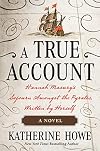
In 1930, Dr. Marian Beresford is presented with "A True Account..." by an undergraduate named Kay. Kay is, by all appearances, the polar opposite of Hannah, but even she is excited to pursue the story. They learn that after witnessing a brutal murder of a boy and now on the run, Hannah takes the name of Billy Chandler on a ship captained by the notorious Edward Low. She survives by being observant and adaptive, earning the trust of the crew. Hannah sees firsthand how brutal pirates really show more are, after they take a French ship called the Rose Pink. But as Billy, she participates in and falls into the life of a criminal at sea. But for Marian and Kay, the book is the only source for a possible treasure hidden somewhere in Key West...
When you tell someone to picture an 18th century woman in their mind, they see either an Abigail Adams or a Marie Antoinette. In reality, the majority of women were rough, hard working, and marginal, esp. the whalers' and sailors' wives of Boston. Also, the accuracy of the dialogue, the maritime terminology, and the setting made my little heart happy. Hannah Masury could've been written as "vivacious", gorgeous, or coquettishly rebellious. She is none of these and yet so much more. After all, a pretty smile and sweet behavior means nothing to the unforgiving ocean. True, I loved Hannah from the beginning but I grew to like Marian as well. Judgmental at first, she learns a valuable lesson about assumption but gets a well deserved, self-assuring confidence boost at end. Also, a nice dose of LGBTQ+ representation in this one! I've now read The Physick Book of Deliverance Dane, The Penguin Book of Witches and now A True Account! Katherine Howe is definitely a must-have author for me. 🏴☠️ show less
When you tell someone to picture an 18th century woman in their mind, they see either an Abigail Adams or a Marie Antoinette. In reality, the majority of women were rough, hard working, and marginal, esp. the whalers' and sailors' wives of Boston. Also, the accuracy of the dialogue, the maritime terminology, and the setting made my little heart happy. Hannah Masury could've been written as "vivacious", gorgeous, or coquettishly rebellious. She is none of these and yet so much more. After all, a pretty smile and sweet behavior means nothing to the unforgiving ocean. True, I loved Hannah from the beginning but I grew to like Marian as well. Judgmental at first, she learns a valuable lesson about assumption but gets a well deserved, self-assuring confidence boost at end. Also, a nice dose of LGBTQ+ representation in this one! I've now read The Physick Book of Deliverance Dane, The Penguin Book of Witches and now A True Account! Katherine Howe is definitely a must-have author for me. 🏴☠️ show less
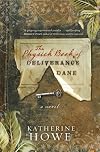
“When I started thinking about the story in The Physick Book of Deliverance Dane, I decided to take the Salem villagers at their word for once: what if witchcraft was real?”
— “The Physick Book of Deliverance Dane,” Katherine Howe, p 363 (Postscript)
Stupidly simple thing I learned reading this book: I like stories about girls who sweat. The refreshing thing about Howe’s 1991 graduate student protagonist, Connie, was how realistically Howe used her sensations to describe what it is show more like to physically be in the human body as a woman who is interested in things beyond being attractive to men. Her realistic priority was the work she had to do, and her interactions formally and loosely professional were the driving force behind the book’s action. Her relationship with Sam did not seem to undergird her every thought, and it seemed more realistic because of that. My perception of an undercurrent of romantic thought in a significant amount of fiction by and about women may be a subjective result of my perspective, but for some reason Connie seemed free of this, and was as a result easier to read. She surely had faults, but no more than the protagonists of any story the reader is supposed to piece together before its characters: she is dense, to the degree that the author needs her to be for the sake of her pacing. Her relationship with her mother is a great example of this, because though it improved, their communication did not. As someone who has had an unrealistically good relationship with her mother throughout her growing up years, I was simultaneously pleased and frustrated by this insight into different lives than mine. I think the complicated relationships of all the women both past and in the 1991 sections, alive and dead, are the centerpiece of the book.
Though this book was theoretically about the twin narratives of the three ancestors and the three modern women, the historic sections played as a second priority, as they take up less space and the author writes them at more of a distance. Hearing her say in an online lecture (via the Coursera program Plagues, Witches, and Wars) that she could more easily write the historic sections because she did not have to do the work of making sure that she was not projecting too much of her own experiences of 1991 was a revelation. Perhaps the writing she considers formally better has less of the sweat and other physical realities that made her prose work, when it did.
Howe’s shortcomings were evidenced most when she brings Connie into contact with her graduate advisor, Chilton Manning, or Manning Chilton, either of them being similarly ridiculous names. My opinion may be different if I had more experience with academia, but he seemed like a caricature of the sexist academic, and his research into alchemy seemed improbable in the modern climate, although all these thoughts are filtered through a 2019 mentality. The standards to which academics are held are constantly changing, and it seems perhaps more so since 2000 than they did before that. So maybe Manning Chilton the IIIs really did exist and perform this way in the early ’90s Harvard history department.
After all this: the book has no heart. Its ability to keep me speedily turning the pages did not, unfortunately, relieve me of this opinion. That said, the theoretical approach to historical fiction, taking those who lived in the past at their word on the more supernatural aspects of their existence, is a fascinating take and I look forward to someday finding a book that explores this further. show less
— “The Physick Book of Deliverance Dane,” Katherine Howe, p 363 (Postscript)
Stupidly simple thing I learned reading this book: I like stories about girls who sweat. The refreshing thing about Howe’s 1991 graduate student protagonist, Connie, was how realistically Howe used her sensations to describe what it is show more like to physically be in the human body as a woman who is interested in things beyond being attractive to men. Her realistic priority was the work she had to do, and her interactions formally and loosely professional were the driving force behind the book’s action. Her relationship with Sam did not seem to undergird her every thought, and it seemed more realistic because of that. My perception of an undercurrent of romantic thought in a significant amount of fiction by and about women may be a subjective result of my perspective, but for some reason Connie seemed free of this, and was as a result easier to read. She surely had faults, but no more than the protagonists of any story the reader is supposed to piece together before its characters: she is dense, to the degree that the author needs her to be for the sake of her pacing. Her relationship with her mother is a great example of this, because though it improved, their communication did not. As someone who has had an unrealistically good relationship with her mother throughout her growing up years, I was simultaneously pleased and frustrated by this insight into different lives than mine. I think the complicated relationships of all the women both past and in the 1991 sections, alive and dead, are the centerpiece of the book.
Though this book was theoretically about the twin narratives of the three ancestors and the three modern women, the historic sections played as a second priority, as they take up less space and the author writes them at more of a distance. Hearing her say in an online lecture (via the Coursera program Plagues, Witches, and Wars) that she could more easily write the historic sections because she did not have to do the work of making sure that she was not projecting too much of her own experiences of 1991 was a revelation. Perhaps the writing she considers formally better has less of the sweat and other physical realities that made her prose work, when it did.
Howe’s shortcomings were evidenced most when she brings Connie into contact with her graduate advisor, Chilton Manning, or Manning Chilton, either of them being similarly ridiculous names. My opinion may be different if I had more experience with academia, but he seemed like a caricature of the sexist academic, and his research into alchemy seemed improbable in the modern climate, although all these thoughts are filtered through a 2019 mentality. The standards to which academics are held are constantly changing, and it seems perhaps more so since 2000 than they did before that. So maybe Manning Chilton the IIIs really did exist and perform this way in the early ’90s Harvard history department.
After all this: the book has no heart. Its ability to keep me speedily turning the pages did not, unfortunately, relieve me of this opinion. That said, the theoretical approach to historical fiction, taking those who lived in the past at their word on the more supernatural aspects of their existence, is a fascinating take and I look forward to someday finding a book that explores this further. show less
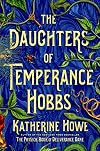
This book was the perfect witchy summer read that I didn't know I needed. I have never read the first book in this series, but that didn't hinder my enjoyment or understanding of this at all. Connie thought she just had to worry about finishing her book, getting her tenure packet in, and grading her student' papers; but on top of that her boyfriend just proposed, she might be pregnant, and she found an old family heirloom that could turn her research and life around. Her mother has convinced show more Connie that no men live long after "the next generation is set" and Connie is desperate to discover if that is true. She plunges herself into researching family history and realizes that her mother is right, but there may be a loophole, weather work. If she can figure out the writings she discovered in her mother's house, she may be able to save the life of the man she loves and become more intimately connected to her family history then she ever thought possible. Fascinating read! I loved the history components and all the characters, I'll have to go back and read the first one now! show less
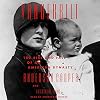
In Vanderbilt: The Rise and Fall of an American Dynasty, Anderson Cooper and Katherine Howe track the history of this famous family from Reconstruction to the Gilded Age, from the Roaring Twenties through the Atomic Age, finally culminating in Cooper’s own mother, Gloria Laura Vanderbilt. Cooper and Howe write, “The Vanderbilt story somehow manages to be both unique and also, deeply, universally American. It is a saga of wealth and success and individualism, but as it turns out, those show more aren’t necessarily the universal goods our culture likes to believe they are.” It is, in their terms, “The story of the greatest American fortune ever squandered.” They begin at the end, with Cornelius Vanderbilt’s death and the eviction of his great-great-great-granddaughter Gladys from the family’s Rhode Island home, the Breakers, in 2018. Cooper and Howe then move through history from the first van der Bilt in New Amsterdam to Cornelius’ early success in cornering the ferry market in New York Harbor and his railroad empire. Where Cornelius built a fortune and his eldest surviving son William Henry expanded it, subsequent generations slowly let it slip away. William’s son, named for himself, married Alva Erskine Smith, who succeed in breaking into New York society and supplanting the Astors, though her need for control led to her domineering her daughter Consuelo, arranging Consuelo’s marriage into the British aristocracy, even as her own marriage collapsed. For her part, Alva eventually married Oliver Belmont and became a champion of women’s rights. Willie’s brother Corneil fathered the children that eventually led both to Gladys and to Anderson Cooper himself. Vanderbilt is part Cooper’s reckoning with his family’s messy history, part a story as old as America itself. The Vanderbilts were seen as “new money” by the Astors, even though the van der Bilt family preceded the Astor family in the Americas. A country without a hereditary peerage, America’s wealthy first command power before refining themselves into a mimicry of European aristocracy, but that power and privilege brings with it all the pains one expects while these families slowly implode under the weight of their expectations. Cooper concludes with thoughts of his own son. He writes, “He is not a scion or an heir. He is, and will be, his own person. He will make his own way. Forge his own path. And perhaps, one day, he will read this book and understand.” The Vanderbilt legacy is a tempting one, but one that was built on ruthless capitalism and squandered just the same. show less
Lists
Awards


You May Also Like


Associated Authors
Statistics
- Works
- 10
- Members
- 9,206
- Popularity
- #2,605
- Rating
- 3.6
- Reviews
- 514
- ISBNs
- 146
- Languages
- 12
- Favorited
- 10

