
Deborah Harkness
Author of A Discovery of Witches
About the Author
Deborah Harkness was born in 1965. She received a B. A. from Mount Holyoke College in 1986, a M. A. from Northwestern University in 1990, and a Ph. D. from the University of California at Davis in 1994. She is a professor of history at the University of Southern California. Harkness is a show more well-regarded historian of science and medicine, specializing in the fifteenth through seventeenth centuries. Her first novel, A Discovery of Witches, was published in 2011. She is the author of the All Souls Trilogy. In 2006, she began a wine blog entitled, Good Wine Under $20. It provides an online record of her search for the best, most affordable wines. She made The New York Times Bestseller List with The Book of Life and Shadow of Night. (Bowker Author Biography) show less
Series
Works by Deborah Harkness
The World of All Souls: The Complete Guide to A Discovery of Witches, Shadow of Night, and The Book of Life (2018) 369 copies, 6 reviews
The Falcon and the Rose 5 copies
A Discovery of Witches: Season 1-2 — Executive Producer — 4 copies
[Title missing] 2 copies
Diana Bishop's Commonplace Book 2 copies
The All Souls Collection 1 copy
Zamanin Dönüsümü 1 copy
Your Heart Belongs to Me 1 copy
Associated Works
Tagged
Common Knowledge
- Canonical name
- Harkness, Deborah
- Other names
- Harkness, Deborah E
- Birthdate
- 1965-04-05
- Gender
- female
- Education
- Mount Holyoke College (BA|Renaissance Studies)
Northwestern University (MA|Tudor-Stuart History)
University of California at Davis (PhD|Early Modern Europe/History of Science)
University of Oxford - Occupations
- professor
author
Professor of history at the University of Southern California
scholar
novelist
historian (show all 7)
executive producer - Organizations
- Colgate University
University of California, Davis
University of Southern California
Renaissance Society of America
North American Conference on British Studies
American Historical Association (show all 7)
Writers Guild of America - Awards and honors
- John Ben Snow Prize (British Studies)
Pfizer Prize (History of Science)
Highly Commended, Longman/History Today Prize - Agent
- Sam Stoloff (Frances Goldin)
Rich Green (CAA) - Nationality
- USA
- Birthplace
- Philadelphia, Pennsylvania, USA
- Places of residence
- Horsham, Pennsylvania, USA
Oxford, Oxfordshire, England, UK
London, England, UK
Davis, California, USA
San Marino, California, USA - Associated Place (for map)
- USA
Members
Reviews

I have really mixed feelings about this book. The protagonist is interesting -- a serious academic with a complicated relationship with magic -- and there's an intriguing world full of magic and creatures and complex social dynamics. But I just couldn't get on board with the main romance, which is completely central to the plot.
I know we're supposed to be rooting forMatthew and Diana and their forbidden love, but he's a walking pile of red flags! He's possessive and controlling from the show more moment they meet, always orders Diana around like he knows what's best, has a terrifying temper, and kills people on Diana's behalf. More than once . And the thing is, not only does everyone around Diana act like they know better than her... but they're actually right. She's never allowed to be an authority on her own life, and she never gets to finish the paper she's working on! From the moment the love interest appears, Diana's normal life that she's worked so hard for is stripped away from her. It just bothers me.
On the other hand, I love a lot of the supporting cast. Ysabeau is great, and Sarah and Em are the best. And their house! I would happily read more about the Bishop family and their witchy business. show less
I know we're supposed to be rooting for
On the other hand, I love a lot of the supporting cast. Ysabeau is great, and Sarah and Em are the best. And their house! I would happily read more about the Bishop family and their witchy business. show less
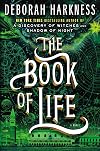
It did not take me long to purchase and read the final installment, The Book of Life, of the All Souls Trilogy when it went on sale. I had been anxiously awaiting the conclusion to the trilogy I began reading back in 2012. I thoroughly enjoyed A Discovery of Witches and Shadow of Night, both books so very different from one another and yet delicious in details about characters I have come to love. And so it was with great anticipation that I began reading The Book of Life, both excited to show more see what would happen and sad to know the story would be coming to an end.
It is no wonder The Book of Life is over five hundred pages. Deborah Harkness fills them well. She continues to breath life into her characters and the world she began creating years ago, each growing and evolving with time and circumstance. I love the depth she has gone to in building her world, the history, science, religion, and lore. I found this final installment of Deborah Harkness's trilogy to be satisfying in every way--except perhaps I did not want to see it end.
Diana and Matthew are not the same people they were when they first stepped back in time. They have returned changed and they face a whole new set of problems along with the old ones. The Book of Life picks up hot on the heels of where Shadow of Night left off. I liked the way the author captured the suddenness of it all for Diana and yet the distance in time it has been for those who knew her centuries ago.
The couple's love is stronger than ever and it continues to be tested time and again as they race to solve the mystery of Ashmole 782, otherwise known as the Book of Life. They must deal with other obstacles as well, including Matthew's blood rage, family politics, and possible war between the preternatural creatures on earth, all as Diana continues to struggle with her identity and accepting herself.
I liked Diana from the very first book, and I like her even more now, after having read The Book of Life. She continues to be a strong woman in her own right, intelligent and thoughtful. She truly grows as a person over the course of the novels, her attitudes and ideas shifting based on her experiences. I appreciated how far Matthew has come in respecting that about Diana--how hard it had been for him in the beginning given his natural inclination as a vampire to control those he loves.
I love how the author is able to balance the supernatural and science throughout the trilogy, especially in this book as she brings her story to a conclusion. It was nice to revisit Diana and Matthew's friends and families. I think I most enjoyed my time back at Diana's childhood home. I just love her house. However, I also really enjoyed the time spent in London. The magic of one and the history of the other. Oh, how I wanted to step inside the pages of this book many times as I read!
There is much to this novel, many story threads woven in, and so much I would like to say. In an effort to avoid spoilers, however, I am trying to remain vague. I thoroughly enjoyed The Book of Life, a contented smile spread across my face as I finished the last page. Deborah Harkness did not tie every loose end up with a neat little bow, but I did not really want or expect her to. She did just enough. I cannot wait to reread this trilogy again one day.
Review orginally posted on my blog, Musings of a Bookish Kitty show less
It is no wonder The Book of Life is over five hundred pages. Deborah Harkness fills them well. She continues to breath life into her characters and the world she began creating years ago, each growing and evolving with time and circumstance. I love the depth she has gone to in building her world, the history, science, religion, and lore. I found this final installment of Deborah Harkness's trilogy to be satisfying in every way--except perhaps I did not want to see it end.
Diana and Matthew are not the same people they were when they first stepped back in time. They have returned changed and they face a whole new set of problems along with the old ones. The Book of Life picks up hot on the heels of where Shadow of Night left off. I liked the way the author captured the suddenness of it all for Diana and yet the distance in time it has been for those who knew her centuries ago.
The couple's love is stronger than ever and it continues to be tested time and again as they race to solve the mystery of Ashmole 782, otherwise known as the Book of Life. They must deal with other obstacles as well, including Matthew's blood rage, family politics, and possible war between the preternatural creatures on earth, all as Diana continues to struggle with her identity and accepting herself.
I liked Diana from the very first book, and I like her even more now, after having read The Book of Life. She continues to be a strong woman in her own right, intelligent and thoughtful. She truly grows as a person over the course of the novels, her attitudes and ideas shifting based on her experiences. I appreciated how far Matthew has come in respecting that about Diana--how hard it had been for him in the beginning given his natural inclination as a vampire to control those he loves.
I love how the author is able to balance the supernatural and science throughout the trilogy, especially in this book as she brings her story to a conclusion. It was nice to revisit Diana and Matthew's friends and families. I think I most enjoyed my time back at Diana's childhood home. I just love her house. However, I also really enjoyed the time spent in London. The magic of one and the history of the other. Oh, how I wanted to step inside the pages of this book many times as I read!
There is much to this novel, many story threads woven in, and so much I would like to say. In an effort to avoid spoilers, however, I am trying to remain vague. I thoroughly enjoyed The Book of Life, a contented smile spread across my face as I finished the last page. Deborah Harkness did not tie every loose end up with a neat little bow, but I did not really want or expect her to. She did just enough. I cannot wait to reread this trilogy again one day.
Review orginally posted on my blog, Musings of a Bookish Kitty show less

So, more than seven years after I read 'A Discovery Of Witches' I finally read 'The Book Of Life', the last book in the All Souls trilogy and I enjoyed myself. The almost six hundred pages of the book slid by in a curl up on the sofa with a coffee binge read that was relaxing and exciting at the same time. The story was well told. I admired how Deborah Harkness managed to start the novel in a way that caught me up with the previous books without and tedious repetition or clumsy info-dumping show more and set the tone for a series of highly charged encounters with layer upon layer of secrets behind them. For me, the ending satisfying, resolving the main conflicts and mysteries without being too neat and tidy.
This was the book were Diana finally comes into her own. She's in control of her power, she has children to protect and she's determined to use the Book Of Life to bring down the Covenant that puts her family at risk. It did surprise me that, when Diana finally came into her power, she used it as if she had been born into the de Clarmont family. She slipped on the wealth and entitlement of the de Clarmont's like a tailored jacket and became someone truly formidable. This is no longer the woman we met in 'A Discovery Of Witches'. This is someone who on having finally understood the her options and abilities had been constrained by the power of the Congregation her whole life, took hold of her power and focused it on their destruction. It seemed to me that the various vampires and witches who had conspired to stop her along the way had had very good reason to do so.
There were lots of scenes in the book that caught me by surprise.
I loved that Deborah Harkness gave us a detailed account of the birthing of the twins, drenching it in physicality and making Diana's pain and exertion into something emotionally powerful.
The other scenes that surprised me I loved rather less. These were the scenes where Benjamin abducted and imprisoned witches and live-streamed their gangrape and eventual death and where he killed children as a way of torturing Matthew. Then there were the scenes that showed the terrible things that were done to Matthew. The images are strong and bloody and vicious and I'd rather not have had them in my head. I know that these scenes are no stronger than I might have read in a book by Anne Rice or Clive Barker but I hadn't expected them here. They took the book and Diana into a darker, more violent place that seemed much more threatening than anything that they encountered in their travels in the Sixteenth Century.
It took me almost to the end of the book to understand that this whole trilogy is primarily a love story. I never quite understood why Diana felt so attracted to the monstrous Matthew, a vampire with the blood of hundreds of his own kind on his hands, or how she could accept his sire, Ysabeau de Clermont, who spent decades hunting and killing witches. I know it was supposed to be a grande amore but it didn't feel like that to me. This time around, I was very aware of the de Claremont's immense wealth and unquestioned privilege and how seductive it is. An ancient, remote castle in France, made so much less remote when you arrive by helicopter. A Queen Anne Townhouse, fully furnished and with hot and cold running servants in Central London, given as a wedding gift. Easy, private travel between countries and continents and never ever having to think about the cost of anything. It seemed to me that Diana fell in love with what the de Claremont's offered her as much as she did with Matthew and, by the end of this book, she had made herself a pillar of the de Claremont's power. It seemed to me that I was also being seduced into thinking of the de Claremont as the good guys: as if their good taste in art, their education, their scientific endeavours and their loyalty to each other made their sense of entitlement and the violence that they wrought to keep themselves secure, entirely acceptable. We've travelled a long way from a New England haunted house and a belief that all Creatures are equal and should be free. Diana Bishop's liberalism turned out to be of the deeply conservative kind that grants liberty to others as long as her own privilege is preserved.
Having said all that, this was an enjoyable book with memorable characters, strong emotions, and a clever plot delivered with a skill that made it easy to fall into the de Claremont's world and believe in it.
I recommend the audiobook, expertly narrated by Jennifer Ikeda. Click on the SoundCloud link below to hear a sample. show less
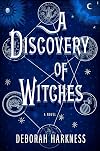
Dear "A Discovery of Witches,"
When I heard you were “Twilight for adults” I was skeptical and a bit hesitant to pick you up. Then you were available as a Kindle library loan and I thought what the heck.
When I started reading you, you reminded me more of The Historian than Twilight and I thought the Oxford setting and academia references were interesting. But then you had a vampire who sparkled and a yoga class for “creatures” and I was became wary. Really, the vampire is going to show more get mad if someone asks what he likes to eat for dinner when they are cooking for him? I think that’s a pretty valid question, even if he has been answering it for centuries.
Don’t get me wrong, I enjoyed reading parts of you, but I do wish you had avoided some of the Edward/Bella clichés. I don’t care if the vampire can’t get over some woman’s smell and I get that a vampire’s skin is going to feel cool against the “hot skin of a warm blood.” Also, it’s actually a bit creepy (not sexy) to have him hunting/stalking her, even if he is “falling” for her.
Look, it’s not you, it’s me. I’m just a bit sick of the vampire thing to be honest. I don’t want to read the word chiseled to describe another gorgeous vampire. I don’t want two paragraphs on how someone smells like cloves… in every single chapter.
I really did like some of your supporting characters. You had some great sassy women (I’m looking at you Sarah) and I loved how the house became a character in its own right. But frankly, it wasn’t enough to make me really like you. There were too many repetitive plots and when I reached the end and realized I had just read 600 pages not knowing you weren’t going to resolve ANYTHING I was more than miffed. If you want to have a sequel, that’s fine, just give me some sort of heads up next time.
Sincerely,
Burned out on vampires in the Midwest show less
When I heard you were “Twilight for adults” I was skeptical and a bit hesitant to pick you up. Then you were available as a Kindle library loan and I thought what the heck.
When I started reading you, you reminded me more of The Historian than Twilight and I thought the Oxford setting and academia references were interesting. But then you had a vampire who sparkled and a yoga class for “creatures” and I was became wary. Really, the vampire is going to show more get mad if someone asks what he likes to eat for dinner when they are cooking for him? I think that’s a pretty valid question, even if he has been answering it for centuries.
Don’t get me wrong, I enjoyed reading parts of you, but I do wish you had avoided some of the Edward/Bella clichés. I don’t care if the vampire can’t get over some woman’s smell and I get that a vampire’s skin is going to feel cool against the “hot skin of a warm blood.” Also, it’s actually a bit creepy (not sexy) to have him hunting/stalking her, even if he is “falling” for her.
Look, it’s not you, it’s me. I’m just a bit sick of the vampire thing to be honest. I don’t want to read the word chiseled to describe another gorgeous vampire. I don’t want two paragraphs on how someone smells like cloves… in every single chapter.
I really did like some of your supporting characters. You had some great sassy women (I’m looking at you Sarah) and I loved how the house became a character in its own right. But frankly, it wasn’t enough to make me really like you. There were too many repetitive plots and when I reached the end and realized I had just read 600 pages not knowing you weren’t going to resolve ANYTHING I was more than miffed. If you want to have a sequel, that’s fine, just give me some sort of heads up next time.
Sincerely,
Burned out on vampires in the Midwest show less
Lists
al.vick-series (1)
Great Audiobooks (1)
2022 Challenge (1)
Which house? (1)
Awards


You May Also Like


Associated Authors
Statistics
- Works
- 31
- Also by
- 1
- Members
- 32,839
- Popularity
- #589
- Rating
- 3.9
- Reviews
- 1,342
- ISBNs
- 278
- Languages
- 21
- Favorited
- 73


