
Kathleen Kent
Author of The Heretic's Daughter
About the Author
Image credit: Kathleen Kent
Series
Works by Kathleen Kent
Associated Works
Of Mice and Minestrone: Hap and Leonard: The Early Years (2020) — Introduction — 68 copies, 8 reviews
Tagged
Common Knowledge
- Canonical name
- Kent, Kathleen
- Birthdate
- 1953-09-22
- Gender
- female
- Occupations
- Schrijfster
- Awards and honors
- Texas Institute of Letters
- Nationality
- USA
- Birthplace
- Meadville, Pennsylvania, USA
- Places of residence
- Dallas, Texas, USA
New York, USA - Associated Place (for map)
- USA
Members
Reviews

The Heretic's Daughter is so much more than a book about the Salem Witch Trials, though throughout the story the reader is aware of the gradually growing underlying tension that will eventually give way to the hysteria that led to the deaths of over 200 men and women. And we also know that the narrator's mother, Martha Carrier is one of the first victims of the Salem Witch Trials.
Sharp-tongued, strong-willed and unwilling to participate in Puritan church life, it is no wonder that Martha show more Carrier and her family were targeted by the animosity of the community. It is even less of a surprise when we learn of a acrimonious dispute over land that has sundered family ties. And Martha's daughter Sarah, the narrator and titular character, cannot help but feel hostile towards a mother more often harsh than affectionate, especially since the two of them are alike in too many ways to allow for harmony between them.
When Sarah takes refuge from the smallpox with her aunt and uncle, she is exposed to their more affectionate family life. How she yearns for that kind of closeness, and how she misses the companionship of her cousin. But despite their good qualities, the reader sees the less attractive side of the Toothaker family. While affectionate with his family, Sarah's uncle is closed-minded and downright vicious when it comes to Native Americans, or 'outsiders' in general. And although Sarah's own mother is vitriolic and short-tempered at times, she is brave enough to stand up for what she believes in - even to the point of losing her own life.
Possible Spoilers:
But the aspect of the story that really appealed to me was that in her martyrdom, Martha Carrier displays none of the closed-minded zeal that I so often find repugnant in those willing to die for their beliefs. Although she refuses to knuckle under to her oppressors, she ensures that her family will live - even if it means that they must lie and denounce her to the judges.
(end spoilers)
This is a thoroughly touching story not so much about the Salem Witch Trials themselves as about a mother-daughter relationship. The Witch Trials form a sort of crucible for mother and daughter. A very interesting read, and emotionally compelling. I definitely recommend this for anyone who is interested in historical fiction.
Also posted at my blog.
FTC Disclosure: I received a free copy of this book in a blog contest. show less
Sharp-tongued, strong-willed and unwilling to participate in Puritan church life, it is no wonder that Martha show more Carrier and her family were targeted by the animosity of the community. It is even less of a surprise when we learn of a acrimonious dispute over land that has sundered family ties. And Martha's daughter Sarah, the narrator and titular character, cannot help but feel hostile towards a mother more often harsh than affectionate, especially since the two of them are alike in too many ways to allow for harmony between them.
When Sarah takes refuge from the smallpox with her aunt and uncle, she is exposed to their more affectionate family life. How she yearns for that kind of closeness, and how she misses the companionship of her cousin. But despite their good qualities, the reader sees the less attractive side of the Toothaker family. While affectionate with his family, Sarah's uncle is closed-minded and downright vicious when it comes to Native Americans, or 'outsiders' in general. And although Sarah's own mother is vitriolic and short-tempered at times, she is brave enough to stand up for what she believes in - even to the point of losing her own life.
Possible Spoilers:
But the aspect of the story that really appealed to me was that in her martyrdom, Martha Carrier displays none of the closed-minded zeal that I so often find repugnant in those willing to die for their beliefs. Although she refuses to knuckle under to her oppressors, she ensures that her family will live - even if it means that they must lie and denounce her to the judges.
(end spoilers)
This is a thoroughly touching story not so much about the Salem Witch Trials themselves as about a mother-daughter relationship. The Witch Trials form a sort of crucible for mother and daughter. A very interesting read, and emotionally compelling. I definitely recommend this for anyone who is interested in historical fiction.
Also posted at my blog.
FTC Disclosure: I received a free copy of this book in a blog contest. show less
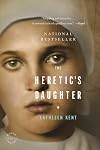
Book 2
"I am amazed that this is a first novel. The book is a very fine specimen of very fine historical fiction.
Not only that but the author is a tenth generation descendant of this family from 1690s Massachusetts during the height of the Salem Witch Trials.
The novel is from the perspective of Sarah Carrier, a ten year old girl, who experiences the difficulties and challenges of this historical period in New England. This author is such an amazing storyteller. She describes the landscapes, show more townscapes to a vivid degree, the minutiae of daily life,the complex sociology of the community to the interelationships and inner lives of the inhabitants.
The conditions at the best of times are challenging but at the worst of times the author takes you into the suffering to such a degree that you start to panic and frantically want to skip pages or take long breaks from reading.
Until reading this book I did not fully understand how these atrocities could occur at the hysterical rantings of a few teenage girls. The book unfolds in such a careful yet hypnotic fashion that not only are you a reader but you become a witness to the plight of not only the Carrier family but to the adult and child witches that were accused and convicted of such utter nonsense !!
The writing is rich, intelligent and interesting:
"And what finally of the tortures of a guilty soul? What concoction is there that can be chewed and swallowed and downed in the belly to force the poison of self-recrimination back through the the pores in the skin? In what organ of the body does it reside ? A seeping wound can be bound. Salve can be dabbed to a burn or a swelling bubo. Poison can be drawn with a leech, or a lance. But guilt is a ghost that takes the shape of the body it inhabits and consumes all that is tender within its shell: brain, bowels, and heart. I cannot pluck it out like a splinter of glass or treat it with herbal brew. " "
-review by Jaidee on GoodReads show less
"I am amazed that this is a first novel. The book is a very fine specimen of very fine historical fiction.
Not only that but the author is a tenth generation descendant of this family from 1690s Massachusetts during the height of the Salem Witch Trials.
The novel is from the perspective of Sarah Carrier, a ten year old girl, who experiences the difficulties and challenges of this historical period in New England. This author is such an amazing storyteller. She describes the landscapes, show more townscapes to a vivid degree, the minutiae of daily life,the complex sociology of the community to the interelationships and inner lives of the inhabitants.
The conditions at the best of times are challenging but at the worst of times the author takes you into the suffering to such a degree that you start to panic and frantically want to skip pages or take long breaks from reading.
Until reading this book I did not fully understand how these atrocities could occur at the hysterical rantings of a few teenage girls. The book unfolds in such a careful yet hypnotic fashion that not only are you a reader but you become a witness to the plight of not only the Carrier family but to the adult and child witches that were accused and convicted of such utter nonsense !!
The writing is rich, intelligent and interesting:
"And what finally of the tortures of a guilty soul? What concoction is there that can be chewed and swallowed and downed in the belly to force the poison of self-recrimination back through the the pores in the skin? In what organ of the body does it reside ? A seeping wound can be bound. Salve can be dabbed to a burn or a swelling bubo. Poison can be drawn with a leech, or a lance. But guilt is a ghost that takes the shape of the body it inhabits and consumes all that is tender within its shell: brain, bowels, and heart. I cannot pluck it out like a splinter of glass or treat it with herbal brew. " "
-review by Jaidee on GoodReads show less
I'm not sure what inspired me to read The Heretic's Daughter as the genre is not one I would usually be attracted to. However, I am certainly glad that I did. I was mesmerized by the book from the beginning and found Kent to be a masterful storyteller.
Told from the perspective of 10 year old Sarah Carrier, this is story about the Salem witch trials. The shocking, horrific, brutal details that actually occurred in our country during that period are laid out in this book. But these trials show more involved more than the torture and eventual death of most of this wrongly accused women, men and children. They also involved the tearing apart of families, the disruption of life as anyone knew it, and the attempts to cling to whatever dignity and love you could find.
I found each of Kent's characters to be beautifully developed and enjoyed the fact that since our protagonist is only a child, we learn of these characters in the manner consistent with a child's development. The confusion and lack of full understanding that comes with being a child further enhanced the feelings of helplessness that naturally occurred during this period.
I would highly recommend this book. show less
Told from the perspective of 10 year old Sarah Carrier, this is story about the Salem witch trials. The shocking, horrific, brutal details that actually occurred in our country during that period are laid out in this book. But these trials show more involved more than the torture and eventual death of most of this wrongly accused women, men and children. They also involved the tearing apart of families, the disruption of life as anyone knew it, and the attempts to cling to whatever dignity and love you could find.
I found each of Kent's characters to be beautifully developed and enjoyed the fact that since our protagonist is only a child, we learn of these characters in the manner consistent with a child's development. The confusion and lack of full understanding that comes with being a child further enhanced the feelings of helplessness that naturally occurred during this period.
I would highly recommend this book. show less
I love historical fiction and The Heretic's Daughter is a perfect example of what I enjoy. A fictionalized account of an actual event, rich in period detail and completely engrossing. It's obvious the author did her research and I learned about the history of the time in an entertaining way. This is the story of Sarah Carrier, who at the beginning of the story is in many ways is the petulant 10 year old. She resents her strong-willed mother and longs for the friend she finally finds in her show more cousin. But this isn't a simple "aha moment" story where all is resolved happily in the end. Not much is happy in the end, which given the premise of the book is no surprise. I learned how the harsh conditions of the time, the petty jealousies and the strong superstitions all lead to so many people accusing each other of being witches, and all this is learned through Sarah's eyes and she finally realizes it for herself.
I was up until late in the night because I couldn't put this story down. I enjoyed the writing style and level of suspense that Kathleen Kent could bring to a story where the ending was well known. I think that takes a lot of skill and I look forward to reading future books by this author. I rate The Heretic's Daughter 5 stars and would recommend it to those who enjoy historical fiction, suspense and I also think this book is perfectly acceptable as a young adult novel. show less
I was up until late in the night because I couldn't put this story down. I enjoyed the writing style and level of suspense that Kathleen Kent could bring to a story where the ending was well known. I think that takes a lot of skill and I look forward to reading future books by this author. I rate The Heretic's Daughter 5 stars and would recommend it to those who enjoy historical fiction, suspense and I also think this book is perfectly acceptable as a young adult novel. show less
Lists
Same Title (1)
Awards


You May Also Like


Associated Authors
Statistics
- Works
- 10
- Also by
- 2
- Members
- 3,816
- Popularity
- #6,640
- Rating
- 3.8
- Reviews
- 262
- ISBNs
- 111
- Languages
- 7