
Brunonia Barry
Author of The Lace Reader
About the Author
Author Brunonia Barry was born in Massachusetts. She studied literature and creative writing at Green Mountain College in Vermont and at the University of New Hampshire before working in Chicago on promotional campaigns for theater and co-founding Smart Games. She wrote for the tween series Beacon show more Street Girls and penned the international and New York Times bestelling novel The Lace Reader. (Bowker Author Biography) show less
Image credit: Martha Everson
Series
Works by Brunonia Barry
Associated Works
Author in Progress: A No-Holds-Barred Guide to What It Really Takes to Get Published (2016) — Contributor — 72 copies, 1 review
Tagged
Common Knowledge
- Birthdate
- 1950
- Gender
- female
- Education
- Green Mountain College
University of New Hampshire - Occupations
- writer
- Organizations
- Portland Stage Company
- Agent
- Rebecca Oliver
- Nationality
- USA (birth)
- Birthplace
- Salem, Massachusetts, USA
- Places of residence
- Marblehead, Massachusetts, USA
Dublin, Ireland
Chicago, Illinois, USA
New York, New York, USA
California, USA - Associated Place (for map)
- USA
Members
Reviews
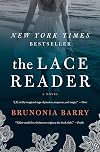
“The Lace Reader” is a challenging book. It is not written to be easy to read. From the very beginning we are told that it is full of lies and deceptions. By the end it is clear that this is not at all the book that it may have appeared to be.
If you pick this up looking for a murder mystery, set in modern day Salem, investigated by a woman gifted with the second sight, then you may end up feeling that you’re in the right cinema but have ended up watching the wrong movie.
“The Lace show more Reader” sets out to do something entirely different and something that I found much more original and satisfying. It makes the process of seeing the patterns of our own lives, the significance and consequences of our choices, the impact of the hurts we suffer and inflict along the way, problematic. It leads us to understand that truth comes from asking the right question and being open to unpalatable answers. In this view of the world, the truth about our lives is an emergent, malleable, elusive thing that we see with the corners of our eyes but which we must find a way to see if we before we can truly be ourselves.
One of the refreshing things about “The Lace Reader” is that Brunonia Barry manages to do justice to this complex theme and still produce an exciting, accessible novel that carries real emotional weight.
She does this by writing a novel that uses four literary devices that together act as a continuous invitation to the reader to work things out for themselves.
The first device is the unreliable narrator. Most of the novel is written in the first person present tense from the point of view of Towner, a troubled woman, returning to her childhood home and being forced by events to confront all the things she has been trying to forget. The opening lines of the book tell us how we should hear what the main character tells us:
“My name is Towner Whitney. No that’s not exactly true. My real first name is Sophya. Never believe me. I lie all the time.
I am a crazy woman… That last part is true.”
Brunonia Barry writes Towner Whitney in such a way that we can care about her, and hope for her without necessarily believing her, which gives the reader much the same relationship to Towner as most of the people in her life who love her.
For me part of the joy of the novel was trying to understand how much of what I was reading was true.
The second literary device, “The Lace Reader’s Guide” is there to help the reader with this task. Lace Reading is a skill akin to reading the Tarot. The lace is used as a focal point in which the Lace Reader discovers the true answer to the Seekers question. This answer sits in “the space between what is real and what is only imagined.” The secrets of Lace Reading are set out in The Lace Reader’s Guide, extracts from which are sprinkled through the book. Their distribution is not random. They are the reader’s way markers and each contains something that we need to bear in mind when reading the next section of the text.
Just when you think you understand the narrative thrust of the book, Brunonia Barry introduces her third literary device, a piece of “fiction” written by Towner as an act of therapy intended to enable her to recover lost memories and restore an integrated sense of self. In this section, Towner’s voice is younger and more intense. The action is compelling. The text could be a free-standing story. The fact that it is just another set of strands in the lace of the story only makes it stronger.
The final device Barry uses is a skillful weaving of past and present in the narration. This is often used in thrillers to feed backstory or to heighten pace but Barry uses it for something more. She helps us to understand that past and present are self-made fictions that over-write one another. Towner’s unreliable memory means that her present is often being rewritten by what she discovers about her own past.
I’ve focused here on the mechanics of the story and the ideas behind it. That doesn’t do just to Barry’s strong evocation of place and people. The island home she describes, with its caves and wild dogs and endless games of hide and seek of all kinds has a permanent home in my imagination.
I reached the end of the novel wanting to read it again, this time with the conscious understanding that the title is meant to describe not just the main characters in the book but the role in which Barry has cast me as the reader. show less
If you pick this up looking for a murder mystery, set in modern day Salem, investigated by a woman gifted with the second sight, then you may end up feeling that you’re in the right cinema but have ended up watching the wrong movie.
“The Lace show more Reader” sets out to do something entirely different and something that I found much more original and satisfying. It makes the process of seeing the patterns of our own lives, the significance and consequences of our choices, the impact of the hurts we suffer and inflict along the way, problematic. It leads us to understand that truth comes from asking the right question and being open to unpalatable answers. In this view of the world, the truth about our lives is an emergent, malleable, elusive thing that we see with the corners of our eyes but which we must find a way to see if we before we can truly be ourselves.
One of the refreshing things about “The Lace Reader” is that Brunonia Barry manages to do justice to this complex theme and still produce an exciting, accessible novel that carries real emotional weight.
She does this by writing a novel that uses four literary devices that together act as a continuous invitation to the reader to work things out for themselves.
The first device is the unreliable narrator. Most of the novel is written in the first person present tense from the point of view of Towner, a troubled woman, returning to her childhood home and being forced by events to confront all the things she has been trying to forget. The opening lines of the book tell us how we should hear what the main character tells us:
“My name is Towner Whitney. No that’s not exactly true. My real first name is Sophya. Never believe me. I lie all the time.
I am a crazy woman… That last part is true.”
Brunonia Barry writes Towner Whitney in such a way that we can care about her, and hope for her without necessarily believing her, which gives the reader much the same relationship to Towner as most of the people in her life who love her.
For me part of the joy of the novel was trying to understand how much of what I was reading was true.
The second literary device, “The Lace Reader’s Guide” is there to help the reader with this task. Lace Reading is a skill akin to reading the Tarot. The lace is used as a focal point in which the Lace Reader discovers the true answer to the Seekers question. This answer sits in “the space between what is real and what is only imagined.” The secrets of Lace Reading are set out in The Lace Reader’s Guide, extracts from which are sprinkled through the book. Their distribution is not random. They are the reader’s way markers and each contains something that we need to bear in mind when reading the next section of the text.
Just when you think you understand the narrative thrust of the book, Brunonia Barry introduces her third literary device, a piece of “fiction” written by Towner as an act of therapy intended to enable her to recover lost memories and restore an integrated sense of self. In this section, Towner’s voice is younger and more intense. The action is compelling. The text could be a free-standing story. The fact that it is just another set of strands in the lace of the story only makes it stronger.
The final device Barry uses is a skillful weaving of past and present in the narration. This is often used in thrillers to feed backstory or to heighten pace but Barry uses it for something more. She helps us to understand that past and present are self-made fictions that over-write one another. Towner’s unreliable memory means that her present is often being rewritten by what she discovers about her own past.
I’ve focused here on the mechanics of the story and the ideas behind it. That doesn’t do just to Barry’s strong evocation of place and people. The island home she describes, with its caves and wild dogs and endless games of hide and seek of all kinds has a permanent home in my imagination.
I reached the end of the novel wanting to read it again, this time with the conscious understanding that the title is meant to describe not just the main characters in the book but the role in which Barry has cast me as the reader. show less
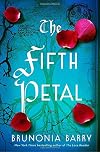
Okay, I tried. Even though I really disliked the first one. Even though Barry's version of modern Salem, despite the constant street-name-dropping that makes me think Google Maps should get a co-author credit, is unrecognizable to anyone who lives on the North Shore (yes, Barry lives in Salem, but she sure isn't writing for anyone who does). But the casual misogyny, most noticeable in the insistence that our two heroines are Not Like Other Girls, stopped me before page 100. I powered on for show more a while after we are told that mind-readers can't have female friends because women lie too much, but when our cafe-owning heroine refuses her female customers (and female guests in her house) coffee but keeps a secret stash for her husband because apparently men can handle its dark awesomeness or something, I was done.
I mean, come on, Barry! I have a very busy schedule of earning 78 cents on the dollar, adapting what I'm allowed to do with my body to changing legislation, and weaving elaborate webs of lies to fool my friends whom I secretly hate, and you expect me to do that without coffee? Pfffttt. You're giving witches a bad name. show less
I mean, come on, Barry! I have a very busy schedule of earning 78 cents on the dollar, adapting what I'm allowed to do with my body to changing legislation, and weaving elaborate webs of lies to fool my friends whom I secretly hate, and you expect me to do that without coffee? Pfffttt. You're giving witches a bad name. show less
 This review was written for LibraryThing Early Reviewers.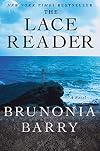
It isn't often upon finishing a book that I want to turn back to the beginning and immediately read it again. If I hadn't finished this book at 4:00 AM, I probably would have done exactly that.
Years ago, after the death of her twin, Towner Whitney fled Salem, Massachusetts, for Southern California ("which was as far as I could go without falling off the end of the earth," as she puts it). When her aunt Eva disappears, her brother asks that she come home. Upon her return to Salem, Towner sets show more up residence in her missing aunt's house rather than stay with her agoraphobic mother May on the offshore island where she was raised.
As Towner reacquaints herself with the environs and residents of her childhood home, she sees ghosts and memories everywhere; some are comfortable and sweet, but most are disturbing at best. She flinches from these memories while at the same time doing her best to confront them, which includes facing not only her jilted high school sweetheart but her former Uncle Cal, now the leader of the "Calvinists," a radically fundamentalist Christian sect determined to save the soul of the witches of Salem, which in his opinion includes the Whitney women: May, with her island sanctuary for battered and abused women and their children; the missing Great Aunt Eva, who read fortunes in the intricacies of a lace panel; and Towner herself, gifted with the ability to hear thoughts in the minds of those around her. At the same time, Towner becomes involved with Rafferty, the detective investigating Eva's disappearance as he struggles with his own demons.
Brunonia Barry has written a complex and complicated story, weaving bits of memory with pieces of the present as she switches us from Towner's memories, to her point of view, to Detective Rafferty's perspective, and back again, with occasional side jaunts to see through someone else's eyes. No one, it seems, has the whole story, and some of what is known may not even be truth.
The Lace Reader is a lovely novel, rich with subtext, full of hints, revealing nothing until the final pages. If I have a single quibble, it's that too little of Detective Rafferty's backstory is revealed. Although we can speculate on his reasons for joining the ranks of Salem's law enforcement, we have nothing truly concrete. But then again, I read the majority of this novel through a night of insomnia and may have missed a few things along the way.
Regardless, The Lace Reader is beautifully written. It's certainly one of the best books I've read in recent years. show less
Years ago, after the death of her twin, Towner Whitney fled Salem, Massachusetts, for Southern California ("which was as far as I could go without falling off the end of the earth," as she puts it). When her aunt Eva disappears, her brother asks that she come home. Upon her return to Salem, Towner sets show more up residence in her missing aunt's house rather than stay with her agoraphobic mother May on the offshore island where she was raised.
As Towner reacquaints herself with the environs and residents of her childhood home, she sees ghosts and memories everywhere; some are comfortable and sweet, but most are disturbing at best. She flinches from these memories while at the same time doing her best to confront them, which includes facing not only her jilted high school sweetheart but her former Uncle Cal, now the leader of the "Calvinists," a radically fundamentalist Christian sect determined to save the soul of the witches of Salem, which in his opinion includes the Whitney women: May, with her island sanctuary for battered and abused women and their children; the missing Great Aunt Eva, who read fortunes in the intricacies of a lace panel; and Towner herself, gifted with the ability to hear thoughts in the minds of those around her. At the same time, Towner becomes involved with Rafferty, the detective investigating Eva's disappearance as he struggles with his own demons.
Brunonia Barry has written a complex and complicated story, weaving bits of memory with pieces of the present as she switches us from Towner's memories, to her point of view, to Detective Rafferty's perspective, and back again, with occasional side jaunts to see through someone else's eyes. No one, it seems, has the whole story, and some of what is known may not even be truth.
The Lace Reader is a lovely novel, rich with subtext, full of hints, revealing nothing until the final pages. If I have a single quibble, it's that too little of Detective Rafferty's backstory is revealed. Although we can speculate on his reasons for joining the ranks of Salem's law enforcement, we have nothing truly concrete. But then again, I read the majority of this novel through a night of insomnia and may have missed a few things along the way.
Regardless, The Lace Reader is beautifully written. It's certainly one of the best books I've read in recent years. show less
"My name is Towner Whitney. No, that's not exactly true. My real first name is Sophya. Never believe me. I lie all the time."
Thus Brunonia Barry warns her reader that the likeable narrator of 'The Lace Reader' is not to be trusted. Nothing will be as it seems at first -or will it?
This is a magical, compelling novel. The basic plot is simple enough: a young woman returns to her hometown after the disappearance and probable death of the family matriarch. We see much of the story through her show more eyes, yet she has from the onset warned us that she is an unreliable narrator. Even as the judicious reader questions much of what she reads, interest in the eccentric Whitney family and their histories becomes compelling.
Giving away details of the story line would be unfair to both reader and author. So to do a quick `junior high book report' approach - the characters are life-like and well-drawn; the plot is well-developed but twisting (careful reading is demanded of the reader); the author's style flows smoothly, and the ending is a roller coaster ride.
The paradox of a really good book for me is that I want to race through it - the `I can't put it down' feeling. I have to know what's happening next. While at the same time I am saddened at the thought of finishing the novel and leaving the magic world of the book. This was true of The Lace Reader. It's difficult to put down and the return to the real world comes with a thud! show less
Thus Brunonia Barry warns her reader that the likeable narrator of 'The Lace Reader' is not to be trusted. Nothing will be as it seems at first -or will it?
This is a magical, compelling novel. The basic plot is simple enough: a young woman returns to her hometown after the disappearance and probable death of the family matriarch. We see much of the story through her show more eyes, yet she has from the onset warned us that she is an unreliable narrator. Even as the judicious reader questions much of what she reads, interest in the eccentric Whitney family and their histories becomes compelling.
Giving away details of the story line would be unfair to both reader and author. So to do a quick `junior high book report' approach - the characters are life-like and well-drawn; the plot is well-developed but twisting (careful reading is demanded of the reader); the author's style flows smoothly, and the ending is a roller coaster ride.
The paradox of a really good book for me is that I want to race through it - the `I can't put it down' feeling. I have to know what's happening next. While at the same time I am saddened at the thought of finishing the novel and leaving the magic world of the book. This was true of The Lace Reader. It's difficult to put down and the return to the real world comes with a thud! show less
Lists
Books with Twins (1)
Carole's List (1)
Awards


You May Also Like


Associated Authors
Statistics
- Works
- 3
- Also by
- 1
- Members
- 5,034
- Popularity
- #4,969
- Rating
- 3.6
- Reviews
- 537
- ISBNs
- 85
- Languages
- 12
- Favorited
- 8
