
Kim Edwards
Author of The Memory Keeper's Daughter
About the Author
Kim Edwards received an MFA in Fiction from Colgate University and an MA in Linguistics from the University of Iowa. After completing her graduate work, she and her husband taught on the rural east coast of Malaysia, then in a small city an hour south of Tokyo, and finally in Phnom Penh, Cambodia. show more While in Asia, she started writing and publishing short fiction. Her story, Sky Juice, won the Nelson Algren Award. Her stories and essays have appeared in Ploughshares, Zoetrope, Anteaus, Story, and The Paris Review and have received a National Magazine Award for Excellence in Fiction and a Pushcart Prize. Her other works include the short story collection The Secrets of a Fire King and a novel The Memory Keeper's Daughter, which won the Kentucky Literary Award for Fiction in 2005. She also received a Whiting Writers' Award in 2002. She is a graduate of the Iowa's Writers' Workshop and currently teaches writing at the University of Kentucky. (Bowker Author Biography) show less
Image credit: Kim Edwards - Photo by Deborah Feingold
Works by Kim Edwards
Associated Works
The Workshop: Seven Decades of the Iowa Writers Workshop - 43 Stories, Recollections, & Essays on Iowa's Place in Twentieth-Century American Literature (1999) — Contributor — 197 copies, 1 review
Tagged
Common Knowledge
- Canonical name
- Edwards, Kim
- Legal name
- Edwards Kimberly
- Birthdate
- 1958
- Gender
- female
- Education
- Colgate University
University of Iowa (Iowa Writers' Workshop) - Occupations
- writer
writing teacher - Organizations
- University of Kentucky
- Awards and honors
- PEN/Hemingway Award (alternate)
Whiting Writers' Award (2002) - Nationality
- USA
- Birthplace
- Killeen, Texas, USA
- Places of residence
- Skaneateles, New York, USA
Malaysia
Tokyo, Japan
Phnom Penh, Cambodia
Lexington, Kentucky, USA - Associated Place (for map)
- USA
Members
Discussions
Romance novel with stained glass maker, Luigi? in Name that Book (December 2012)
fiction- doctor delivers his twins one of whom is disabled-tells wife the baby has died in Name that Book (September 2010)
Reviews

It was so nice to read a beautifully written book with actual, developed characters, and a fully realized plot after the crap I’ve been reading. I might be giving this book an artificially inflated review just because of the comparison.
Really, though, it’s written extraordinarily well, with descriptions that leap off the page, and similes and metaphors that are not at all heavy handed or obvious.
To be honest, the premise wasn’t intriguing to me, but I picked it up because it was show more popular and recommended and well thought of by people whose opinions I respect. Also, it was .25 cents at a garage sale. However, I was captivated by the lives of David & Norah Henry, their son Paul, and the Down Syndrome baby, Pheobe, that David gave up at birth. David told Norah that Pheobe died, and that secret influences their family in many ways. David’s nurse, Caroline, was told to bring the baby to an institution, but instead she keeps the baby and raises her as her own. As a reader, you are constantly trying to figure out how the secret will eventually be discovered. A few times they are so close your heart starts racing.
The book spans more than 25 years, but is divided into sections approximately five years apart, and we are given a few chapters on the lives of each of the characters during some important milestones in their lives. The dynamism of the characters, while still remaining fundamentally trapped in their former lives and lies is stunning. For the author to be so genuine in writing the inner lives of such a disparate cast is truly an accomplishment. show less
Really, though, it’s written extraordinarily well, with descriptions that leap off the page, and similes and metaphors that are not at all heavy handed or obvious.
To be honest, the premise wasn’t intriguing to me, but I picked it up because it was show more popular and recommended and well thought of by people whose opinions I respect. Also, it was .25 cents at a garage sale. However, I was captivated by the lives of David & Norah Henry, their son Paul, and the Down Syndrome baby, Pheobe, that David gave up at birth. David told Norah that Pheobe died, and that secret influences their family in many ways. David’s nurse, Caroline, was told to bring the baby to an institution, but instead she keeps the baby and raises her as her own. As a reader, you are constantly trying to figure out how the secret will eventually be discovered. A few times they are so close your heart starts racing.
The book spans more than 25 years, but is divided into sections approximately five years apart, and we are given a few chapters on the lives of each of the characters during some important milestones in their lives. The dynamism of the characters, while still remaining fundamentally trapped in their former lives and lies is stunning. For the author to be so genuine in writing the inner lives of such a disparate cast is truly an accomplishment. show less
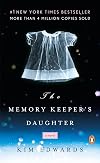
This was the story about one man's decision to 'get rid of' one of his twins because of she had Down's Syndrome and the life-long ramifications of this decision for him and his family. It was set in the middle 1960's which is important to keep in mind when trying to understand the motivation behind this decision. I would assume that the medical and educational helps we have access to today wouldn't necessarily have been available then so in one sense this man's decision could be seen as show more perfectly logical.
Having said the above,I did feel that David, as good as his intentions may have seemed to him at the time, was being highly insensitive to take upon himself, without discussion with his wife, the decision to 'get rid of' Phoebe as if someone had made him God. The thing that really irked me about him was how he never included his wife in deciding what to do. Phoebe was not just his child but also Norah's and as such she had the right to be included in any, and all, decision making. As a result of David's lies (telling Norah that Phoebe was dead) was that he built a huge wedge between him and Norah which naturally affected their marital relationship (which he acknowledged many, many years later). Norah became distant from him, in part because he was caring around so much unnecessary guilt, but also because a part of her hadn't been able to really accept that Phoebe was dead, which of course she wasn't. Essentially one person's lies in this relationship slowly ate away at it leading to a very dysfunctional and unhealthy existence between the two.
I really admired Caroline for taking on the challenge of raising Phoebe like she did. I also admire her for seeing beyond the disability to the child underneath. This makes a massive difference to how someone responds to another human being. In the end, after David's death, Caroline was the one who had to break to Norah that her daughter was in fact very much alive and doing really well for herself. This was a credit to Caroline for believing that Phoebe had a right to some sort of existence and to be treated as much as possible as a normal human being. This she did with great aplomb and with a determination that allowed her to fight for both a better education for people like Phoebe and better medical care as well.
This book provides the reader with an excellent snapshot into the consequences of not only lying, but lying within an otherwise healthy relationship and how this affects the relationship. It also speaks to those who have children with a disability about the importance of fighting for that child's rights because they're human beings that deserve the best that can be provided. But I also believe there's another level that this book speaks to: the importance of not being rushed to grieve and get it over with. This latter level, in today's extremely busy society where everything needs to be done yesterday almost, there has never been a more important message to get out there. Grieving can not, and should not, be rushed. People grieve in different ways and at different times and this needs to not only be accepted, but also to be acknowledged. show less
Having said the above,
I really admired Caroline for taking on the challenge of raising Phoebe like she did. I also admire her for seeing beyond the disability to the child underneath. This makes a massive difference to how someone responds to another human being. In the end, after David's death, Caroline was the one who had to break to Norah that her daughter was in fact very much alive and doing really well for herself. This was a credit to Caroline for believing that Phoebe had a right to some sort of existence and to be treated as much as possible as a normal human being. This she did with great aplomb and with a determination that allowed her to fight for both a better education for people like Phoebe and better medical care as well.
This book provides the reader with an excellent snapshot into the consequences of not only lying, but lying within an otherwise healthy relationship and how this affects the relationship. It also speaks to those who have children with a disability about the importance of fighting for that child's rights because they're human beings that deserve the best that can be provided. But I also believe there's another level that this book speaks to: the importance of not being rushed to grieve and get it over with. This latter level, in today's extremely busy society where everything needs to be done yesterday almost, there has never been a more important message to get out there. Grieving can not, and should not, be rushed. People grieve in different ways and at different times and this needs to not only be accepted, but also to be acknowledged. show less
It's 1964, and amid a blizzard, and despite that fact that he's an orthopedist, Dr. David Henry has just delivered his wife's first child -- a healthy, beautiful, perfect baby boy -- Paul. Much to his surprise, a second baby is born as well. This time, a baby girl with Down Syndrome. In a spur of the moment decision, with his wife unaware, Dr. Henry asks Caroline Gill, the nurse assisting with the delivery, to take the girl away to an institution. As Caroline makes the long drive to the show more institution, she can't help but feel how wrong the whole situation is. And when she gets there, she can't go through with it. Caroline and Phoebe leave, setting up a new life of their own in a new town, far away from anyone who might recognize them.
Meanwhile, Norah Henry spends the next 25 years believing that her daughter died at birth. Over the years, the pain hasn't lessened. In fact, as she watches Paul grow up, she can't help but imagine what Phoebe might have been like if she'd lived. Would she have his same love of music? Would she be as headstrong as he is? Would she be athetically inclined, like him? Or maybe she'd be completely different. Norah and Dr. Henry grow apart as his secret wedges its way between them. When Dr. Henry gave Phoebe to Caroline, he thought he would be saving his wife a lifetime of heartache. He never imagined that he would ruin their marriage.
The Memory Keeper's Daughter is one of those books that sticks with you. While I was reading it, and still now, days later, I'm wondering what I would do if I were any of the characters.
How would I react if my husband told me my child had died at birth, and that he didn't want a memorial service or any kind of formal burial? Would I be suspicious? Or would I just accept it? Could I live with a man who didn't want me to discuss the heartache of the loss of a child?
What if I were in Caroline's shoes? Would I be able to deliver a baby to an institution as ordered? Would I have the strength to raise a baby -- with special needs, no less -- all by myself, in secret, away from all my family and friends? Would I tell the mother, or would I keep it quiet as the father requested?
It's easy to say that you'd do the right thing. You'd tell the mother. You'd question your husband. But what reason would you have to believe that your husband lied to you, that your baby wasn't really dead? And as the nurse, wouldn't you be concerned that the mother might call the police, that you might be charged with kidnapping, that the father might retaliate against you?
It's hard to say that I enjoyed this book, because I'm not really sure if I did. How much can you enjoy a book that punches you in the gut and rips your heart out? But the story is good, and I kept coming back for more. A little each day, because I couldn't handle much more than that. This book is definitely not for everyone, and at other times in my life, I probably would have liked it less. Thankfully, I read this one at the right time. show less
Meanwhile, Norah Henry spends the next 25 years believing that her daughter died at birth. Over the years, the pain hasn't lessened. In fact, as she watches Paul grow up, she can't help but imagine what Phoebe might have been like if she'd lived. Would she have his same love of music? Would she be as headstrong as he is? Would she be athetically inclined, like him? Or maybe she'd be completely different. Norah and Dr. Henry grow apart as his secret wedges its way between them. When Dr. Henry gave Phoebe to Caroline, he thought he would be saving his wife a lifetime of heartache. He never imagined that he would ruin their marriage.
The Memory Keeper's Daughter is one of those books that sticks with you. While I was reading it, and still now, days later, I'm wondering what I would do if I were any of the characters.
How would I react if my husband told me my child had died at birth, and that he didn't want a memorial service or any kind of formal burial? Would I be suspicious? Or would I just accept it? Could I live with a man who didn't want me to discuss the heartache of the loss of a child?
What if I were in Caroline's shoes? Would I be able to deliver a baby to an institution as ordered? Would I have the strength to raise a baby -- with special needs, no less -- all by myself, in secret, away from all my family and friends? Would I tell the mother, or would I keep it quiet as the father requested?
It's easy to say that you'd do the right thing. You'd tell the mother. You'd question your husband. But what reason would you have to believe that your husband lied to you, that your baby wasn't really dead? And as the nurse, wouldn't you be concerned that the mother might call the police, that you might be charged with kidnapping, that the father might retaliate against you?
It's hard to say that I enjoyed this book, because I'm not really sure if I did. How much can you enjoy a book that punches you in the gut and rips your heart out? But the story is good, and I kept coming back for more. A little each day, because I couldn't handle much more than that. This book is definitely not for everyone, and at other times in my life, I probably would have liked it less. Thankfully, I read this one at the right time. show less
I admire Edwards’ writing of this substantial novel but sadly wondered how one unconscionable decision could traumatize all three members of a family for most of their lives. In effect I am questioning the plausibility of the story’s plot.
I found David, Caroline, Norah and Phoebe well-developed characters with good dialogue but felt that Edwards struggled with Paul’s characterization. At times Paul seems forced, unrealistic. I have many questions about Paul: does Paul really believe show more his father doesn’t love him? Simply because David doesn’t fully understand or support Paul’s musical aspirations? Or for using his medical practice as an excuse for not being home enough? And why wouldn’t Paul become closer to and more protective of his father after learning about his mother’s inappropriate behavior? Why is Paul angry at both his mother and father?
The deterioration of this family is painful to watch. Hard to grasp doctor David’s impatience with Norah’s continuous grieving. It’s possible that since he’s not grieving the ‘loss’ but expending his emotional energy on guilt for having ‘created’ an impossible situation. This leaves him with no reserves of sympathy or sensitivity to spare for Norah!
While David and his family are declining, Caroline’s and Phoebe’s lives are adjusting and developing. Caroline lands a solid job and a home with an employer who becomes a good friend and advocate. And finds herself and an inner strength by joining a group of parents of children with Down syndrome on a mission to improve and normalize their children’s lives. And raising, caring for Phoebe is challenging but she excels at both the practical and emotional aspects. Caroline continues to find fulfillment and love in her personal life as well. But… she always feels a sense of culpability in what she’s done.
Throughout my reading I always wondered how it would all end, and believed that at some point Norah or Paul would learn the truth.
Very good read. show less
I found David, Caroline, Norah and Phoebe well-developed characters with good dialogue but felt that Edwards struggled with Paul’s characterization. At times Paul seems forced, unrealistic. I have many questions about Paul: does Paul really believe show more his father doesn’t love him? Simply because David doesn’t fully understand or support Paul’s musical aspirations? Or for using his medical practice as an excuse for not being home enough? And why wouldn’t Paul become closer to and more protective of his father after learning about his mother’s inappropriate behavior? Why is Paul angry at both his mother and father?
The deterioration of this family is painful to watch. Hard to grasp doctor David’s impatience with Norah’s continuous grieving. It’s possible that since he’s not grieving the ‘loss’ but expending his emotional energy on guilt for having ‘created’ an impossible situation. This leaves him with no reserves of sympathy or sensitivity to spare for Norah!
While David and his family are declining, Caroline’s and Phoebe’s lives are adjusting and developing. Caroline lands a solid job and a home with an employer who becomes a good friend and advocate. And finds herself and an inner strength by joining a group of parents of children with Down syndrome on a mission to improve and normalize their children’s lives. And raising, caring for Phoebe is challenging but she excels at both the practical and emotional aspects. Caroline continues to find fulfillment and love in her personal life as well. But… she always feels a sense of culpability in what she’s done.
Throughout my reading I always wondered how it would all end, and believed that at some point Norah or Paul would learn the truth.
Very good read. show less
Lists
Books I've Read (2)
Female Author (1)
To Read (1)
AP Lit (1)
Carole's List (1)
Unread books (1)
Books with Twins (1)
First Novels (1)
To Read (1)
Awards


You May Also Like


Associated Authors
Statistics
- Works
- 11
- Also by
- 5
- Members
- 20,490
- Popularity
- #1,058
- Rating
- 3.5
- Reviews
- 569
- ISBNs
- 149
- Languages
- 16
- Favorited
- 13
