
Lisa Genova
Author of Still Alice
About the Author
Lisa Genova (born November 11, 1970) has a degree in Biopsychology, from Bates College, and a Ph.D. in Neuroscience from Harvard University. Genova is the author of the New York Times Bestselling novel STILL ALICE, which is now a major feature film with Julianne Moore. She is also the author of the show more novel LEFT NEGLECTED and LOVE ANTHONY. She also made the New York Times Best Seller List with her title's: Inside the O'Briens and Every Note Played. She will be at the Adelaide Writers' Week for the 2016 festival. (Bowker Author Biography) show less
Works by Lisa Genova
Associated Works
Tagged
Common Knowledge
- Birthdate
- 1970-11-22
- Gender
- female
- Education
- Harvard University (PhD in neuroscience)
- Occupations
- online columnist (National Alzheimer's Association)
neuroscientist - Organizations
- National Alzheimer's Association
- Nationality
- USA
- Birthplace
- USA
- Places of residence
- Massachusetts, USA
- Associated Place (for map)
- Massachusetts, USA
Members
Reviews
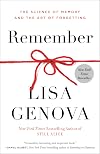
Do not consider this just a book for seniors worried about losing their memory. It is not. Neuroscientist, Lisa Genova presents a very accessible overview of how our memory works. She addresses how memories are formed, why we forget, and how we can improve. I found it informative, validating and enlightening. Yes, she does address Alzheimer’s and offers lifestyle changes to ward off the monster, but that is exactly why this book should be in the hands of early middle agers as well as show more seniors. She writes with clarity, humor, and compassion offering shared experiences from her own life. I’d recommend this book for almost anyone curious about how the brain forms a memory, what to expect as the brain ages and also for those dealing with a loved one’s memory loss. show less
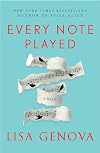
Wow! What a compelling yet heart-breaking read - like moths drawn to a flame.
Cue up Schumann's Fantasie in C Major, Op. 17. Not a piece easily navigated on the ivories - requiring superlative technique, heart and confidence. Genova was brilliant in the choosing of her protagonist, Richard, an arrogant, self-absorbed, cocky and an incredibly talented concert pianist. He's played all the famous halls and with all the great orchestras around the world. That is until his right hand becomes too show more weak to navigate the repertoire. Perhaps it's merely a touch of tendonitis. Sadly, it's far worse. It's ALS, what we often hear called, "Lou Gehrig's Disease". Had he been purely an academic, he could have continued for some time sharing with the world what existed in his mind. But no, he had lived and breathed through his hands as they caressed the keys of his grand piano coaxing her exquisite voice from her sonorous strings and sharing in musical ecstasy. Now his hands and arms are paralyzed and he is divorced from his ebony mistress. She sits idle by the window of his Comm. Ave condo never to be stroked by his deft hands again.
Time marches on and Richard becomes increasingly diminished by this insidious disease. At a particularly low and debilitating moment he mistakenly calls his ex-wife (an equally gifted pianist), Karina. She's close by and heads on over to help him. She is affronted by how far his illness had progressed in such a short time. There's no question, he cannot continue living as he has with just a few home health care aides. Karina suggests that he move back home with her. Perhaps it was through some element of guilt or even compassion for the father of her college-aged child. Richard and Karina have much history from shared joy to deep regret. Will they be able to forgive and reconcile with one another before it's too late. Theirs is a tremendous story of love, resentment, loss, agony, redemption and forgiveness.
Through a very well written fictional story, author Lisa Genova educates the reader on the various stages of and technical hardware needed for getting through life with an ALS diagnosis. It is a horrific disease about which few know much. That is unless they work with ALS patients, have ALS or care for someone with ALS. There is no cure as of yet. To exist with it is to have a mind imprisoned in an atrophying body. Kudos to Genova for bringing this disease to light and encouraging people to pick up the gauntlet and support those struggling with the disease and find a cure to make it a distant memory for future generations. show less
Cue up Schumann's Fantasie in C Major, Op. 17. Not a piece easily navigated on the ivories - requiring superlative technique, heart and confidence. Genova was brilliant in the choosing of her protagonist, Richard, an arrogant, self-absorbed, cocky and an incredibly talented concert pianist. He's played all the famous halls and with all the great orchestras around the world. That is until his right hand becomes too show more weak to navigate the repertoire. Perhaps it's merely a touch of tendonitis. Sadly, it's far worse. It's ALS, what we often hear called, "Lou Gehrig's Disease". Had he been purely an academic, he could have continued for some time sharing with the world what existed in his mind. But no, he had lived and breathed through his hands as they caressed the keys of his grand piano coaxing her exquisite voice from her sonorous strings and sharing in musical ecstasy. Now his hands and arms are paralyzed and he is divorced from his ebony mistress. She sits idle by the window of his Comm. Ave condo never to be stroked by his deft hands again.
Time marches on and Richard becomes increasingly diminished by this insidious disease. At a particularly low and debilitating moment he mistakenly calls his ex-wife (an equally gifted pianist), Karina. She's close by and heads on over to help him. She is affronted by how far his illness had progressed in such a short time. There's no question, he cannot continue living as he has with just a few home health care aides. Karina suggests that he move back home with her. Perhaps it was through some element of guilt or even compassion for the father of her college-aged child. Richard and Karina have much history from shared joy to deep regret. Will they be able to forgive and reconcile with one another before it's too late. Theirs is a tremendous story of love, resentment, loss, agony, redemption and forgiveness.
Through a very well written fictional story, author Lisa Genova educates the reader on the various stages of and technical hardware needed for getting through life with an ALS diagnosis. It is a horrific disease about which few know much. That is unless they work with ALS patients, have ALS or care for someone with ALS. There is no cure as of yet. To exist with it is to have a mind imprisoned in an atrophying body. Kudos to Genova for bringing this disease to light and encouraging people to pick up the gauntlet and support those struggling with the disease and find a cure to make it a distant memory for future generations. show less

I found this story profoundly sad, disturbing and thought-provoking when I read it soon after it was first published. When I was faced with reading it for a second time (as a reading group choice) I wondered whether it would have less of an emotional impact. However, I felt as inexorably drawn into the author’s descriptions of how the diagnosis of early-onset Alzheimer’s disease affected not only Alice, but also her husband, John, and their three adult children. The effects on their show more lives were profound and disturbing for each of them. I thought that she charted, in a very sensitive and moving way, the gradual disintegration of Alice’s ability to do anything for herself, as well as her continuing demand to be seen for who she had been, not just who she was becoming. She realistically and evocatively captured the ways in which each member of the family developed different, and changing, coping strategies as they struggled to deal both with new realities, and an uncertain future. Everyone hoped for a miracle cure but, as there wasn’t one, they could only watch as the disease unrelentingly destroyed every aspect of Alice’s life, from her memories, to her ability to do anything for herself. There were moments when her descriptions of Alice’s continuing awareness of what was happening to her were so evocative that they felt almost too painful to read: I could almost viscerally feel her frustrations and her fear.
There were times when I felt angry with John’s apparent detachment, his constant search for alternative diagnoses or treatments and, finally, with a decision he makes when Alice’s hold on reality has deteriorated considerably. However, the author did such a good job of portraying his point of view, and his need to look forward, that I ended up feeling some empathy with him!
Any form of dementia is something no individual or family wants to think about, but when it strikes someone in their fifties the shock must be greater, particularly as this form of the disease has such a strong genetic component, with a fifty percent chance that any children may go on to develop it. I thought that the author dealt well, and very credibly, with the dilemma of whether or not people would choose to take advantage of genetic testing. It seems to me that, whatever the decision, it must be very difficult to either live the rest of your life knowing that you have inherited that gene, or to go through life wondering. Not all forgetful moments are a precursor to dementia, but if there is that history in your family, I can only begin to imagine how stressful such moments must be.
This is not an easy story to read but I think that Lisa Genova’s well-informed, compassionate writing has created characters who are unforgettable (if that isn’t too ironic) and through them has conveyed a powerful message that we should continue to “see” the essence of who sufferers are, rather than, through ignorance and fear, ignore them. I’m sure we all ask the question “what if ….? and I think this book goes some way to addressing some of the answers. show less
There were times when I felt angry with John’s apparent detachment, his constant search for alternative diagnoses or treatments and, finally, with a decision he makes when Alice’s hold on reality has deteriorated considerably. However, the author did such a good job of portraying his point of view, and his need to look forward, that I ended up feeling some empathy with him!
Any form of dementia is something no individual or family wants to think about, but when it strikes someone in their fifties the shock must be greater, particularly as this form of the disease has such a strong genetic component, with a fifty percent chance that any children may go on to develop it. I thought that the author dealt well, and very credibly, with the dilemma of whether or not people would choose to take advantage of genetic testing. It seems to me that, whatever the decision, it must be very difficult to either live the rest of your life knowing that you have inherited that gene, or to go through life wondering. Not all forgetful moments are a precursor to dementia, but if there is that history in your family, I can only begin to imagine how stressful such moments must be.
This is not an easy story to read but I think that Lisa Genova’s well-informed, compassionate writing has created characters who are unforgettable (if that isn’t too ironic) and through them has conveyed a powerful message that we should continue to “see” the essence of who sufferers are, rather than, through ignorance and fear, ignore them. I’m sure we all ask the question “what if ….? and I think this book goes some way to addressing some of the answers. show less

Alice sempre foi uma mulher de certezas. Professora e pesquisadora bem-sucedida, não havia referência bibliográfica que não guardasse de cor. Alice sempre acreditou que poderia estar no controle, mas nada é para sempre. Perto dos cinqüenta anos, Alice Howland começa a esquecer. No início, coisas sem importância, até que ela se perde na volta para casa. Estresse, provavelmente, talvez a menopausa; nada que um médico não dê jeito. Mas não é o que acontece, ironicamente, a show more professora com a memória mais afiada de Harvard é diagnosticada com um caso precoce de mal de Alzheimer, uma doença degenerativa incurável. Poucas certezas aguardam Alice. Ela terá que se reinventar a cada dia, abrir mão do controle, aprender a se deixar cuidar e conviver com uma única certeza - a de que não será mais a mesma. Enquanto tenta aprender a lidar com as dificuldades, Alice começa a enxergar a si própria, o marido, os filhos e o mundo de forma diferente. Um sorriso, a voz, o toque, a calma que a presença de alguém transmite podem devolver uma lembrança mesmo que por instantes, e ainda que não saiba quem é. show less
Lists
Names in Titles (1)
First Novels (1)
Wishlist (1)
Awards


You May Also Like


Associated Authors
Statistics
- Works
- 12
- Also by
- 1
- Members
- 13,207
- Popularity
- #1,768
- Rating
- 4.1
- Reviews
- 899
- ISBNs
- 255
- Languages
- 20
- Favorited
- 16