
Diane Setterfield
Author of The Thirteenth Tale
About the Author
Image credit: Diane Setterfield at the Grosvenor House Hotel on March 28, 2007 in London, England
Works by Diane Setterfield
Tagged
Common Knowledge
- Canonical name
- Diane Setterfield
- Birthdate
- 1964-08-22
- Gender
- female
- Education
- Bristol University (BA|1986|Ph.D|1993|French Literature)
- Occupations
- teacher
author - Organizations
- Institut Universitaire de Technologie
Ecole nationale supérieure de Chimie - Agent
- Vivien Green (Sheil Land)
- Nationality
- UK
- Birthplace
- Reading, Berkshire, England, UK
- Places of residence
- Reading, Berkshire, England, UK
Harrogate, North Yorkshire, England, UK
Oxford, Oxfordshire, England, UK - Associated Place (for map)
- England, UK
Members
Discussions
The Thirteenth Tale: Middles (SPOILERS) in The 11 in 11 Category Challenge (February 2011)
The Thirteenth Tale: Endings (SPOILERS) in The 11 in 11 Category Challenge (February 2011)
The Thirteenth Tale: Beginnings (SPOILERS) in The 11 in 11 Category Challenge (February 2011)
The Thirteenth Tale: General Thread in The 11 in 11 Category Challenge (February 2011)
Reviews

This was such an extraordinary book that I've been trying for two weeks now to think of how to do it justice in a review. I've decided that I can't. All I can do is share my experience of reading it and hope that it encourages you to read it too.
I bought 'Once Upon A River' for the gorgeous cover and the clever title. The Magical Realism tag attached to it almost discouraged me, it's an oxymoron that seldom justifies either word. The fact that the audiobook is sixteen hours long also gave me show more pause. Still, my wife loved this book so I decided to jump right in.
This was my reaction after fifteen minutes:
'I'm in love. The language is a beautiful as the cover. The text flows like a river: smooth forward motion with hidden depths and currents. Best of all, the magic here is storytelling itself. I'm looking forward to the next sixteen hours.'
In the end, I spent nearly three weeks in the thrall of this book not because it was sixteen hours long but because the storytelling was mesmerising and the language was gorgeous. I sank into it a chapter at a time like taking a warm bath at the end of a long day.
So, if it was that good, what was it about?
That's where I start to stumble in writing a review. When I summarise the book, it sounds like a dry, academic, literary conceit. For example:
'Once Upon A River is an extended exploration of how we use storytelling to weave personal and collective truth out of memory, imagination, hopes, fears, and a need to find an answer. The river represents the flow of the narrative, with our individual stories as tributaries feeding into the main narrative, merging with and changing the stories of others and together creating a powerful current that sweep us along and occasionally breaks the banks of our expectations.'
Are you bored yet? I know I would be.
The problem is that that describes the book as it might have been if it had been written as an academic exercise by a critic or a literary theorist. The actual book is more like being part of a masterclass given by a dancer whose talent and expertise and passion transform the dance from formal steps to music to something that reaches past your conscious mind, summoning your emotions and igniting your imagination. The critic's version would explain the anatomy of storytelling. Diane Setterfield's version adds a spark of life that animates the fully understood collection of flesh blood and bones.
She demonstrates such a playful mastery that soon you forget that you're exploring the nature of storytelling, in the same way that you forget that the movie on the screen is not real, and give yourself up to the story itself.
'Once Upon A River' is rich with storytellers, reaching far beyond the authorial voice, and each storyteller has their own tone, like a leitmotiv in an opera, so you always know who you're listening to.
All the main characters see and think about the world in very different ways and all of them make sense, whether it is the nurses need to analyse and measure so that she can know the answer, or the photographers visual memory and imagination that turns ideas and emotions into images, or the illiterate housekeeper's thoughts tormented by fear and guilt, or the gentleman farmer so wedded to benign rationality that when he encounters the extraordinary he renders it palatable by believing his mind is deceiving him.
Then the are the drinkers at The Swan, who form a kind of collective character, perhaps representing us all, who Setterfield, without reducing their humanity of individuality, turns into a thinking, talking, entity, that uses storytelling to reach a consensus on how events should be understood. Except that the story never stops, the narrative flows on, sometimes escaping from the channel the consensus bound it by and the whole thing needs to be reconsidered.
This is a book filled as much with emotions as ideas. There is beauty, not just in the descriptions of the river but in the hearts, imagination and actions of the people. There is also pain and grief and guilt and fear and pure, unashamed malice.
There is an understanding of the kinship between story, imagination and memory which feels not so much like a revelation by the author but a reminder of something we all know but don't pay enough attention to.
There is respect for curiosity and the desire to know the causes of things that sits alongside the possibility of the inexplicable and acknowledges the porous membranes that enclose our definition of the impossible.
Most of all there is the language that, like the best music uses its rhythms and cadences to reach past our analytical minds and touch a knowledge that we can feel but may not be able to express except in smiles and tears and the changing beat of our hearts.
For me, one of the most powerful scenes in the book was a Magic Lantern show, held in The Swan, that used photographs to bring together the visual and the verbal and create a new shared belief in what the 'real' story was.
Yet all this, as wonderful as it is, is still not the heart of the book. That lies not in the way in which the story is told but in the story itself and the people who live in it, construct it, change it and are changed by it.
This is a mystery story that starts in The Swan on Winter Solstice night when a man, half-drowned and bleeding from his wounds, staggers in from the river carrying a dead little girl in his arms. A dead little girl who later wakes. A little girl who, although pale and mute and a stranger, triggers in others a strong need to protect and cherish her. A little girl that is claimed by more than one father.
The mystery of the little girl is the current that captures the main characters and changes the course of their lives. It's a mystery with as many twists and turns as the river itself. As we follow it past kidnappings and suicides and killings and malicious abuse, we uncover secrets wrapped in shame and guilt and, with each reveal, the tension grows, our need to know becomes an obsession and our desire for everything to be all right in the end becomes acute.
Flowing through the mystery are love stories and tales of torment, happy stable lives, and enduring hatreds. There is also the legend of Quietly the boatman who it's said, silently patrols the river, rescuing those in distress whose time has not yet come and taking the rest on to the other side.
Yet it is the people who make the story. There is a large cast of characters, some to cheer for, some to hate, some to pity and some who you nod at and say, 'i've met them.' My favourites were the nurse and the photographer. But then there's the little boy who can't hold a story in his head long enough to tell it. And the poor housekeeper who was so brave and yet so timid. And... Yes, there's a whole colony of them living in my imagination now.
I seldom re-read books but I already know that 'Once Upon A River' is a book I'll come back to and I know it will give me something fresh each time.
I recommend the audiobook version, narrated by Juliet Stevenson. She was the perfect choice for this book. She has a huge range and she seems to understand every nuance of the book. Click on the SoundCloud link below to hear a sample.
https://soundcloud.com/simonschuster/once-upon-a-river-audiobook-excerpt?utm_sou... show less
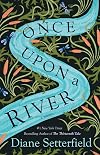
A long, slow revelation of the various secrets being kept by the inhabitants of one stretch of the Thames in the 19th century and an exploration of how all those secrets and their keepers' lives intersect and branch out from the events of one evening on the river. This novel is masterfully and beautifully told (and there are a few just brilliant, hilarious bits too) and is almost as much about storytelling as it is about telling *this* story. Not quite an all-time favorite for me because the show more nature of it holds the reader just a touch too far away from the characters for my taste, but boy does it sure reward sticking with it. show less
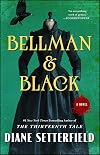
The novel traces the events in the life of William Bellman, a promising youth – handsome, talented, ambitious, beloved – whose destiny is subsequently shaped by tragedy, hubris, and (possibly) supernatural intervention.
The book is billed as a gothic tale due to the whole “supernatural intervention” thing, with extra atmosphere contributed by Setterfield’s invocation of rooks (crows) as a metaphor for thought and memory. In this, the author appears to be riffing on Norse mythology: show more the god Odin is customarily described as being accompanied by his two raven companions, Huggin (thought) and Munnin (mind), who continually observe the earth and report what they learn to their master. Setterfield’s rooks, stand-ins for Odin’s ravens, are primarily observers and storytellers ... but perhaps not above demonstrating a more intimate interest where their own are concerned.
Will’s original sin? A youthful indiscretion in which he kills a rook with a bolt from his catapult. Thereafter, the rooks (sometimes in bird form, sometimes in human form as the mysterious “Mr. Black”) reappear at various decision points in Will’s life, not so much shaping Will’s decisions as being there to bear witness to his increasingly tragic choices, for as Will’s hubris drives him towards increasing success in the business world (first optimizing his family business, a cloth mill, before moving on to establish Bellman & Black, the wildly profitable emporium of all things mourning – because is there anything more hubris-y than transforming your own personal tragedy into a profit-making opportunity?), he increasingly turns his back on thought (recognizing the importance of human connections) and memory (remembering how to love). Which will ultimately prevail – Will’s hubris or his humanity?
I read this in one sitting, a tribute to Setterfield’s storytelling prowess. Reflecting back, I can appreciate how much craft has gone into maintaining forward momentum given large parts of the story are about relatively dry business dealings and affairs, with relevant but somewhat uneventful rook-related passages interspersed. But Setterfield’s lean, imaginative prose is a pleasure to read and while this book may not be “gothic” in the horror sense, she does an adept job of infusing her tale with plenty of ambiguity and uncertainty, which are the staples of all good gothic literature. Overall, I enjoyed the tale, and would willingly read other novels by this author. show less
The book is billed as a gothic tale due to the whole “supernatural intervention” thing, with extra atmosphere contributed by Setterfield’s invocation of rooks (crows) as a metaphor for thought and memory. In this, the author appears to be riffing on Norse mythology: show more the god Odin is customarily described as being accompanied by his two raven companions, Huggin (thought) and Munnin (mind), who continually observe the earth and report what they learn to their master. Setterfield’s rooks, stand-ins for Odin’s ravens, are primarily observers and storytellers ... but perhaps not above demonstrating a more intimate interest where their own are concerned.
Will’s original sin? A youthful indiscretion in which he kills a rook with a bolt from his catapult. Thereafter, the rooks (sometimes in bird form, sometimes in human form as the mysterious “Mr. Black”) reappear at various decision points in Will’s life, not so much shaping Will’s decisions as being there to bear witness to his increasingly tragic choices, for as Will’s hubris drives him towards increasing success in the business world (first optimizing his family business, a cloth mill, before moving on to establish Bellman & Black, the wildly profitable emporium of all things mourning – because is there anything more hubris-y than transforming your own personal tragedy into a profit-making opportunity?), he increasingly turns his back on thought (recognizing the importance of human connections) and memory (remembering how to love). Which will ultimately prevail – Will’s hubris or his humanity?
I read this in one sitting, a tribute to Setterfield’s storytelling prowess. Reflecting back, I can appreciate how much craft has gone into maintaining forward momentum given large parts of the story are about relatively dry business dealings and affairs, with relevant but somewhat uneventful rook-related passages interspersed. But Setterfield’s lean, imaginative prose is a pleasure to read and while this book may not be “gothic” in the horror sense, she does an adept job of infusing her tale with plenty of ambiguity and uncertainty, which are the staples of all good gothic literature. Overall, I enjoyed the tale, and would willingly read other novels by this author. show less

If you know your literary history, you will be familiar with a Victorian trend known as the "sensation" novel, which was at its greatest popularity in the 1860s and 1870s. The Thirteenth Tale references many of these works - Jane Eyre, Great Expectations, Wilkie Collins's The Woman in White, and Mary Elizabeth Braddon's Lady's Audley's Secret, which are all important touchstones for Setterfield's novel.
There is a strange prejudice that the narrator, Margaret Lea, expresses repeatedly in the show more course of The Thirteenth Tale, which is that, in her opinion, the conventions of the aforementioned "sensation" novel represent the archetype of the "traditional" novel, with its realistic characters and sensibly linear storytelling. None of that postmodern playing with uncertainty and non-linear plots for her! Indeed, that is supposedly part of why she is reluctant to write about her new biographical assignment, best-selling author Vida Winter.
But here's the thing about the "sensation" novel: it wasn't at all the "traditional" form of the novel, and that is why it only lasted for two decades during the Victorian period! While it did produce a handful of masterpieces, it became the inevitable victim of its own aesthetic principle of trying to shock its readers. The "sensation" novel quickly descended into a series of cliches: hidden family ties, shocking secrets, revelations of madness, incest, murder, and so on.
So you see, while Jane Eyre and Great Expectations and The Woman in White are indeed masterpieces of their time, they are also unrepeatable because they emerge from a particular culture, one that quickly went out of fashion because it was rightly seen (and continues to be seen) as mostly hackneyed and unoriginal.
The latter problem is one that returns in The Thirteenth Tale, which I felt was equally hackneyed and unoriginal. I realize, of course, that Setterfield was trying to pay homage to the "sensation" novel, but a better way to do this would have been to borrow *critically* from that genre, rather than simply repeating its cliches. This aspect of the novel was a particular problem at the book's conclusion, when the reader is bombarded with "revelations" that can be spotted a mile away, such as the true identity of Vida Winter, or Aurelius's Love's connection to the main story.
If Margaret Lea was so interested in the tradition of the British novel, maybe she should have read, say, Jane Austen's Northanger Abbey, a work that parodies the Gothic tradition of the late eighteenth century, the direct predecessor of the "sensation" novel. Austen provides the perfect template for paying homage to literary cliches while at the same time reworking them in an original way.
What I found rather more disturbing about the The Thirteenth Tale, though, is its pointed repression of the twentieth century. For me, this wasn't just an aesthetic decision, an overweening admiration of the Victorian novel on Setterfield's part. As far as I'm concerned, this kind of return to the past is a dangerous nostalgia, one that erases the terrible events and lessons of the twentieth century by pretending they are not there.
The reason why most neo-Victorian novels goes back to the past is precisely in order to rediscover what was repressed in Victorian literature. In A.S. Byatt's Angels and Insects, for instance, she reveals the hypocritical, incestuous ties between colonization and aristocracy. In Sarah Waters's Tipping the Velvet we are given a portrait of lesbian sexuality that is otherwise invisible. In Michel Faber's The Crimson Petal and the White we see a different repression of female sexuality in the form of prostitution.
The Thirteenth Tale, by contrast, is not critical or self-aware in the same way as these works. It is an exercise in uncritical nostalgia, a compulsion to repeat the worn-out pleasures of the "sensation" novel. In so doing, it represses the horror of what follows, choosing to focus on the entertainment of the past so as to avoid the more difficult questions of more recent times. show less
There is a strange prejudice that the narrator, Margaret Lea, expresses repeatedly in the show more course of The Thirteenth Tale, which is that, in her opinion, the conventions of the aforementioned "sensation" novel represent the archetype of the "traditional" novel, with its realistic characters and sensibly linear storytelling. None of that postmodern playing with uncertainty and non-linear plots for her! Indeed, that is supposedly part of why she is reluctant to write about her new biographical assignment, best-selling author Vida Winter.
But here's the thing about the "sensation" novel: it wasn't at all the "traditional" form of the novel, and that is why it only lasted for two decades during the Victorian period! While it did produce a handful of masterpieces, it became the inevitable victim of its own aesthetic principle of trying to shock its readers. The "sensation" novel quickly descended into a series of cliches: hidden family ties, shocking secrets, revelations of madness, incest, murder, and so on.
So you see, while Jane Eyre and Great Expectations and The Woman in White are indeed masterpieces of their time, they are also unrepeatable because they emerge from a particular culture, one that quickly went out of fashion because it was rightly seen (and continues to be seen) as mostly hackneyed and unoriginal.
The latter problem is one that returns in The Thirteenth Tale, which I felt was equally hackneyed and unoriginal. I realize, of course, that Setterfield was trying to pay homage to the "sensation" novel, but a better way to do this would have been to borrow *critically* from that genre, rather than simply repeating its cliches. This aspect of the novel was a particular problem at the book's conclusion, when the reader is bombarded with "revelations" that can be spotted a mile away, such as the true identity of Vida Winter, or Aurelius's Love's connection to the main story.
If Margaret Lea was so interested in the tradition of the British novel, maybe she should have read, say, Jane Austen's Northanger Abbey, a work that parodies the Gothic tradition of the late eighteenth century, the direct predecessor of the "sensation" novel. Austen provides the perfect template for paying homage to literary cliches while at the same time reworking them in an original way.
What I found rather more disturbing about the The Thirteenth Tale, though, is its pointed repression of the twentieth century. For me, this wasn't just an aesthetic decision, an overweening admiration of the Victorian novel on Setterfield's part. As far as I'm concerned, this kind of return to the past is a dangerous nostalgia, one that erases the terrible events and lessons of the twentieth century by pretending they are not there.
The reason why most neo-Victorian novels goes back to the past is precisely in order to rediscover what was repressed in Victorian literature. In A.S. Byatt's Angels and Insects, for instance, she reveals the hypocritical, incestuous ties between colonization and aristocracy. In Sarah Waters's Tipping the Velvet we are given a portrait of lesbian sexuality that is otherwise invisible. In Michel Faber's The Crimson Petal and the White we see a different repression of female sexuality in the form of prostitution.
The Thirteenth Tale, by contrast, is not critical or self-aware in the same way as these works. It is an exercise in uncritical nostalgia, a compulsion to repeat the worn-out pleasures of the "sensation" novel. In so doing, it represses the horror of what follows, choosing to focus on the entertainment of the past so as to avoid the more difficult questions of more recent times. show less
Lists
READ in 2024 (1)
Put a Bird On It (1)
Women's Stories (1)
to get (1)
First Novels (1)
Netgalley Reads (1)
Page Turners (1)
2000s decade (1)
Favourite Books (1)
Safe as Houses (1)
Best Audiobooks (2)
Books with Twins (1)
Facebook list (1)
Five star books (1)
Secrets Books (1)
Unread books (1)
Female Author (1)
READ in 2023 (1)
Magic Realism (1)
Summer Reading (1)
Awards


You May Also Like


Associated Authors
Statistics
- Works
- 6
- Members
- 23,208
- Popularity
- #909
- Rating
- 3.9
- Reviews
- 1,288
- ISBNs
- 194
- Languages
- 22
- Favorited
- 61

