
John Harwood (1) (1946–)
Author of The Ghost Writer
For other authors named John Harwood, see the disambiguation page.
About the Author
Image credit: Mostly Fiction
Works by John Harwood
Face To Face 1 copy
Associated Works
Ghosts by Gaslight: Stories of Steampunk and Supernatural Suspense (2011) — Contributor — 220 copies, 8 reviews
Tagged
Common Knowledge
- Birthdate
- 1946
- Gender
- male
- Relationships
- Harwood, Gwen (mother)
- Nationality
- Australia
- Associated Place (for map)
- Australia
Members
Reviews

Constance Langton always felt like an outsider in her own family, even moreso when her younger sister Alma dies. Her Mother shuts down, lamenting on and on about Alma so Constance takes her to see a séance. When things go too well and her Mother sinks deeper into her depression, shutting herself off completely from her family, Father decides to leave home because he doesn't want to deal with his wife. Left to fend for herself, an Uncle takes her in as a housekeeper.
While in his employ, she show more receives a strange letter that she has inherited an old estate known as Wraxford Hall. But she's warned by the Hall's attorney, John Montague, to sell the place...as soon as she can. He gives her a handful of letters from the last known owner of the Hall, but won't say much more about the place. Even her Uncle can only offer little information. Through those letters, however, she learns of the dark history of the Hall, of the mystery surrounding the disappearances of two of its previous owners and of a young woman and her child. Intrigued, Constance sets out to discover just what happened at the Hall and what exactly her ties are to the mysterious Wraxford family.
If you're a fan of gothic mystery/thrillers, John Harwood's "The Séance" is the perfect tale for you. It contains all the elements: a dark, crumbling manse with a mysterious past, a surrounding forest haunted by an ethereal monk who is rumored to cause death to anyone who sees him, people disappearing, a mesmerist, séances and mediums -- all set in Victorian England. The intertwining tales of Constance and of the happenings at Wraxford Hall kept me enthralled as I read on and on, and the way Harwood presented the tale allowed me as a reader to play along as detective, piecing the story together along with Constance rather than remain outside the story. I also enjoyed the characters, especially that of Dr. Magnus Wraxford, the mesmerist. He contains a very quiet evil which at first happily draws you in, but as time goes on, you can tell something isn't quite right by a facial expression or the measuring of his words. Very creepy, and just what a gothic story needs.
An excellent read from beginning to end. show less
While in his employ, she show more receives a strange letter that she has inherited an old estate known as Wraxford Hall. But she's warned by the Hall's attorney, John Montague, to sell the place...as soon as she can. He gives her a handful of letters from the last known owner of the Hall, but won't say much more about the place. Even her Uncle can only offer little information. Through those letters, however, she learns of the dark history of the Hall, of the mystery surrounding the disappearances of two of its previous owners and of a young woman and her child. Intrigued, Constance sets out to discover just what happened at the Hall and what exactly her ties are to the mysterious Wraxford family.
If you're a fan of gothic mystery/thrillers, John Harwood's "The Séance" is the perfect tale for you. It contains all the elements: a dark, crumbling manse with a mysterious past, a surrounding forest haunted by an ethereal monk who is rumored to cause death to anyone who sees him, people disappearing, a mesmerist, séances and mediums -- all set in Victorian England. The intertwining tales of Constance and of the happenings at Wraxford Hall kept me enthralled as I read on and on, and the way Harwood presented the tale allowed me as a reader to play along as detective, piecing the story together along with Constance rather than remain outside the story. I also enjoyed the characters, especially that of Dr. Magnus Wraxford, the mesmerist. He contains a very quiet evil which at first happily draws you in, but as time goes on, you can tell something isn't quite right by a facial expression or the measuring of his words. Very creepy, and just what a gothic story needs.
An excellent read from beginning to end. show less

“Absurd, absurd, said the voice of reason: it is clairvoyance, I said to myself, only—what did Dr. Wraxford say?—a lesion of the brain, and will heal itself in time. But the phrase went spinning from one fearful thought to the next—a lesion of the brain, a lesion of the brain—until it became the sound of train wheels clattering through a dream in which I was compelled to return again and again to London.”
—The Séance by John Harwood
Even a well-written, meticulously constructed show more novel can suffer from too much atmosphere. This work has been compared to the foggy mysteries penned by Wilkie Collins and M.R. James, and it does wear the patina of those authors. Yet, somehow, when you scratch beneath the tarnish you are met only with bronze, the most basic of alloys—no jaw-dropping, eye-popping wonderment. I did enjoy the multiple narratives delivered in epistolary form (polylogic epistolary novel form, for the prudes in the room). I’m a big fan of experimenting with narrative—reliable or otherwise. However, once the mist clears after much discussion and constant reevaluation to figure out just where the hell you are, it’s exactly as you thought it was and you’re left scratching the head at the digressions that proffered so little payout. I wouldn’t mind reading this author’s first novel, “The Ghost Writer”—just as acclaimed and compared to some of my favorite writers. But I’m not rushing toward it. There’s simply too much damn fog.
Here's another good bit, though:
“I could not disagree, for Edward’s theology went no further than ‘If, when I die, I discover there is an afterlife, I shall be pleasantly surprised—at least, I trust the surprise will be a pleasant one—if not, it will be mere oblivion. Carpe diem for me, I’m afraid’” show less
—The Séance by John Harwood
Even a well-written, meticulously constructed show more novel can suffer from too much atmosphere. This work has been compared to the foggy mysteries penned by Wilkie Collins and M.R. James, and it does wear the patina of those authors. Yet, somehow, when you scratch beneath the tarnish you are met only with bronze, the most basic of alloys—no jaw-dropping, eye-popping wonderment. I did enjoy the multiple narratives delivered in epistolary form (polylogic epistolary novel form, for the prudes in the room). I’m a big fan of experimenting with narrative—reliable or otherwise. However, once the mist clears after much discussion and constant reevaluation to figure out just where the hell you are, it’s exactly as you thought it was and you’re left scratching the head at the digressions that proffered so little payout. I wouldn’t mind reading this author’s first novel, “The Ghost Writer”—just as acclaimed and compared to some of my favorite writers. But I’m not rushing toward it. There’s simply too much damn fog.
Here's another good bit, though:
“I could not disagree, for Edward’s theology went no further than ‘If, when I die, I discover there is an afterlife, I shall be pleasantly surprised—at least, I trust the surprise will be a pleasant one—if not, it will be mere oblivion. Carpe diem for me, I’m afraid’” show less
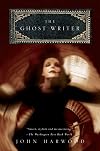
Like so many stories of this sort, the setup was great, but the resolution proves to be a bit disappointing. This is probably inevitable to some extent. The story takes us from hot, dry Australia to post-war London, to garbage-strewn 1980s London to better-kempt 1999 London and then into a disused, dusty Hampstead mansion. All those settings are brought to life well. Harwood is very good at establishing atmosphere and mood without being too ostentatious about it. The story contains several show more "stories within" that are all very good, indeed and which (pleasingly) blur into the main story. But the finale brings in yet one more new element to an already crowded story and still manages to be predictable. (Shades of Philip Dick.)
All in all, though, a good modern gothic novel. show less
All in all, though, a good modern gothic novel. show less
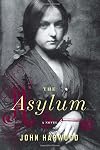
Georgina Ferrars is a 21 year old orphan that has been living with her uncle in London. So, why is she waking up in an insane asylum in Cornwall, where she is called Lucy Ashton. Georgina is told that she came to the asylum willingly, asking to see Dr. Straker, then became ill and was admitted voluntarily. She tells the doctor that a mistake has been made and tells him her real name. A telegraph is sent to her uncle's house and a reply is sent that his niece, Georgina Ferrars is perfectly show more fine and with him. Lucy/Georgina can't remember the last few months but feels certain she is who she says she is even though the doctor goes to London in person and meets Georgina Ferrars. Lucy is not convinced and escapes and makes her way back to London, to her uncle's shop. The door is opened by a woman who looks just like her and Lucy has no explanation for this. Lucy is returned to the asylum. We are then flashed back to a narrative from Rosina Wentworth, a young girl living with a cruel father, one she believes killed her sister and her story is told to her favorite cousin, as she plots to get away from her father.
Lucy/Georgina tries to recall some things from her past, especially with her mother as she wonders if she might truly be mad.
The story is excellent and well told, gradually cluing in the reader and has an exciting ending. I look forward to reading the author's previous novels. Highly recommended! show less
Lucy/Georgina tries to recall some things from her past, especially with her mother as she wonders if she might truly be mad.
The story is excellent and well told, gradually cluing in the reader and has an exciting ending. I look forward to reading the author's previous novels. Highly recommended! show less
Lists
Awards


You May Also Like


Associated Authors
Statistics
- Works
- 6
- Also by
- 2
- Members
- 2,508
- Popularity
- #10,237
- Rating
- 3.5
- Reviews
- 131
- ISBNs
- 85
- Languages
- 4
- Favorited
- 5