
F. G. Cottam
Author of The House of Lost Souls
About the Author
Disambiguation Notice:
(dut) Francis Cottam also writes under the pen-name of F.G. Cottam
Image credit: F.G. Cottam
Series
Works by F. G. Cottam
Tagged
Common Knowledge
- Legal name
- Cottam, Francis
- Other names
- Cottam, F. G.
- Birthdate
- 1957
- Gender
- male
- Education
- University of Kent (History)
- Occupations
- journalist
- Agent
- Caroline Michel (Peters Fraser and Dunlop)
- Nationality
- UK
- Birthplace
- Southport, Lancashire, England, UK
- Places of residence
- Lambeth, London, England, UK
Kingston upon Thames, Surrey, England, UK - Disambiguation notice
- Francis Cottam also writes under the pen-name of F.G. Cottam
- Associated Place (for map)
- England, UK
Members
Reviews
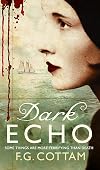
Evil is introduced immediately and unambiguously. Cottam fills in the depth and scope of its power with fascinating ghost "cameos" and bits of history leaving the reader in a vice of approach (anxious for the final confrontation) and avoidance (fear that the ultimate encounter will end badly, however conditioned we are to expect otherwise.) I have yet to be disappointed by a Cottam book. He never keeps the reader waiting for the first good scare and knows how to maintain an atmosphere of show more dread to the very end. show less
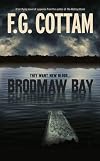
This is the fourth F.G. Cottam book I've read and I'm still enjoying his work. You don't really find out much about James' character until the book is under way, unlike that of his wife, who you discover is a well-known book illustrator. They have two relatively normal children, Jack and Olivia. Family life is turned upside down when Jack is brutally attacked on the bus and that's when you see where their life really is at. James is drawn to Brodmaw Bay when he finds a book about it in show more Jack's hospital room with illustrations that he is sure must be done by his wife. When questioned, she doesn't remember doing them. WE discover that there has been talk of moving for years and that Lillian is having an affair with a younger author. I must admit that James took Lillian's infidelity a bit too well - at least better than most men I know would have. I did like the ghost girl who was like a guardian spirit to Jack and Olivia. In spite of the fact that I knew early on that it was reminiscent of Wicker Man, I still enjoyed the overall story but didn't really expect the ending quite that way. A good ghost/horror story. show less
I received and advance copy of this book from the publisher through NetGalley in exchange for an honest review.
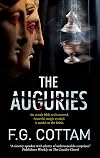
The Auguries reminded me a bit of another Cottam book, The Lazarus Prophecy. The same interesting mixture of church/world history and modern horror. In fact, I have read several of Cottam’s other works and they all have a strong element of history and folklore that is really a plus for me. His novels provide quite a bit of suspense and strong historical elements as well as show more thriller style pacing which is a compelling mix. I find the horror elements not to be of the “in your face” variety but more along the lines of images and concepts that disturbing on a deeper level than something nasty trying to break into your house.
The Auguries is about witches and dark magic and a spell book finding its way into the wrong hands. Rather than some unrealistic wizard/super villain, the evil in The Auguries is very familiar, which grounds the story in a believable element. The Almanac of Forbidden Wisdom was written with the hope that it would fall into the hands of an amateur who would be unable to forsee the damage that these spells would do. The magic is harsh and simple yet the repercussions drastic and escalating to the apocalyptic.
As a writer, Cottam’s skills are well developed. The characters representing the church and state are presented in a sympathetic light as heroes, which isn’t often the case. It was a relief for me to read a book that wasn’t full of typical clichés where the government characters are power mad and the clergy are evil. Here they felt like real people. Even the villain had sympathetic elements and was completely believable.
Apart from all of that, it is a damn good story. Like Lazarus, Auguries is horrific historical “what if” that injects legends, actual characters and events into a supernatural story. It is quite compelling. Several times I felt the desire to research whether The Almanac of Forbidden Wisdom actually exists. I decided not to. I would rather not know.
4 solid stars. show less
The Auguries reminded me a bit of another Cottam book, The Lazarus Prophecy. The same interesting mixture of church/world history and modern horror. In fact, I have read several of Cottam’s other works and they all have a strong element of history and folklore that is really a plus for me. His novels provide quite a bit of suspense and strong historical elements as well as show more thriller style pacing which is a compelling mix. I find the horror elements not to be of the “in your face” variety but more along the lines of images and concepts that disturbing on a deeper level than something nasty trying to break into your house.
The Auguries is about witches and dark magic and a spell book finding its way into the wrong hands. Rather than some unrealistic wizard/super villain, the evil in The Auguries is very familiar, which grounds the story in a believable element. The Almanac of Forbidden Wisdom was written with the hope that it would fall into the hands of an amateur who would be unable to forsee the damage that these spells would do. The magic is harsh and simple yet the repercussions drastic and escalating to the apocalyptic.
As a writer, Cottam’s skills are well developed. The characters representing the church and state are presented in a sympathetic light as heroes, which isn’t often the case. It was a relief for me to read a book that wasn’t full of typical clichés where the government characters are power mad and the clergy are evil. Here they felt like real people. Even the villain had sympathetic elements and was completely believable.
Apart from all of that, it is a damn good story. Like Lazarus, Auguries is horrific historical “what if” that injects legends, actual characters and events into a supernatural story. It is quite compelling. Several times I felt the desire to research whether The Almanac of Forbidden Wisdom actually exists. I decided not to. I would rather not know.
4 solid stars. show less
I received an ARC copy from NetGalley in exchange for an honest review.
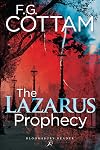
The Lazarus Prophecy is the first book that I have read by F.G. Cottam although he is popular among my book friends. Now I can certainly see why.
It is an accurate description to call this a supernatural crime story but it is much more than that. The Lazarus Prophecy really elevates the form, like The Club Dumas did years ago. And it does it with fine writing, great characters, a horrifying villain, and a very intricate, show more layered plot that reaches back to the time of Christ. He also does it with tremendous description and sense of place. I had a strong sense of London (both present and 1880’s) and that mountain keep that houses the monks of the Order of , who we have never heard of but who nonetheless have literally saved the world many times over.
Cottam begins by flipping back and forth between two story lines. The first is a really well done police procedural with the difference being that the killer is supernatural, although they don’t know that yet. The second story line deals with a secret order of monks living in a mountain keep. Ordained by St. Peter himself, they remain secret because if the general population knew of their existence and more importantly WHY they exist it would be too much. Sort of a “You can’t handle the truth” situation if ever there was one. They are accurately described as "God's gaolers." At this point in the novel I was impressed by how well Cottam handled both aspects—the crime story and the supernatural one. I think it is quite rare to be this versatile. John Connolly does it. So does Cottam.
The plotting was especially well done. Slowly building tension to a climax and then, right near the end of the book (judging by the amount of chapters left) we suddenly are dropped down a rabbit hole into 1888 London. Distracting? Jarring? Not at all. It was my favorite part of the book. So go ahead and add a strong and equally well done historical aspect to the description of this novel. I went from really liking this book to loving it. And when we returned to present for what could be called “round 2’” Cottam has set up a no holds barred white knuckle ride to the finale. show less
The Lazarus Prophecy is the first book that I have read by F.G. Cottam although he is popular among my book friends. Now I can certainly see why.
It is an accurate description to call this a supernatural crime story but it is much more than that. The Lazarus Prophecy really elevates the form, like The Club Dumas did years ago. And it does it with fine writing, great characters, a horrifying villain, and a very intricate, show more layered plot that reaches back to the time of Christ. He also does it with tremendous description and sense of place. I had a strong sense of London (both present and 1880’s) and that mountain keep that houses the monks of the Order of , who we have never heard of but who nonetheless have literally saved the world many times over.
Cottam begins by flipping back and forth between two story lines. The first is a really well done police procedural with the difference being that the killer is supernatural, although they don’t know that yet. The second story line deals with a secret order of monks living in a mountain keep. Ordained by St. Peter himself, they remain secret because if the general population knew of their existence and more importantly WHY they exist it would be too much. Sort of a “You can’t handle the truth” situation if ever there was one. They are accurately described as "God's gaolers." At this point in the novel I was impressed by how well Cottam handled both aspects—the crime story and the supernatural one. I think it is quite rare to be this versatile. John Connolly does it. So does Cottam.
The plotting was especially well done. Slowly building tension to a climax and then, right near the end of the book (judging by the amount of chapters left) we suddenly are dropped down a rabbit hole into 1888 London. Distracting? Jarring? Not at all. It was my favorite part of the book. So go ahead and add a strong and equally well done historical aspect to the description of this novel. I went from really liking this book to loving it. And when we returned to present for what could be called “round 2’” Cottam has set up a no holds barred white knuckle ride to the finale. show less
Lists
Awards

You May Also Like


Statistics
- Works
- 22
- Members
- 1,166
- Popularity
- #22,047
- Rating
- 3.6
- Reviews
- 81
- ISBNs
- 117
- Languages
- 2
- Favorited
- 5
