
Phil Rickman (1950–2024)
Author of The Wine of Angels
About the Author
Image credit: copyright John Mason.
Series
Works by Phil Rickman
Merrily's Border: The Mysterious World of Merrily Watkins - History & Folklore, People & Places (2018) 10 copies, 1 review
A Bird-Painter's Sketch Book 2 copies
I pilastri di Camelot 1 copy
Associated Works
Tagged
Common Knowledge
- Other names
- Kingdom, Will (pseudonym)
Madley, Thom (pseudonym) - Birthdate
- 1950-03-06
- Date of death
- 2024-10-29
- Gender
- male
- Occupations
- journalist
fiction writer - Organizations
- Mid Wales Journal
BBC Radio Wales - Agent
- Ed Wilson (Johnson & Alcock)
Andrew Hewson (Johnson & Alcock) - Nationality
- UK
- Birthplace
- Lancashire, England, UK
- Map Location
- England, UK
Members
Reviews

This is the second novel in Phil Rickman’s Merrily Watkins series, and like the first one it is an odd and unexpected mixture of cozy mystery and horror novel that manages to work surprisingly well. This time, Rickman moves the supernatural rather more into the foreground than it was in The Wine of Angels where it was only a very subtle presence that might very well not have existed at all. In Midwinter of the Spirit (I really love that title), we have ghosts, demonic possession, satanism show more - a whole range of supernatural phenomena. It is getting almost too much, and one can’t help but feel that Rickman is laying it on a bit too thick with an ending of almost apocalyptic proportions. Still, he manages to keep things in balance, if just barely, and never comes quite down on the side of a supernatural explanation of events; also there is a definite sense that human greed and ambition are at least as evil as any supernatural forces.
So in the end, Midwinter of the Spirit is a mystery novel with strong horror elements (rather than a horror novel structured like a mystery). It is also a very entertaining read; Rickman begins evoking an ominous atmosphere of dread and things being not quite right very early on this time, but still sneaks in a portrait of a British cathedral city to complement The Wine of Angel’s small village. I personally found that aspect of the novel very fascinating to read, but if you are mostly interested in crime or horror you might find parts of the novel a bit of a slog. I for one really enjoyed it, but then I’m a self-confessed anglophile.
In contrast to the more outrageous plot, the narrative structure is much cleaner this time than it was in the previous novel – there are only three points of view this time (all of them familiar from The Wine of Angels), and Rickman does an excellent job on having them illuminate events and each other from different perspectives. I also really liked the characters, among them one of the more credible depictions of a teenager I have read in fiction, he gets the balance between precocious and exasperating, lovable and frustrating perfectly. Overall, the dialogue is credible, the descriptions atmospheric, and having his vicar heroine become an exorcist is a stroke of sheer genious on Rickman’s part that opens up a lot of possibilities for the later volumes. One of them possibly the rather interesting parellels that the novel draws between satanists and Soviet spies – is seems that the author is dropping clues that the Holy War has become a Holy Cold War and I am curious to see if and how he follows this up in the sequels. show less
So in the end, Midwinter of the Spirit is a mystery novel with strong horror elements (rather than a horror novel structured like a mystery). It is also a very entertaining read; Rickman begins evoking an ominous atmosphere of dread and things being not quite right very early on this time, but still sneaks in a portrait of a British cathedral city to complement The Wine of Angel’s small village. I personally found that aspect of the novel very fascinating to read, but if you are mostly interested in crime or horror you might find parts of the novel a bit of a slog. I for one really enjoyed it, but then I’m a self-confessed anglophile.
In contrast to the more outrageous plot, the narrative structure is much cleaner this time than it was in the previous novel – there are only three points of view this time (all of them familiar from The Wine of Angels), and Rickman does an excellent job on having them illuminate events and each other from different perspectives. I also really liked the characters, among them one of the more credible depictions of a teenager I have read in fiction, he gets the balance between precocious and exasperating, lovable and frustrating perfectly. Overall, the dialogue is credible, the descriptions atmospheric, and having his vicar heroine become an exorcist is a stroke of sheer genious on Rickman’s part that opens up a lot of possibilities for the later volumes. One of them possibly the rather interesting parellels that the novel draws between satanists and Soviet spies – is seems that the author is dropping clues that the Holy War has become a Holy Cold War and I am curious to see if and how he follows this up in the sequels. show less
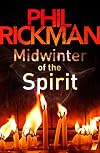
There's no avoiding it: this series is problematic, and some of the motifs would normally be a red rag to a bull for me. Packaging it up with a charming single Mum priest and her smart, difficult teenage daughter goes a long way to making it irresistible though, and I devoured this outing in 2 days despite some of the issues the bit of my brain I locked up for the duration would have liked to froth over.
Merrily has lived down the difficulties of her first months in Ledwardine, and picked up show more a new challenge: the reforming new Bishop of Hereford wants her to be his new exorcist. As dark clouds gather over the county in the run up to Christmas, she must decide whether she really believes in evil - and whether she's really ready to face it. show less
Merrily has lived down the difficulties of her first months in Ledwardine, and picked up show more a new challenge: the reforming new Bishop of Hereford wants her to be his new exorcist. As dark clouds gather over the county in the run up to Christmas, she must decide whether she really believes in evil - and whether she's really ready to face it. show less
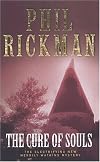
It had been years since I'd first enjoyed the first three books in Phil Rickman's Merrily Watkins series. Then the day came when I saw the next three sitting on my bookshelf, and I knew it was time to pick up book four, The Cure of Souls. Rickman knows how to blend many elements into a compelling, atmospheric tale.
There's the element of the supernatural that makes the story a tiny bit eery, even though the cause of mayhem is always rooted in very earthbound human behavior. There's the show more element of setting in which I always learn something about the area. In The Cure of Souls, this element is threefold: a bit about the history of hop growing and picking, the making of guitars, and Romany (gypsy) traditions. There's the ecclesiastical element which is done with a light touch. There's the strong element of mystery which keeps readers wondering what in the world is going on, and then there's my favorite-- the element of character. I truly enjoy the characters in this book.
Merrily Watkins is a woman with a true calling. She wants to do good. She wants to help her fellow human beings. She wants to raise her teenage daughter to be a good person, and she's still not convinced that she's the right priest for the job of diocese exorcist, but she's working hard to learn as much about it as she can. She has to work hard because too many people still look at her and think, "You're the wrong sex, you're too young, you're too small."
At the beginning of this series, I couldn't stand Merrily's daughter, Jane. Jane just got right up my nose, but I'm happy to say that, as she gets older, she's begun to realize that the world doesn't revolve around her and she needs to take other people into account. She's got good instincts in this book, and it's fun to watch the evolution of her character.
I love how Rickman begins his tales with overtones of the supernatural-- Ouija boards, fortune tellers, demonic possession, ghosts-- and then turns everything inside out to show how the mystery is actually rooted in the here and now. That takes skill, and when that skill is joined with an atmospheric setting and a strong cast of characters, it turns this series into a winner. show less
There's the element of the supernatural that makes the story a tiny bit eery, even though the cause of mayhem is always rooted in very earthbound human behavior. There's the show more element of setting in which I always learn something about the area. In The Cure of Souls, this element is threefold: a bit about the history of hop growing and picking, the making of guitars, and Romany (gypsy) traditions. There's the ecclesiastical element which is done with a light touch. There's the strong element of mystery which keeps readers wondering what in the world is going on, and then there's my favorite-- the element of character. I truly enjoy the characters in this book.
Merrily Watkins is a woman with a true calling. She wants to do good. She wants to help her fellow human beings. She wants to raise her teenage daughter to be a good person, and she's still not convinced that she's the right priest for the job of diocese exorcist, but she's working hard to learn as much about it as she can. She has to work hard because too many people still look at her and think, "You're the wrong sex, you're too young, you're too small."
At the beginning of this series, I couldn't stand Merrily's daughter, Jane. Jane just got right up my nose, but I'm happy to say that, as she gets older, she's begun to realize that the world doesn't revolve around her and she needs to take other people into account. She's got good instincts in this book, and it's fun to watch the evolution of her character.
I love how Rickman begins his tales with overtones of the supernatural-- Ouija boards, fortune tellers, demonic possession, ghosts-- and then turns everything inside out to show how the mystery is actually rooted in the here and now. That takes skill, and when that skill is joined with an atmospheric setting and a strong cast of characters, it turns this series into a winner. show less
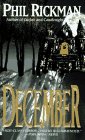
I came to read December after recently getting hooked on the Merrily Watkins series. To me it felt like a (long) book of two halves: the first half could have done with a really good edit for both length and pace, but the second half (particularly the band's return to the fated abbey studio) fired along with dramatic tension.
The premise is a clever one: a rock band made up of psychics put into an old abbey to see what they come up with, and it isn't pretty. As usual, Rickman walks the fine show more line between the supernatural and the believable very well. It's also a story that exposes why it's unfair to label Rickman's work with a genre 'horror' label - there is much more here than just the overarching supernatural plot, with portrayals of creative dynamics and responses to adversity that make the book worth persevering with beyond the slow start. Lovely to see some favourite characters such as Gwyn Arthur Jones popping up too.
In terms of Rickman's stand-alone novels, I think I probably preferred Candlenight for its tighter structure and more comic edge to lighten the tone occasionally. show less
The premise is a clever one: a rock band made up of psychics put into an old abbey to see what they come up with, and it isn't pretty. As usual, Rickman walks the fine show more line between the supernatural and the believable very well. It's also a story that exposes why it's unfair to label Rickman's work with a genre 'horror' label - there is much more here than just the overarching supernatural plot, with portrayals of creative dynamics and responses to adversity that make the book worth persevering with beyond the slow start. Lovely to see some favourite characters such as Gwyn Arthur Jones popping up too.
In terms of Rickman's stand-alone novels, I think I probably preferred Candlenight for its tighter structure and more comic edge to lighten the tone occasionally. show less
Lists
Awards


You May Also Like


Associated Authors
Statistics
- Works
- 43
- Also by
- 1
- Members
- 6,932
- Popularity
- #3,526
- Rating
- 3.9
- Reviews
- 244
- ISBNs
- 322
- Languages
- 5
- Favorited
- 40