
James Herbert (1) (1943–2013)
Author of The Rats
For other authors named James Herbert, see the disambiguation page.
About the Author
Horror writer James Herbert was born in London, England on April 8, 1943. Before becoming a full-time writer, he worked as a singer and an art director for an advertising agency. His novels have sold more than forty-two million copies worldwide and have been translated into thirty-three languages, show more including Russian and Chinese. His stories are simple, yet compelling and usually have a young, jaded man as the hero. Besides writing his novels, he also designs the book covers and handles the publicity. He currently lives in London, England with his wife and children. (Bowker Author Biography) show less
Image credit: © Pan Macmillan
Series
Works by James Herbert
Lair/The Fog/The Rats 5 copies
Others [short story] 1 copy
The Ghost Hunter 1 copy
Lara's Lament [short story] 1 copy
Moon; The Magic Cottage 1 copy
Flesh and Blood 1 copy
Associated Works
Tagged
Common Knowledge
- Canonical name
- Herbert, James
- Legal name
- Herbert, James John
- Birthdate
- 1943-08-04
- Date of death
- 2013-03-20
- Gender
- male
- Education
- St Aloysius Grammar School, Highgate, London, England, UK
Hornsey College of Art - Occupations
- art director
singer
author - Awards and honors
- World Horror Convention Grand Master Award (2010)
Order of the British Empire (Officer ∙ 2010) - Relationships
- Herbert, Eileen (wife)
- Short biography
- Herbert's first novel, The Rats, depicted London overrun by mutant flesh-eating rodents and sold 100,000 copies within two weeks of being published in 1974.
Since then, he has published 23 novels in more than 30 languages, selling 54 million copies worldwide. His latest book, Ash, was published lin March 2013.
Herbert was appointed an OBE by the Queen in 2010 - the same year he was made Grand Master of Horror by the World of Horror Convention. - Nationality
- UK
- Birthplace
- London, Middlesex, England, UK
- Places of residence
- London, Middlesex, England, UK
Woodmancote, Sussex, England, UK - Place of death
- Woodmancote, Sussex, England, UK
- Map Location
- England, UK
Members
Discussions
James Herbert in Thing(amabrarian)s That Go Bump in the Night (August 2007)
Reviews
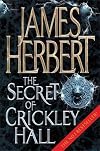
I have been meaning to read a James Herbert novel for years, but unfortunately for me, I picked a duff 'un. Not bad enough to abandon, even clocking in at over 600 pages, but still more of an endurance test than a ghost story. The plot was intriguing enough, if decidedly lacking in originality and belaboured with every device known to horror writers, but the writing was atrocious! Not only is James Herbert of the 'Tell Don't Show' school of fiction, he's the patron saint. There was so much show more unnecessary detail in this book - even minor characters sound like police e-fits, all medium builds with low foreheads and clothing itemised by brand - that a decent editor would have been able to chop this book in half with ease. (And don't forget the humble bracket for wedging in additional pointless facts!)
I vaguely remember this being made into a BBC miniseries with the ubiquitous Suranne Jones a few years ago, which would probably have been a quicker introduction to Herbert than reading this brick of a book. The story is the same - after the loss of their young son, the Caleigh family move from London to the Devon coast while husband Gabe (he's American! and an engineer!) is working on a sea turbine project (which you'll learn all about, even though his work isn't relevant!) Unfortunately, they make the mistake of renting Crickley Hall, which is haunted to the hilt, all creaking doors and banging in the night, not to mention mysterious wet patches drifting up from the cellar. The dog runs away after a couple of days, but nope, Gabe doesn't believe in ghosts, so they'll just have to hack it. Through lonnnnnnnnnnnnnnng scenes of exposition ('Are you growing tired of my reminiscences, Eve?'), naturally, we learn that a group of orphaned children were evacuated to the house in the 40s, to be cared for by a religious crackpot called Augustus Theophilus Cribben (yep, he was always going to turn out well) and his equally unstable sister Magda. Bad things happened, in graphic detail, and now the house is filled with the tormented spirits of the children and bonkers Augie himself. A medium (female, sympathetic) and a paranormal investigator (male, dodgy) also join in the exposition, so that the final two hundred pages drag on for HOURS. Not even a fight in the cellar, with the villain turning into Rasputin and refusing to die, until the decomposing corpse of his first victim pushes him down a well, and then old Augustus returning for an encore, could save the story for me by that point.
I have read that James Herbert's other books are better, and hopefully shorter, so I won't give up on him just yet, but that was not a promising start! (Helpful hint: watch the TV series instead. Or the Poltergeist trilogy, which is the same sort of thing.) show less
I vaguely remember this being made into a BBC miniseries with the ubiquitous Suranne Jones a few years ago, which would probably have been a quicker introduction to Herbert than reading this brick of a book. The story is the same - after the loss of their young son, the Caleigh family move from London to the Devon coast while husband Gabe (he's American! and an engineer!) is working on a sea turbine project (which you'll learn all about, even though his work isn't relevant!) Unfortunately, they make the mistake of renting Crickley Hall, which is haunted to the hilt, all creaking doors and banging in the night, not to mention mysterious wet patches drifting up from the cellar. The dog runs away after a couple of days, but nope, Gabe doesn't believe in ghosts, so they'll just have to hack it. Through lonnnnnnnnnnnnnnng scenes of exposition ('Are you growing tired of my reminiscences, Eve?'), naturally, we learn that a group of orphaned children were evacuated to the house in the 40s, to be cared for by a religious crackpot called Augustus Theophilus Cribben (yep, he was always going to turn out well) and his equally unstable sister Magda. Bad things happened, in graphic detail, and now the house is filled with the tormented spirits of the children and bonkers Augie himself. A medium (female, sympathetic) and a paranormal investigator (male, dodgy) also join in the exposition, so that the final two hundred pages drag on for HOURS. Not even a fight in the cellar, with the villain turning into Rasputin and refusing to die, until the decomposing corpse of his first victim pushes him down a well, and then old Augustus returning for an encore, could save the story for me by that point.
I have read that James Herbert's other books are better, and hopefully shorter, so I won't give up on him just yet, but that was not a promising start! (Helpful hint: watch the TV series instead. Or the Poltergeist trilogy, which is the same sort of thing.) show less
The Rats: The chilling, bestselling classic from the Master of Horror (The Rats Trilogy Book 1) by James Herbert
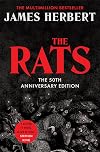
It's rare to read a horror story and side with the 'monsters', but I am now 100% officially #teamrat. The men in this book, including the author insert 'hero' (I am surprised that Herbert wasn't in fact a teacher before he started writing), are skeevy, sexist pigs, and the women are ranked on how well they can look after the men. I know this was written in the 1970s - the political asides are far from subtle ('Heaven knows, the dockers don't need much excuse to stay away from work') - but I show more nearly threw up in my mouth when art teacher Mr Harris watches two fourteen year old girls walk past and says, 'Anyway, the crumpet's good.' There are also samples of 'casual' racism and homophobia thrown in for good measure. Hey ho!
The horror element - radioactive rats - is mostly gore, with the mutant vermin chewing faces off and eating entire corpses down to the skeleton. But each little vignette of terror begins with an obnoxious human character, like the teenager copping a feel in the cinema ('My first proper good-looking bird! After all those fat ones, skinny ones, ones with big noses, ones with big teeth - at last a good looking one!'), leaving the reader to root for the rats. I found the 'love scenes' more repulsive, to be honest - there's a weird chapter where Harris and his girlfriend invite themselves to her aunt's house for a weekend away, and aunt is all but hopping into bed with them the morning after!
A snapshot of the era - clearly it's the government's fault that the radioactive rats have taken over - and very obviously the author's debut novel, but I could have lived without this King-lite novella. Especially when the 'solution' to the infestation was to throw out puppies infected with a virus as live bait, while Harris was right there being an obnoxious 'everyman' mansplainer, telling the experts what to do. Throw him and his wandering hands to the rats (rattus over twattus, if you will!) show less
The horror element - radioactive rats - is mostly gore, with the mutant vermin chewing faces off and eating entire corpses down to the skeleton. But each little vignette of terror begins with an obnoxious human character, like the teenager copping a feel in the cinema ('My first proper good-looking bird! After all those fat ones, skinny ones, ones with big noses, ones with big teeth - at last a good looking one!'), leaving the reader to root for the rats. I found the 'love scenes' more repulsive, to be honest - there's a weird chapter where Harris and his girlfriend invite themselves to her aunt's house for a weekend away, and aunt is all but hopping into bed with them the morning after!
A snapshot of the era - clearly it's the government's fault that the radioactive rats have taken over - and very obviously the author's debut novel, but I could have lived without this King-lite novella. Especially when the 'solution' to the infestation was to throw out puppies infected with a virus as live bait, while Harris was right there being an obnoxious 'everyman' mansplainer, telling the experts what to do. Throw him and his wandering hands to the rats (rattus over twattus, if you will!) show less

The Rats
⭐️⭐️⭐️⭐️ (reread, with caution)
This was a reread for me, and it turned out to be a very different experience than my first pass. The Rats still works—often brilliantly—but on rereading, its weaknesses stand out far more sharply. What emerged most clearly this time is that the novel feels like two books uneasily sharing the same pages: the book of rats, and the book of people.
The book of rats is excellent. Herbert is at his strongest when he focuses on show more constrained spaces, failed systems, and inevitability. The best scenes are grounded, brutal, and frightening precisely because they respect physical limits: trains stalled in tunnels, blocked exits, fire, darkness, disease. The rats work not as monsters to be fought, but as an indifferent force that turns ordinary infrastructure into traps. These sections remain genuinely effective and are the reason the book still earns a high rating from me.
The book of people, however, is far less successful—and on reread, actively frustrating. Herbert increasingly bends the world, the institutions, and even his own established rules to elevate Harris, an art teacher who is treated as a kind of chosen figure. Harris rarely seems to work, shows little sustained concern for his own students, and yet is repeatedly positioned as morally correct, strategically insightful, and eventually indispensable at the highest levels of response. The novel keeps insisting on his importance, but never convincingly earns it.
As the story progresses, this favoritism becomes structural. Rules established early are quietly relaxed so Harris can remain physically engaged in a climactic confrontation. Institutions suddenly accelerate, science delivers miraculous overnight solutions, and logistics that were previously treated as overwhelming are hand-waved aside. The world, and even the book’s own internal logic, has to contort to keep Harris central.
This problem extends beyond Harris to the broader handling of people. Herbert frequently pauses momentum to insert late-stage backstory for officials or disgraced experts, asking the reader to care long after narrative investment has passed. His portrayal of women often defaults to dated shorthand—domestic labor, sexual moral accounting, cosmetic self-monitoring—that adds little and stands out more starkly on rereading.
None of this negates the novel’s impact. On a first read, the speed and set pieces can easily carry you past these issues. But on reread, especially with sharper critical tools, the seams show. The book of rats remains disciplined, frightening, and conceptually strong. The book of people feels indulgent, uneven, and ultimately undermining.
For that reason, I still rate The Rats highly—but I’d call it a reread with caution. It’s a novel whose strengths are real and memorable, but whose weaknesses become increasingly visible once the initial momentum fades. When Herbert trusts inevitability, constraint, and indifference, the book is superb. When he reaches for chosen protagonists and miraculous fixes, it falters. show less
⭐️⭐️⭐️⭐️ (reread, with caution)
This was a reread for me, and it turned out to be a very different experience than my first pass. The Rats still works—often brilliantly—but on rereading, its weaknesses stand out far more sharply. What emerged most clearly this time is that the novel feels like two books uneasily sharing the same pages: the book of rats, and the book of people.
The book of rats is excellent. Herbert is at his strongest when he focuses on show more constrained spaces, failed systems, and inevitability. The best scenes are grounded, brutal, and frightening precisely because they respect physical limits: trains stalled in tunnels, blocked exits, fire, darkness, disease. The rats work not as monsters to be fought, but as an indifferent force that turns ordinary infrastructure into traps. These sections remain genuinely effective and are the reason the book still earns a high rating from me.
The book of people, however, is far less successful—and on reread, actively frustrating. Herbert increasingly bends the world, the institutions, and even his own established rules to elevate Harris, an art teacher who is treated as a kind of chosen figure. Harris rarely seems to work, shows little sustained concern for his own students, and yet is repeatedly positioned as morally correct, strategically insightful, and eventually indispensable at the highest levels of response. The novel keeps insisting on his importance, but never convincingly earns it.
As the story progresses, this favoritism becomes structural. Rules established early are quietly relaxed so Harris can remain physically engaged in a climactic confrontation. Institutions suddenly accelerate, science delivers miraculous overnight solutions, and logistics that were previously treated as overwhelming are hand-waved aside. The world, and even the book’s own internal logic, has to contort to keep Harris central.
This problem extends beyond Harris to the broader handling of people. Herbert frequently pauses momentum to insert late-stage backstory for officials or disgraced experts, asking the reader to care long after narrative investment has passed. His portrayal of women often defaults to dated shorthand—domestic labor, sexual moral accounting, cosmetic self-monitoring—that adds little and stands out more starkly on rereading.
None of this negates the novel’s impact. On a first read, the speed and set pieces can easily carry you past these issues. But on reread, especially with sharper critical tools, the seams show. The book of rats remains disciplined, frightening, and conceptually strong. The book of people feels indulgent, uneven, and ultimately undermining.
For that reason, I still rate The Rats highly—but I’d call it a reread with caution. It’s a novel whose strengths are real and memorable, but whose weaknesses become increasingly visible once the initial momentum fades. When Herbert trusts inevitability, constraint, and indifference, the book is superb. When he reaches for chosen protagonists and miraculous fixes, it falters. show less

[[James Herbert]] was part of the wave of horror authors who helped define a genre in the 1980s. Butt he gets quite little attention, especially here in the United States. Stephen King often shows up blurbing his books, like [The Fog], and mentions several of them in his non-fiction treatise on horror, [Danse Macabre].
This book is not of the same ilk as most of Herbert's frontal-assault, frighteners, but it has its own appeal in the quiet horror, like [[Charles L. Grant]]'s work. A couple show more move from London to the British country, taking over a cottage that seems steeped in magic. But they can't quite grasp the magic as it bubbles around them. Add in a nearby cult, bent on taking over the cottage and all its magic power, and you've got a slow-burner that packs a punch in the last few pages. It must be admitted that the slow-burn sometimes felt a little too slow, and the main characters sometimes a little too slow on the up-take. But never so much so that you don't want to keep reading.
4 1/2 bones!!!!!
Highly Recommended - though not where I'd start with Herbert. show less
This book is not of the same ilk as most of Herbert's frontal-assault, frighteners, but it has its own appeal in the quiet horror, like [[Charles L. Grant]]'s work. A couple show more move from London to the British country, taking over a cottage that seems steeped in magic. But they can't quite grasp the magic as it bubbles around them. Add in a nearby cult, bent on taking over the cottage and all its magic power, and you've got a slow-burner that packs a punch in the last few pages. It must be admitted that the slow-burn sometimes felt a little too slow, and the main characters sometimes a little too slow on the up-take. But never so much so that you don't want to keep reading.
4 1/2 bones!!!!!
Highly Recommended - though not where I'd start with Herbert. show less
Lists
A Dog's Eye View (1)
1980 great books (1)
1970s (1)
READ IN 2021 (1)
READ IN 2022 (1)
Which house? (1)
Awards


You May Also Like


Associated Authors
Statistics
- Works
- 40
- Also by
- 15
- Members
- 15,261
- Popularity
- #1,495
- Rating
- 3.5
- Reviews
- 278
- ISBNs
- 680
- Languages
- 12
- Favorited
- 42