
Shaun Hutson
Author of Slugs
About the Author
Disambiguation Notice:
Shaun Hutson writes under his own name, as well as under 8 different pseudonyms including: Robert Neville, Nick Blake, Frank Taylor, Tom Lambert, Samuel P. Bishop, Wolf Kruger and Stefan Rostov.
Series
Works by Shaun Hutson
Incisions: Cut 2 4 copies
Stranger Things: The Companion 3 copies
Model Inquiries into Nature in the Schoolyard: The MINTS Book An Inquiry Field Guide to the Natural History of Southwestern Virginia Schoolyards (1997) 2 copies
Buick Illustrated 1 copy
Land of Homes 1 copy
Victimes (Maniac) 1 copy
Den ondes ansikt 1 copy
The Bumper Book Of Lies 1 copy
Erebe ou les noirs paturages 1 copy
House of the Hunter 1 copy
Chainsaw Terror 1 copy
Incisions: Cut 1 1 copy
Hollow Point 1 copy
Associated Works
Tagged
Common Knowledge
- Other names
- Kruger, Wolf
Neville, Robert
Blake, Nick
Taylor, Frank
Lambert, Tom
Bishop, Samuel P. (show all 8)
Rostov, Stefan
Adams, Spike T. - Birthdate
- 1958
- Gender
- male
- Nationality
- UK
- Disambiguation notice
- Shaun Hutson writes under his own name, as well as under 8 different pseudonyms including: Robert Neville, Nick Blake, Frank Taylor, Tom Lambert, Samuel P. Bishop, Wolf Kruger and Stefan Rostov.
- Associated Place (for map)
- UK
Members
Discussions
Shaun Hutson?? in Thing(amabrarian)s That Go Bump in the Night (October 2009)
Reviews
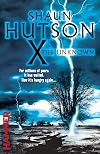
Shaun Hutson has done a worthy job in translating a 1950s British attempt to mimic the American monster movie (and Hammer's effort to follow on from the initial success of Quatermass) to twenty first century Britain.
It is often tougher to write a page turner for the average bloke than a literary effort for the soi-disant intellectual in Hampstead and from that point of view Hutson does well.
Indeed, I would go further and suggest that he has a talent for introducing simple descriptions of show more very real emotions into a story.
I 'liked' in particular the way he wove very real daily twenty-first century fears - death or maiming in military service, cancer, family loss and deformity in children - into the story.
However, the book is a bit of pot-boiler for a fault that is not Hutsons - he has been remarkably creative in adding new elements to an old 'radioactive monster from out of the ground' story but a story that was entertaining on film is far too limiting as literature.
Hutson had a choice here whether to 'stick to the script' for the sake of Hammer's revival and the fans or go spinning off into more credible characterisation, political context and science - he chose or was instructed or pitched the former.
The result is an entertainment of sorts but also a reminder that any attempt to stick to a film story too closely in literature is likely to produce flawed material.
This ties in with the common experience that films of books may be great films but never as great as the original text while some of the iconic films, especialy in genre cinema, are quite free adaptations of short or relatively popular and simple fiction.
The book is part of the attempt to revive the Hammer brand (which we welcome) and assure the British public that the 'spirit' of Hammer lives on but be warned, the blurb in the GoodReads introduction is inaccurate and suggests a lazy copywriter who has not read the book.
The book is not set in Afghanistan or Scotland (yes, the film was set in the latter) but in the English countryside - the only connection with Afghanistan is that the British soldiers are sympathetically drawn as facing duty in that useless war.
There is no horrific chemical weapon being created by the British Army - who is this guy, a Fenian? I won't give the story away here except to note that the 'hero', as in all early Hammer cinema attempts to reach the US market, is an American scientist like the early Quatermass.
And a boy stumbles on something but only after British troops have done so and it is not anything man created but a classic monster from the deep.
As so often in a reading since the crash of 2008, this is another sign of the sheer laziness and perhaps cost-cutting of the publishing industry. The sales agents do not even read the books they are selling.
Still, though a potboiler, and it looks as if he hurried the commission in the last third, it made me interested in reading a 'real' Shaun Hutson, one he initiated and plotted rather than one fitting a strict pre-set formula, and I may look out for one of these. show less
It is often tougher to write a page turner for the average bloke than a literary effort for the soi-disant intellectual in Hampstead and from that point of view Hutson does well.
Indeed, I would go further and suggest that he has a talent for introducing simple descriptions of show more very real emotions into a story.
I 'liked' in particular the way he wove very real daily twenty-first century fears - death or maiming in military service, cancer, family loss and deformity in children - into the story.
However, the book is a bit of pot-boiler for a fault that is not Hutsons - he has been remarkably creative in adding new elements to an old 'radioactive monster from out of the ground' story but a story that was entertaining on film is far too limiting as literature.
Hutson had a choice here whether to 'stick to the script' for the sake of Hammer's revival and the fans or go spinning off into more credible characterisation, political context and science - he chose or was instructed or pitched the former.
The result is an entertainment of sorts but also a reminder that any attempt to stick to a film story too closely in literature is likely to produce flawed material.
This ties in with the common experience that films of books may be great films but never as great as the original text while some of the iconic films, especialy in genre cinema, are quite free adaptations of short or relatively popular and simple fiction.
The book is part of the attempt to revive the Hammer brand (which we welcome) and assure the British public that the 'spirit' of Hammer lives on but be warned, the blurb in the GoodReads introduction is inaccurate and suggests a lazy copywriter who has not read the book.
The book is not set in Afghanistan or Scotland (yes, the film was set in the latter) but in the English countryside - the only connection with Afghanistan is that the British soldiers are sympathetically drawn as facing duty in that useless war.
There is no horrific chemical weapon being created by the British Army - who is this guy, a Fenian? I won't give the story away here except to note that the 'hero', as in all early Hammer cinema attempts to reach the US market, is an American scientist like the early Quatermass.
And a boy stumbles on something but only after British troops have done so and it is not anything man created but a classic monster from the deep.
As so often in a reading since the crash of 2008, this is another sign of the sheer laziness and perhaps cost-cutting of the publishing industry. The sales agents do not even read the books they are selling.
Still, though a potboiler, and it looks as if he hurried the commission in the last third, it made me interested in reading a 'real' Shaun Hutson, one he initiated and plotted rather than one fitting a strict pre-set formula, and I may look out for one of these. show less

This review first appeared on scifiandscary.com: https://www.scifiandscary.com/slugs-review/
Confession time before we start. As a teenager, Shaun Hutson was my favourite British horror author. More than Herbert, who I found a bit ploddy at times, his books had a violent energy that really appealed to me. They’re blatantly ludicrous, but so efficiently written that it’s easy to forget that. Hutson never takes himself to seriously, despite the horribly dark themes he often ends up show more exploring, which gives the books an appealing, b-movie vibe. Hutson is, I would suggest, the Lucio Fulci to Herbert’s George Romero. Probably not objectively as good, but so entertaining and engaging that it’s hard to say for sure. Like Guy N Smith, whose books have featured in this column already, he wrote under a number of pseudonyms and in a number of genres. He published war stories and westerns, as well as penning a novelisation of the movie ‘The Terminator’. Director James Cameron supposedly disliked it so much that he refused to let it be published in the US, although it did make it onto UK shelves. It’s great.
Hutson did in fact claim to have been inspired to take up writing after reading Smith’s ‘Night of the Crabs’, saying that if a book that bad could get published he figured he might as well give it a go. He also claims that many of his books took no more than a weekend to write, which feels like it’s probably a credible statement. The common theme in all his work is lots of sex and violence. In a few months I’ll be discussing his infamous novel ‘Chainsaw Terror’, but this instalment focusses on his first book, ‘Slugs’.
That one-word title tells you everything you need to know really. It promises something horribly disgusting and Hutson delivers. The plot is very similar to ‘The Rats’, mutated creatures attack humans in a series of horrific vignettes and an everyman hero takes them on. In this case the hero is a health inspector, and the slugs are even more of an improbable monster than the rats. Hutson realises this and is wonderfully creative with the gore. He does include a few scenes where people fall and then can’t get up for some reason as the slugs slowly advance on them, but also gives them some other tricks. The titular creatures secrete slime that sends anyone who eats it homicidally insane, and infect anyone who accidentally swallows a slug with worms that then burst out of their faces.
It’s fair to say that the gore in this book is ramped up to 11 and it’s all the more fun for it. Hutson rarely lets more than a few pages pass without someone dying and he describes every death with a gleeful aplomb. There’s boatloads of sex too, which may go someway to explaining why I liked his books so much as a teenager. His penchant for the word “cleft” to describe the female anatomy does grate a little after a while, though.
This was a book I remembered fondly, and my reread of it for this review proved that memory to be correct. Measured by normal literary criteria it’s not a good book. The plot is bonkers, the characters are wafer thin and it lacks any real message. Taken on its own terms, though, it’s a masterpiece. Vibrant, energetic, memorable and grimly inventive. I loved every oozing, bloody page.
show less
Confession time before we start. As a teenager, Shaun Hutson was my favourite British horror author. More than Herbert, who I found a bit ploddy at times, his books had a violent energy that really appealed to me. They’re blatantly ludicrous, but so efficiently written that it’s easy to forget that. Hutson never takes himself to seriously, despite the horribly dark themes he often ends up show more exploring, which gives the books an appealing, b-movie vibe. Hutson is, I would suggest, the Lucio Fulci to Herbert’s George Romero. Probably not objectively as good, but so entertaining and engaging that it’s hard to say for sure. Like Guy N Smith, whose books have featured in this column already, he wrote under a number of pseudonyms and in a number of genres. He published war stories and westerns, as well as penning a novelisation of the movie ‘The Terminator’. Director James Cameron supposedly disliked it so much that he refused to let it be published in the US, although it did make it onto UK shelves. It’s great.
Hutson did in fact claim to have been inspired to take up writing after reading Smith’s ‘Night of the Crabs’, saying that if a book that bad could get published he figured he might as well give it a go. He also claims that many of his books took no more than a weekend to write, which feels like it’s probably a credible statement. The common theme in all his work is lots of sex and violence. In a few months I’ll be discussing his infamous novel ‘Chainsaw Terror’, but this instalment focusses on his first book, ‘Slugs’.
That one-word title tells you everything you need to know really. It promises something horribly disgusting and Hutson delivers. The plot is very similar to ‘The Rats’, mutated creatures attack humans in a series of horrific vignettes and an everyman hero takes them on. In this case the hero is a health inspector, and the slugs are even more of an improbable monster than the rats. Hutson realises this and is wonderfully creative with the gore. He does include a few scenes where people fall and then can’t get up for some reason as the slugs slowly advance on them, but also gives them some other tricks. The titular creatures secrete slime that sends anyone who eats it homicidally insane, and infect anyone who accidentally swallows a slug with worms that then burst out of their faces.
It’s fair to say that the gore in this book is ramped up to 11 and it’s all the more fun for it. Hutson rarely lets more than a few pages pass without someone dying and he describes every death with a gleeful aplomb. There’s boatloads of sex too, which may go someway to explaining why I liked his books so much as a teenager. His penchant for the word “cleft” to describe the female anatomy does grate a little after a while, though.
This was a book I remembered fondly, and my reread of it for this review proved that memory to be correct. Measured by normal literary criteria it’s not a good book. The plot is bonkers, the characters are wafer thin and it lacks any real message. Taken on its own terms, though, it’s a masterpiece. Vibrant, energetic, memorable and grimly inventive. I loved every oozing, bloody page.
show less
From the dramatic opening chapter, in which a psychic magically removes three rotting tumours from a young woman, without physically touching her, it is clear that events in the novel will unfold outside reality. Jonathan Mathias is renowned as a healer, although he refuses to call himself a ‘faith’ healer, since he believes it is a power from within himself that is helping people, not any higher or more mysterious power. A writer, David Blake, tries to interview him and establishes that show more Mathias believes he can manipulate other people’s ‘Astral bodies’ or soul. Blake’s understandable doubts are tested when Mathias briefly demonstrates his powers and the writer later starts to hallucinate. So far, so dramatic.
New characters are introduced rapidly and given sufficient background to distinguish them and intrigue the reader. These characters are mostly connected to two institutes conducting psychic research, in France and England. Early on, Kelly Hunt becomes the main character who ponders events and seems most concerned with their truth, but the whole cast is involved in psychic exploration in some form. Most characters seem intensely driven by a secret, which involves the reader in trying to work out their actions and motives, but few are likeable. Even Kelly commits a dubious act fairly early on in the narrative which has tragic consequences and will make most readers wary of empathising with her.
At the core of the narrative is gruesome, frequent and unmerited violence. As the research into astral bodies, projection and manifestation continues, Kelly begins to act like a detective, (though not a particularly good or subtle one,) and the bodies start to pile up. Some are accidents, or appear to be, while others are horrific murders. All are described in eye-averting detail, focusing on how the human body reacts under various pressures. I would not recommend this book to anyone who cannot stomach repeated descriptions of horrific violence, including sexual violence.
Short chapters make this easy to read and the ease with which people commit terrible acts creates a slight chill, but the novel never becomes un-put-down-able because the writer’s style is so blasé and events don’t quite match up. Dreams seem to create some physical changes, but not others. Characters do not react consistently to experiences – except for those characters committing the crimes, whose repeated identical reactions actually begin to create a sense of monotony. Towards the end of the novel, Kelly asks the evil perpetrator why he has killed so many. This seems like a question worth putting to the author himself as I started to question why quite so many characters had to act/die in this way. Was it simply excessive and unnecessary violence? The perpetrator’s response is bland and unconvincing. I wonder what Hutson’s response would be.
Ultimately, the novel fails to explain events sufficiently, even given the ambiguity allowed to the paranormal. Minor characters are abandoned once their allotted role is completed, leaving you to wonder what on earth happened to them. Explanations for major character’s behaviour are not developed enough to defend the build up they get in the early part of the novel. If you manage to read through the gruesome descriptions to the end, you will still be left wondering: how and why and what exactly is all this? show less
New characters are introduced rapidly and given sufficient background to distinguish them and intrigue the reader. These characters are mostly connected to two institutes conducting psychic research, in France and England. Early on, Kelly Hunt becomes the main character who ponders events and seems most concerned with their truth, but the whole cast is involved in psychic exploration in some form. Most characters seem intensely driven by a secret, which involves the reader in trying to work out their actions and motives, but few are likeable. Even Kelly commits a dubious act fairly early on in the narrative which has tragic consequences and will make most readers wary of empathising with her.
At the core of the narrative is gruesome, frequent and unmerited violence. As the research into astral bodies, projection and manifestation continues, Kelly begins to act like a detective, (though not a particularly good or subtle one,) and the bodies start to pile up. Some are accidents, or appear to be, while others are horrific murders. All are described in eye-averting detail, focusing on how the human body reacts under various pressures. I would not recommend this book to anyone who cannot stomach repeated descriptions of horrific violence, including sexual violence.
Short chapters make this easy to read and the ease with which people commit terrible acts creates a slight chill, but the novel never becomes un-put-down-able because the writer’s style is so blasé and events don’t quite match up. Dreams seem to create some physical changes, but not others. Characters do not react consistently to experiences – except for those characters committing the crimes, whose repeated identical reactions actually begin to create a sense of monotony. Towards the end of the novel, Kelly asks the evil perpetrator why he has killed so many. This seems like a question worth putting to the author himself as I started to question why quite so many characters had to act/die in this way. Was it simply excessive and unnecessary violence? The perpetrator’s response is bland and unconvincing. I wonder what Hutson’s response would be.
Ultimately, the novel fails to explain events sufficiently, even given the ambiguity allowed to the paranormal. Minor characters are abandoned once their allotted role is completed, leaving you to wonder what on earth happened to them. Explanations for major character’s behaviour are not developed enough to defend the build up they get in the early part of the novel. If you manage to read through the gruesome descriptions to the end, you will still be left wondering: how and why and what exactly is all this? show less

This review first appeared on scifiandscary.com: https://www.scifiandscary.com/spawn-review/
After the blistering ‘Slugs’, ‘Spawn’ was a bit of a disappointment. It certainly doesn’t feature the strong storytelling and enjoyably cinematic gore of the other novel. Like most of his books, it’s one I have read before, but I didn’t remember it well, beyond the concept. What a concept it is though, absolutely bonkers and arguably extremely offensive, it’s certainly a book that show more it’s hard to imagine being published any time other than during the 80s horror boom.
The book follows Harold, a hospital porter and ex-psychiatric patient, horribly scarred in a fire when he was a child, who rescues the corpses of aborted foetuses from the clinical waste furnace and buries them in a nearby field. When lightning strikes the mass grave, some of the foetuses come back to life. This happens without any real explanation and for no reason other than that’s what happens when lightning strikes dead things in horror books and movies. The reanimated babies then psychically communicate with Harold and make him do nasty stuff.
Alongside all of this, again for no real reason, is a parallel storyline about an escaped murderer and the policeman who is searching for him. There are loose connections, beyond geography, as the stories progress, but it’s only really at the end that they come together. This is a narrative technique that Hutson uses in a lot of his books and it’s not that successful here. More often than not, it feels like two different books stuck together to bring the word count up.
That probably wouldn’t matter too much if the gore was more fun, but it really isn’t, especially when compared to the delirious heights of ‘Slugs’. The book is undeniably horrible, but that horror comes most often from lingering descriptions of the aborted foetuses. As a result, it’s often hard to read rather than enjoyable. On the plus side, there’s tonnes of sex and he only uses the world “cleft” once. show less
After the blistering ‘Slugs’, ‘Spawn’ was a bit of a disappointment. It certainly doesn’t feature the strong storytelling and enjoyably cinematic gore of the other novel. Like most of his books, it’s one I have read before, but I didn’t remember it well, beyond the concept. What a concept it is though, absolutely bonkers and arguably extremely offensive, it’s certainly a book that show more it’s hard to imagine being published any time other than during the 80s horror boom.
The book follows Harold, a hospital porter and ex-psychiatric patient, horribly scarred in a fire when he was a child, who rescues the corpses of aborted foetuses from the clinical waste furnace and buries them in a nearby field. When lightning strikes the mass grave, some of the foetuses come back to life. This happens without any real explanation and for no reason other than that’s what happens when lightning strikes dead things in horror books and movies. The reanimated babies then psychically communicate with Harold and make him do nasty stuff.
Alongside all of this, again for no real reason, is a parallel storyline about an escaped murderer and the policeman who is searching for him. There are loose connections, beyond geography, as the stories progress, but it’s only really at the end that they come together. This is a narrative technique that Hutson uses in a lot of his books and it’s not that successful here. More often than not, it feels like two different books stuck together to bring the word count up.
That probably wouldn’t matter too much if the gore was more fun, but it really isn’t, especially when compared to the delirious heights of ‘Slugs’. The book is undeniably horrible, but that horror comes most often from lingering descriptions of the aborted foetuses. As a result, it’s often hard to read rather than enjoyable. On the plus side, there’s tonnes of sex and he only uses the world “cleft” once. show less
Lists
You May Also Like


Associated Authors
Statistics
- Works
- 114
- Also by
- 3
- Members
- 2,474
- Popularity
- #10,363
- Rating
- 3.4
- Reviews
- 53
- ISBNs
- 284
- Languages
- 9
- Favorited
- 4