
Carol Goodman
Author of The Lake of Dead Languages
About the Author
Disambiguation Notice:
Also writes as Lee Carroll (with Lee Slonimsky) and Juliet Dark.
Image credit: Brian Velenchenko
Series
Works by Carol Goodman
Tagged
Common Knowledge
- Canonical name
- Goodman, Carol
- Other names
- Dark, Juliet
- Birthdate
- 1959-02-10
- Gender
- female
- Occupations
- teacher
author - Agent
- Lisa Barnes (Loretta Barrett Books, Inc.)
- Relationships
- Slonimsky, Lee (husband)
- Nationality
- USA
- Places of residence
- Long Island, New York, USA
- Disambiguation notice
- Also writes as Lee Carroll (with Lee Slonimsky) and Juliet Dark.
- Associated Place (for map)
- New York, USA
Members
Discussions
Fantasy book about faeries. Purple cover. Possibly starts with letter D or A and might end in “wood” in Name that Book (December 2018)
Reviews
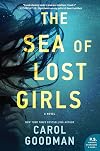
The Sea of Lost Girls by Carol Goodman is a read that will keep you guessing, even when you might think you know who did it, and keep you turning pages. It is a quick read but, in some ways, one that you might should try to slow down a little while reading.
I saw Tess referred to as an unreliable narrator, and I can't disagree, but I don't think she qualifies in the way that the term is usually intended. We often think of a narrator who is consciously telling a story to us and who either flat show more out lies or twists the truth to make their version absolve or vindicate themselves. This first person narration is more a case of us being inside her head as she thinks and acts, so what she says is what she tells herself. This is also where I think trying to slow down our reading is helpful so we don't think that she is lying to us when what she is doing is practicing what she intends to say to someone else. She may be preparing to lie to them, but she is not doing so to us. But we have to be cognizant of the framing of any story she tells, whether to herself or to another.
I also am not a fan of using the empty phrase "she was unlikable" to judge a book. My problem with whether a character is likable or not as a judging tool is that we are mixing our reality with the world of the novel and not doing justice to the book. First of all, we are privy to far more information about a character in a book, particularly a first person narration, than we are about people up and down the street, even friends and some family. That extra information will likely bring out the blemishes in a person as well as any redeeming qualities. Fine, so I might decide I wouldn't like this person if I was in their world or if they were in mine. But neither is the case, so, who cares if I find the person likable or not? And I can feel, and usually do feel, empathy and compassion for people I don't like, and even some I actually dislike. So liking a character or not means little to nothing as a judging factor. Unless, of course, one only feels empathy and compassion for those one likes. If so, well, I'm sorry for everyone you know, hope they realize the shallowness of the person they share space with.
Yes, Tess is a helicopter mom and believes she is doing so for valid reasons. Do I agree? I'm not sure, but I don't know what I would do if I had been traumatized and felt I needed to go to extremes to protect my child. Sometimes what we do to protect our children can have the opposite effect. But most of us aren't perfect enough to know this while we are going through it.
The twists and turns in the plot were very well planned and executed well. Some, as I have also seen, could have been avoided if people had just talked to each other. Well, that is true of just about everything. But what seems so obvious to a reader while reading a fictional story wouldn't feel so obvious to that same person if they were going through it in real life. So I have no problem believing that people didn't want to "discuss" personal issues with other people. And some things are not easy to bring up when first getting to know someone, then when you're close to that person, they become difficult to bring up because they weren't brought up before. Well, for most of us who aren't perfect enough to know exactly what topics to discuss with every acquaintance we have at just the right time. But reviewers are apparently often perfect people and know exactly what they would have done and because of that they can't relate and can't empathize. Oh well, so sad.
I highly recommend this to readers who like to be inside the head of the protagonist, blemishes and all, while a highly unusual series of events play out. The characters are mostly well rounded and there are none who come off as too good or, ultimately, too bad. Well, maybe a couple do come off as bad people, but they get theirs, so...
Reviewed from a copy made available through Goodreads First Reads. show less
I saw Tess referred to as an unreliable narrator, and I can't disagree, but I don't think she qualifies in the way that the term is usually intended. We often think of a narrator who is consciously telling a story to us and who either flat show more out lies or twists the truth to make their version absolve or vindicate themselves. This first person narration is more a case of us being inside her head as she thinks and acts, so what she says is what she tells herself. This is also where I think trying to slow down our reading is helpful so we don't think that she is lying to us when what she is doing is practicing what she intends to say to someone else. She may be preparing to lie to them, but she is not doing so to us. But we have to be cognizant of the framing of any story she tells, whether to herself or to another.
I also am not a fan of using the empty phrase "she was unlikable" to judge a book. My problem with whether a character is likable or not as a judging tool is that we are mixing our reality with the world of the novel and not doing justice to the book. First of all, we are privy to far more information about a character in a book, particularly a first person narration, than we are about people up and down the street, even friends and some family. That extra information will likely bring out the blemishes in a person as well as any redeeming qualities. Fine, so I might decide I wouldn't like this person if I was in their world or if they were in mine. But neither is the case, so, who cares if I find the person likable or not? And I can feel, and usually do feel, empathy and compassion for people I don't like, and even some I actually dislike. So liking a character or not means little to nothing as a judging factor. Unless, of course, one only feels empathy and compassion for those one likes. If so, well, I'm sorry for everyone you know, hope they realize the shallowness of the person they share space with.
Yes, Tess is a helicopter mom and believes she is doing so for valid reasons. Do I agree? I'm not sure, but I don't know what I would do if I had been traumatized and felt I needed to go to extremes to protect my child. Sometimes what we do to protect our children can have the opposite effect. But most of us aren't perfect enough to know this while we are going through it.
The twists and turns in the plot were very well planned and executed well. Some, as I have also seen, could have been avoided if people had just talked to each other. Well, that is true of just about everything. But what seems so obvious to a reader while reading a fictional story wouldn't feel so obvious to that same person if they were going through it in real life. So I have no problem believing that people didn't want to "discuss" personal issues with other people. And some things are not easy to bring up when first getting to know someone, then when you're close to that person, they become difficult to bring up because they weren't brought up before. Well, for most of us who aren't perfect enough to know exactly what topics to discuss with every acquaintance we have at just the right time. But reviewers are apparently often perfect people and know exactly what they would have done and because of that they can't relate and can't empathize. Oh well, so sad.
I highly recommend this to readers who like to be inside the head of the protagonist, blemishes and all, while a highly unusual series of events play out. The characters are mostly well rounded and there are none who come off as too good or, ultimately, too bad. Well, maybe a couple do come off as bad people, but they get theirs, so...
Reviewed from a copy made available through Goodreads First Reads. show less
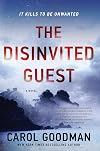
The Disinvited Guest by Carol Goodman is a recommended Gothic thriller
It's around 2030 and a new virus has surfaced. Lucy Harper's husband Reed has invited a small group of five close friends and family to isolate themselves on the island that he and his sister Liz own off the coast of Maine. In the 1850's Fever Island was a quarantine site for Irish famine ships and it has a history of stories claiming it is haunted. They have stock the island with supplies and now plan to wait out the new show more quarantines in isolation. But the history of the island where stories of witches, ghosts, and other spooky beings abound weighs heavy on everyone and when odd occurrences and strange signs begin to appear, the group is on edge. And then it seems that sabotage may threaten the group’s survival.
There are several things that were done right in The Disinvited Guest. The quality of the writing is excellent. The idea of isolating this group of characters on this creepy island is a good concept for a Gothic horror thriller. Providing the island with a tragic history is well played, as are the journal entries from the 1850's included in the plot. The increasing tension and suspicion created as strange occurrences that seem to be supernatural happen, like seeing the Grey Lady, work well. Suspicions are cast upon almost everyone. There are several twists and a surprising ending.
Two major strikes against The Disinvited Guest. First, the characters are truly annoying and not very credible. There were several times I had to suspend my disbelief. Second, this could have been set during a long summer vacation rather than a new plague ten years in the future. The whole concept of "Oh, there is a new pandemic and we must be full of fear" in this novel lost points with me immediately. Pandemic fear fiction is an ill-advised choice to make as a plot element, no matter how inconsequential it may be to the overall narrative. It is also a senseless and annoying concept for the many people who worked as usual throughout the whole event.
Disclosure: My review copy was courtesy of HarperCollins.
http://www.shetreadssoftly.com/2022/07/the-disinvited-guest.html show less
It's around 2030 and a new virus has surfaced. Lucy Harper's husband Reed has invited a small group of five close friends and family to isolate themselves on the island that he and his sister Liz own off the coast of Maine. In the 1850's Fever Island was a quarantine site for Irish famine ships and it has a history of stories claiming it is haunted. They have stock the island with supplies and now plan to wait out the new show more quarantines in isolation. But the history of the island where stories of witches, ghosts, and other spooky beings abound weighs heavy on everyone and when odd occurrences and strange signs begin to appear, the group is on edge. And then it seems that sabotage may threaten the group’s survival.
There are several things that were done right in The Disinvited Guest. The quality of the writing is excellent. The idea of isolating this group of characters on this creepy island is a good concept for a Gothic horror thriller. Providing the island with a tragic history is well played, as are the journal entries from the 1850's included in the plot. The increasing tension and suspicion created as strange occurrences that seem to be supernatural happen, like seeing the Grey Lady, work well. Suspicions are cast upon almost everyone. There are several twists and a surprising ending.
Two major strikes against The Disinvited Guest. First, the characters are truly annoying and not very credible. There were several times I had to suspend my disbelief. Second, this could have been set during a long summer vacation rather than a new plague ten years in the future. The whole concept of "Oh, there is a new pandemic and we must be full of fear" in this novel lost points with me immediately. Pandemic fear fiction is an ill-advised choice to make as a plot element, no matter how inconsequential it may be to the overall narrative. It is also a senseless and annoying concept for the many people who worked as usual throughout the whole event.
Disclosure: My review copy was courtesy of HarperCollins.
http://www.shetreadssoftly.com/2022/07/the-disinvited-guest.html show less

The Water Witch
4 Stars
The enchanting town of Fairwick, New York is not as tranquil as it seems. Home to the last door to Faerie, the town is being threatened by the Grove, a secret and sinister coven of witches determined to seal the door and banish the fae from the human world forever. Half-witch-half-fae professor, Callie MacFay, is caught in the middle while still struggling in the aftermath of banishing her demon lover. In an attempt to release her bound powers in order to help her show more friends, Callie agrees to accept the aid of Duncan Laird, a seductive academic who might have his own agenda. Will Callie be able to save the people she has come to love like family?
So often the second book in a series fails to live up to expectations, but this is not the case for The Water Witch for this sequel is equally as rich in atmosphere, faerie-lore and romance as the original.
It should be noted that readers eager for action-packed urban fantasy or a thrilling paranormal romance might be disappointed. Yes, there is fascinating world building, smexy love scenes and exciting moments, but these are not the focus. Rather the story revolves around Callie learning more about her magical past, discovering her powers and trying to move on from the loss of her incubus.
The plot is comprised of several parallel threads involving a vindictive undine, a an injured Norse demi-god, a secretive cult with a menacing agenda and a dangerous faerie drug. Each is well-developed and all ultimately coalesce into a satisfying climax and resolution.
The events of the previous book are seamlessly interwoven within the new narrative and the reader is never lost or inundated with repetitive detail.
All in all, a beautifully written and captivating story with an appealing heroine and charming secondary characters. The book does end on a minor cliffhanger so be sure to have the final installment handy. Highly recommended for fans of Deborah Harkness's All Souls trilogy. show less
4 Stars
The enchanting town of Fairwick, New York is not as tranquil as it seems. Home to the last door to Faerie, the town is being threatened by the Grove, a secret and sinister coven of witches determined to seal the door and banish the fae from the human world forever. Half-witch-half-fae professor, Callie MacFay, is caught in the middle while still struggling in the aftermath of banishing her demon lover. In an attempt to release her bound powers in order to help her show more friends, Callie agrees to accept the aid of Duncan Laird, a seductive academic who might have his own agenda. Will Callie be able to save the people she has come to love like family?
So often the second book in a series fails to live up to expectations, but this is not the case for The Water Witch for this sequel is equally as rich in atmosphere, faerie-lore and romance as the original.
It should be noted that readers eager for action-packed urban fantasy or a thrilling paranormal romance might be disappointed. Yes, there is fascinating world building, smexy love scenes and exciting moments, but these are not the focus. Rather the story revolves around Callie learning more about her magical past, discovering her powers and trying to move on from the loss of her incubus.
The plot is comprised of several parallel threads involving a vindictive undine, a an injured Norse demi-god, a secretive cult with a menacing agenda and a dangerous faerie drug. Each is well-developed and all ultimately coalesce into a satisfying climax and resolution.
The events of the previous book are seamlessly interwoven within the new narrative and the reader is never lost or inundated with repetitive detail.
All in all, a beautifully written and captivating story with an appealing heroine and charming secondary characters. The book does end on a minor cliffhanger so be sure to have the final installment handy. Highly recommended for fans of Deborah Harkness's All Souls trilogy. show less
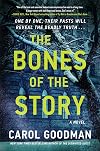
This is an author that I really enjoy, having read two of her previous books. This was the perfect opportunity to become reacquainted with her work. This one had plenty of dark academia vibes and was also a locked-room mystery. The atmospheric pull to it gave the reader a true feeling of "being there". I am not particularly an Agatha Christie fan, but I loved Christie's "And Then There Were None" and this one made me think of that. The vibes are certainly there, but this author put her own show more spin on things so that you never really knew what to expect. There is a very strong sense of place, and I am always a fan of that. The wintry setting completely sets the mood and adds to the overall tension. This is a dark and ominous story that kept me engaged from start to finish. Between the traditions of the school that we learn from the past storylines to the secrets that are being kept, this is one twisted story that you cannot stop reading. It kept me guessing all the way through. show less
Lists
Awards


You May Also Like


Associated Authors
Statistics
- Works
- 26
- Members
- 8,916
- Popularity
- #2,695
- Rating
- 3.6
- Reviews
- 588
- ISBNs
- 265
- Languages
- 10
- Favorited
- 25
