

Elizabeth Kostova
Author of The Historian
About the Author
Series
Works by Elizabeth Kostova
The Historian {abridged audiobook} 3 copies
Krajina tieňov 1 copy
Associated Works
Tagged
Common Knowledge
- Legal name
- Johnson Kostova, Elizabeth
- Birthdate
- 1964-12-26
- Gender
- female
- Education
- Yale University (BA|1988)
University of Michigan (MFA|2004)
Webb School, Knoxville, Tennessee, USA - Occupations
- author
novelist - Organizations
- Elizabeth Kostova Foundation
- Awards and honors
- Hopwood Award (2003)
Quill Award (2006)
Lord Ruthven Award (2006)
Book Sense Book of the Year (2006) - Relationships
- Johnson, Victoria (sister)
Kostov, Gyorgi (husband) - Nationality
- USA
- Birthplace
- New London, Connecticut, USA
- Places of residence
- Ann Arbor, Michigan, USA
Knoxville, Tennessee, USA
Ljubljana, Slovenia
Philadelphia, Pennsylvania, USA - Associated Place (for map)
- USA
Members
Discussions
The Historian in Someone explain it to me... (November 2022)
November Fantasy Thread - NO SPOILERS - The Historian in The Green Dragon (November 2012)
November Fantasy Thread - SPOILERS - The Historian in The Green Dragon (November 2012)
Swan Thieves in Girlybooks (October 2012)
The Historian in Thing(amabrarian)s That Go Bump in the Night (May 2008)
Reviews
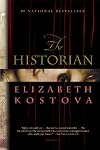
To you, perceptive reader, I bequeath my history....Late one night, exploring her father's library, a young woman finds an ancient book and a cache of yellowing letters. The letters are all addressed to "My dear and unfortunate successor," and they plunge her into a world she never dreamed of-a labyrinth where the secrets of her father's past and her mother's mysterious fate connect to an inconceivable evil hidden in the depths of history.The letters provide links to one of the darkest show more powers that humanity has ever known-and to a centuries-long quest to find the source of that darkness and wipe it out. It is a quest for the truth about Vlad the Impaler, the medieval ruler whose barbarous reign formed the basis of the legend of Dracula. Generations of historians have risked their reputations, their sanity, and even their lives to learn the truth about Vlad the Impaler and Dracula. Now one young woman must decide whether to take up this quest herself-to follow her father in a hunt that nearly brought him to ruin years ago, when he was a vibrant young scholar and her mother was still alive. What does the legend of Vlad the Impaler have to do with the modern world? Is it possible that the Dracula of myth truly existed-and that he has lived on, century after century, pursuing his own unknowable ends? The answers to these questions cross time and borders, as first the father and then the daughter search for clues, from dusty Ivy League libraries to Istanbul, Budapest, and the depths of Eastern Europe. In city after city, in monasteries and archives, in letters and in secret conversations, the horrible truth emerges about Vlad the Impaler's dark reign-and about a time-defying pact that may have kept his awful work alive down through the ages.Parsing obscure signs and hidden texts, reading codes worked into the fabric of medieval monastic traditions-and evading the unknown adversaries who will go to any lengths to conceal and protect Vlad's ancient powers-one woman comes ever closer to the secret of her own past and a confrontation with the very definition of evil. Elizabeth Kostova's debut novel is an adventure of monumental proportions, a relentless tale that blends fact and fantasy, history and the present, with an assurance that is almost unbearably suspenseful-and utterly unforgettable. show less
This is such a superbly constructed novel, the framework being told by the narrator, never named, but the majority of the book in epistolary form through the letters and journals of her father and her father's professor, with some additional letters from her mother. It perhaps this, along with the pacing, which gives the book a slightly old-fashioned feel, but this certainly isn't a cause for complaint. The way that the narrator reads something in her father's journal that he has discovered show more in a letter from his professor
This superbly constructed novel follows the teenage daughter of a US diplomat as she seeks to unravel the dark secret that obsesses her father, using his journals which record events of some years before she was born, including notes of letters of his college professor. This nested style might have been awkward, but is handled with such deft skill that it flows beautifully. The epistolary form, and perhaps something in the pacing, gives the book a slightly old fashioned air, but this is certainly not a complaint. Rather, Kostova is happy to enthrall the reader gradually with exquisite detail and carefully paced reveals instead of the fast jump cuts more common in a modern thriller.
This pace, and the space of the 720 pages, allows for some wonderful travelogue throughout Europe – Sophia, Budapest, Oxford, rural Romania – and to Istanbul, that is exquisite and never superfluous, along with the exploration of some interesting themes, among them the shifting patterns of political and religious power in Eastern Europe over the last half millennium and an aside on the horrific possibilities if someone like Stalin were able to become immortal, and a continued revelling in a love of books and learning – although this is made rather uncomfortable when we find who the historian of the title actually refers to.
(Slight spoiler – but only if you have ABSOLUTELY NO IDEA WHAT THIS BOOK IS ABOUT)
For me, one of the books great achievements is to deny one of the central themes of Stoker's original Dracula, where the overriding metaphor is of the contamination of foreign blood. In The Historian, almost all the pivotal figures are of mixed heritage – Professor Rossi is Italian-English, and in his daughter Romanian is added to the mix, and other characters are Italian-Turkish and even Scots-Hungarian Gypsy – and this mixing of cultures and ancestry is foregrounded as a strength.
One last word on the audiobook to which I listened. This was performed superbly by Justine Ayre as the narrator and Paul Michael as everyone else. A book can be made or destroyed in the audio form by the quality of the voice talent, and here Paul Michael especially did a wonderful job, each voice distinct and unique and the accents superb. show less
This superbly constructed novel follows the teenage daughter of a US diplomat as she seeks to unravel the dark secret that obsesses her father, using his journals which record events of some years before she was born, including notes of letters of his college professor. This nested style might have been awkward, but is handled with such deft skill that it flows beautifully. The epistolary form, and perhaps something in the pacing, gives the book a slightly old fashioned air, but this is certainly not a complaint. Rather, Kostova is happy to enthrall the reader gradually with exquisite detail and carefully paced reveals instead of the fast jump cuts more common in a modern thriller.
This pace, and the space of the 720 pages, allows for some wonderful travelogue throughout Europe – Sophia, Budapest, Oxford, rural Romania – and to Istanbul, that is exquisite and never superfluous, along with the exploration of some interesting themes, among them the shifting patterns of political and religious power in Eastern Europe over the last half millennium and an aside on the horrific possibilities if someone like Stalin were able to become immortal, and a continued revelling in a love of books and learning – although this is made rather uncomfortable when we find who the historian of the title actually refers to.
(Slight spoiler – but only if you have ABSOLUTELY NO IDEA WHAT THIS BOOK IS ABOUT)
For me, one of the books great achievements is to deny one of the central themes of Stoker's original Dracula, where the overriding metaphor is of the contamination of foreign blood. In The Historian, almost all the pivotal figures are of mixed heritage – Professor Rossi is Italian-English, and in his daughter Romanian is added to the mix, and other characters are Italian-Turkish and even Scots-Hungarian Gypsy – and this mixing of cultures and ancestry is foregrounded as a strength.
One last word on the audiobook to which I listened. This was performed superbly by Justine Ayre as the narrator and Paul Michael as everyone else. A book can be made or destroyed in the audio form by the quality of the voice talent, and here Paul Michael especially did a wonderful job, each voice distinct and unique and the accents superb. show less
To say that I didn't enjoy this book would be untrue; I did. It has a remarkable way of immersing you in its lush, academia-filled world. The prose is beautiful, and there were several instances when I found myself highlighting and saving quotes and sections. Overall, it was a good moody read for the beginning of October, allowing me to feel the leaves changing while still being in Southern California.
However, the atmospheric descriptions and overall autumn "vibes" couldn't entirely redeem show more this book from the issues I found with it. To start, the layers the narration delved into were, at times, overwhelming. I mean, frame stories upon frame stories with letters and notations. While I grasp the purpose of simulating varied academic sources, it could've only been successful if each narrator had a distinct voice. Unfortunately, that wasn't the case, as there was no real distinction between the voice of the young 16-year-old and her father as a graduate student years prior or any other character thereafter.
Another issue was that my interest waned after about 400 pages, when this book should have ended. Instead, I found myself slogging through to the end and then being disappointed that the final reveal of this great evil, which was supposed to make all the anticipation worth it, was no more frightening than your average academic advisor. Oh, and then the book kept going...
Would I recommend this book? Maybe? If you know what to expect going into it, this could be a fantastic atmospheric novel to pick up and set down for autumn. However, if you're seeking an engaging, "can't-put-it-down" book, this is not it. show less
However, the atmospheric descriptions and overall autumn "vibes" couldn't entirely redeem show more this book from the issues I found with it. To start, the layers the narration delved into were, at times, overwhelming. I mean, frame stories upon frame stories with letters and notations. While I grasp the purpose of simulating varied academic sources, it could've only been successful if each narrator had a distinct voice. Unfortunately, that wasn't the case, as there was no real distinction between the voice of the young 16-year-old and her father as a graduate student years prior or any other character thereafter.
Another issue was that my interest waned after about 400 pages, when this book should have ended. Instead, I found myself slogging through to the end and then being disappointed that the final reveal of this great evil, which was supposed to make all the anticipation worth it, was no more frightening than your average academic advisor. Oh, and then the book kept going...
Would I recommend this book? Maybe? If you know what to expect going into it, this could be a fantastic atmospheric novel to pick up and set down for autumn. However, if you're seeking an engaging, "can't-put-it-down" book, this is not it. show less
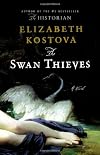
Kostova's prose is rich and elegant, and the story that comes to life here -- rather, the various stories that come to life -- wanders within it beautifully. From the beginning, it's difficult not to be drawn into the world of the painter who chose to attack a painting, and the man who attempts to untangle his story and his sanity.
Yet, there is a 'yet'. Though the novel is entrancing from the beginning, something of its magic is lost as it veers in various directions, from recent history show more back through generations, tracking both letters and lives. Beyond the painter and his therapist, there are other contemporary characters are slightly more superficial, slightly less full, and as various chapters wandered back further into history, I found myself wishing that the novel would have stayed with them, rather than tracing stories so far backward into what was less compelling, except in its relation to the present.
But, all told, there's a calmness and a loveliness to this novel that makes me glad to have stumbled upon it. I think probably that the title and the cover drew me in more than anything, which is fine--I think a reader who's drawn to either will find a lot to love here. I suppose, in the end, I just wish that it had stayed more tightly focused, or spent more of its length upon the women in the book so that they felt a bit more fully considered, and less stereo-typed. When their voices were filling the pages, they were very alive, but when they were in the background, they seemed barely considered, and as if they took a back seat to the looks back in history.
This may be part of the goal of the book, to watch how certain contemporary situations and people paled in comparison to the history with some perspectives, and not with others, but I admit that I could have done with fewer looks back, whether that would have meant more time in the present, or simply a shorter work. Some of those moments felt too... considered, too formed, too perfect. It may be going too far to say that they felt as if they were trying too hard, in a sort of MFA-altered fashion, but I'm not sure it's far from the truth, as they didn't feel fully natural to the book and to the story.
That said, I'm glad to have stumbled on the book, and I'll certainly read Kostova's more widely known Historian, if not more of her work even beyond that. show less
Yet, there is a 'yet'. Though the novel is entrancing from the beginning, something of its magic is lost as it veers in various directions, from recent history show more back through generations, tracking both letters and lives. Beyond the painter and his therapist, there are other contemporary characters are slightly more superficial, slightly less full, and as various chapters wandered back further into history, I found myself wishing that the novel would have stayed with them, rather than tracing stories so far backward into what was less compelling, except in its relation to the present.
But, all told, there's a calmness and a loveliness to this novel that makes me glad to have stumbled upon it. I think probably that the title and the cover drew me in more than anything, which is fine--I think a reader who's drawn to either will find a lot to love here. I suppose, in the end, I just wish that it had stayed more tightly focused, or spent more of its length upon the women in the book so that they felt a bit more fully considered, and less stereo-typed. When their voices were filling the pages, they were very alive, but when they were in the background, they seemed barely considered, and as if they took a back seat to the looks back in history.
This may be part of the goal of the book, to watch how certain contemporary situations and people paled in comparison to the history with some perspectives, and not with others, but I admit that I could have done with fewer looks back, whether that would have meant more time in the present, or simply a shorter work. Some of those moments felt too... considered, too formed, too perfect. It may be going too far to say that they felt as if they were trying too hard, in a sort of MFA-altered fashion, but I'm not sure it's far from the truth, as they didn't feel fully natural to the book and to the story.
That said, I'm glad to have stumbled on the book, and I'll certainly read Kostova's more widely known Historian, if not more of her work even beyond that. show less
Lists
Page Turners (1)
Witchy Fiction (1)
100 Hemskaste (1)
5 Best 5 Years (1)
Awful Books (1)
Shelf 101 (1)
Epistolary Books (1)
Favourite Books (1)
Unread books (1)
Elaina's (1)
Five star books (1)
Female Author (1)
Magic Realism (1)
To Read - Horror (1)
Awards


You May Also Like


Associated Authors
Statistics
- Works
- 10
- Also by
- 2
- Members
- 27,982
- Popularity
- #726
- Rating
- 3.7
- Reviews
- 1,072
- ISBNs
- 177
- Languages
- 26
- Favorited
- 58


