
Kate Mosse
Author of Labyrinth
About the Author
Disambiguation Notice:
Not to be confused with the model Kate Moss.
Series
Works by Kate Mosse
Warrior Queens & Quiet Revolutionaries: How Women (Also) Built the World (2022) 132 copies, 3 reviews
Burning Chambers Series 2 Books Collection Set By Kate Mosse (The Burning Chambers, The City of Tears) (2021) 3 copies
La Cité des morts (French Edition) 2 copies
Guerra senza confini 2 copies
The Taxidermist's Daughter / The Winter Ghosts / The Mistletoe Bride and Other Haunting Tales 2 copies
the ghosts of paris 1 copy
Languedoc 1: Labyrinth 1 copy
100 Great Plays For Women 1 copy
Languedoc 3 : Citadel 1 copy
Languedoc 2 : Sepulchre 1 copy
Associated Works
The Book Lovers' Appreciation Society: Breast Cancer Care Short Story Collection (2009) — Contributor — 97 copies, 1 review
Reader's Digest Select Editions: 61 Hours | The Wish List | The Lock Artist | The Winter Ghosts (2010) — Contributor — 8 copies
Tagged
Common Knowledge
- Canonical name
- Mosse, Kate
- Legal name
- Mosse, Katharine Louise
- Birthdate
- 1961-10-20
- Gender
- female
- Education
- University of Oxford (BA|1984 - New College)
- Occupations
- novelist
broadcaster - Organizations
- Orange Prize for Fiction
- Awards and honors
- European Woman of Achievement (2007)
Order of the British Empire (Officer, 2013) - Relationships
- Mosse, Greg (husband)
- Short biography
- Katharine Louise Mosse OBE (born 20 October 1961) is an English novelist, non-fiction and short story writer and broadcaster. She is best known for her 2005 novel Labyrinth, which has been translated into more than 37 languages.
Mosse was born in Chichester, and raised in Fishbourne, West Sussex, the eldest of three sisters born to a solicitor. Their aunt was involved in the campaign for the ordination of women and her grandfather was a vicar. She was educated at Chichester High School For Girls and New College, Oxford and graduated in 1984 with a BA (Hons) in English. After leaving university, she spent seven years working in publishing in London for Hodder & Stoughton, then Century, and finally as an editorial director at Hutchinson, part of the Random House Group. She was a member of the National Union of Journalists (NUJ) and Women in Publishing.
She left publishing in 1992, for a writing career beginning with the non-fiction, Becoming a Mother. - Nationality
- UK
- Birthplace
- Chichester, West Sussex, England, UK
- Places of residence
- West Sussex, England, UK
- Map Location
- England, UK
- Disambiguation notice
- Not to be confused with the model Kate Moss.
Members
Discussions
Kate Mosse talks about Historical Fiction in Historical Fiction (December 2014)
Reviews
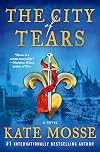
Kate Mosse is such an extraordinary writer that you turn page after page, never stopping to think that you have read 300 pages and still have another 300 pages to go before you find out what history has already taught you. This is another book that when I went to check my notes and highlights - there weren’t any. Speaks to how invested I was in each page. I believed I could remember all the names, the places, the vendettas and the myriad reasons for all the insanity. Power, who has it, who show more wants it, who will do anything to keep it, and who will risk all to wrench it away from the status quo.
It took less than ten pages to remember all that happened in “The Burning Chambers” and become reacquainted with Minou Joubert and Piet Reydon. Mosse’s skill in infusing her characters with realistic qualities of love, fear, selflessness, selfishness, prejudice and hate makes you care about the good and righteous and depise the powerful and depraved. The personal losses are so great there may be no coming back from their edge of the abyss.
Once again Mosse has dropped the reader into the bloody civil wars in France of the 16th Century. The Catholics are killing the Huguenots, the Duke of Guise is looking to cement his position and make the ultimate power grab. The Cardinals are corrupt, the Bishops do their bidding, the leaders are insane and the poor populace is about to be slaughtered.
The political situations created by Catherine De’ Medici, The Duke of Guise and Henri of Navarre make the politics of today look like absolute child’s play.
The ending, the ending, the ending, what next Ms Mosse? Thank you NetGalley and Minotaur Books for a copy show less
It took less than ten pages to remember all that happened in “The Burning Chambers” and become reacquainted with Minou Joubert and Piet Reydon. Mosse’s skill in infusing her characters with realistic qualities of love, fear, selflessness, selfishness, prejudice and hate makes you care about the good and righteous and depise the powerful and depraved. The personal losses are so great there may be no coming back from their edge of the abyss.
Once again Mosse has dropped the reader into the bloody civil wars in France of the 16th Century. The Catholics are killing the Huguenots, the Duke of Guise is looking to cement his position and make the ultimate power grab. The Cardinals are corrupt, the Bishops do their bidding, the leaders are insane and the poor populace is about to be slaughtered.
The political situations created by Catherine De’ Medici, The Duke of Guise and Henri of Navarre make the politics of today look like absolute child’s play.
The ending, the ending, the ending, what next Ms Mosse? Thank you NetGalley and Minotaur Books for a copy show less
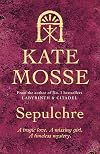
You can't fault Kate Mosse as a storyteller; she is, in fact, an extraordinary one. She's also a respected researcher who deep-dives into the history of a place, in this case, from late19th century Paris to the less sophisticated southern reaches of Languedoc.
The characters who inhabit her novels have unsettling foibles, religious attitudes close to boiling and dangerous superstitions that can be easily stoked by dark and evil forces. In particular, Mosse's Sepulchre has tragic lovers show more unable to avoid a final reckoning, a teenaged heroine, who one moment is a romantic child and the next is a perceptive adult, and a syphilitic monster who seeks sadistic revenge.
This novel, Moose's 2007 second offering in her Labyrinth trilogy, is dark from the Prelude throughout most of its over 700 pages. Interesting subjects, such as the art of Tarot reading and the marriage of Mary Magdalene to Jesus and their bloodline, are peppered throughout the novel and only add to the texture of the story.
This novel ties the past with the present in a propulsive story that won't allow the reader to escape its grasp until the very last page. show less
The characters who inhabit her novels have unsettling foibles, religious attitudes close to boiling and dangerous superstitions that can be easily stoked by dark and evil forces. In particular, Mosse's Sepulchre has tragic lovers show more unable to avoid a final reckoning, a teenaged heroine, who one moment is a romantic child and the next is a perceptive adult, and a syphilitic monster who seeks sadistic revenge.
This novel, Moose's 2007 second offering in her Labyrinth trilogy, is dark from the Prelude throughout most of its over 700 pages. Interesting subjects, such as the art of Tarot reading and the marriage of Mary Magdalene to Jesus and their bloodline, are peppered throughout the novel and only add to the texture of the story.
This novel ties the past with the present in a propulsive story that won't allow the reader to escape its grasp until the very last page. show less
‘’All houses wherein men have lived and died are haunted houses. Through the open doors the harmless phantoms on their errands glide, with feet that make no sound upon the floors.’’
From ‘’Haunted Houses’’
Henry Wadsworth Longfellow
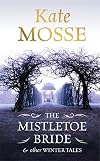
I discovered the beauty of Kate Mosse’s’ writing when I read The Taxidermist’s Daughter. That book quickly became one of my very favourites. The Gothic elements, the British Marshes, the darkness in the people’s soul. My search to read more show more of her work brought me to this beautiful collection where spectres beyond this world meet the ghosts that lurk in our souls.
‘’The Mistletoe Bride’’ : The well-known tale of the bride who was locked in a chest during her wedding night.
‘’Duet’’: An unusual duet, a psychological tale, beautifully echoing one of Poe’s most popular stories.
‘’Red Letter Day’’ : A tale crossing the boundaries of time, set in the haunting city of Carcassonne.
‘’The Drowned Village’’: A bittersweet story set in Brittany that brought to my mind the tales of St. Mark’s Eve which was described in beautiful detail in The Taxidermist’s Daughter.
‘’The House on the Hill’’ : Yes, this story is as mysterious and engaging as its title.
‘’Why the Yew Tree Lives So Long’’ : A beautiful text, an ode to the mysterious yew tree.
‘’Sainte- Terése’’ : Another story from Languedoc. A woman trapped in a suffocating relationship finds comfort in the most unusual of places.
‘’The Ship of the Dead’’ : A self-explanatory title, and perhaps, the scariest tale in the collection. Set in Brittany.
‘’La Fille de Mélisande’’ : A beautiful tale that is inspired by Debussy’s opera Pelleas et Mélisande.
‘’The Revenant’’ : A tale set in the Fishbourne Marshes, in Sussex, where The Taxidermist’s Daughter is set. A wintery tale of mists and sins of the past, containing many elements that made me believe it paved the way for Mosse’s extraordinary novel.
‘’On Harting Hill’’: A beautiful rendition of the Vanishing Hitchhiker legend.
‘’The Princess Alice’’: The sad story of a doomed family. This story contains a lovely scene, where the main character is browsing books in the middle of a storm,lost in her own world. Every bookworm will find this moment familiar. .
‘’In the Theatre at Night’’: When I was a child, I had this weird notion that my toys certainly came alive while I was sleeping, at those hours of the night when the world falls silent. (The fact that I grew up with Tchaikovsky's The Nutcracker didn’t really help…) When I became an adult -theoretically speaking- and up to this day, I want to believe that theatres come alive once the lights go out and the backstage door is locked. This is a beautiful,poetic text, an hymn to Theatre and the tangible connections between the Past and the Present.
‘’The Yellow Scarf’’: The last story in the collection that brings the course full circle. We meet the Bride amidst the fight of the civil war.
‘’Syrinx’’: The first short play by Mosse, a story of women who were wronged and who wronged others in their turn. I can't say I was impressed by it. In my opinion, it didn't fit in the collection, it lacked the atmosphere and the beauty of the previous tales.
This is one of the most beautiful collection of stories I've ever read. The language is beautiful, sometimes raw, always poetic, dark and thick as the mists that cover the landscapes where the hauntings take place. The illustrations by Rohan Daniel Eason are eerie and powerful in their simplicity and depict the essence of each story perfectly. And they’re scary, I guarantee you that, There were two-three tales that had me looking over shoulder during the night.
I never, ever comment on reviews, but there were two things that attracted my attention and I just can't keep silent tonight. :). I read a comment in how the stories are clichéd. They’re not. If you feel you had read something similar before, you are correct. Mosse has taken well-known tales and legends and presented her own image. If that is what ‘’cliché’’ means, then every book ever written on King Arthur is clichéd as well. She explains her source of inspiration in Author’s Notes at the end of each tale, which brings me to a comment about how this technique diminished the magic of the stories. No, in my opinion, it adds up to it and makes us want to search for even more sources and versions of the legends. If we bother, that is…
Do you know what made me appreciate this collection so much? The feeling of hope it inspires. Yes, we have darkness and death and injustice, but we have also hope, the human strength to overcome not only the ghosts of a supernatural universe, but the hauntings of our actions and wrongdoings that are far more resilient than their spectral kins.And once we overcome those, then there are too few things to be afraid of..If you want gore and jump scares and ‘’boos’’ in the dark, then this collection won’t suit your interests. If you love the haunting kind of beauty and a proper look into the human psyche, then read this book on a winter's night, on Midsummer’s Eve, on Halloween, on a stormy evening... show less
From ‘’Haunted Houses’’
Henry Wadsworth Longfellow
I discovered the beauty of Kate Mosse’s’ writing when I read The Taxidermist’s Daughter. That book quickly became one of my very favourites. The Gothic elements, the British Marshes, the darkness in the people’s soul. My search to read more show more of her work brought me to this beautiful collection where spectres beyond this world meet the ghosts that lurk in our souls.
‘’The Mistletoe Bride’’ : The well-known tale of the bride who was locked in a chest during her wedding night.
‘’Duet’’: An unusual duet, a psychological tale, beautifully echoing one of Poe’s most popular stories.
‘’Red Letter Day’’ : A tale crossing the boundaries of time, set in the haunting city of Carcassonne.
‘’The Drowned Village’’: A bittersweet story set in Brittany that brought to my mind the tales of St. Mark’s Eve which was described in beautiful detail in The Taxidermist’s Daughter.
‘’The House on the Hill’’ : Yes, this story is as mysterious and engaging as its title.
‘’Why the Yew Tree Lives So Long’’ : A beautiful text, an ode to the mysterious yew tree.
‘’Sainte- Terése’’ : Another story from Languedoc. A woman trapped in a suffocating relationship finds comfort in the most unusual of places.
‘’The Ship of the Dead’’ : A self-explanatory title, and perhaps, the scariest tale in the collection. Set in Brittany.
‘’La Fille de Mélisande’’ : A beautiful tale that is inspired by Debussy’s opera Pelleas et Mélisande.
‘’The Revenant’’ : A tale set in the Fishbourne Marshes, in Sussex, where The Taxidermist’s Daughter is set. A wintery tale of mists and sins of the past, containing many elements that made me believe it paved the way for Mosse’s extraordinary novel.
‘’On Harting Hill’’: A beautiful rendition of the Vanishing Hitchhiker legend.
‘’The Princess Alice’’: The sad story of a doomed family. This story contains a lovely scene, where the main character is browsing books in the middle of a storm,lost in her own world. Every bookworm will find this moment familiar. .
‘’In the Theatre at Night’’: When I was a child, I had this weird notion that my toys certainly came alive while I was sleeping, at those hours of the night when the world falls silent. (The fact that I grew up with Tchaikovsky's The Nutcracker didn’t really help…) When I became an adult -theoretically speaking- and up to this day, I want to believe that theatres come alive once the lights go out and the backstage door is locked. This is a beautiful,poetic text, an hymn to Theatre and the tangible connections between the Past and the Present.
‘’The Yellow Scarf’’: The last story in the collection that brings the course full circle. We meet the Bride amidst the fight of the civil war.
‘’Syrinx’’: The first short play by Mosse, a story of women who were wronged and who wronged others in their turn. I can't say I was impressed by it. In my opinion, it didn't fit in the collection, it lacked the atmosphere and the beauty of the previous tales.
This is one of the most beautiful collection of stories I've ever read. The language is beautiful, sometimes raw, always poetic, dark and thick as the mists that cover the landscapes where the hauntings take place. The illustrations by Rohan Daniel Eason are eerie and powerful in their simplicity and depict the essence of each story perfectly. And they’re scary, I guarantee you that, There were two-three tales that had me looking over shoulder during the night.
I never, ever comment on reviews, but there were two things that attracted my attention and I just can't keep silent tonight. :). I read a comment in how the stories are clichéd. They’re not. If you feel you had read something similar before, you are correct. Mosse has taken well-known tales and legends and presented her own image. If that is what ‘’cliché’’ means, then every book ever written on King Arthur is clichéd as well. She explains her source of inspiration in Author’s Notes at the end of each tale, which brings me to a comment about how this technique diminished the magic of the stories. No, in my opinion, it adds up to it and makes us want to search for even more sources and versions of the legends. If we bother, that is…
Do you know what made me appreciate this collection so much? The feeling of hope it inspires. Yes, we have darkness and death and injustice, but we have also hope, the human strength to overcome not only the ghosts of a supernatural universe, but the hauntings of our actions and wrongdoings that are far more resilient than their spectral kins.And once we overcome those, then there are too few things to be afraid of..If you want gore and jump scares and ‘’boos’’ in the dark, then this collection won’t suit your interests. If you love the haunting kind of beauty and a proper look into the human psyche, then read this book on a winter's night, on Midsummer’s Eve, on Halloween, on a stormy evening... show less

I think I have found a new favorite author. After I picked this up in a used bookstore and had read about 100 pages, I was hooked. Next time I was in a (different) used bookstore I found four more titles and snapped them all up. Even though this is apparently #2 in a three-volume series, I haven’t read nor have I yet found Labryrinth, the first one. Maybe I’ll look for that on Libby or something, but I digress.
This was an engrossing story. While I’m not personally into occult stuff, show more Tarot cards and the like, I do appreciate a good historical discovery story. I especially loved in this one the merciless way that Mosse, through her (secondary?) lead character Meredith Martin, absolutely buried The da Vinci Code on p 335. She’s talking with a hotelier named Hal who eventually proves to be an ally in her quest. The quote starts off with Hal speaking:
“I’m assuming you know the basic story about the place?”
[Meredith] shook her head, “Don’t think so…”
“It’s the village that sparked all the *Holy Blood and the Holy Grail* stuff? *Da Vinci Code*? *The Templar Legacy*? Ringing any bells? Bloodline of Christ?”
Meredith pulled a face. “Sorry, I’m more a non-fiction girl—biography, history, theory, that kind of stuff. Facts.”
I downgraded the rating an extra half-star for a geographical mistake: Meredith Martin is from the Raleigh-Durham area of North Carolina, “not far from her alma mater, the University of North Carolina.” UNC is in Chapel Hill. The three cities Raleigh, Durham, and Chapel Hill are close enough to one another to be called “the Research Triangle.” However, associating UNC with either Raleigh or Durham—or worse, as here, both—would cause great offense. I was once corrected on this point by a gentleman(?) who crudely informed me “Douche (Duke) is in Durham!” show less
This was an engrossing story. While I’m not personally into occult stuff, show more Tarot cards and the like, I do appreciate a good historical discovery story. I especially loved in this one the merciless way that Mosse, through her (secondary?) lead character Meredith Martin, absolutely buried The da Vinci Code on p 335. She’s talking with a hotelier named Hal who eventually proves to be an ally in her quest. The quote starts off with Hal speaking:
“I’m assuming you know the basic story about the place?”
[Meredith] shook her head, “Don’t think so…”
“It’s the village that sparked all the *Holy Blood and the Holy Grail* stuff? *Da Vinci Code*? *The Templar Legacy*? Ringing any bells? Bloodline of Christ?”
Meredith pulled a face. “Sorry, I’m more a non-fiction girl—biography, history, theory, that kind of stuff. Facts.”
I downgraded the rating an extra half-star for a geographical mistake: Meredith Martin is from the Raleigh-Durham area of North Carolina, “not far from her alma mater, the University of North Carolina.” UNC is in Chapel Hill. The three cities Raleigh, Durham, and Chapel Hill are close enough to one another to be called “the Research Triangle.” However, associating UNC with either Raleigh or Durham—or worse, as here, both—would cause great offense. I was once corrected on this point by a gentleman(?) who crudely informed me “Douche (Duke) is in Durham!” show less
Lists
Awards


You May Also Like


Associated Authors
Statistics
- Works
- 40
- Also by
- 14
- Members
- 16,509
- Popularity
- #1,373
- Rating
- 3.7
- Reviews
- 580
- ISBNs
- 430
- Languages
- 23
- Favorited
- 20


