
S. J. Parris
Author of Heresy
About the Author
Disambiguation Notice:
S. J. Parris is the pen name of Stephanie Merritt, a contributing journalist for various newspapers and magazines, including the Observer and the Guardian. [Heresy (2010)]
Image credit: Stephanie Jane Merritt aka S.J. Parris, at Edinburgh International Book Festival at Charlotte Square Gardens on August 14, 2016 in Edinburgh, Scotland
Series
Works by S. J. Parris
Die heilende Kraft der klassischen Musik. Eine Entdeckungsreise zu mehr Kreativität und Lebensenergie. (1998) 2 copies, 1 review
Heresy 1 copy
Tagged
Common Knowledge
- Legal name
- Merritt, Stephanie Jane
- Other names
- Parris, S. J.
- Birthdate
- 1974
- Gender
- female
- Education
- University of Cambridge (Queens' College)
- Occupations
- journalist
critic
novelist - Organizations
- The Observer (deputy literary editor)
- Nationality
- UK
- Birthplace
- Surrey, England, UK
- Places of residence
- England, UK
- Disambiguation notice
- S. J. Parris is the pen name of Stephanie Merritt, a contributing journalist for various newspapers and magazines, including the Observer and the Guardian. [Heresy (2010)]
- Associated Place (for map)
- England, UK
Members
Reviews
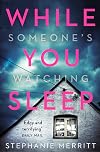
An atmospheric story, see on a small island off the coast of Scotland, Stephanie Merritt has written a book that captures the hauntings and horrors of the traditional Gothic novel. Onto this island, comes Zoe, trying to escape from her past in America and her fragile relationship with her husband. She has rented a house in a remote location, which locally has the reputation for unexplained events dating back to the Victorian era and the disappearance of a boy a year earlier. Zoe’s fragile show more mental state is not helped by stories of these events and a growing fear that she is repeating the life of Ailsa McBride all that time ago. Merritt keeps the reader guessing and glued as to whether Zoe’s experiences are real or conjured by her imagination, as the story careers and lurches to a chilling ending. show less
The Dead of Winter: three novellas The Secret Dead, The Academy of Secrets, A Christmas Requiem by S. J. Parris
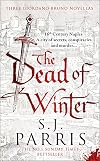
S. J. Parris’ seven-book series of 16th Century historical mysteries, built around the real-life figure of Giordano Bruno, an Italian philosopher, poet, alchemist, astronomer, cosmological theorist, and esotericist, has been recommended to me repeatedly, so I decided to sample the series by reading three novellas , written as prequels to the first book, starting when Giordano Bruno first entered the Dominican Order at the monastery of San Domenico Maggiore in Naples in 1566.
Originally show more published separately, the three novellas are now available in a single volume called ‘The Dead of Winter’. I think they work well together. Giordano Bruno developed over the course of the three novellas, and my picture of the world he lived in grew progressively darker.
I’m now keen to read the Giordano Bruno novels so I can see how he fares in the court of Elizabeth I.
THE SECRET DEAD
This was an enjoyable introduction to Giordano Bruno. He immediately felt real to me.
I was surprised that he was a Dominican, given their role as Inquisitors at this time, but S. J. Parris did a good job of showing it as a pragmatic choice for a young man with no fortune.
The story has a strong sense of place and time, depicting Naples as a violent, choleric city with too many people squeezing into too small a space, all of them living in the shadow of both of Versuvious and the occupying Spanish forces. It’s a rich city where life is cheep, everyone carries a knife and the gap between what people do and what Church and State demand of them is wide enough for a man easily to fall into it and lose himself.
The mystery was straightforward but well-told. The autopsy scene was graphic without being exploitative. Investigating the murder of the young woman also set Bruno on the path towards heresy, prompting him to put more trust in his own scientific investigations than in the brutally enforced dogma of the Church.
I liked how the mystery demonstrated the power structures in Naples and the pressures to conform that Bruno was under. The ending was credible and made me cheer.
THE ACADEMY OF SECRETS
This novella rounds out Bruno’s intellect and rebellious nature by entangling him with a secret society devoted to the understanding of Natural Magic (Science).
This story demonstrates that, although Bruno is an intellectual prodigy, he can put himself and others in danger because he has no patience with, or understanding of, politics, and is in the grip of a young man’s strong passions.
I admired how S. J. Parris evoked a world where the pursuit of forbidden knowledge could be fatal and where a person with no rank is at the mercy of the nobility.
In this story, the people were more important than the plot, but the plot still delivered some tension and excitement.
A CHRISTMAS REQIUM
This was the longest, darkest and best of the novellas. I was fascinated and appalled, but not surprised, by the Rome described in the novella.
I admired S. J. Parris’ skill in helping me see the Cardinals and the Pope as real people, with passions, ambitions and character flaws rather than pieces on a theocratic chessboard. Making them more human actually made them much more frightening.
In this story, the twenty-one-year-old Bruno discovers the hazards of being clever and flippant in the presence of men who can have you tortured and killed for the beliefs you hold and the books you’ve read. I liked that Bruno is both exceptionally bright and remarkably stupid. His naivety, arrogance and lack of impulse control got him into an astonishing amount of trouble in Rome in a very short time.
Part of what made this story so dark was knowing that the real Giordano Bruno was eventually killed by the Inquisition in Rome in 1600, thirty-one years after the events in this novella; he was burned at the stake in Rome in the Campo dei Fiori. S. J. Parris foreshadows this by having Bruno sneak out of the Dominican headquarters in Rome during a time of fasting. He finds something to eat at a café in the Campo de Fiori. He enjoys his meal up to the point where he spots a pole on the centre of the market used for the tormento della cordia, a torture devi show less
Originally show more published separately, the three novellas are now available in a single volume called ‘The Dead of Winter’. I think they work well together. Giordano Bruno developed over the course of the three novellas, and my picture of the world he lived in grew progressively darker.
I’m now keen to read the Giordano Bruno novels so I can see how he fares in the court of Elizabeth I.
THE SECRET DEAD
This was an enjoyable introduction to Giordano Bruno. He immediately felt real to me.
I was surprised that he was a Dominican, given their role as Inquisitors at this time, but S. J. Parris did a good job of showing it as a pragmatic choice for a young man with no fortune.
The story has a strong sense of place and time, depicting Naples as a violent, choleric city with too many people squeezing into too small a space, all of them living in the shadow of both of Versuvious and the occupying Spanish forces. It’s a rich city where life is cheep, everyone carries a knife and the gap between what people do and what Church and State demand of them is wide enough for a man easily to fall into it and lose himself.
The mystery was straightforward but well-told. The autopsy scene was graphic without being exploitative. Investigating the murder of the young woman also set Bruno on the path towards heresy, prompting him to put more trust in his own scientific investigations than in the brutally enforced dogma of the Church.
I liked how the mystery demonstrated the power structures in Naples and the pressures to conform that Bruno was under. The ending was credible and made me cheer.
THE ACADEMY OF SECRETS
This novella rounds out Bruno’s intellect and rebellious nature by entangling him with a secret society devoted to the understanding of Natural Magic (Science).
This story demonstrates that, although Bruno is an intellectual prodigy, he can put himself and others in danger because he has no patience with, or understanding of, politics, and is in the grip of a young man’s strong passions.
I admired how S. J. Parris evoked a world where the pursuit of forbidden knowledge could be fatal and where a person with no rank is at the mercy of the nobility.
In this story, the people were more important than the plot, but the plot still delivered some tension and excitement.
A CHRISTMAS REQIUM
This was the longest, darkest and best of the novellas. I was fascinated and appalled, but not surprised, by the Rome described in the novella.
I admired S. J. Parris’ skill in helping me see the Cardinals and the Pope as real people, with passions, ambitions and character flaws rather than pieces on a theocratic chessboard. Making them more human actually made them much more frightening.
In this story, the twenty-one-year-old Bruno discovers the hazards of being clever and flippant in the presence of men who can have you tortured and killed for the beliefs you hold and the books you’ve read. I liked that Bruno is both exceptionally bright and remarkably stupid. His naivety, arrogance and lack of impulse control got him into an astonishing amount of trouble in Rome in a very short time.
Part of what made this story so dark was knowing that the real Giordano Bruno was eventually killed by the Inquisition in Rome in 1600, thirty-one years after the events in this novella; he was burned at the stake in Rome in the Campo dei Fiori. S. J. Parris foreshadows this by having Bruno sneak out of the Dominican headquarters in Rome during a time of fasting. He finds something to eat at a café in the Campo de Fiori. He enjoys his meal up to the point where he spots a pole on the centre of the market used for the tormento della cordia, a torture devi show less
Alchemy: The latest new gripping historical crime thriller from the Sunday Times bestselling author (Giordano Bruno, Book 7) by S. J. Parris
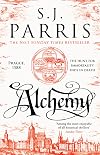
This seventh entry in the author's series of 16th century murder mysteries sees historical Italian religious renegade Giordano Bruno called to investigate the murder of an alchemist in Prague, the capital city of Holy Roman Emperor Rudolf II. Rudolf is eccentric and capricious but also a patron of artists and scientists and a protector of the city's Jewish community against the extremely widespread anti Semitism of the time. Various factions want to sow hatred of the city's Jews and/or show more topple the Emperor, and the machinations of Bruno's old nemeses in the Catholic church are as ever in the background. The real reasons for the murder of the alchemist and the later murder of a Jewish bookseller relate to murkier doings and include what I thought was a ludicrous plot element around the Emperor and a young Jewish woman, Esther. After the resolution of the plot threads, Bruno is left contemplating a job offer of Imperial librarian. show less
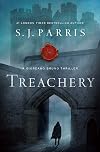
The Giodano Bruno series of historical mysteries by S. J. Parris, just gets better and better. I read a lot of historical mysteries, and the genre's greatest weakness is that most authors can either develop characters effectively or design mysteries complex enough to remain mysteries until the novel's end. Parris is one of those rare writers who can offer both simultaneously, which makes her Giordano Bruno series a particular pleasure.
In Treachery, Bruno is headed to Plymouth with Sir Philip show more Sidney, who has been charged with escorting the deposed Portuguese ruler to London for a meeting with Elizabeth I. Sidney has dreams of joining Sir Frances Drake's fleet, which is moored in Plymouth preparing an attack on Spanish ports where English ships are being held.
Sidney's scheming offers a bit of comic relief to accompany the mystery at the novel's heart. One of Drake's crew members has apparently committed suicide, though Drake suspects murder. Sidney offers Bruno's detecting skills to Drake in hopes of currying favor.
That's the set-up. What is wonderful is that this mystery really is a mystery. Time and again, the mystery seems to have been solved, only to have deeper layers of the puzzle revealed. A reader may make one or two correct guesses while reading, but it's a rare reader who will be able to puzzle out the entire mystery before Bruno does.
Bonus: there's also a Gnostic gospel, purportedly the testament of Judas Iscariot, playing its own role in the complications. What more can a reader of historical mysteries ask for? show less
In Treachery, Bruno is headed to Plymouth with Sir Philip show more Sidney, who has been charged with escorting the deposed Portuguese ruler to London for a meeting with Elizabeth I. Sidney has dreams of joining Sir Frances Drake's fleet, which is moored in Plymouth preparing an attack on Spanish ports where English ships are being held.
Sidney's scheming offers a bit of comic relief to accompany the mystery at the novel's heart. One of Drake's crew members has apparently committed suicide, though Drake suspects murder. Sidney offers Bruno's detecting skills to Drake in hopes of currying favor.
That's the set-up. What is wonderful is that this mystery really is a mystery. Time and again, the mystery seems to have been solved, only to have deeper layers of the puzzle revealed. A reader may make one or two correct guesses while reading, but it's a rare reader who will be able to puzzle out the entire mystery before Bruno does.
Bonus: there's also a Gnostic gospel, purportedly the testament of Judas Iscariot, playing its own role in the complications. What more can a reader of historical mysteries ask for? show less
Lists
Awards


You May Also Like


Associated Authors
Statistics
- Works
- 27
- Members
- 4,256
- Popularity
- #5,907
- Rating
- 3.7
- Reviews
- 247
- ISBNs
- 191
- Languages
- 7
- Favorited
- 6

