
Andrew Swanston
Author of The King's Spy
About the Author
Series
Works by Andrew Swanston
Tagged
Common Knowledge
- Gender
- male
Members
Reviews
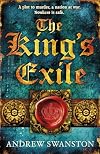
Received in ebook format from www.netgalley.com
It was only after checking online that I realised that this was #2 in a series - there has clearly been events in #1 that would explain why Thomas rapidly finds himself on a boat going to Barbados as an indentured servant, to work for two violent vicious thugs on a sugar plantation. They are physically and verbally violent, mainly towards their betters and women. Much of the violence is implied (screams in the distance etc), with only the show more occasional slightly more graphical indication of events - such as when boiling sugar strips away flesh from an unfortunate slave.
Thomas spends his first two years working for the Gibbes brothers, whose threats of violence (and occasional whipping) seem to be enough to keep Thomas from escaping. The threats allow for no interaction with the black slaves on the estate and there is only one mulatto from another estate who is educated and well spoken enough for no attempt to be made at a patois. There are the occasional scenes of the Boiling room etc, but in every situation Thomas is on his own, with no interaction with the black slaves.
Thomas escapes and takes refuge with another plantation owner and the next few years sees him recovering from his treatment and becoming a useful member to the plantation owners. This is a difficult time for the inhabitants of Barbados, where news from England is slow to arrive and does not rapidly reflect the ever changing politics around the Monarchy and Oliver Cromwell's waning fortunes. Politics seem to be at the mercy of the local inhabitants as much as what is going on in England.
There are several bloody fights where people are protecting both their specific plantations, and the wider island against invaders. It many instances people are dispatched in a bloody and violent manner. Finally Thomas manages to reach his just rewards and return home with his family and rich and more contented man.
My overall feeling was that it was very.... dispassionate and disconnected. Whilst an interesting story, I wasn't really that engaged with the main character or any of the supporting people (the most amusing and satisfying bit being the unmarried Mary's reasoning for not wanting to lose one of her legs as "Charles likes the way my legs wrap around him"). The sister and nieces were so one-dimensional as to be non-entities - I dont know if they were more rounded in the previous book - or will be in further books.
This is a section of history that I don't know much about - just what *was* the effect of the change in monarchy on the Slave Trade and the Colonies? I'm sure that the daily lives of all people working in the sugar trade was more brutal and short as envisioned in this book.
So in short, a nice interlude of a story that wasnt a deep commentary on history or slavery but which had the opportunity of being so much more. show less
It was only after checking online that I realised that this was #2 in a series - there has clearly been events in #1 that would explain why Thomas rapidly finds himself on a boat going to Barbados as an indentured servant, to work for two violent vicious thugs on a sugar plantation. They are physically and verbally violent, mainly towards their betters and women. Much of the violence is implied (screams in the distance etc), with only the show more occasional slightly more graphical indication of events - such as when boiling sugar strips away flesh from an unfortunate slave.
Thomas spends his first two years working for the Gibbes brothers, whose threats of violence (and occasional whipping) seem to be enough to keep Thomas from escaping. The threats allow for no interaction with the black slaves on the estate and there is only one mulatto from another estate who is educated and well spoken enough for no attempt to be made at a patois. There are the occasional scenes of the Boiling room etc, but in every situation Thomas is on his own, with no interaction with the black slaves.
Thomas escapes and takes refuge with another plantation owner and the next few years sees him recovering from his treatment and becoming a useful member to the plantation owners. This is a difficult time for the inhabitants of Barbados, where news from England is slow to arrive and does not rapidly reflect the ever changing politics around the Monarchy and Oliver Cromwell's waning fortunes. Politics seem to be at the mercy of the local inhabitants as much as what is going on in England.
There are several bloody fights where people are protecting both their specific plantations, and the wider island against invaders. It many instances people are dispatched in a bloody and violent manner. Finally Thomas manages to reach his just rewards and return home with his family and rich and more contented man.
My overall feeling was that it was very.... dispassionate and disconnected. Whilst an interesting story, I wasn't really that engaged with the main character or any of the supporting people (the most amusing and satisfying bit being the unmarried Mary's reasoning for not wanting to lose one of her legs as "Charles likes the way my legs wrap around him"). The sister and nieces were so one-dimensional as to be non-entities - I dont know if they were more rounded in the previous book - or will be in further books.
This is a section of history that I don't know much about - just what *was* the effect of the change in monarchy on the Slave Trade and the Colonies? I'm sure that the daily lives of all people working in the sugar trade was more brutal and short as envisioned in this book.
So in short, a nice interlude of a story that wasnt a deep commentary on history or slavery but which had the opportunity of being so much more. show less

Incendium ... fire and death in the name of piety ...
I love historical mystery fiction - especially when featuring some ell known players such as Robert Dudley, Earl of Leicester and favourite of Queen Elizabeth I of England.
As in reality, there is a plot against the Queen following what was known as the Ridolfi Plot (1571). There were plots on both sides of the English Channel as Paris prepares for the wedding of Henry of Navarre and Marguerite de Valois (which in itself is just a prelude show more to the St Bartholomew Day's massacre).
Dr Christopher Radcliffe, lawyer and spy for Leicester, is given the task to investigate and root out treason and its culprits wherever they may be. But the word "incendium" whispers of a new plot against the Queen.
Swanston gives us a real feel for Elizabeth London, the "viper's nest", where there are more real life treasonable plots than you could poke a stick at. And just when you think all is resolved, you find yourself only halfway through. Very clever writing. show less
I love historical mystery fiction - especially when featuring some ell known players such as Robert Dudley, Earl of Leicester and favourite of Queen Elizabeth I of England.
As in reality, there is a plot against the Queen following what was known as the Ridolfi Plot (1571). There were plots on both sides of the English Channel as Paris prepares for the wedding of Henry of Navarre and Marguerite de Valois (which in itself is just a prelude show more to the St Bartholomew Day's massacre).
Dr Christopher Radcliffe, lawyer and spy for Leicester, is given the task to investigate and root out treason and its culprits wherever they may be. But the word "incendium" whispers of a new plot against the Queen.
Swanston gives us a real feel for Elizabeth London, the "viper's nest", where there are more real life treasonable plots than you could poke a stick at. And just when you think all is resolved, you find yourself only halfway through. Very clever writing. show less
**I am grateful to Nudge for providing me with a free copy in return for an honest review.**
Thomas Hill, unassuming bookseller and erstwhile royal cryptographer to Charles I, is arrested on trumped-up charges for writing a pamphlet that allegedly incites actions against Parliament. After spending a night in a dank Winchester prison cell he is transported without trial to Southampton, where he is forced to board a ship bound for Barbados in the Caribbean along with other prisoners, to serve show more seven years as an indentured labourer. When he finally arrives on the island he is told that he must spend his indenture under the brothers Gibbes, two brutal and violent plantation owners. As the years on the island pass by, Thomas realises that an old enemy is still very much alive and central to Thomas’s fate, while he also becomes embroiled in the political machinations to secure Barbados for either king or Parliament.
This is the second volume in the Thomas Hill trilogy, with the most unlikely of heroes at its centre. When I read the first book in the series, The King’s Spy, what appealed to me was the unusual combination of historical fiction with illuminating and fascinating details about cryptography and various methods of encryption methods used, which Thomas, with his background in mathematics, is of course able to decipher. Though The King’s Spy was a cut above the average historical fiction fare I surprised myself when I requested the second volume, but quickly realised my mistake – I’ve been putting off reading it until earlier this month, when I decided that a shelf life of more than three years since the original request was enough. It quickly turned out that my doubts were justified: despite the interesting subject matter, depicting an aspect of the English Civil War that I wasn’t aware of, the narrative is dull in the extreme, the plot agonisingly slow in places despite the odd skirmish and battle, and I really struggled to make it through to the end; had it not been for the fact that I was supposed to write a review about the book, I would have given up about halfway through. I think part of this stems from the fact that the author is keen to impart his knowledge of the period, and some passages read like lessons administered by a schoolmaster, with the dialogue especially stilted. Try as I might, I could not engage with any of the characters, despite of the hardship that befalls Thomas and the graphic descriptions of a skirmish and battle, and I thought the plot predictable and tension almost non-existent. The villains are for the most part drawn in very broad brush strokes, lacking subtlety and appearing almost like caricatures.
Don’t hold out any hopes that the inclusion of cryptography will save the book. From the way the blurb is worded I assumed that ciphers and codes would again play major roles in the plot, but it isn’t until close to the end (nearly page 300 in a 350-page book) that Thomas lays his hands on an encrypted message, the only one in the narrative, and then it takes him only ten pages to work it out.
A disappointment almost from start to finish, I will certainly not seek out the final volume in the series and stay away from any of the author’s other works. show less
Thomas Hill, unassuming bookseller and erstwhile royal cryptographer to Charles I, is arrested on trumped-up charges for writing a pamphlet that allegedly incites actions against Parliament. After spending a night in a dank Winchester prison cell he is transported without trial to Southampton, where he is forced to board a ship bound for Barbados in the Caribbean along with other prisoners, to serve show more seven years as an indentured labourer. When he finally arrives on the island he is told that he must spend his indenture under the brothers Gibbes, two brutal and violent plantation owners. As the years on the island pass by, Thomas realises that an old enemy is still very much alive and central to Thomas’s fate, while he also becomes embroiled in the political machinations to secure Barbados for either king or Parliament.
This is the second volume in the Thomas Hill trilogy, with the most unlikely of heroes at its centre. When I read the first book in the series, The King’s Spy, what appealed to me was the unusual combination of historical fiction with illuminating and fascinating details about cryptography and various methods of encryption methods used, which Thomas, with his background in mathematics, is of course able to decipher. Though The King’s Spy was a cut above the average historical fiction fare I surprised myself when I requested the second volume, but quickly realised my mistake – I’ve been putting off reading it until earlier this month, when I decided that a shelf life of more than three years since the original request was enough. It quickly turned out that my doubts were justified: despite the interesting subject matter, depicting an aspect of the English Civil War that I wasn’t aware of, the narrative is dull in the extreme, the plot agonisingly slow in places despite the odd skirmish and battle, and I really struggled to make it through to the end; had it not been for the fact that I was supposed to write a review about the book, I would have given up about halfway through. I think part of this stems from the fact that the author is keen to impart his knowledge of the period, and some passages read like lessons administered by a schoolmaster, with the dialogue especially stilted. Try as I might, I could not engage with any of the characters, despite of the hardship that befalls Thomas and the graphic descriptions of a skirmish and battle, and I thought the plot predictable and tension almost non-existent. The villains are for the most part drawn in very broad brush strokes, lacking subtlety and appearing almost like caricatures.
Don’t hold out any hopes that the inclusion of cryptography will save the book. From the way the blurb is worded I assumed that ciphers and codes would again play major roles in the plot, but it isn’t until close to the end (nearly page 300 in a 350-page book) that Thomas lays his hands on an encrypted message, the only one in the narrative, and then it takes him only ten pages to work it out.
A disappointment almost from start to finish, I will certainly not seek out the final volume in the series and stay away from any of the author’s other works. show less

Winter 1574 and the City of London is in uproar, witches are being burned, slogans are daubed on houses and false coins are in circulation. It is the latter that concern the Earl of Essex as these coins show his family emblems and so he requests the assistance of Dr Radcliff. Radcliff himself also has problems, his new housekeeper has been accused of witchcraft and put in prison and his lover has finally refused to see him, accusing him of using the favours of a whore. Ell is just an show more informer but Kat is convinced otherwise. Radcliff's friend is killed and the chase after the perpetrators leads him to have to make to some difficult decisions.
This is a second outing for Dr Christopher Radcliff and his companions in Elizabethan London. It is a strong piece of historical fiction with a suitable twisty plot and some interesting characters. I particularly liked the consideration of the deformed, both in terms of the woman accused of witchcraft and the 'villain', both sympathetic characters in their own right but used as a device to illustrate prejudices amongst the people. show less
This is a second outing for Dr Christopher Radcliff and his companions in Elizabethan London. It is a strong piece of historical fiction with a suitable twisty plot and some interesting characters. I particularly liked the consideration of the deformed, both in terms of the woman accused of witchcraft and the 'villain', both sympathetic characters in their own right but used as a device to illustrate prejudices amongst the people. show less
Lists
You May Also Like


Statistics
- Works
- 9
- Members
- 306
- Popularity
- #76,933
- Rating
- 3.5
- Reviews
- 15
- ISBNs
- 38
- Languages
- 1