
S. D. Sykes
Author of Plague Land
Series
Works by S. D. Sykes
Tagged
Common Knowledge
- Gender
- female
- Agent
- Curtis Brown
- Nationality
- England
UK - Places of residence
- UK
- Associated Place (for map)
- UK
Members
Reviews
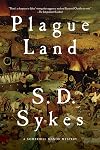
A historical mystery with the word plague in the title and a cover featuring a painting by Bruegel the Elder—who could resist? Plague Land is a great read on multiple levels: a solid mystery, a detailed depiction of life in rural England in the mid-1300s, and also a study of the role of Plague in reshaping the political and social order of the time.
For the first third or so of this novel, I thought I was reading something pretty good, but not necessarily great. Later in my reading, I show more realized that Plague Land was the first thing I reached for when I unexpectedly awoke at 6 a.m. On a Saturday. It takes a special novel to trump an extra few hours of sleep on the weekend.
The narrator and central character, Oswald de Lacy, a third son destined for life as a monk, is called home as lord of the manor after his father and two older brothers are struck down by Plague. Not long after his return home, a murder is uncovered. Oswald, an agnostic who nonetheless was comfortable with his life in the monastery, is already having enough trouble stepping into his unexpected new role. Then the local priest starts stirring up the community claiming the murder is the work of cynocephalae, demon-possessed, dog-headed men.
At first Oswald is something of a cypher. He tells his story, but shares little of his inner life, so while readers are engaged by events, they feel at arm’s distance from him. But slowly Oswald’s actions begin to speak for him, and as readers learn more about his world-view he becomes increasingly interesting.
Though the plot is less complex, this novel reminds me (in a good way) of Eco’s The Name of the Rose. A young postulant who remains innocent of the “ways of the world” is troubled by the new view of humanity he’s gaining. His mentor, in this case the apothecary at the monastery where Oswald’s been living, tries to interpret the world for him, simultaneously protecting and enlightening him.
I bought this book for the cover, and I have no regrets. Sykes’ blend of puzzle, history, and analysis makes for fascinating reading. show less
For the first third or so of this novel, I thought I was reading something pretty good, but not necessarily great. Later in my reading, I show more realized that Plague Land was the first thing I reached for when I unexpectedly awoke at 6 a.m. On a Saturday. It takes a special novel to trump an extra few hours of sleep on the weekend.
The narrator and central character, Oswald de Lacy, a third son destined for life as a monk, is called home as lord of the manor after his father and two older brothers are struck down by Plague. Not long after his return home, a murder is uncovered. Oswald, an agnostic who nonetheless was comfortable with his life in the monastery, is already having enough trouble stepping into his unexpected new role. Then the local priest starts stirring up the community claiming the murder is the work of cynocephalae, demon-possessed, dog-headed men.
At first Oswald is something of a cypher. He tells his story, but shares little of his inner life, so while readers are engaged by events, they feel at arm’s distance from him. But slowly Oswald’s actions begin to speak for him, and as readers learn more about his world-view he becomes increasingly interesting.
Though the plot is less complex, this novel reminds me (in a good way) of Eco’s The Name of the Rose. A young postulant who remains innocent of the “ways of the world” is troubled by the new view of humanity he’s gaining. His mentor, in this case the apothecary at the monastery where Oswald’s been living, tries to interpret the world for him, simultaneously protecting and enlightening him.
I bought this book for the cover, and I have no regrets. Sykes’ blend of puzzle, history, and analysis makes for fascinating reading. show less
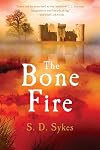
Sinister Eden Castle is the worst place to wait out the plague, and that choice of "safe haven" makes S.D. Sykes's The Bone Fire her best Somershill Manor mystery yet. Plague outside the walls, a killer on the loose within. I've always had a soft spot in my heart for locked room mysteries, and The Bone Fire delivers a multi-layered mystery that's fun to solve.
I've been a fan of this series from the first book, Plague Land, and it was interesting for me to witness how characters who had show more survived the first plague in 1348 behaved when it returned in 1361. Interesting facts about the era in which the book is set are seamlessly woven into the story. Oswald's friend Godfrey has prepared for a long siege, having his chosen guests bring in food and other necessities, while he carries out his own plans: the few servants in the castle are all female because females eat less, food storage is given top priority, and even entertainment is taken care of by hiring a fool.
The mystery is intricate, and you'll be surprised at just how much scuttling and hiding a few characters can do in a relatively small castle. Buttonholing each character and trying to find out his true agenda is quite a job, and as Oswald tries to do just this, he realizes his true task: "I was not a hero or a pariah. I was a nemesis." I would imagine I'm not the only person who immediately thinks of Miss Marple whenever I see the word nemesis, and Oswald definitely needs all of that woman's skills of deduction.
The setting is excellent, and so is the mystery, but the characters truly drive the story. Oswald has matured so much from the first book in the series. He's doing much less investigative stumbling around in The Bone Fire. His marriage is an interesting one, too. I still can't stand Oswald's mother, but the purpose of the supremely frustrating woman makes much more sense now. (Shame on me, but I'm still hoping that the next round of plague does her in.) The secondary cast of characters reads like something out of Chaucer: a lord and his lady, a knight, a religious extremist, a court jester, a drunk, a couple of traveling craftsmen-- and they all have an important place in this story.
If you enjoy historical mysteries, I urge you to read this series. Although best read in order, you can read The Bone Fire as a standalone. (But I hope you don't.) show less
I've been a fan of this series from the first book, Plague Land, and it was interesting for me to witness how characters who had show more survived the first plague in 1348 behaved when it returned in 1361. Interesting facts about the era in which the book is set are seamlessly woven into the story. Oswald's friend Godfrey has prepared for a long siege, having his chosen guests bring in food and other necessities, while he carries out his own plans: the few servants in the castle are all female because females eat less, food storage is given top priority, and even entertainment is taken care of by hiring a fool.
The mystery is intricate, and you'll be surprised at just how much scuttling and hiding a few characters can do in a relatively small castle. Buttonholing each character and trying to find out his true agenda is quite a job, and as Oswald tries to do just this, he realizes his true task: "I was not a hero or a pariah. I was a nemesis." I would imagine I'm not the only person who immediately thinks of Miss Marple whenever I see the word nemesis, and Oswald definitely needs all of that woman's skills of deduction.
The setting is excellent, and so is the mystery, but the characters truly drive the story. Oswald has matured so much from the first book in the series. He's doing much less investigative stumbling around in The Bone Fire. His marriage is an interesting one, too. I still can't stand Oswald's mother, but the purpose of the supremely frustrating woman makes much more sense now. (Shame on me, but I'm still hoping that the next round of plague does her in.) The secondary cast of characters reads like something out of Chaucer: a lord and his lady, a knight, a religious extremist, a court jester, a drunk, a couple of traveling craftsmen-- and they all have an important place in this story.
If you enjoy historical mysteries, I urge you to read this series. Although best read in order, you can read The Bone Fire as a standalone. (But I hope you don't.) show less
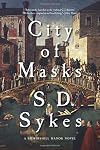
I really enjoy S. D. Sykes' historical series. Oswald is a younger son who was destined for a life in the monastery, but when the Black Death killed his father and older brothers, he found himself Lord of Somershill Manor. Life in a religious order doesn't necessarily condition a person for running an estate, so Oswald has been on a learning curve that's interesting to watch. In City of Masks, ten years have passed, and while Oswald tries to conduct an investigation, readers slowly learn show more what happened in England to chase him away from his home.
Oswald is an interesting blend of intelligence and naivete. Growing up in the monastery has made him wise in several things ordinary people don't know, yet woefully ignorant in things those same ordinary people take for granted. His mother is a woman of her times who also manages to be thoroughly obnoxious with very little effort, but Sykes gives her some backstory so she's not just a two-dimensional stereotype.
The mystery in City of Masks kept me guessing, but as much as I enjoyed the story and the characters, it was Venice that was the shining star for me. Sykes brought this dazzling city to life in all its glory and filth-- and traveling to those outlying islands wasn't a picnic either. As I read, I felt as though I were in Venice with Oswald in 1358, and that's the best sort of armchair travel a reader can ask for.
If you enjoy historical mysteries with a vivid sense of place, strong stories, and interesting characters, I recommend S.D. Syke's Somershill Manor mysteries. To understand Oswald as much as possible, it would be a good idea to start at the beginning with Plague Land and The Butcher Bird but you could read City of Masks without feeling lost at all. It's up to you! show less
Oswald is an interesting blend of intelligence and naivete. Growing up in the monastery has made him wise in several things ordinary people don't know, yet woefully ignorant in things those same ordinary people take for granted. His mother is a woman of her times who also manages to be thoroughly obnoxious with very little effort, but Sykes gives her some backstory so she's not just a two-dimensional stereotype.
The mystery in City of Masks kept me guessing, but as much as I enjoyed the story and the characters, it was Venice that was the shining star for me. Sykes brought this dazzling city to life in all its glory and filth-- and traveling to those outlying islands wasn't a picnic either. As I read, I felt as though I were in Venice with Oswald in 1358, and that's the best sort of armchair travel a reader can ask for.
If you enjoy historical mysteries with a vivid sense of place, strong stories, and interesting characters, I recommend S.D. Syke's Somershill Manor mysteries. To understand Oswald as much as possible, it would be a good idea to start at the beginning with Plague Land and The Butcher Bird but you could read City of Masks without feeling lost at all. It's up to you! show less
This book, set in 1350, is the beginning of a new historical fiction mystery series. Oswald de Lacy, 18, had been working as a novice in the hospital of a remote Benedictine monastery under the guidance of his long-time mentor, Brother Peter. After the death of the Abbot from the Black Plague, Oswald returned home, bringing Brother Peter with him. Since Oswald’s father and two older brothers had also been taken by the plague, Oswald was now to be Lord of the Somershill estate, as well as show more the town Constable.
Upon his return, Oswald is immediately beset upon by a host of problems: he has more than a thousand acres that need tending, revenues to be raised, and taxes to be collected, but a large proportion of the villagers died from the plague. Moreover, a disreputable local priest, John of Cornwall, comes to announce that a young girl has been found dead in the forest, and he is convinced it was at the hands of The Cynocephalus, an alleged dog-headed beast that did the work of the Devil. Cornwall is whipping up the local populace into a frenzy of fear (which conveniently results in their purchasing religious relics from Cornwall to protect them).
Oswald doesn’t believe in any beast and Peter encourages him to find the actual murderer. Oswald tries to abjure superstition as well as religion, and claims to believe in “science.” [The Oxford English Dictionary records the first use of the word science as having occurred in 1350, and Oswald is very unlikely to have been familiar with it. If anything, he would have used the term “natural philosophy.”]
In any event, Oswald, endlessly ordered about by his mother and older sister (in spite of the fact that women at that time had no power whatsoever), suspects one person after another, falls in InstaLove, almost gets killed several times, and finally “solves” the crime after almost getting hit on the head with the answer.
Discussion: I had a number of problems with this book. First of all, there is the “historical” aspect of this book. I thought the author did an excellent job in portraying the different ways in which squalor, ill health, bad food, and vice characterized people’s lives at this time. But she was inconsistent. Women were sometimes utterly powerless, and at other times seemed right out of the 21st Century. Oswald in particular was not only an atheist (not unheard of at this time, certainly), but a believer in “science” which just wasn’t likely at that time, especially with respect to both religion and medicine. In addition, although he and Peter lived at a small obscure monastery, Peter was able to teach him geometry, in spite of Euclid having been available only at large universities. (There was, of course, no printing press until 1450, and no indication Peter had benefitted from a privileged education elsewhere.) Moreover, Oswald had, in his own family library, copies of both Summa Theologica by Thomas Aquinas and Roger Bacon’s Opus Minus. At that time, books were made at great expense by hand and only to be found in the possession of kings, universities, large churches, or large monasteries.
My second problem was with the characterizations. Normally, I don’t like to compare writers, but this book, albeit set in the 14th Century, begs comparison with The Siege Winter by Arianna Franklin and Samantha Norman. In that story, you also have a medieval setting, an evil and abusive member of the clergy, a crime, political machinations, and an exploration of the administration of a medieval estate. Yet the history in that book is much more accurate, the pacing and tension more consistent, and the characters much more richly layered and memorable. One can also compare the Brother Cadfael series by Ellis Peters, another historical mystery series that takes place in the 12th Century. Brother Cadfael, bright and resourceful, looks for natural solutions to illnesses and crimes in a much more century-appropriate manner. In this story, Oswald is wimpy and dumb, the women in his family are execrable, the local politics are tawdry and uninteresting, and there is really no one I would want to hang around with for more than one book.
Evaluation: While some reviewers have lauded this book, I found it historically questionable in parts with not very compelling characters. show less
Upon his return, Oswald is immediately beset upon by a host of problems: he has more than a thousand acres that need tending, revenues to be raised, and taxes to be collected, but a large proportion of the villagers died from the plague. Moreover, a disreputable local priest, John of Cornwall, comes to announce that a young girl has been found dead in the forest, and he is convinced it was at the hands of The Cynocephalus, an alleged dog-headed beast that did the work of the Devil. Cornwall is whipping up the local populace into a frenzy of fear (which conveniently results in their purchasing religious relics from Cornwall to protect them).
Oswald doesn’t believe in any beast and Peter encourages him to find the actual murderer. Oswald tries to abjure superstition as well as religion, and claims to believe in “science.” [The Oxford English Dictionary records the first use of the word science as having occurred in 1350, and Oswald is very unlikely to have been familiar with it. If anything, he would have used the term “natural philosophy.”]
In any event, Oswald, endlessly ordered about by his mother and older sister (in spite of the fact that women at that time had no power whatsoever), suspects one person after another, falls in InstaLove, almost gets killed several times, and finally “solves” the crime after almost getting hit on the head with the answer.
Discussion: I had a number of problems with this book. First of all, there is the “historical” aspect of this book. I thought the author did an excellent job in portraying the different ways in which squalor, ill health, bad food, and vice characterized people’s lives at this time. But she was inconsistent. Women were sometimes utterly powerless, and at other times seemed right out of the 21st Century. Oswald in particular was not only an atheist (not unheard of at this time, certainly), but a believer in “science” which just wasn’t likely at that time, especially with respect to both religion and medicine. In addition, although he and Peter lived at a small obscure monastery, Peter was able to teach him geometry, in spite of Euclid having been available only at large universities. (There was, of course, no printing press until 1450, and no indication Peter had benefitted from a privileged education elsewhere.) Moreover, Oswald had, in his own family library, copies of both Summa Theologica by Thomas Aquinas and Roger Bacon’s Opus Minus. At that time, books were made at great expense by hand and only to be found in the possession of kings, universities, large churches, or large monasteries.
My second problem was with the characterizations. Normally, I don’t like to compare writers, but this book, albeit set in the 14th Century, begs comparison with The Siege Winter by Arianna Franklin and Samantha Norman. In that story, you also have a medieval setting, an evil and abusive member of the clergy, a crime, political machinations, and an exploration of the administration of a medieval estate. Yet the history in that book is much more accurate, the pacing and tension more consistent, and the characters much more richly layered and memorable. One can also compare the Brother Cadfael series by Ellis Peters, another historical mystery series that takes place in the 12th Century. Brother Cadfael, bright and resourceful, looks for natural solutions to illnesses and crimes in a much more century-appropriate manner. In this story, Oswald is wimpy and dumb, the women in his family are execrable, the local politics are tawdry and uninteresting, and there is really no one I would want to hang around with for more than one book.
Evaluation: While some reviewers have lauded this book, I found it historically questionable in parts with not very compelling characters. show less
Lists
Awards


You May Also Like


Associated Authors
Statistics
- Works
- 5
- Members
- 485
- Popularity
- #50,912
- Rating
- 3.6
- Reviews
- 39
- ISBNs
- 36