Ariana Franklin (1933–2011)
Author of Mistress of the Art of Death
About the Author
Ariana Franklin is a pen name used by Diana Norman. She is a British author and journalist writing historical fiction and non-fiction. She was born in Devon, England. She is married to the film critic Barry Norman. (Bowker Author Biography)
Image credit: Mary Jane Russell
Series
Works by Ariana Franklin
Associated Works
Tagged
Common Knowledge
- Legal name
- Norman, Diana
- Other names
- Franklin, Ariana
Narracott, Mary Diana (birth name) - Birthdate
- 1933-08-25
- Date of death
- 2011-01-27
- Gender
- female
- Occupations
- author
journalist (freelance)
magistrate
historical novelist
biographer - Awards and honors
- Ellis Peters Historical Dagger (2007)
CWA Dagger in the Library (shortlisted, 2009)
CWA Dagger in the Library (2010) - Agent
- Helen Heller Agency
- Relationships
- Norman, Barry (husband)
- Short biography
- Ariana Franklin was the pen name of British writer Diana Norman. A former newspaper journalist, she wrote several critically acclaimed biographies and historical novels under her own name. She used the pen name for more recent historical thrillers.
- Nationality
- UK
- Birthplace
- London, Middlesex, England, UK
- Places of residence
- Torquay, Devon, England, UK
Hertfordshire, England, UK
London, Middlesex, England, UK - Place of death
- Datchworth, Hertfordshire, England, UK
- Map Location
- England, UK
Members
Discussions
Group Read (January) - A MURDEROUS PROCESSION in The 11 in 11 Category Challenge (January 2011)
Reviews
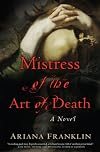
If you like historical fiction, forensic pathology suspense thrillers, medieval pageantry, romance, and intricate plots, this is the book for you. The characters are unforgettable and the story is many layered:
1. Young children are disappearing from the town of Cambridge, and turning up later as skeletons showing evidence of unspeakable torture and death.
2. In England at that time, money lending was illegal. Only Jews were allowed to lend money, so they were tolerated. However the Jews show more were accused of killing the children.
3. Henry II, needing the Jews to keep his country solvent (no bishop could build a cathedral, no knight embark on a Crusade without borrowing) orders the entire Jewish population of the town into sanctuary within the castle walls. Still the killings continue.
4. At this same time, the town of Salerno in Italy is turning out trained forensic scientists and doctors. Henry sends to his friend the King of Sicily for a "Doctor of Death" to solve the mystery of who is killing the children.
5. Sicily sends its most noted Doctor of Death,Vesuvia Adelia Rachel Ortese Aguilar, perhaps not realizing that in England, women who 'practice medicine' are more often seen as witches. Adelia is accompanied by Simon the Jew of Naples, and Mansur, a Saracen eunoch who acts as a bodyguard....a sort of medieval CSI team.
Those are just a few of the layers. Add in a Prior with a bad prostrate, an Abbess with a lousy attitude and even worse abbey management skills, an adorable child right out of Dickens, some rather rude and nasty knights, a delightful eelmonger/housekeeper and her helpers Mathilde A and Mathilde B, and you have the beginnings of a wonderful bubbling cauldron of a story. And let's not forget the dog named Safeguard....her description is so great, I can almost smell him myself. All the ingredients blend into an absolute page-turner. Just when you think it's solved, something else twists and you're off on another rollercoaster of emotion, and terror.
In spite of the horror of the subject, Franklin manages to inject spots of humor that leave you chuckling with glee. The scene where she catherizes the poor Prior is worth the price of the book. The humanity and compassion displayed by all members of the team bode well for futurebooks in the series. These are people you want to get to know. This is a woman you can root for.
This is the first of what is promised to be a series about this wonderful female forensic pathologist. show less
1. Young children are disappearing from the town of Cambridge, and turning up later as skeletons showing evidence of unspeakable torture and death.
2. In England at that time, money lending was illegal. Only Jews were allowed to lend money, so they were tolerated. However the Jews show more were accused of killing the children.
3. Henry II, needing the Jews to keep his country solvent (no bishop could build a cathedral, no knight embark on a Crusade without borrowing) orders the entire Jewish population of the town into sanctuary within the castle walls. Still the killings continue.
4. At this same time, the town of Salerno in Italy is turning out trained forensic scientists and doctors. Henry sends to his friend the King of Sicily for a "Doctor of Death" to solve the mystery of who is killing the children.
5. Sicily sends its most noted Doctor of Death,Vesuvia Adelia Rachel Ortese Aguilar, perhaps not realizing that in England, women who 'practice medicine' are more often seen as witches. Adelia is accompanied by Simon the Jew of Naples, and Mansur, a Saracen eunoch who acts as a bodyguard....a sort of medieval CSI team.
Those are just a few of the layers. Add in a Prior with a bad prostrate, an Abbess with a lousy attitude and even worse abbey management skills, an adorable child right out of Dickens, some rather rude and nasty knights, a delightful eelmonger/housekeeper and her helpers Mathilde A and Mathilde B, and you have the beginnings of a wonderful bubbling cauldron of a story. And let's not forget the dog named Safeguard....her description is so great, I can almost smell him myself. All the ingredients blend into an absolute page-turner. Just when you think it's solved, something else twists and you're off on another rollercoaster of emotion, and terror.
In spite of the horror of the subject, Franklin manages to inject spots of humor that leave you chuckling with glee. The scene where she catherizes the poor Prior is worth the price of the book. The humanity and compassion displayed by all members of the team bode well for futurebooks in the series. These are people you want to get to know. This is a woman you can root for.
This is the first of what is promised to be a series about this wonderful female forensic pathologist. show less
City of Shadows by Ariana Franklin is an engrossing and entertaining murder mystery set in 1920s and 30s Berlin during the years leading up to Nazi control. After World War I, the Russian Revolution was a huge factor that brought about a shift in population. A surge of emigres, from rich White Russians to poor Jews arrived in Germany fleeing the Bolsheviks. One rumour seemed to capture the minds and hearts of people everywhere, could one of the Czar’s daughters have survived the massacre show more at Ekaterinburg?
Prince Nick Potrovskov, a slick Russian nightclub owner hears about a woman who could possibly be a daughter of the Czar and rescues her from a Berlin insane asylum. He assigns two of his Russian employees to live, look after and groom this woman whom they name Anna Anderson. His Jewish secretary, Esther and an ex-Romanov servant now working as a stripper, Natalya. Anna Anderson lives in terror of a man who is stalking her, and all too soon people around Anna Anderson are being murdered. When Police Inspector Schmidt enters the case, he and Esther form a bond and eventually fall in love, all the while trying to protect Anna and hunt down her powerful enemy.
In City of Shadows, author Ariana Franklin plays with the myth of Anastasia, the rumour of her survival when the family of the Czar were murdered was one that persisted up until 2007 when the bodies of the last Russian ruling family were located and identified by DNA evidence. I remember Anna Anderson, the woman who persisted in proclaiming herself the long lost Anastasia and although the author has changed some of the facts and developed a superb murder mystery around her, much of what she has written here did happen. To add to the authenticity of the story, the setting of Berlin as Hitler rises and gains control gives the book a sense of urgency and fatalism. I absolutely loved this story with it’s blend of romance, violence, humor and mystery. show less
Prince Nick Potrovskov, a slick Russian nightclub owner hears about a woman who could possibly be a daughter of the Czar and rescues her from a Berlin insane asylum. He assigns two of his Russian employees to live, look after and groom this woman whom they name Anna Anderson. His Jewish secretary, Esther and an ex-Romanov servant now working as a stripper, Natalya. Anna Anderson lives in terror of a man who is stalking her, and all too soon people around Anna Anderson are being murdered. When Police Inspector Schmidt enters the case, he and Esther form a bond and eventually fall in love, all the while trying to protect Anna and hunt down her powerful enemy.
In City of Shadows, author Ariana Franklin plays with the myth of Anastasia, the rumour of her survival when the family of the Czar were murdered was one that persisted up until 2007 when the bodies of the last Russian ruling family were located and identified by DNA evidence. I remember Anna Anderson, the woman who persisted in proclaiming herself the long lost Anastasia and although the author has changed some of the facts and developed a superb murder mystery around her, much of what she has written here did happen. To add to the authenticity of the story, the setting of Berlin as Hitler rises and gains control gives the book a sense of urgency and fatalism. I absolutely loved this story with it’s blend of romance, violence, humor and mystery. show less
In this conclusion of the series, we jump a number of years into the future to a time when King Henry has died and Allie is in her early twenties. She has been living with her mother and Emma for all this time and being trained in medicine by Adelia. However, her special interest is for animals.
Although Allie is content, Rowley is very fixated on getting her married off. He is aging and worries that once he dies, his daughter will be without a protector or any security. Allie is very opposed show more to being set to the home of a strange man as a possession, but when Giltha sends word that she is ailing, a plot is hatched.
The fen town where Giltha lives has a neighboring lord who is young and looking for a wife. The hope is that if Allie is in proximity, the two will naturally fall in love and a suitable match can be struck.
But when Allie arrives at the home of her friends, she learns that a series of murders has been plaguing the town for years. The target is beautiful young women. Although she lacks her mother's experience with such crimes, she will need to call on all the skills she has to uncover the killer in time.
I found this book lacked the narrative polish that originally drew me to the series. I often have this problem with posthumously published books and wish people would stop doing this. It just leaves the series feeling sullied as the final chapter is a bit of a let down.
My main gripe was that Allie herself isn't sufficiently characterized to hold the focus of a novel. We don't know her very well, and we don't really get to know her better in these pages. The plot is also lacking as things just seem to happen for no real reason and then the book abruptly ends. Bit of a let down for the end of a series I greatly enjoyed otherwise. show less
Although Allie is content, Rowley is very fixated on getting her married off. He is aging and worries that once he dies, his daughter will be without a protector or any security. Allie is very opposed show more to being set to the home of a strange man as a possession, but when Giltha sends word that she is ailing, a plot is hatched.
The fen town where Giltha lives has a neighboring lord who is young and looking for a wife. The hope is that if Allie is in proximity, the two will naturally fall in love and a suitable match can be struck.
But when Allie arrives at the home of her friends, she learns that a series of murders has been plaguing the town for years. The target is beautiful young women. Although she lacks her mother's experience with such crimes, she will need to call on all the skills she has to uncover the killer in time.
I found this book lacked the narrative polish that originally drew me to the series. I often have this problem with posthumously published books and wish people would stop doing this. It just leaves the series feeling sullied as the final chapter is a bit of a let down.
My main gripe was that Allie herself isn't sufficiently characterized to hold the focus of a novel. We don't know her very well, and we don't really get to know her better in these pages. The plot is also lacking as things just seem to happen for no real reason and then the book abruptly ends. Bit of a let down for the end of a series I greatly enjoyed otherwise. show less
Dr. Vesuvia Adelia Rachel Ortese Aguilar has just been dispatched from Salerno to Cambridge in an effort to help catch a killer. This particular killer chooses children as his victims, and as the story begins, he has had his savage and bloodthirsty way with four of them. As the murdered children are all Christians, suspicion begins to fall on the Jews of Cambridge, much to the chagrin of King Henry, who wishes to see them absolved. Adelia finds herself in a strange predicament after landing show more in Cambridge, for although she's a doctor of particular renown in Salerno, the attitudes of the English prevent her from practicing openly: one because she is a female, and two because her specialty in the examination of dead bodies is regarded with suspicion and considered witchcraft. Under a cloak of secrecy, Adelia begins her investigation into the brutal murders, uncovering surprising and damning evidence of not only the supposed killer, but of the town and the people he is hidden among. When Sir Rowly Picot joins the investigation at Adelia's side, she's far from happy. Rowley has his own reasons for wanting information about the killer, but Adelia isn't quite sure he shouldn't be considered a suspect. As the two creep closer and closer to the truth, the unknown killer begins to venomously resist from the shadows, placing Adelia and Rowley into some of the most sinister and dangerous situations that they've ever faced. In this complex and deeply dark blend of historical fiction and mystery, two of the most unlikely allies must come together to unmask a horrible and demonic killer, and to save Cambridge's children before it's too late.
I rarely read books that are part of a series nowadays. For one thing, they're a bit tougher to review than standalone novels. Also, I find myself wanting to gulp down the entire series at one time, which can be a problem when there are so many other books vying for attention. I made an exception for these books after reading some really great reviews on them, and I have to admit the medieval setting was one that I couldn't ignore. I'm really glad I made the choice to read these books, but now I'm in the predicament that I dreaded, with wanting to read on and continue the series, come hell or high water.
What I noticed first about this book as I was reading, was the unremitting darkness that surrounded the plot and characters. One could argue that the medieval age was one of particular darkness, but I think this book strove deeply for a real feeling of foreboding and ominousness. From the outset, the murders of the children take center stage and there is no shying away from all the gruesome details. Even the introduction of Adelia manages to be suffused with cryptic portent, explaining her time among the other scholars of Salerno who are fluent in the art of death. This setting of the scene may have come across as too maudlin had it not been handled in the right way, but Franklin does a lot during these sections to set the perfect stage and to make these characters into people the reader is eager to know. As things begin to move forward, the pall remains, hanging over every description and scene, creating a medieval England that's not only dangerous and sinister, but ripe for the talents that Adelia has to offer.
The historical sections were what really interested me the most. Ostensibly, this book has a dual genre, bobbing between historical fiction and mystery, but I think I took the most enjoyment from the history. Franklin does a great deal to make the book feel authentic, from the prejudices and strictures against women, and particularly women skilled in the art of healing, to the oppressive and heavy-handed role of the church in Cambridge society. The attitudes of the population at that time were particularly backward in most cases, and the commoners needed little urging to become bloodthirsty, which in the case of this story, felt all too real. As Adelia is forced to investigate under cover, I began to see that the things which hindered her were not only the conventions of the people surrounding her, but the lack of enlightenment that spread far and wide throughout the realm.
I wasn't as impressed with the mystery aspects of this book early on, because it was pretty obvious to me who the killer was. But Franklin had a few aces up her sleeve and I managed to be shocked at the mystery despite myself. Often I shy away mysteries because it's always too easy for me to figure things out, but here, the mystery had a fullness and an unexpectedness that really thrilled me. There was definitely more to this story than met the eye, and turning the last page, I was both horrified and excited to find out where the next book would lead me. It was definitely a more sinister story than I had first thought it would or could be, and I liked that every character in the book played their part with skill and efficiency. The implications this story raised were much more troubling than the murder that Adelia was contracted to solve, leaving me to marvel at Franklin's skill at creating this microcosm of the medieval world, a world seething with malevolence.
it's interesting to note the position of women in this society. Being a woman tied to the Church or the wife of a commoner were the excepted norms, but for Adleia's safety, it's better that she hides her status as a learned woman, lest she be accused of witchcraft. A lot of the time, these strictures hinder and anger her, for coming from a place that respects the contributions of both male and females, Adleia is loathe to give up her rights and privileges. Though she must be covert in her dealings with the dead, a few of the other characters come to know her for who she really is and must protect her secret alongside of her. Even those in the know find her strange and inexplicable knowledge almost sinister, and realize the possession of this knowledge means danger to themselves. Though Adelia is severely limited in the ways she can investigate, she finds a way to do what is necessary and complete her job.
The plight of Cambridge's Jews was also very interesting. As taxpayers, they are of great importance to the king, but since the murders of the children, the other townsfolk have basically kept them in fear for their lives and hiding in an abandoned castle. It seems Cambridge and England is no stranger to anti-Semitism, and in fact, throughout history and across continents, Jews have been vilified for a number of reasons that are incredible to think about. By highlighting this aspect of the story, Franklin is able to discourse on the unfair blame that the Jews have shouldered, even in a place so far removed in time. In the discovery of the true murderer, the Jews are forgiven and accepted back into the town, but the damage has been done and things will never be the same. The unfortunate sting of blame and recrimination becomes just one pinpoint of the humiliations and injustices the Jewish population must endure throughout time.
I was unexpectedly pleased with the depth and power of this book. Many of the topics and situations are specific to the time and place described, but I found that Franklin's ability to make them resonant, even in today's society, was masterful. Though this was one of the darker books I've read in some time, I found it to be one that I couldn't put down, and the intelligence and complexity of the narrative was delightful to me. I think lovers of historical fiction would do well to pick up this book, as well as those mystery lovers looking for something beyond the norm. I'm already in the middle of the next installment and am finding it to be just as entertaining and engrossing as the first. It was a really great read, made greater by the author's ability to tease out the more meaningful aspects of the story. Recommended. show less
I rarely read books that are part of a series nowadays. For one thing, they're a bit tougher to review than standalone novels. Also, I find myself wanting to gulp down the entire series at one time, which can be a problem when there are so many other books vying for attention. I made an exception for these books after reading some really great reviews on them, and I have to admit the medieval setting was one that I couldn't ignore. I'm really glad I made the choice to read these books, but now I'm in the predicament that I dreaded, with wanting to read on and continue the series, come hell or high water.
What I noticed first about this book as I was reading, was the unremitting darkness that surrounded the plot and characters. One could argue that the medieval age was one of particular darkness, but I think this book strove deeply for a real feeling of foreboding and ominousness. From the outset, the murders of the children take center stage and there is no shying away from all the gruesome details. Even the introduction of Adelia manages to be suffused with cryptic portent, explaining her time among the other scholars of Salerno who are fluent in the art of death. This setting of the scene may have come across as too maudlin had it not been handled in the right way, but Franklin does a lot during these sections to set the perfect stage and to make these characters into people the reader is eager to know. As things begin to move forward, the pall remains, hanging over every description and scene, creating a medieval England that's not only dangerous and sinister, but ripe for the talents that Adelia has to offer.
The historical sections were what really interested me the most. Ostensibly, this book has a dual genre, bobbing between historical fiction and mystery, but I think I took the most enjoyment from the history. Franklin does a great deal to make the book feel authentic, from the prejudices and strictures against women, and particularly women skilled in the art of healing, to the oppressive and heavy-handed role of the church in Cambridge society. The attitudes of the population at that time were particularly backward in most cases, and the commoners needed little urging to become bloodthirsty, which in the case of this story, felt all too real. As Adelia is forced to investigate under cover, I began to see that the things which hindered her were not only the conventions of the people surrounding her, but the lack of enlightenment that spread far and wide throughout the realm.
I wasn't as impressed with the mystery aspects of this book early on, because it was pretty obvious to me who the killer was. But Franklin had a few aces up her sleeve and I managed to be shocked at the mystery despite myself. Often I shy away mysteries because it's always too easy for me to figure things out, but here, the mystery had a fullness and an unexpectedness that really thrilled me. There was definitely more to this story than met the eye, and turning the last page, I was both horrified and excited to find out where the next book would lead me. It was definitely a more sinister story than I had first thought it would or could be, and I liked that every character in the book played their part with skill and efficiency. The implications this story raised were much more troubling than the murder that Adelia was contracted to solve, leaving me to marvel at Franklin's skill at creating this microcosm of the medieval world, a world seething with malevolence.
it's interesting to note the position of women in this society. Being a woman tied to the Church or the wife of a commoner were the excepted norms, but for Adleia's safety, it's better that she hides her status as a learned woman, lest she be accused of witchcraft. A lot of the time, these strictures hinder and anger her, for coming from a place that respects the contributions of both male and females, Adleia is loathe to give up her rights and privileges. Though she must be covert in her dealings with the dead, a few of the other characters come to know her for who she really is and must protect her secret alongside of her. Even those in the know find her strange and inexplicable knowledge almost sinister, and realize the possession of this knowledge means danger to themselves. Though Adelia is severely limited in the ways she can investigate, she finds a way to do what is necessary and complete her job.
The plight of Cambridge's Jews was also very interesting. As taxpayers, they are of great importance to the king, but since the murders of the children, the other townsfolk have basically kept them in fear for their lives and hiding in an abandoned castle. It seems Cambridge and England is no stranger to anti-Semitism, and in fact, throughout history and across continents, Jews have been vilified for a number of reasons that are incredible to think about. By highlighting this aspect of the story, Franklin is able to discourse on the unfair blame that the Jews have shouldered, even in a place so far removed in time. In the discovery of the true murderer, the Jews are forgiven and accepted back into the town, but the damage has been done and things will never be the same. The unfortunate sting of blame and recrimination becomes just one pinpoint of the humiliations and injustices the Jewish population must endure throughout time.
I was unexpectedly pleased with the depth and power of this book. Many of the topics and situations are specific to the time and place described, but I found that Franklin's ability to make them resonant, even in today's society, was masterful. Though this was one of the darker books I've read in some time, I found it to be one that I couldn't put down, and the intelligence and complexity of the narrative was delightful to me. I think lovers of historical fiction would do well to pick up this book, as well as those mystery lovers looking for something beyond the norm. I'm already in the middle of the next installment and am finding it to be just as entertaining and engrossing as the first. It was a really great read, made greater by the author's ability to tease out the more meaningful aspects of the story. Recommended. show less
Lists
Awards
You May Also Like
Associated Authors
Statistics
- Works
- 27
- Also by
- 1
- Members
- 11,080
- Popularity
- #2,126
- Rating
- 3.9
- Reviews
- 595
- ISBNs
- 266
- Languages
- 10
- Favorited
- 33


