
Candice Proctor
Author of What Angels Fear
About the Author
Candice Proctor received a B. A. in classics and an M. A. and Ph.D in European history. She taught history at the University of Idaho and Midwestern State University in Texas. She also worked as an archaeologist on a variety of sites including a Hudson's Bay Company Fort in San Juan Island, a show more Cherokee village in Tennessee, a prehistoric kill site in Victoria, Australia, and a Roman cemetery and medieval manor house in Winchester, England. She spent many years as a partner in an international business consulting firm. She writes novels under the names Candice Proctor, C. S. Harris, and C. S. Graham. She writes the Sebastian St. Cyr Mystery Ser. under the name C. S. Harris. She is also the author of a nonfiction historical study of women in the French Revolution. (Bowker Author Biography) show less
Image credit: http://csharris.net/
Series
Works by Candice Proctor
What Angels Fear | When Gods Die | Where Serpents Sleep | Where Shadows Dance | What Darkness Brings (2006) 1 copy
De gouvernante 1 copy
Verboden liefde 1 copy
Nacht in het paradijs 1 copy
Achter de horizon 1 copy
De nalatenschap 1 copy
Nachtelijke bekentenissen 1 copy
Tagged
Common Knowledge
- Other names
- Harris, C.S.
Graham, C.S. - Birthdate
- 1954-09-29
- Gender
- female
- Occupations
- historian
novelist - Relationships
- Williamson, Penelope (sister)
- Nationality
- USA
- Places of residence
- New Orleans, Louisiana, USA
- Associated Place (for map)
- Louisiana, USA
Members
Discussions
Chat in Book Discussion : Who Buries The Dead by C S Harris (June 2025)
Series Update in Book Discussion : Who Buries The Dead by C S Harris (June 2025)
Chat in Book Discussion : Why Kings Confess by C S Harris (September 2024)
Chat in Book Discussion : What Darkness Brings by C S Harris (October 2023)
Chat in Book Discussion : When Maidens Mourn by C S Harris (December 2022)
Chat in Book Discussion : Where Shadows Dance by C S Harris (October 2020)
Chat in Book Discussion : What Reamains of Heaven by C S Harris (December 2019)
Chat in Book Discussion : Where Serpents Sleep by C S Harris (March 2019)
Chat in Book Discussion : Why Mermaids Sing by C S Harris (October 2018)
Chat in Book Discussion : When Gods Die by C S Harris (March 2018)
Chat in Book Discussion : What Angels Fear by C S Harris (October 2017)
Reviews

Note: There are necessarily spoilers for previous books in this series.
Although this is the 16th book in this series, C.S. Harris does an outstanding job of providing enough background in every book - without making it seem tedious or out of place - so that any of the books could be read as standalones.
The Sebastian St. Cyr historical crime fiction series began with the first book set in 1811, the year that George, Prince of Wales (known by the public as “Prinny”) began his nine-year show more tenure as Regent of the British Monarchy. (A prince regent is a prince who rules in the place of a monarch who is still the titular king but has been deemed unfit for any reason, such as age, or physical or mental incapacity. In this case, the Prince of Wales was standing in for his father George III, thought to be mad. On the death of his father in 1820, the Prince Regent became George IV.)
The Regency Era is a popular setting for fiction. For one thing, these were very interesting times historically. Most of Europe was at war, for and against Napoleon, depending on the year. Social mores were in an uproar as well: the rights of both women and slaves were being debated everywhere. And the conflict between the classes, especially in England, proved to be rich fodder for romantic plots. [You may also wish to consult my post on "An Introduction to the Regency Era.”]
In this installment, it is now the fall of 1814, and Sebastian St. Cyr, Viscount Devlin, the main protagonist, is in his early 30s, married, and with a 20-month-old son. Devlin is heir to the powerful Earl of Hendon, but is not actually Hendon’s son. His mother had an affair, and Devlin has been trying to locate her to find out who his real father is. What he does know is that there was a man about his age in London, Jamie Knox, who resembled Devlin so much that eighteen months before he inadvertently took a fatal bullet that was meant for Devlin. Jamie left a son about Simon’s age, who also looked eerily like Simon. Devlin hired an investigator to track his mother, but hasn’t had much luck so far.
In the first book, Devlin had been suspected of a murder he did not commit, and became something of a Sherlock Holmes to find the real murderer in order to save his own skin.
In subsequent books, Devlin continued to be consulted on murders that involved the nobility, because he had an entrée into the upper level of society that would have been denied to the regular police. He agreed, because the thought of anybody stealing away someone else’s life was an abomination to him, especially after the traumatic instances of unjust murder he witnessed in the army. He still felt guilt over these deaths, even though he could not have prevented any of them. He retained a fierce commitment to the pursuit of justice. (And of course, like the rest of the upper class at that time, he didn't have anything else to do anyway.)
Devlin is aided by the insights of his friend, the surgeon Paul Gibson, who generally does the autopsies on all the bodies Devlin finds. He also benefits from the counsel of Sir Henry Lovejoy, now a "Bow Street Runner" (detective) who has become a friend of Devlin’s. Devlin asks his young horse handler Tom, a former street urchin, as well as his valet, Jules Calhoun, to do reconnaissance work for him. Each has an entrée into the lower levels of society that Devlin can’t even manage in disguise. And in an increasing capacity, his wife, Hero, helps him in his investigative work.
The story begins, as usual, with the discovery of a murder victim. This time it was in the unsavory district of Wapping, known for taverns, rowdy seamen, thieves, and prostitutes. The victim was Sir Edwin Pym, a magistrate with a habit of trolling Wapping for young prostitutes late at night. What was most significant about the murder was how it was committed - it looked remarkably like the gruesome modus operandi used by the Ratcliffe Highway killer of three years earlier. (These murders, as the author explains in an Afterward, actually occurred in December 1811 and “terrified Regency London at least as much as Jack the Ripper panicked Victorian London decades later.”). Moreover, only ten days prior to Pym’s death, a seaman was killed in the exact same manner.
The Home Office was anxious to get to the bottom of the murders, lest the populace panic again as they did in 1811. Jarvis, the most influential man in London (who happened to be Devlin’s father-in-law), sent the word out that the terror “must be squashed immediately.” Napoleon was finally vanquished, and now the streets were full of unemployed ex-soldiers and sailors; there was agitation over wages and prices; and “of course Ireland was, as always, hovering on the brink of revolt.” The last thing they needed, Jarvis reasoned, was “a string of grisly murders terrifying the already restive population.” This meant finding the guilty party, or anyone, really, who could be blamed and incarcerated.
Sebastian takes it upon himself to find the (real) murderer or murderers before the Home Office finds a scapegoat, and as he investigates, he himself gets in danger. Meanwhile, the bodies pile up. The connections among the new victims offer clues to the motive behind the murders, and to the nefarious politics fueled by greed and corruption behind the carnage.
As a side plot, Hero, who tries in her own way to right the injustices of society by writing muckraking articles, is currently looking into the situation of foundling hospitals and the workhouses to which many orphans were sent. They were seldom inspected and most of their charges ended up dying. As with Hero’s previous investigations, this one also ends up having ties to Sebastian’s murder case.
Discussion: In this series, many of the aristocracy are despicable characters: haughty, entitled, hypocritical, and contemptuous of the masses of poor who barely eke out a living while the upper tier of society carouses and parties. The author juxtaposes the egregious attitudes of these rich, entitled people with those of her empathetic protagonists, making their differences stand out in stark relief.
In this particular book, the author also integrated the sordid history of the treatment of orphans into the plot. Another interesting aspect of the period she explored was the interrelationship between public officials, tavern owners, and breweries, one which sounds reminiscent of the gang infiltration of the liquor trade during Prohibition in the U.S.
Evaluation: I love the recurring characters in this series and their evolving interactions. In addition, one always learns a great deal of well-researched history about this fascinating and horrifying period, with a number of crimes thrown in to add tension and interest. This series is entertaining, educational, and well worth delving into. show less
Although this is the 16th book in this series, C.S. Harris does an outstanding job of providing enough background in every book - without making it seem tedious or out of place - so that any of the books could be read as standalones.
The Sebastian St. Cyr historical crime fiction series began with the first book set in 1811, the year that George, Prince of Wales (known by the public as “Prinny”) began his nine-year show more tenure as Regent of the British Monarchy. (A prince regent is a prince who rules in the place of a monarch who is still the titular king but has been deemed unfit for any reason, such as age, or physical or mental incapacity. In this case, the Prince of Wales was standing in for his father George III, thought to be mad. On the death of his father in 1820, the Prince Regent became George IV.)
The Regency Era is a popular setting for fiction. For one thing, these were very interesting times historically. Most of Europe was at war, for and against Napoleon, depending on the year. Social mores were in an uproar as well: the rights of both women and slaves were being debated everywhere. And the conflict between the classes, especially in England, proved to be rich fodder for romantic plots. [You may also wish to consult my post on "An Introduction to the Regency Era.”]
In this installment, it is now the fall of 1814, and Sebastian St. Cyr, Viscount Devlin, the main protagonist, is in his early 30s, married, and with a 20-month-old son. Devlin is heir to the powerful Earl of Hendon, but is not actually Hendon’s son. His mother had an affair, and Devlin has been trying to locate her to find out who his real father is. What he does know is that there was a man about his age in London, Jamie Knox, who resembled Devlin so much that eighteen months before he inadvertently took a fatal bullet that was meant for Devlin. Jamie left a son about Simon’s age, who also looked eerily like Simon. Devlin hired an investigator to track his mother, but hasn’t had much luck so far.
In the first book, Devlin had been suspected of a murder he did not commit, and became something of a Sherlock Holmes to find the real murderer in order to save his own skin.
In subsequent books, Devlin continued to be consulted on murders that involved the nobility, because he had an entrée into the upper level of society that would have been denied to the regular police. He agreed, because the thought of anybody stealing away someone else’s life was an abomination to him, especially after the traumatic instances of unjust murder he witnessed in the army. He still felt guilt over these deaths, even though he could not have prevented any of them. He retained a fierce commitment to the pursuit of justice. (And of course, like the rest of the upper class at that time, he didn't have anything else to do anyway.)
Devlin is aided by the insights of his friend, the surgeon Paul Gibson, who generally does the autopsies on all the bodies Devlin finds. He also benefits from the counsel of Sir Henry Lovejoy, now a "Bow Street Runner" (detective) who has become a friend of Devlin’s. Devlin asks his young horse handler Tom, a former street urchin, as well as his valet, Jules Calhoun, to do reconnaissance work for him. Each has an entrée into the lower levels of society that Devlin can’t even manage in disguise. And in an increasing capacity, his wife, Hero, helps him in his investigative work.
The story begins, as usual, with the discovery of a murder victim. This time it was in the unsavory district of Wapping, known for taverns, rowdy seamen, thieves, and prostitutes. The victim was Sir Edwin Pym, a magistrate with a habit of trolling Wapping for young prostitutes late at night. What was most significant about the murder was how it was committed - it looked remarkably like the gruesome modus operandi used by the Ratcliffe Highway killer of three years earlier. (These murders, as the author explains in an Afterward, actually occurred in December 1811 and “terrified Regency London at least as much as Jack the Ripper panicked Victorian London decades later.”). Moreover, only ten days prior to Pym’s death, a seaman was killed in the exact same manner.
The Home Office was anxious to get to the bottom of the murders, lest the populace panic again as they did in 1811. Jarvis, the most influential man in London (who happened to be Devlin’s father-in-law), sent the word out that the terror “must be squashed immediately.” Napoleon was finally vanquished, and now the streets were full of unemployed ex-soldiers and sailors; there was agitation over wages and prices; and “of course Ireland was, as always, hovering on the brink of revolt.” The last thing they needed, Jarvis reasoned, was “a string of grisly murders terrifying the already restive population.” This meant finding the guilty party, or anyone, really, who could be blamed and incarcerated.
Sebastian takes it upon himself to find the (real) murderer or murderers before the Home Office finds a scapegoat, and as he investigates, he himself gets in danger. Meanwhile, the bodies pile up. The connections among the new victims offer clues to the motive behind the murders, and to the nefarious politics fueled by greed and corruption behind the carnage.
As a side plot, Hero, who tries in her own way to right the injustices of society by writing muckraking articles, is currently looking into the situation of foundling hospitals and the workhouses to which many orphans were sent. They were seldom inspected and most of their charges ended up dying. As with Hero’s previous investigations, this one also ends up having ties to Sebastian’s murder case.
Discussion: In this series, many of the aristocracy are despicable characters: haughty, entitled, hypocritical, and contemptuous of the masses of poor who barely eke out a living while the upper tier of society carouses and parties. The author juxtaposes the egregious attitudes of these rich, entitled people with those of her empathetic protagonists, making their differences stand out in stark relief.
In this particular book, the author also integrated the sordid history of the treatment of orphans into the plot. Another interesting aspect of the period she explored was the interrelationship between public officials, tavern owners, and breweries, one which sounds reminiscent of the gang infiltration of the liquor trade during Prohibition in the U.S.
Evaluation: I love the recurring characters in this series and their evolving interactions. In addition, one always learns a great deal of well-researched history about this fascinating and horrifying period, with a number of crimes thrown in to add tension and interest. This series is entertaining, educational, and well worth delving into. show less
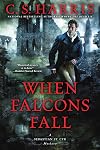
1813. Sebastian St. Cyr, Viscount Devlin, and his wife, Hero, have come to this deceptively peaceful Shropshire village to honor a slain friend. But when the body of a young widow is found on the banks of the river Teme, the village’s inexperienced new magistrate turns to Sebastian for help. Sebastian soon realizes that Emma Chance was hiding her true identity, and she was not the first beautiful young woman in the village to be murdered. Also troubling are the machinations of Lucien show more Bonaparte, the estranged brother of the megalomaniac French Emperor Napoléon. Held captive under the British government’s watchful eye, Bonaparte is restless, ambitious, and treacherous. Home to the eerie ruins of an ancient monastery, Ayleswick reveals itself to be a dark and dangerous place with a violent past that may be connected to Sebastian’s own unsettling origins. And as he faces his most diabolical opponent ever, he is forced to consider what malevolence he’s willing to embrace in order to destroy a killer.
This was a nice change as Sebastian enjoys a change of scenery. The story read more like an old-fashioned mystery at times, as the suspects are contained in one place, and the murderer is found, almost by the process of elimination.
Of course, this series has a darker atmosphere than most modern-day detective stories set in this century do. It gives us a look into the politics of the past and makes a statement regarding the double standards applied to women at that day and age. I thought it strange but found that it seemed to mirror some of the same exact issues we read in our headlines today. "Same story; different day." It seems that powerful men behaving badly and leaving a trail of shattered and broken lives in their wake, hasn't changed very much.
The personal connection for Sebastian comes quickly. As always, it will glue the reader to every page, and the fact that it was a group read for me only added to the suspense along with getting other viewpoints from my fellow readers. It presented a rare and unique "take" on the Regency Era, which is often remembered for its aristocratic dalliances, the fancy balls and marriage markets. This series is, and has always been, a bit dark and moody, and scandalous, while always exploring the "underbelly" of society, as well as the evil that lurks in the hearts and minds of those who are in power. "Same page...different day".
I am in awe of Ms. Harris’ characterizations...the way she weaves absorbing stories that never fail to draw you deeply into her characters and stories. 5 big shinny stars for another unforgettable visit with Sebastian and Hero. show less
This was a nice change as Sebastian enjoys a change of scenery. The story read more like an old-fashioned mystery at times, as the suspects are contained in one place, and the murderer is found, almost by the process of elimination.
Of course, this series has a darker atmosphere than most modern-day detective stories set in this century do. It gives us a look into the politics of the past and makes a statement regarding the double standards applied to women at that day and age. I thought it strange but found that it seemed to mirror some of the same exact issues we read in our headlines today. "Same story; different day." It seems that powerful men behaving badly and leaving a trail of shattered and broken lives in their wake, hasn't changed very much.
The personal connection for Sebastian comes quickly. As always, it will glue the reader to every page, and the fact that it was a group read for me only added to the suspense along with getting other viewpoints from my fellow readers. It presented a rare and unique "take" on the Regency Era, which is often remembered for its aristocratic dalliances, the fancy balls and marriage markets. This series is, and has always been, a bit dark and moody, and scandalous, while always exploring the "underbelly" of society, as well as the evil that lurks in the hearts and minds of those who are in power. "Same page...different day".
I am in awe of Ms. Harris’ characterizations...the way she weaves absorbing stories that never fail to draw you deeply into her characters and stories. 5 big shinny stars for another unforgettable visit with Sebastian and Hero. show less
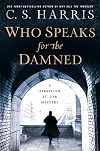
Series: Sebastian St. Cyr #15
Publication Date: 4/7/20
Number of Pages: 352
Hold on to your hats because this intense and complex historical mystery is going to take you on a rollercoaster of a ride. We are fifteen books into the series, and you’d think things might begin to get a tad stale. That isn’t even remotely close to the case though. This book is as fresh, different, and interesting as the first book in the series. The author’s research and grasp of the history of that period are show more outstanding and make you feel as if you are right there living the tale as it unfolds.
I’ll make no bones about it – this book ripped my heart from my chest, flung it to the floor and stepped on all the little pieces. Many of this author’s victims are sympathetic and you mourn their passing, but this one… If you don’t wail at the things that he had to endure in his life only to be murdered – well…
Nicholas Hayes was discovered in Pennington’s Tea Gardens with a sickle protruding from his back. He’d only been back in England for a week or two after eighteen years away. Everyone had thought he had died after being transported when he had been convicted of the murder of a young Frenchwoman. If he had escaped death after he’d been transported, why would he return to London where he’d be immediately executed if the crown discovered him? What of the young child who is with him?
As we learn more about our victim, we find that all is not as one would think. But, who wanted him to die and why? You’ll learn all of that as you follow the clues along with Sebastian and Hero. You’ll meet some truly despicable people – true vermin in the guise of humans. You’ll also meet and get to know some lovely, caring people who deserve a better life than they’ve had.
This was truly a wonderful read – well-written, well-plotted and filled chock full of characters you will either love or hate, but nothing in-between. For me personally, because it was such an emotional read, I should probably have chosen to read it at some time other than the midst of a global pandemic. But, nonetheless, I am happy to have read it and I absolutely cannot wait for the next book in the series.
I voluntarily read and reviewed an Advanced Reader Copy of this book. All thoughts and opinions are my own. show less
Publication Date: 4/7/20
Number of Pages: 352
Hold on to your hats because this intense and complex historical mystery is going to take you on a rollercoaster of a ride. We are fifteen books into the series, and you’d think things might begin to get a tad stale. That isn’t even remotely close to the case though. This book is as fresh, different, and interesting as the first book in the series. The author’s research and grasp of the history of that period are show more outstanding and make you feel as if you are right there living the tale as it unfolds.
I’ll make no bones about it – this book ripped my heart from my chest, flung it to the floor and stepped on all the little pieces. Many of this author’s victims are sympathetic and you mourn their passing, but this one… If you don’t wail at the things that he had to endure in his life only to be murdered – well…
Nicholas Hayes was discovered in Pennington’s Tea Gardens with a sickle protruding from his back. He’d only been back in England for a week or two after eighteen years away. Everyone had thought he had died after being transported when he had been convicted of the murder of a young Frenchwoman. If he had escaped death after he’d been transported, why would he return to London where he’d be immediately executed if the crown discovered him? What of the young child who is with him?
As we learn more about our victim, we find that all is not as one would think. But, who wanted him to die and why? You’ll learn all of that as you follow the clues along with Sebastian and Hero. You’ll meet some truly despicable people – true vermin in the guise of humans. You’ll also meet and get to know some lovely, caring people who deserve a better life than they’ve had.
This was truly a wonderful read – well-written, well-plotted and filled chock full of characters you will either love or hate, but nothing in-between. For me personally, because it was such an emotional read, I should probably have chosen to read it at some time other than the midst of a global pandemic. But, nonetheless, I am happy to have read it and I absolutely cannot wait for the next book in the series.
I voluntarily read and reviewed an Advanced Reader Copy of this book. All thoughts and opinions are my own. show less

Third book in the Sebastian St. Cyr Mysteries series and I continue to be a solid fan. I now fully appreciate the slow character development and story arc progression. Harris has her reasons, especially with the huge reveal that occurs in this installment of the series. All the clues were there in the earlier books, but only if you were looking for them. I like when authors turn small details into big things. Got to keep us readers on our toes! I also really appreciate how the published book show more summaries do not contain spoilers for readers who are not caught up with the series. So many others books seem to do exactly that, which I find very frustrating. While the earlier stories have a vein of darkness running through them, this particular story is even darker and not something I would recommend for readers who are faint of heart or don't like books that delve into disturbing topics, like cannibalism. I know, you are thinking "cannibalism" in Regency London? If you read the story, you will understand, but I wanted to give a heads up for any squeamish readers out there so they can steer clear. Political wranglings and espionage activities continue to crop up, but the focus of the story is on the mysterious deaths Viscount Devlin is determined to solve. Even with the overall dark aspects of the story, there are moments of levity courtesy of Sebastian's young tiger Tom and Viscount Devlin's failed attempts to secure a new valet. Always entertaining when a valet is more concerned with the master's reputation than the master is. The interviews just never seem to go as well as Sebastian hopes.
Overall, another wonderfully suspenseful read set in atmospheric Regency England. show less
Overall, another wonderfully suspenseful read set in atmospheric Regency England. show less
Lists
Awards


You May Also Like


Associated Authors
Statistics
- Works
- 42
- Members
- 10,168
- Popularity
- #2,334
- Rating
- 4.0
- Reviews
- 597
- ISBNs
- 240
- Languages
- 8
- Favorited
- 3
