
Melvin Starr
Author of The Unquiet Bones
About the Author
Image credit: via goodreads
Series
Works by Melvin Starr
Tagged
Common Knowledge
- Canonical name
- Starr, Melvin
- Gender
- male
- Education
- Western Michigan University (MA ∙ History)
Greenville College (Illinois) - Occupations
- history teacher (Portage, Michigan, public school)
- Nationality
- USA
- Birthplace
- Kalamazoo, Michigan, USA
- Places of residence
- Kalamazoo, Kalamazoo County, Michigan, USA
- Associated Place (for map)
- Michigan, USA
Members
Reviews
A Trail of Ink: The Third Chronicle of Hugh de Singleton, Surgeon (Hugh De Singleton 3) by Mel Starr

I received this as an ER book some time ago, but when I realized it was the third book in a series, I went back to get the first two books; I'm glad I did. Hugh de Singleton, surgeon and bailiff, is a rather diffident, modest character. As a detective, he's less given to brilliant flashes of insight than he is to a dogged persistence in asking questions and keeping watch until the evildoer shows his hand.
One particularly interesting aspect of the depiction of Hugh is that, despite his show more modesty, the reader can see that he is "a man of parts" by the reaction of others to him: the friendship of John Wyclif, the trust imposed by Lord Gilbert in Hugh by making him his bailiff, and the preference shown to him by Kate, the stationer's daughter, whom he's busy courting when not trying to find Wyclif's stolen books.
Starr rarely misses a step in writing about the medieval period, and the reader gets a feel for the importance of religion in everyday life; the monotony of the diet of the lower classes and such groups as scholars, especially as contrasted with the multiple courses and elaborate cuisine enjoyed by the aristocracy; and the limits of medieval medicine (actually, it's more efficacious in these novels than it probably was in reality, as infection seems to play less of a role that it would have historically).
One litmus test for me is whether, when I finish a book, I want to pick up the next book in the series. Starr's series passes with flying colors--I can't wait to read the next book! show less
One particularly interesting aspect of the depiction of Hugh is that, despite his show more modesty, the reader can see that he is "a man of parts" by the reaction of others to him: the friendship of John Wyclif, the trust imposed by Lord Gilbert in Hugh by making him his bailiff, and the preference shown to him by Kate, the stationer's daughter, whom he's busy courting when not trying to find Wyclif's stolen books.
Starr rarely misses a step in writing about the medieval period, and the reader gets a feel for the importance of religion in everyday life; the monotony of the diet of the lower classes and such groups as scholars, especially as contrasted with the multiple courses and elaborate cuisine enjoyed by the aristocracy; and the limits of medieval medicine (actually, it's more efficacious in these novels than it probably was in reality, as infection seems to play less of a role that it would have historically).
One litmus test for me is whether, when I finish a book, I want to pick up the next book in the series. Starr's series passes with flying colors--I can't wait to read the next book! show less
 This review was written for LibraryThing Early Reviewers.
Master Hugh is perhaps over-accomplished in the same way Dr Maturin is in O'Brian's novels of the Napoleonic Wars, considering both the state of medicine in his day and Hugh's relative inexperience shortly after his training in Paris. An example: his repeated use of wine to cleanse wounds and surgical sites, merely a rare and idiosyncratic practice or completely anachronistic? Admittedly, inwardly I cheered his success even as his inner monologue acknowledged his practise was conjectural. show more Such anhistorical instances as this are balanced with a continued attention to the impact of plague events, to the lot of women of various social positions (no inheritance, little prospect if male head of family dies or disowns), to the prospects of men not eldest born, to the considerations of weather and shelters typical of town and hamlet.
Starr weaves into the narrative examples of Christian belief and custom, at a cultural and social level rather than theological, another means for building up a sense of time and place.
As with many detective books, the premise allows for interaction and contrast between social classes, more frequently and broader than I suspect typical for most people of the time, as well as visiting various locations, in this case including traffic between the villages and the castle demesne, and villeins, burghers, and Duke's officers and household. The murders and their solution as reached by Hugh are true to the lifeways of the people involved, relying neither on contrived circumstances nor tortured logic. For that reason, they are as much a part of learning of mediaeval England as Starr's description of weather or living conditions.
Starr's narrative voice is an impressive achievement, unclear to me how anachronistic it might be though his background in mediaeval history and English is grounds for assuming he made a particular effort at accuracy. show less
Starr weaves into the narrative examples of Christian belief and custom, at a cultural and social level rather than theological, another means for building up a sense of time and place.
As with many detective books, the premise allows for interaction and contrast between social classes, more frequently and broader than I suspect typical for most people of the time, as well as visiting various locations, in this case including traffic between the villages and the castle demesne, and villeins, burghers, and Duke's officers and household. The murders and their solution as reached by Hugh are true to the lifeways of the people involved, relying neither on contrived circumstances nor tortured logic. For that reason, they are as much a part of learning of mediaeval England as Starr's description of weather or living conditions.
Starr's narrative voice is an impressive achievement, unclear to me how anachronistic it might be though his background in mediaeval history and English is grounds for assuming he made a particular effort at accuracy. show less
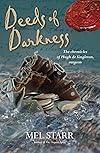
I love, love, love Mel Starr’s medieval mystery series featuring surgeon and bailiff, Hugh de Singleton. Not only does Starr bring medieval England to life, he creates an intelligent mystery that keeps both the main character and the reader on his toes. Deeds of Darkness is the 10th book in the series and is as fresh as all the rest. If you love history and mystery this one is for you!
Hugh is once again charged with uncovering a mysterious event in his bailiwick. Besides determining what show more happened to businessman and coroner, Hubert Shillside, Hugh is faced with assaults, murders, hamsoken (breaking and entering), and threats to himself and family. All in all, just another episode for his chronicles.
Starr does his homework in the creation of Hugh’s world. Interesting details of everyday life and a sprinkling of old English words combine with the social order of the day. His characters are very much medieval in their attitudes and ethics, but there is plenty there for the modern reader to identify with. Men (and women) haven’t changed that much in the 600+ years since Hugh lived. The mystery is filled with twists, turns, and puzzling clues. Deeds of Darkness keeps the reader guessing. Justice in 14th century England is unlike our’s — the state and church had separate jurisdictions and sentencing requirements. But it is certain that, one way or the other, everyone got what they deserved. Hugh is a very devout man and keeps the tenets of the church and the teaching of Jesus to the forefront of his mind, even when they are difficult to follow. Starr portrays a world in which faith is the center of a man’s world, but in the latter days of the 1300s, a reforming wind is in the air.
Intelligent, intriguing, and just plain fun, Deeds of Darkness is a recommended read. And with other deeds of darkness sure to come in the future, I look forward to more adventures with Hugh.
Recommended.
Audience: adults.
(Thanks to Kregel and Lion Hudson for a complimentary copy. All opinions expressed are mine alone.) show less
Hugh is once again charged with uncovering a mysterious event in his bailiwick. Besides determining what show more happened to businessman and coroner, Hubert Shillside, Hugh is faced with assaults, murders, hamsoken (breaking and entering), and threats to himself and family. All in all, just another episode for his chronicles.
Starr does his homework in the creation of Hugh’s world. Interesting details of everyday life and a sprinkling of old English words combine with the social order of the day. His characters are very much medieval in their attitudes and ethics, but there is plenty there for the modern reader to identify with. Men (and women) haven’t changed that much in the 600+ years since Hugh lived. The mystery is filled with twists, turns, and puzzling clues. Deeds of Darkness keeps the reader guessing. Justice in 14th century England is unlike our’s — the state and church had separate jurisdictions and sentencing requirements. But it is certain that, one way or the other, everyone got what they deserved. Hugh is a very devout man and keeps the tenets of the church and the teaching of Jesus to the forefront of his mind, even when they are difficult to follow. Starr portrays a world in which faith is the center of a man’s world, but in the latter days of the 1300s, a reforming wind is in the air.
Intelligent, intriguing, and just plain fun, Deeds of Darkness is a recommended read. And with other deeds of darkness sure to come in the future, I look forward to more adventures with Hugh.
Recommended.
Audience: adults.
(Thanks to Kregel and Lion Hudson for a complimentary copy. All opinions expressed are mine alone.) show less
by Mel Starr
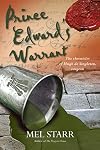
Master Hugh de Singleton is back with a new chronicle of a mystery solved in Prince Edward’s Warrant. Hugh must leave the comfort of his hearth to minister to the Black Prince Edward. Having served him well in France, Hugh is called to treat and cure, if he can, the malady that afflicts the prince. But as always, Hugh soon finds himself in the midst of a mystery, this time the poisoning of one of Edward’s favorite knights. The bodies soon pile up as Hugh doggedly follows the clues.
Mel show more Starr’s historical mysteries are some of my favorites. Limited by his time and place, Hugh manages to use his intuition, limited scientific knowledge, and insight into the human psyche to solve complex crimes of passion and greed. The setting for the latest novel is Kennington Palace, a long gone favorite of Prince Edward. Life at court, with its protocol, amusements, and hierarchy, is shared with a detail that adds to the narrative. Hugh is a chronicler of more than murder and mayhem, and shares his thoughts on the fashions, customs, and politics of 14th century England. I especially love Hugh’s musings on the religious practices and dogma of the day. Hugh also has a dry wit that is spotlighted in his dealings with Edward’s personal physician. While Hugh may be a mere mechanic in his profession as surgeon, he is much more practical and methodical in his study of the common diseases of the day than the puffed up Dr. Blackwell. As both bailiff to Sir Gilbert and surgeon, Hugh brings a mix of expertise to his quest for the perpetrators. Fans of mysteries will love Hugh’s detecting prowess.
Another winner from the skilled pen of Starr, Prince Edward’s Warrant is a must-read for fans of historical mysteries and medieval fiction.
Recommended.
Audience: adults.
(Thanks to Lion Hudson and NetGalley for a complimentary copy. All opinions expressed are mine alone.) show less
Mel show more Starr’s historical mysteries are some of my favorites. Limited by his time and place, Hugh manages to use his intuition, limited scientific knowledge, and insight into the human psyche to solve complex crimes of passion and greed. The setting for the latest novel is Kennington Palace, a long gone favorite of Prince Edward. Life at court, with its protocol, amusements, and hierarchy, is shared with a detail that adds to the narrative. Hugh is a chronicler of more than murder and mayhem, and shares his thoughts on the fashions, customs, and politics of 14th century England. I especially love Hugh’s musings on the religious practices and dogma of the day. Hugh also has a dry wit that is spotlighted in his dealings with Edward’s personal physician. While Hugh may be a mere mechanic in his profession as surgeon, he is much more practical and methodical in his study of the common diseases of the day than the puffed up Dr. Blackwell. As both bailiff to Sir Gilbert and surgeon, Hugh brings a mix of expertise to his quest for the perpetrators. Fans of mysteries will love Hugh’s detecting prowess.
Another winner from the skilled pen of Starr, Prince Edward’s Warrant is a must-read for fans of historical mysteries and medieval fiction.
Recommended.
Audience: adults.
(Thanks to Lion Hudson and NetGalley for a complimentary copy. All opinions expressed are mine alone.) show less
Lists
You May Also Like


Statistics
- Works
- 17
- Members
- 2,052
- Popularity
- #12,527
- Rating
- 3.8
- Reviews
- 233
- ISBNs
- 115
- Languages
- 3
- Favorited
- 1
