
Sarah Dunant
Author of The Birth of Venus
About the Author
She began her career writing mysteries, but with her last book, TRANSGRESSIONS (ReganBooks/HarperCollins), graduated to more ambitious, cutting-edge psychological thrillers. Three of her six books, including TRANSGRESSIONS, have been shortlisted for Britain's prestigious Edgar equivalent, the show more Golden Dagger award, and her third novel, FATLANDS, won the Silver Dagger. As a journalist and critic she has worked extensively in print, radio and television, where for many years she hosted her own show on BBC2. She has also edited two books of essays. Dunant lives in London with her family. (Publisher Provided) Sarah Dunant was born Linda Dunant in London, England on August 8, 1950. She read history at Newnham College, Cambridge. Before becoming a full-time author, she worked in theatre, radio and television. Her works include The Birth of Venus, In the Company of the Courtesan, Sacred Hearts, Snow Storms in a Hot Climate, Transgressions, Mapping the Edge, and Blood and Beauty. She is also the author of A Hannah Wolfe Crime Novel series. (Bowker Author Biography) show less
Disambiguation Notice:
Has written two novels with Peter Busby under the pen name of Peter Dunant.
Series
Works by Sarah Dunant
Associated Works
Tagged
Common Knowledge
- Canonical name
- Dunant, Sarah
- Birthdate
- 1950-08-08
- Gender
- female
- Education
- Godolphin and Latymer School, London
University of Cambridge (Newnham College) - Occupations
- broadcaster
novelist
historical novelist - Organizations
- BBC
- Awards and honors
- Walter Scott Prize (2010)
Silver Dagger Award (1993) - Agent
- Clare Alexander (Aitken Alexander Associates)
- Nationality
- UK
- Birthplace
- London, England, UK
- Places of residence
- London, England, UK
Florence, Italy - Map Location
- England, UK
- Disambiguation notice
- Has written two novels with Peter Busby under the pen name of Peter Dunant.
Members
Discussions
Mystery set in renaissance italy-Florence? in Name that Book (April 2012)
Reviews
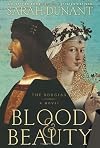
In the historical epilogue to this lush novel author Sarah Dunant says
Subtitled, The Borgias, A Novel, this book is part of my reading list for consideration for the Maine Readers Choice Award. It certainly is a worthy entry into the ring. While I had heard of the Borgias and their corruption over the years, I don't think I'd ever read anything that presented the story of this infamous family in such detail. Certainly authors have leeway when writing fiction, and Dunant makes no claim to have us see this as a biography. She has steeped herself in the history of the era, becoming as familiar as possible with source material, both fictional and archival. Her previous books, such as Birth of Venus, In the Company of the Courtesan, and Sacred Hearts, have shown her mastery of the language, the customs, the politics and the scenery of the era but with fictional characters. In this one, she tackles historical characters, treading carefully among the information available to present us with a plausible rendition of this well-known and oft-villified family.
Pope Alexander VI, born Rodrigo Borgia, ascends the throne of Peter after some intense backstage maneuvering. He promptly makes his illegitimate son Cesare a cardinal at the age of 19, and begins marrying off his other children to various royal partners to form alliances to bolster his political ambitions. This is a time when Italy was still not a unified country, existing instead as series of city-states, when the Holy Roman Empire was gradually disintegrating, when Spain's power was on the rise. A Spaniard by birth, Alexander had to tread carefully through the politics of Italy, using the power of his office, as well as his love for his family to enhance his power, his wealth, and his ego.
His son Cesare, is a power hungry young man, well loved by all the ladies, unscrupulous in his relations with both church and state. The world has been fed stories about Cesare's relationship with his sister Lucrezia, the Pope's only and very beloved daughter. Dunant treats this relationship carefully, never allowing the undocumented rumors to overtake other possibilities. Certainly the two were close, but here they are portrayed as being very politically astute siblings who are under the tight rein of their father the Pope. While they may have been pawns and playthings, the author is careful to also let us see the power these women held in the male dominated arena.
Dunant gives us a richly drawn portrait of the Pope, his off-spring, his enemies, his mistresses and relations, his offspring, his warts, his dealings with foreign countries, all the while showing us possibilities of humanity not often attributed to this family. In addition, the customs, the fashions, and the history of the period are intricately described, taking the reader back to a time of rich but vile corruption, political perfidy, and horrifying treachery.
Historical fiction doesn't get much better than this. This is definitely Dunant's best work. I read somewhere that there may be a sequel in the offing. Let's hope so. There's much more to this story that deserves a well-researched, objective, and humane look.
I also sampled a significant part of this one in audio. Narrator Edoardo Ballerini does a stellar job of giving us the characters in different voices, accents, and attitudes. The print copy includes an excellent family tree and map of the different political entities of the era, a definite plus for those of us needing a history refresher. show less
show more
"More than many in history, the Borgias have suffered from an excess of bad press. While their behavior--personal and political--was often brutal and corrupt, they lived in brutal and corrupt times; and the thirst for diplomatic gossip and scandal, along with undoubted prejudice against their Spanish nationality, played its part in embellishing what was already a colorful story. Once the slander was abroad, much of it was
incorporated into the historical record without being challenged. Spin, it seems, was a political art long before the modern word was introduced.
Subtitled, The Borgias, A Novel, this book is part of my reading list for consideration for the Maine Readers Choice Award. It certainly is a worthy entry into the ring. While I had heard of the Borgias and their corruption over the years, I don't think I'd ever read anything that presented the story of this infamous family in such detail. Certainly authors have leeway when writing fiction, and Dunant makes no claim to have us see this as a biography. She has steeped herself in the history of the era, becoming as familiar as possible with source material, both fictional and archival. Her previous books, such as Birth of Venus, In the Company of the Courtesan, and Sacred Hearts, have shown her mastery of the language, the customs, the politics and the scenery of the era but with fictional characters. In this one, she tackles historical characters, treading carefully among the information available to present us with a plausible rendition of this well-known and oft-villified family.
Pope Alexander VI, born Rodrigo Borgia, ascends the throne of Peter after some intense backstage maneuvering. He promptly makes his illegitimate son Cesare a cardinal at the age of 19, and begins marrying off his other children to various royal partners to form alliances to bolster his political ambitions. This is a time when Italy was still not a unified country, existing instead as series of city-states, when the Holy Roman Empire was gradually disintegrating, when Spain's power was on the rise. A Spaniard by birth, Alexander had to tread carefully through the politics of Italy, using the power of his office, as well as his love for his family to enhance his power, his wealth, and his ego.
His son Cesare, is a power hungry young man, well loved by all the ladies, unscrupulous in his relations with both church and state. The world has been fed stories about Cesare's relationship with his sister Lucrezia, the Pope's only and very beloved daughter. Dunant treats this relationship carefully, never allowing the undocumented rumors to overtake other possibilities. Certainly the two were close, but here they are portrayed as being very politically astute siblings who are under the tight rein of their father the Pope. While they may have been pawns and playthings, the author is careful to also let us see the power these women held in the male dominated arena.
Dunant gives us a richly drawn portrait of the Pope, his off-spring, his enemies, his mistresses and relations, his offspring, his warts, his dealings with foreign countries, all the while showing us possibilities of humanity not often attributed to this family. In addition, the customs, the fashions, and the history of the period are intricately described, taking the reader back to a time of rich but vile corruption, political perfidy, and horrifying treachery.
Historical fiction doesn't get much better than this. This is definitely Dunant's best work. I read somewhere that there may be a sequel in the offing. Let's hope so. There's much more to this story that deserves a well-researched, objective, and humane look.
I also sampled a significant part of this one in audio. Narrator Edoardo Ballerini does a stellar job of giving us the characters in different voices, accents, and attitudes. The print copy includes an excellent family tree and map of the different political entities of the era, a definite plus for those of us needing a history refresher. show less
The book covers the ten-year period between 1492 and 1502, beginning with Roderigo Borgia’s election as Pope Alexander VI and ending with Lucrezia’s third marriage. Once the family patriarch has ascended the Throne of Peter, he is concerned with consolidating his power: “For the Borgias to achieve the next rung of immortality the bricks and mortar must be human ones: sons and daughters, cousins, nieces and nephews, each one bringing another silken thread of loyalty and influence into show more the web of family, secure and powerful enough to run Rome and beyond” (67). To create his dynasty, the pope uses his progeny as pawns to arrange alliances and has no qualms about bending the rules and breaking agreements if necessary. Cesare, the eldest son, perhaps best summarizes the Borgia tactics when he argues in favour of causing outrage in society: “’The more outrage the better. This way people will fear us while we are alive and never – ever – forget us when we are dead’” (486).
Dunant obviously did considerable research in preparation for writing this work of historical fiction. The bibliography at the end of the book is extensive. She seems to have sifted through various books about this notorious family and then set out to write a realistic portrayal. She avoids some of the most salacious speculations which suggest incestuous relations between father and daughter and between Cesare and his sister.
The author is most successful in humanizing Lucrezia. She emerges as a fully rounded character who provokes both understanding and sympathy. She proves to be as intelligent as the men in her family and to possess more honour. At the beginning she is an innocent, romantic twelve-year-old but her experiences strip away her naivety. She realizes she is “’just a piece on a chessboard to be moved or taken when and where it suits [Borgia] ambitions’” (466) and learns to “roll her sorrow up into a small tight ball and swallow it deep down inside her” (316) until “her sorrow becomes strategy” (453). Gradually, she discovers “disobedience. She, who has been brought up to honor her family and to do everything she is told. She, who has asked only for two things directly in her life: that the two men for whom she felt affection should be spared, only to see both of them slaughtered” (455).
Her third marriage, to the Duke of Ferrara, she sees as an escape since she understands Cesare is correct when he says, “’Regardless of whom you marry, if your next husband is not powerful enough to take you away, you will always be a Borgia first and someone’s wife second. . . . the next marriage must be another kind of union; a legitimate ruler with real power, from a family with roots deep enough to withstand the gales of history’” (466). Dunant has planned “a concluding novel in a few years’ time” (504) and it will presumably explore whether Lucrezia’s marriage into such a family is happy and whether she is able to satisfy her yearning “to build a court of [her] own, poets and musicians around [her]” (466).
Cesare is the character who is least sympathetic. Even his father recognizes “the coldness in his soul” (68). He seems to have no positive qualities to fully redeem his viciousness and brutality, except a love for his sister, and that love often seems inappropriate. To emphasize that his love for Lucrezia is genuine, Dunant has him obsessing about being forgiven by her for killing her second husband; his last words to her in the novel express his desire to hear “’The words that say you love me and that I am forgiven’” (498).
This was an entertaining read, although sometimes the continual political machinations and changes in allegiances became somewhat confusing. A knowledge of Italian history would be helpful in understanding the context of the novel. Having watched The Borgias, the television series starring Jeremy Irons, I found myself making comparisons with the two interpretations of the infamous Borgia family. show less
Dunant obviously did considerable research in preparation for writing this work of historical fiction. The bibliography at the end of the book is extensive. She seems to have sifted through various books about this notorious family and then set out to write a realistic portrayal. She avoids some of the most salacious speculations which suggest incestuous relations between father and daughter and between Cesare and his sister.
The author is most successful in humanizing Lucrezia. She emerges as a fully rounded character who provokes both understanding and sympathy. She proves to be as intelligent as the men in her family and to possess more honour. At the beginning she is an innocent, romantic twelve-year-old but her experiences strip away her naivety. She realizes she is “’just a piece on a chessboard to be moved or taken when and where it suits [Borgia] ambitions’” (466) and learns to “roll her sorrow up into a small tight ball and swallow it deep down inside her” (316) until “her sorrow becomes strategy” (453). Gradually, she discovers “disobedience. She, who has been brought up to honor her family and to do everything she is told. She, who has asked only for two things directly in her life: that the two men for whom she felt affection should be spared, only to see both of them slaughtered” (455).
Her third marriage, to the Duke of Ferrara, she sees as an escape since she understands Cesare is correct when he says, “’Regardless of whom you marry, if your next husband is not powerful enough to take you away, you will always be a Borgia first and someone’s wife second. . . . the next marriage must be another kind of union; a legitimate ruler with real power, from a family with roots deep enough to withstand the gales of history’” (466). Dunant has planned “a concluding novel in a few years’ time” (504) and it will presumably explore whether Lucrezia’s marriage into such a family is happy and whether she is able to satisfy her yearning “to build a court of [her] own, poets and musicians around [her]” (466).
Cesare is the character who is least sympathetic. Even his father recognizes “the coldness in his soul” (68). He seems to have no positive qualities to fully redeem his viciousness and brutality, except a love for his sister, and that love often seems inappropriate. To emphasize that his love for Lucrezia is genuine, Dunant has him obsessing about being forgiven by her for killing her second husband; his last words to her in the novel express his desire to hear “’The words that say you love me and that I am forgiven’” (498).
This was an entertaining read, although sometimes the continual political machinations and changes in allegiances became somewhat confusing. A knowledge of Italian history would be helpful in understanding the context of the novel. Having watched The Borgias, the television series starring Jeremy Irons, I found myself making comparisons with the two interpretations of the infamous Borgia family. show less

Sacred Hearts, by Sarah Dunant
By the time you finish reading the first few pages of Sarah Dunant's recent historical novel (her third), you will be swept into the intricate microcosm of a 16th century convent in northern Italy. Night has fallen at Santa Catarina, and the usual hush that blankets the damp stone cells of the dormitory has been broken by the echo of frenzied screams emanating from a 16-year old girl who has been forced into the convent against her will. Young Sarafina is show more outraged at her involuntary internment, and her ragged wailing has begun to wear on the holy sisters, who depend upon a precious span of sleep before being routed from their slumber at 1 a.m. for the office of Matins. Something must be done, and Suara (Sister) Zoana, the resident apothecary mistress, decides to break her vow of nocturnal isolation; she slips down the long stone hall to dispense a dram of poppy syrup to Sarafina. The poor girl is so miserable and desperate that Suara Zoana breaks nighttime protocol and verbally comforts Sarafina as the drug takes effect. An empathetic bond forms that night which will alter the course of both their lives and the future of Santa Catarina.
Zoana herself was not a willing postulant when she entered the gates of Santa Catarina 16 years before as a recently orphaned young girl, and her involuntary marriage to Christ was not an unusual one. Even wealthy fathers could not always pay the exorbitant dowry rates required for multiple daughters during the 16th century, and Santa Catarina provided a respectable, lifelong warehouse for such girls at a fraction of the dowry cost. These daughters, along with handicapped, ugly, or otherwise unmarriageable women, frequently took their place beside the devout in the convent community with no hope of an alternative future.
Dunant explores the complex social and psychological implications of living in a permanently closed community of women. Although girls possessing an intelligent and strong-headed personality tended to resist assimilation the most, they were the very ones who often benefited from a cloistered society that relied upon them to write, manufacture goods, compose music, balance financial accounts, mix and dispense medicine, and participate in governing a community in the absence of men. The virginal holy sisters lived longer than their secular counterparts, who were subjected to sexual diseases, drunken advances, and serial pregnancies at the whim of their husbands, but they were also doomed to watch their youthful energy and desire slowly evaporate into withered old age without the benefit of children or the happier aspects of conjugal life.
Dunant has filled the book with historical information. The reader learns about Italian city state politics, the delicate dance between the convent and its main benefactors, the forces fueling the Catholic Counter-Reformation, the raucous rituals of Winter Carnival, and much, much more. Dunant's ability to draw the reader into history with specific sensory descriptions makes all of this "learning" delightfully painless. Nuns, giddy with the high spirits of Winter Carnival, toss a shower of dried rose petals over the convent wall onto a gathering of bawdy serenading boys, inciting a near riot (nuns gone wild!); one nun who happens to be the daughter of Santa Catarina's richest benefactor powders her face, lines her nun's habit with colorful, rich silks and tests just how far she can let her newest hairstyle escape her wimple before being chastised; local citizens are titillated when Santa Catarina's annual orchestral concert features wind instruments (the holy sisters grip their lips around the mouthpieces and blow -- shocking!).
The sensory richness of Sacred Hearts combines with a great story line (there's romance and suspense I haven't gotten into) and memorable, complex characters to make an outstanding work of historical fiction. One of my favorite narrators, Rosalyn Landor, is featured in the audio edition of this novel. Her rich, articulate voice pairs perfectly with the tone and mood of the book. show less
By the time you finish reading the first few pages of Sarah Dunant's recent historical novel (her third), you will be swept into the intricate microcosm of a 16th century convent in northern Italy. Night has fallen at Santa Catarina, and the usual hush that blankets the damp stone cells of the dormitory has been broken by the echo of frenzied screams emanating from a 16-year old girl who has been forced into the convent against her will. Young Sarafina is show more outraged at her involuntary internment, and her ragged wailing has begun to wear on the holy sisters, who depend upon a precious span of sleep before being routed from their slumber at 1 a.m. for the office of Matins. Something must be done, and Suara (Sister) Zoana, the resident apothecary mistress, decides to break her vow of nocturnal isolation; she slips down the long stone hall to dispense a dram of poppy syrup to Sarafina. The poor girl is so miserable and desperate that Suara Zoana breaks nighttime protocol and verbally comforts Sarafina as the drug takes effect. An empathetic bond forms that night which will alter the course of both their lives and the future of Santa Catarina.
Zoana herself was not a willing postulant when she entered the gates of Santa Catarina 16 years before as a recently orphaned young girl, and her involuntary marriage to Christ was not an unusual one. Even wealthy fathers could not always pay the exorbitant dowry rates required for multiple daughters during the 16th century, and Santa Catarina provided a respectable, lifelong warehouse for such girls at a fraction of the dowry cost. These daughters, along with handicapped, ugly, or otherwise unmarriageable women, frequently took their place beside the devout in the convent community with no hope of an alternative future.
Dunant explores the complex social and psychological implications of living in a permanently closed community of women. Although girls possessing an intelligent and strong-headed personality tended to resist assimilation the most, they were the very ones who often benefited from a cloistered society that relied upon them to write, manufacture goods, compose music, balance financial accounts, mix and dispense medicine, and participate in governing a community in the absence of men. The virginal holy sisters lived longer than their secular counterparts, who were subjected to sexual diseases, drunken advances, and serial pregnancies at the whim of their husbands, but they were also doomed to watch their youthful energy and desire slowly evaporate into withered old age without the benefit of children or the happier aspects of conjugal life.
Dunant has filled the book with historical information. The reader learns about Italian city state politics, the delicate dance between the convent and its main benefactors, the forces fueling the Catholic Counter-Reformation, the raucous rituals of Winter Carnival, and much, much more. Dunant's ability to draw the reader into history with specific sensory descriptions makes all of this "learning" delightfully painless. Nuns, giddy with the high spirits of Winter Carnival, toss a shower of dried rose petals over the convent wall onto a gathering of bawdy serenading boys, inciting a near riot (nuns gone wild!); one nun who happens to be the daughter of Santa Catarina's richest benefactor powders her face, lines her nun's habit with colorful, rich silks and tests just how far she can let her newest hairstyle escape her wimple before being chastised; local citizens are titillated when Santa Catarina's annual orchestral concert features wind instruments (the holy sisters grip their lips around the mouthpieces and blow -- shocking!).
The sensory richness of Sacred Hearts combines with a great story line (there's romance and suspense I haven't gotten into) and memorable, complex characters to make an outstanding work of historical fiction. One of my favorite narrators, Rosalyn Landor, is featured in the audio edition of this novel. Her rich, articulate voice pairs perfectly with the tone and mood of the book. show less

I have been interested in all things Borgia since I was 12 years old and read my first (not great) novel about Lucrezia. Since that time I have read much fiction and non-fiction about this fascinating family and watched the two recent TV series (one US - not so good, and one European - brilliant) and I came to read Dunant's book simply because it was about the family and I couldn't NOT read it. I was pleasantly surprised to find that I enjoyed this book immensely as it delivered the show more characters to me in a way that was both familiar and new. Dunant writes well and interleaves historical fact with good story telling. I was appreciative that where the historical facts aren't clear (eg. who killed Juan Borgia?) she didn't take the storyline down paths of fantasy. I think this book would be a good introduction for anyone with a general interest in the Borgias as well as for anyone with a bit more knowledge who just wants to slip into their world for awhile. show less
Lists
Awards


You May Also Like


Associated Authors
Statistics
- Works
- 15
- Also by
- 7
- Members
- 14,587
- Popularity
- #1,576
- Rating
- 3.7
- Reviews
- 551
- ISBNs
- 315
- Languages
- 21
- Favorited
- 35
