
Susan Vreeland (1946–2017)
Author of Girl in Hyacinth Blue
About the Author
Susan Vreeland was born in Racine, Wisconsin on January 20, 1946. She received a bachelor's degree in literature from San Diego State University. After graduating, she taught high school English in San Diego from 1969 to 2000. In 1980, she began writing articles about art, culture, and travel for show more newspapers and magazines. Her first novel What Love Sees was published in 1988. Her other novels include Girl in Hyacinth Blue, The Passion of Artemisia, Luncheon of the Boating Party, Life Studies, The Forest Lover, Lisette's List, and Clara and Mr. Tiffany. Her short fiction has appeared in numerous publications including The Missouri Review, Ploughshares, New England Review, Alaska Quarterly Review, and Connecticut Review. She died after heart surgery on August 23, 2017 at the age of 71. (Bowker Author Biography) show less
Image credit: svreeland.com
Works by Susan Vreeland
Doni (in Ritratti d'artista) 1 copy
Associated Works
The Book That Changed My Life: 71 Remarkable Writers Celebrate the Books That Matter Most to Them (2006) — Contributor — 411 copies, 18 reviews
A Paris All Your Own: Bestselling Women Writers on the City of Light (2017) — Contributor — 85 copies, 5 reviews
The Smiles of Rome: A Literary Companion for Readers and Travelers (2005) — Contributor — 67 copies, 2 reviews
Tagged
Common Knowledge
- Canonical name
- Vreeland, Susan
- Legal name
- Vreeland, Susan Joyce
- Birthdate
- 1946-01-20
- Date of death
- 2017-08-23
- Gender
- female
- Education
- San Diego State University (B.A.|1969|M.A.|1972|M.A.|1978)
- Occupations
- educator
novelist - Organizations
- San Diego Unified School District
- Agent
- Barbara Braun Associates, Inc.
- Relationships
- Gray, Joseph (husband)
- Cause of death
- complications from heart surgery
- Nationality
- USA
- Birthplace
- Racine, Wisconsin, USA
- Places of residence
- San Diego, California, USA
- Place of death
- San Diego, California, USA
- Associated Place (for map)
- California, USA
Members
Reviews
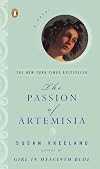
It was very hard to relate to the main character and her sensibilities, but the author is quite right to pen Artemisia Gentileschi in such a frustrating manner. She was a woman of her time who possessed a difficult manner. Most of the characters are difficult to understand, but I think it was the time and the patrician nature of religion. The author sees through it and allows her feminine characters to be true to themselves.
The setting was irresistible and the tale is well told. As I was show more reading, I looked up the paintings mentioned and looked at each through the author's/character's eyes. Very satisfying. show less
The setting was irresistible and the tale is well told. As I was show more reading, I looked up the paintings mentioned and looked at each through the author's/character's eyes. Very satisfying. show less
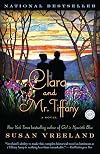
Engrossing look into the production of Tiffany glass and the “Tiffany girls”. Turns out that women designed many of the lamps and mosaics, especially the real life Clara Driscoll, a great artist who didn’t get credit for her designs during her life. Clara inspired the women workers to be creative, encouraged them to fight for equality, and even led them in a march to prevent the men's labor union from trying to stop their work. The big, burly men felt threatened by the women’s show more successes. It’s also a great history lesson about New York City in the late 1890s, with the opulent lifestyles of the wealthy, the oppression of immigrants and women, and even the life of gay men. Despite the good parts, the book sometimes read like a how-to manual on stained glass design and production, even including tedious details about the accounting system. Clara’s frustration with the lack of recognition for her work, while valid, was also belabored. Still, it is sad that her talent and successes remained unknown until the very recent discovery of her personal letters. In a fitting homage to Clara, Vreeland gives us a short summary on what happened to many of the actual people. show less
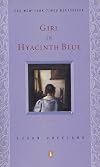
Girl in Hyacinth Blue is a novel in short stories. I usually find this kind of thing to be a bit of a bait and switch. When I read a novel, I want it to be a novel. In my middle age, I've developed an appreciation for short stories that has been hard won over a few decades of not caring for them. Nonetheless, I generally don't like to be surprised by short stories hiding inside a novel. Here, though, I'll make an exception because how beautifully they're handled and because of the common show more thread of the painting around which all of them revolve.
Girl in Hyacinth Blue follows a lost, forgotten Vermeer masterpiece from its painting to the study of the son of a Nazi, only it's done in reverse. As we follow the painting back in time, we meet a son tortured by his father's war crimes so dissonant with the man he knows, a Jewish girl making a sacrifice for safety that is hardly guaranteed, a couple troubled by a husband's former love, a philandering wife matched by a philandering husband, a couple who rescues a baby during a flood, and on back to Vermeer himself struggling to make ends meet and wondering if he shouldn't take a proper job to provide for his impoverished family but unable to turn away from the transcendent beauty that draws his eye and his talent always back to painting.
Though a slim book, Girl in Hyacinth Blue in its journey through history is filled with the richness of human experience and captures all manner of people who themselves are captured by the beauty of a painting of a girl they will never know and yet feel a kind of kinship with. The idea of following a painting through history is fascinating on its own. Vreeland's execution of it is what is truly sublime. show less
Girl in Hyacinth Blue follows a lost, forgotten Vermeer masterpiece from its painting to the study of the son of a Nazi, only it's done in reverse. As we follow the painting back in time, we meet a son tortured by his father's war crimes so dissonant with the man he knows, a Jewish girl making a sacrifice for safety that is hardly guaranteed, a couple troubled by a husband's former love, a philandering wife matched by a philandering husband, a couple who rescues a baby during a flood, and on back to Vermeer himself struggling to make ends meet and wondering if he shouldn't take a proper job to provide for his impoverished family but unable to turn away from the transcendent beauty that draws his eye and his talent always back to painting.
Though a slim book, Girl in Hyacinth Blue in its journey through history is filled with the richness of human experience and captures all manner of people who themselves are captured by the beauty of a painting of a girl they will never know and yet feel a kind of kinship with. The idea of following a painting through history is fascinating on its own. Vreeland's execution of it is what is truly sublime. show less
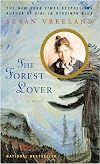
I generally struggle with historical fiction featuring a real person. I feel compelled to know what is true and what is made up. Fortunately, the internet makes this much easier than in the past. Also, when the featured person died relatively recently, I worry about what family members may think about how their relative is treated. In this case, the author has an obvious respect and sympathy for her character, Emily Carr, which makes it easier to read.
The book didn't have much of a plot, It show more was the strong character of Emily Carr that held my interest. The book made me think about the acceptance of "women artists". Would Emily's avant-garde style have been more accepted had she been male? Was it a greater transgression for a woman to stray beyond realism than for a man?
Other issues raised include cultural appropriation; not something considered much at the time the novel is set, but certainly an issue today. And spirituality is a major theme. I wondered to what extent a "forest lover" could be religious in the traditional sense prevalent at the time of the novel's setting.
I didn't enjoy the book itself so much as the experience of having read it and thought about the many issues it provoked. show less
The book didn't have much of a plot, It show more was the strong character of Emily Carr that held my interest. The book made me think about the acceptance of "women artists". Would Emily's avant-garde style have been more accepted had she been male? Was it a greater transgression for a woman to stray beyond realism than for a man?
Other issues raised include cultural appropriation; not something considered much at the time the novel is set, but certainly an issue today. And spirituality is a major theme. I wondered to what extent a "forest lover" could be religious in the traditional sense prevalent at the time of the novel's setting.
I didn't enjoy the book itself so much as the experience of having read it and thought about the many issues it provoked. show less
Lists
First Novels (1)
Awards


You May Also Like


Associated Authors
Statistics
- Works
- 27
- Also by
- 3
- Members
- 9,036
- Popularity
- #2,662
- Rating
- 3.7
- Reviews
- 309
- ISBNs
- 168
- Languages
- 15
- Favorited
- 17