
Susanna Kearsley
Author of The Winter Sea
About the Author
Susanna Kearsley was born in Ontario, Canada in 1966. She is an award winning author of historical fiction and mystery. She received the Romance Writers of America RITA Award for Best Paranormal Romance for her work, The Firebird, in 2014. Her other title's include: Undertow, Mariana, Season of show more Storms, Every Secret Thing, The Rose Garden and Bellewether. (Bowker Author Biography) show less
Series
Works by Susanna Kearsley
THE ROSE GARDEN PA 1 copy
Associated Works
Reader's Digest Condensed Books: Five Past Midnight • Only Love • Killing Floor • The Shadowy Horses (1997) 8 copies
Livros Condensados: Controle remote | Cavalos na penumbra | Na rua onde moras | Anjo caído (2002) 4 copies
Reader's Digest Select Editions: Cobra Event / Then Came Heaven / Remote Control / The Shadowy Horses (1999) — Contributor — 1 copy
Tagged
Common Knowledge
- Legal name
- Williamson, Mary Lynne
- Other names
- Cole, Emma
- Birthdate
- 1966-01-17
- Gender
- female
- Occupations
- museum curator
restaurant server
novelist - Organizations
- Crime Writers of Canada
Romantic Novelists' Association
International Thriller Writers - Agent
- Camilla Hornby (Curtis Brown)
Shawna McCarthy (Curtis Brown)
Felicity Blunt - Nationality
- Canada
- Places of residence
- Ontario, Canada
- Map Location
- Kanada
- Associated Place (for map)
- Ontario, Canada
Members
Discussions
Winter Sea, Mir's third book. in World Reading Circle (November 2011)
Reviews
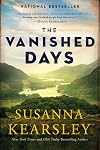
As an eighteenth century Scottish reenactor I was initially drawn to this story to discover more about the actions which lead up to the various Jacobite uprisings in Scotland. Having previously read Susanna Kearsley's, "Bellewether", I knew that I was in for a treat and an amazing story.
The story toggles between "current day" Edinburgh of 1707 and the 1680s for the background of this rich tale. The Acts of Union have dissolved the Scottish Parliament and created a united nation with show more England. To assuage the Scots, a fund called, "The Equivalent" was created to offset financial losses as well as those losses of human lives relative to the Darien settlement. The fund was managed by the commissioners. Widows whose husbands died in military service related to the Darien settlement could apply for recompense. One such applicant was Lily Aitcheson whose marriage had not been properly recorded beyond the provision of a marriage certificate. The investigation of the claim, which under normal circumstances would be handled by the commissioners, was passed off to Lieutenant Turnbull with the assistance of a Mr. Gilroy. In Turnbull's absence, the investigation was temporarily handed off to Sergeant Adam Williamson who had served under Turnbull. The investigation commences and the reader accompanies Williamson and Gilroy as they seek to prove or disprove Ms. Aitcheson's claim.
The story displays the many differences and social stigmas related to class. Social activities cavalierly practiced by one class are scorned when observed in the other. The sins of the parents are burdens of their offspring. Rising out of those stigmas is a precious and much coveted gift to be protected at all costs.
Kearsley's prose is exquisitely rendered. The settings are visually rich and atmospheric. Her historical research is Herculean and meticulous. This was an immersive book, rich with historic detail and beautifully executed. Well done Ms. Kearsley!
I am grateful to Susanna Kearsley and publisher SourceBooks for having provided a complimentary copy of this book through NetGalley. Their generosity, however, has not influenced this review - the words of which are mine alone.
Publisher: Sourcebooks Landmark
Publication date: October 5, 2021
No. of pages: 484
ISBN: 9781492650164 show less
The story toggles between "current day" Edinburgh of 1707 and the 1680s for the background of this rich tale. The Acts of Union have dissolved the Scottish Parliament and created a united nation with show more England. To assuage the Scots, a fund called, "The Equivalent" was created to offset financial losses as well as those losses of human lives relative to the Darien settlement. The fund was managed by the commissioners. Widows whose husbands died in military service related to the Darien settlement could apply for recompense. One such applicant was Lily Aitcheson whose marriage had not been properly recorded beyond the provision of a marriage certificate. The investigation of the claim, which under normal circumstances would be handled by the commissioners, was passed off to Lieutenant Turnbull with the assistance of a Mr. Gilroy. In Turnbull's absence, the investigation was temporarily handed off to Sergeant Adam Williamson who had served under Turnbull. The investigation commences and the reader accompanies Williamson and Gilroy as they seek to prove or disprove Ms. Aitcheson's claim.
The story displays the many differences and social stigmas related to class. Social activities cavalierly practiced by one class are scorned when observed in the other. The sins of the parents are burdens of their offspring. Rising out of those stigmas is a precious and much coveted gift to be protected at all costs.
Kearsley's prose is exquisitely rendered. The settings are visually rich and atmospheric. Her historical research is Herculean and meticulous. This was an immersive book, rich with historic detail and beautifully executed. Well done Ms. Kearsley!
I am grateful to Susanna Kearsley and publisher SourceBooks for having provided a complimentary copy of this book through NetGalley. Their generosity, however, has not influenced this review - the words of which are mine alone.
Publisher: Sourcebooks Landmark
Publication date: October 5, 2021
No. of pages: 484
ISBN: 9781492650164 show less
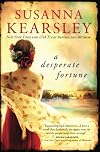
I have enjoyed every book by Susanna Kearsley that I've read. I slipped into the story of A Desperate Fortune and really didn't come up for air until I'd read the last page. If there are any Diana Gabaldon or Mary Stewart fans out there who haven't read Susanna Kearsley, I urge them to do so.
I found both storylines absorbing. Sara's Asperger's is dealt with objectively, and her work in breaking Mary's code is a treat to watch. Mary's storyline really gives readers a feel for what exiled show more Jacobites had to endure. I also appreciated the similarities between the two women. As far as the secondary characters go, I like Sara's love interest, Luc, but found his history with his ex almost too good to be true. Sara and Luc's son Noah are definitely my favorite present-day characters. But what about Mary's time? Mary's traveling companions Madame Roy and MacPherson are wonderful, and so is Mary's dog, Frisque. And as far as competing love interests go, Mary's wins, hands down.
Although A Desperate Fortune is a standalone novel, recurring characters from previous books do make brief appearances, which will please Kearsley's fans. While being immersed in Paris and secret codes and exciting escapes and handsome men, I also learned some fascinating details about the fairy tales of Madame d'Aulnoy and the role she and other women writers of that time played in literature. (The things you don't learn in school....)
Yes, I love this book, and if I can leave you with any advice, it's this: please don't skip reading "About the Characters" at the very end. Kearsley's telling us about the real Mary Dundas brought a smile and a tear to my eye. show less
I found both storylines absorbing. Sara's Asperger's is dealt with objectively, and her work in breaking Mary's code is a treat to watch. Mary's storyline really gives readers a feel for what exiled show more Jacobites had to endure. I also appreciated the similarities between the two women. As far as the secondary characters go, I like Sara's love interest, Luc, but found his history with his ex almost too good to be true. Sara and Luc's son Noah are definitely my favorite present-day characters. But what about Mary's time? Mary's traveling companions Madame Roy and MacPherson are wonderful, and so is Mary's dog, Frisque. And as far as competing love interests go, Mary's wins, hands down.
Although A Desperate Fortune is a standalone novel, recurring characters from previous books do make brief appearances, which will please Kearsley's fans. While being immersed in Paris and secret codes and exciting escapes and handsome men, I also learned some fascinating details about the fairy tales of Madame d'Aulnoy and the role she and other women writers of that time played in literature. (The things you don't learn in school....)
Yes, I love this book, and if I can leave you with any advice, it's this: please don't skip reading "About the Characters" at the very end. Kearsley's telling us about the real Mary Dundas brought a smile and a tear to my eye. show less
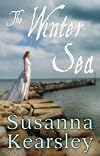
This isn't your typical time travel story. In fact, no one actually travels back into the past, which makes this book even better, in my opinion. I was intrigued by the concept of ancestors' memories passed down in the DNA, influencing what we are drawn to and the choices we make.
The story has two plotlines - one takes place in the present and one in the past. I don't usually enjoy books that jerk you suddenly out of a modern setting into the past within a few chapters, but it worked here. show more I liked that the sections about each character - the writer Carrie and Sophia, the ancestor whose memories she'd inherited - were short, so that you never got huge chunks of storyline that made you reluctant to switch back to the other story. The plot was interesting and for me, it was a wonderful way to fill in the gaps in a period of history I usually avoid reading about (the Jacobite uprising isn't a favourite topic ever since I read Stevenson's"Kidnapped" as a kid and tried deciphering what on earth the intrigue was all about). show less
The story has two plotlines - one takes place in the present and one in the past. I don't usually enjoy books that jerk you suddenly out of a modern setting into the past within a few chapters, but it worked here. show more I liked that the sections about each character - the writer Carrie and Sophia, the ancestor whose memories she'd inherited - were short, so that you never got huge chunks of storyline that made you reluctant to switch back to the other story. The plot was interesting and for me, it was a wonderful way to fill in the gaps in a period of history I usually avoid reading about (the Jacobite uprising isn't a favourite topic ever since I read Stevenson's"Kidnapped" as a kid and tried deciphering what on earth the intrigue was all about). show less

I have enjoyed every novel of Susanna Kearsley's that I've read. She has a talent for writing romantic suspense set in two different timelines. In The Firebird, we have Nicola and Rob traveling first to Belgium and then to Russia in the present day in an attempt to authenticate Margaret Ross's heirloom. The second timeline involves the little girl that the wooden bird was given to-- a time shortly after the death of Peter the Great, a time when a Stuart was trying to retake the throne of show more England, a time when the English were doing everything in their power to prevent that from happening.
The present day timeline is a good one. Nicola and Rob are two strong, fascinating characters whom you want to see getting together. Nicola has always been afraid of her gift and hasn't really explored how far she can go with it. Rob on the other hand is the "old hand" (and the old soul) whose patience and steadiness are exactly what Nicola needs. But as strong as their story is, it's not the heart of this book.
No, the heart of the book belongs to young Anna Logan, who spent the first years of her life unaware that she was living with a foster family. When the political situation takes a deadly turn, Anna is told a portion of the truth of her heritage, and she's spirited away to a convent in Belgium before finding herself in St. Petersburg. This girl will steal your heart. She's smart, she's observant, and she's incredibly brave. She may be old beyond her years, but she's still a little girl whose naivete has dire consequences. After all she's been through, you just want things to go right for Anna.
Kearsley put me right smack in the middle of that Belgian convent and before I knew it, I found myself in Russia. Anna Logan's story is compelling, and Kearsley does an excellent job of showing what happened to so many of the Jacobites who fought on the losing side. If I have any quibble about The Firebird it's that this historical storyline is so strong that the one in the present day pales by comparison. I really liked the characters of Nicola and Rob, so I do wish their story had been beefed up a bit. But that is a very small quibble indeed because each time I picked up this book, I lost myself in Kearsley's marvelous story. show less
The present day timeline is a good one. Nicola and Rob are two strong, fascinating characters whom you want to see getting together. Nicola has always been afraid of her gift and hasn't really explored how far she can go with it. Rob on the other hand is the "old hand" (and the old soul) whose patience and steadiness are exactly what Nicola needs. But as strong as their story is, it's not the heart of this book.
No, the heart of the book belongs to young Anna Logan, who spent the first years of her life unaware that she was living with a foster family. When the political situation takes a deadly turn, Anna is told a portion of the truth of her heritage, and she's spirited away to a convent in Belgium before finding herself in St. Petersburg. This girl will steal your heart. She's smart, she's observant, and she's incredibly brave. She may be old beyond her years, but she's still a little girl whose naivete has dire consequences. After all she's been through, you just want things to go right for Anna.
Kearsley put me right smack in the middle of that Belgian convent and before I knew it, I found myself in Russia. Anna Logan's story is compelling, and Kearsley does an excellent job of showing what happened to so many of the Jacobites who fought on the losing side. If I have any quibble about The Firebird it's that this historical storyline is so strong that the one in the present day pales by comparison. I really liked the characters of Nicola and Rob, so I do wish their story had been beefed up a bit. But that is a very small quibble indeed because each time I picked up this book, I lost myself in Kearsley's marvelous story. show less
Lists
Awards


You May Also Like


Associated Authors
Statistics
- Works
- 21
- Also by
- 3
- Members
- 11,442
- Popularity
- #2,055
- Rating
- 3.9
- Reviews
- 674
- ISBNs
- 302
- Languages
- 9
- Favorited
- 42
