On This Page
Description
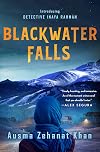
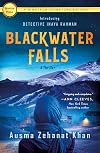
"From critically acclaimed author Ausma Zehanat Khan, Blackwater Falls is the first in a timely and powerful crime series, introducing Detective Inaya Rahman. Girls from immigrant communities have been disappearing for months in the Colorado town of Blackwater Falls, but the local sheriff is slow to act and the fates of the missing girls largely ignored. At last, the calls for justice become too loud to ignore when the body of a star student and refugee--the Syrian teenager Razan Elkader--is show more positioned deliberately in a mosque. Detective Inaya Rahman and Lieutenant Waqas Seif of the Denver Police are recruited to solve Razan's murder, and quickly uncover a link to other missing and murdered girls. But as Inaya gets closer to the truth, Seif finds ways to obstruct the investigation. Inaya may be drawn to him, but she is wary of his motives: he may be covering up the crimes of their boss, whose connections in Blackwater run deep. Inaya turns to her female colleagues, attorney Areesha Adams and Detective Catalina Hernandez, for help in finding the truth. The three have bonded through their experiences as members of vulnerable groups and now they must work together to expose the conspiracy behind the murders before another girl disappears. Delving deep into racial tensions, and police corruption and violence, Blackwater Falls examines a series of crimes within the context of contemporary American politics with compassion and searing insight"-- show lessTags
Recommendations















Member Reviews
The Publisher Says: From critically acclaimed author Ausma Zehanat Khan, Blackwater Falls is the first in a timely and powerful crime series, introducing Detective Inaya Rahman.
Girls from immigrant communities have been disappearing for months in the Colorado town of Blackwater Falls, but the local sheriff is slow to act and the fates of the missing girls largely ignored. At last, the calls for justice become too loud to ignore when the body of a star student and refugee—the Syrian teenager Razan Elkader—is positioned deliberately in a mosque.
Detective Inaya Rahman and Lieutenant Waqas Seif of the Denver Police are recruited to solve Razan’s murder, and quickly uncover a link to other missing and murdered girls. But as Inaya gets show more closer to the truth, Seif finds ways to obstruct the investigation. Inaya may be drawn to him, but she is wary of his motives: he may be covering up the crimes of their boss, whose connections in Blackwater run deep.
Inaya turns to her female colleagues, attorney Areesha Adams and Detective Catalina Hernandez, for help in finding the truth. The three have bonded through their experiences as members of vulnerable groups and now they must work together to expose the conspiracy behind the murders before another girl disappears.
Delving deep into racial tensions, and police corruption and violence, Blackwater Falls examines a series of crimes within the context of contemporary American politics with compassion and searing insight.
I RECEIVED A DRC FROM THE PUBLISHER VIA NETGALLEY. THANK YOU.
My Review: Look at that rating above. Now, listen to me: I am heartily sick of reading about men who abuse, rape, and murder girls. It's imagery I don't want in my head...real life provides more than enough examples of this disgusting, evil, inexcusable, reprehensible thinking and behavior.
Now are you more impressed that this story earned four stars from me?
Author Zehanat Khan is a talented wordsmith, and a very adept plotmonger. Her hate crime in this story is so extremely nauseating to me that I seriously thought about just not going forward with the read. A young Muslim immigrant girl's body is found crucified on the doors of a local mosque.
That was it for me. I closed the Kindle and just barely didn't delete the DRC. But, as people I know posted reviews that were equally appalled but full of praise (though sometimes they intended it to be condemnation), I thought I should pick up the read. I'm not pleased I did, but I'm glad I've read it.
I am in sympathy with Author Zehanat Khan's politics so I didn't feel it necessary to whinge about them. Her deeply felt disdain for the evangelical christian congregation in this story is short of the religion-blaming game that so many "christians" indulge in (despite their own "savior"'s injunctions not to judge others). I was pleased by that. I'd've been equally pleased had she indulged in christian bashing, though. The fact that she has Inaya ruminating on the *people* who committed this heinous act is a step up from the run-of-the-mill thriller.
The girl-posse that works together was, I suppose, fan service. It didn't make me feel any warmer towards that gynergy-celebrating stuff. It also led me to wonder if, in her authorial haste not to bash men as a whole, she hadn't rushed the possible romantic stuff she's hinting at between Inaya and Lieutenant Seif. It feels too soon to me. I want to get to know her as a person before thinking there might soon be a part-of-a-couple vibe.
More especially I want to see Inaya grow into her own powers as an investigator. This is a rookie's case. Let her get past this, move into a more confident footing, before saddling her with a man. That isn't what's going to happen, it seems, but it was an issue I felt needed to be addressed in my four-star review...as you're beginning to see, I liked the read but wasn't mad for it. I rated it higher than my first instinct said to rate it because it's very important to make these kinds of crimes public. I don't, as said above, like reading about violence against women. I am rather fond of a fair few women and don't wish to think of this kind of horror being perpetrated on them. But it's not like it doesn't happen, and disproportionately to immigrants and women of color; swallowing down my visceral disgust for the kind of sick fuck who could conceive of this crime as an act to be brought to fruition is necessary.
We need, as a society, to have the horrible, painful conversations that are the only way to get past the us-v-them divides that animate these haters. Books, novels most especially, are the premier way to give us permission to discuss hate and its dreadful consequences. I hope a few of y'all will see that opportunity and seize it. show less
Girls from immigrant communities have been disappearing for months in the Colorado town of Blackwater Falls, but the local sheriff is slow to act and the fates of the missing girls largely ignored. At last, the calls for justice become too loud to ignore when the body of a star student and refugee—the Syrian teenager Razan Elkader—is positioned deliberately in a mosque.
Detective Inaya Rahman and Lieutenant Waqas Seif of the Denver Police are recruited to solve Razan’s murder, and quickly uncover a link to other missing and murdered girls. But as Inaya gets show more closer to the truth, Seif finds ways to obstruct the investigation. Inaya may be drawn to him, but she is wary of his motives: he may be covering up the crimes of their boss, whose connections in Blackwater run deep.
Inaya turns to her female colleagues, attorney Areesha Adams and Detective Catalina Hernandez, for help in finding the truth. The three have bonded through their experiences as members of vulnerable groups and now they must work together to expose the conspiracy behind the murders before another girl disappears.
Delving deep into racial tensions, and police corruption and violence, Blackwater Falls examines a series of crimes within the context of contemporary American politics with compassion and searing insight.
I RECEIVED A DRC FROM THE PUBLISHER VIA NETGALLEY. THANK YOU.
My Review: Look at that rating above. Now, listen to me: I am heartily sick of reading about men who abuse, rape, and murder girls. It's imagery I don't want in my head...real life provides more than enough examples of this disgusting, evil, inexcusable, reprehensible thinking and behavior.
Now are you more impressed that this story earned four stars from me?
Author Zehanat Khan is a talented wordsmith, and a very adept plotmonger. Her hate crime in this story is so extremely nauseating to me that I seriously thought about just not going forward with the read. A young Muslim immigrant girl's body is found crucified on the doors of a local mosque.
That was it for me. I closed the Kindle and just barely didn't delete the DRC. But, as people I know posted reviews that were equally appalled but full of praise (though sometimes they intended it to be condemnation), I thought I should pick up the read. I'm not pleased I did, but I'm glad I've read it.
I am in sympathy with Author Zehanat Khan's politics so I didn't feel it necessary to whinge about them. Her deeply felt disdain for the evangelical christian congregation in this story is short of the religion-blaming game that so many "christians" indulge in (despite their own "savior"'s injunctions not to judge others). I was pleased by that. I'd've been equally pleased had she indulged in christian bashing, though. The fact that she has Inaya ruminating on the *people* who committed this heinous act is a step up from the run-of-the-mill thriller.
The girl-posse that works together was, I suppose, fan service. It didn't make me feel any warmer towards that gynergy-celebrating stuff. It also led me to wonder if, in her authorial haste not to bash men as a whole, she hadn't rushed the possible romantic stuff she's hinting at between Inaya and Lieutenant Seif. It feels too soon to me. I want to get to know her as a person before thinking there might soon be a part-of-a-couple vibe.
More especially I want to see Inaya grow into her own powers as an investigator. This is a rookie's case. Let her get past this, move into a more confident footing, before saddling her with a man. That isn't what's going to happen, it seems, but it was an issue I felt needed to be addressed in my four-star review...as you're beginning to see, I liked the read but wasn't mad for it. I rated it higher than my first instinct said to rate it because it's very important to make these kinds of crimes public. I don't, as said above, like reading about violence against women. I am rather fond of a fair few women and don't wish to think of this kind of horror being perpetrated on them. But it's not like it doesn't happen, and disproportionately to immigrants and women of color; swallowing down my visceral disgust for the kind of sick fuck who could conceive of this crime as an act to be brought to fruition is necessary.
We need, as a society, to have the horrible, painful conversations that are the only way to get past the us-v-them divides that animate these haters. Books, novels most especially, are the premier way to give us permission to discuss hate and its dreadful consequences. I hope a few of y'all will see that opportunity and seize it. show less
This originally appeared at The Irresponsible Reader.
---
She'd thought to herself many times that the town was too shiny, too perfect, a vision of Americana, with fern-green pastures unfurling north of the reservoir, and pickup trucks and ranches that spoke of a vanished dream: the hardworking people of the heartland.
But there were hate crimes and harassment in this heartland, communities who lived at the mercy of their employers, and vigilantes and cops who were there to make them obey. In Chicago, the exercise of power was naked and direct; she knew that all too well. Blackwater’s old-fashioned gentility masked its insistence on the status quo, an insight that made her uneasy.
WHAT'S BLACKWATER FALLS ABOUT?
Well, I could put this in show more a very bare-bones way—a pair of detectives take over a murder investigation in a small town outside of Denver. There've been a number of complaints about the Sherriff, so Denver PD has sent them. One high school girl has been killed, and there are rumors of two others that are missing. The detectives deal with local roadblocks, an antagonistic Sherriff's department, and some internal troubles as they search for answers.
This is not a new idea to Police Procedurals—at all. And for good reason—that's the makings of a good story. But...let's put some meat on those bones and see what Khan does that makes this novel stand out.
Detective Imaya Rahman has recently moved from Chicago to Denver, following some professional failure and personal trauma (it's initially unclear what both were). She's part of the Community Response Unit—which is assigned to any case calling for police accountability, particularly in cases involving overpoliced communities/areas. The unit was formed following the protests of 2020, and Rahman was involved in police oversight back in Chicago, it was a natural fit. The murder victim—a Syrian refugee—was a member of the same mosque that Rahman and her family attends (her father's a criminal defense attorney, and her younger sisters attend a local college, I'm not sure what her mother does other than worry about getting her daughters married), and was discovered in that mosque. Her body was posed and displayed in a way that seemed to invoke both Christ's crucifixion and the Virgin Mary. Between the victim, the building, and the imagery—this screams hate crime. And the tensions between the Sherriff's Department and the (largely immigrant) Muslim community in the area are at a boiling point.
Enter CRU and Det. Rahaman, in particular. Her partner was a former trauma therapist who moved into criminal psychology, bringing valuable insights and profiling abilities. Before joining the CRU, Det. Catalina Hernandez had worked for years on the border helping immigrants with legal and medical aid. With her eye for detail, her ability to relate to the immigrant population of Blackwater Falls, and her people skills; and Rahman's investigative instincts and shared background with the victim's families—they're the ideal team for this case.
There's no dearth of suspects—there's an evangelical megachurch in town where the preaching is as frequently anti-Muslim and anti-immigrant as it is pro-Christ. There's the Disciples, a Christian motorcycle club—they appear to be the enforcers of the outlook of said megachurch (and make an aggressive appearance at the victim's home the day of her body's discovery). There's the private (and very white) school the victim attended, where she'd been harassed and assaulted for her race, her apparel, and her success. Part of that success was getting a coveted internship at a local tech firm that she'd recently been fired from. Lastly, her father had been part of a movement to organize a union at the plant he worked at—and management's response was both aggressive and seemingly targeted at the families of the organizers.
It seemed like a large suspect pool when I was reading it, but having typed it all out just now, it seems even more daunting.
As I said earlier, the Sherriff's department is hostile—naturally because no one likes being pushed off a case, and possibly because there's a good reason for them to be removed. At the same time, they seem awfully well-informed about what's happening in the investigation (as do some of the potential suspects)—does the CRU have a leak?
THE SUBPLOTS/WORLDBUILDING
Yeah, even with all of that going on, Khan is able to work in a handful of subplots—some of which serve the story, some establish the characters, and some help build the foundation of a series. It doesn't feel over-stuffed and nothing is given short shrift. I'm not going to go into them all at this point because I don't want this post to get too long, so I'll be vague here.
This is a fantastic world here (well, okay, it's a horrible world because it's pretty realistic—but it's a fantastic world for the purposes of an ongoing series. I'm pretty sure that the entities that proved to have nothing to do with the murder will be seen again in relation to a future crime.
The tensions and problems within the CRU will give all the characters opportunities for growth and development as that Unit becomes better (or devolves into uselessness).
Over the course of the case, Rahman and Hernandez form an alliance (and possible budding friendship) with a local attorney and minority rights activist—the potential for mutual aid and clashes within this group of women alone is enough to fuel readers' imaginations for a few books.
Also, you have to account for Rahman's backstory, family, and potential romantic entanglements that we've only scratched the surface of in this book, it's going to take a few more to really explore all of this. And I'm sure the other members of the team could have similar arcs as well.
CULTURE CLASHES
Blackwater Falls is a pretty diverse community at the present (but not historically)—you've got the families that have made this community over the generations—largely white, Protestant (of various types), and moderately-to-very affluent. There's a new Muslim community appearing—Rahman's family, Syrian refugees, and significant numbers of Somalis—largely brought into do blue-collar work. Denver's CRU itself is pretty diverse.
The key to both success when it comes to this case and for the health of the community is understanding each other to some extent. Khan makes this point subtly throughout, but you can't walk away from the book without it making an impression. The detectives struggle to overcome their lack of understanding of parts of the communities, cultures, and religions in the town, as do the citizens/residents, the suspects, and (I think I can say without spoiling anything) even the killer is tripped up by not really understanding things. The lack of mutual respect and awareness will destroy this unit and community until bridges are built—and used.
For the way she handles this theme alone, Khan deserves a kudos or two.
SO, WHAT DID I THINK ABOUT BLACKWATER FALLS?
I think I've tipped my hand already here. I was very impressed by this book—I've seen a lot of people talk about how a good police procedural can be written post-George Floyd. Here's the answer. Khan tackles the struggles of a police department trying to do the job they've always done while making slow changes and resisting others—the CRU's lieutenant (who I've ignored solely for reasons of space up until now) is the poster child for this. There are outside voices wanting these changes to happen more rapidly and others decrying the entire idea—and these detectives are stuck in the middle while trying to stop a murderer.
Is this a template for others? No. But it's a shining example that the subgenre can survive and thrive. Possibly even drawing new readers in, too.
The character work—both major and minor—is fantastic, there's not one of them that couldn't walk off the page as a living, breathing person. The pacing is tight. The tension is organic and ratchets up throughout just the way it should. The mystery(ies) are well-plotted and executed. Khan left a giant red herring for readers to be distracted by, wondering why the detectives weren't following one line of investigation—and my notes are full of my grumbling about it, smug in knowing that I'd figured out a significant part of the case (and maybe the killer's identity) hundreds of pages ahead of them. And as I called it a red herring, I clearly couldn't have been more wrong, but I didn't give up on it until I had to.
Right now, I have this sense that there are a point or two that I intended to make that I've completely forgotten about—and I feel bad about that, because this is one of those books that you can really sink your teeth into. At the same time, I have a sense that I'm nearing the "said too-much" line, so I'll leave this here and not try to think of those neglected points.
This is a great procedural in the way it embraces the defining traits and pushes them in new ways, it's a great character study, a good commentary on several issues facing the country—and it's a pretty solid mystery, too (can't forget that). I'm more than eager to see where this series goes next. Get your hands on this one, friends. show less
---
She'd thought to herself many times that the town was too shiny, too perfect, a vision of Americana, with fern-green pastures unfurling north of the reservoir, and pickup trucks and ranches that spoke of a vanished dream: the hardworking people of the heartland.
But there were hate crimes and harassment in this heartland, communities who lived at the mercy of their employers, and vigilantes and cops who were there to make them obey. In Chicago, the exercise of power was naked and direct; she knew that all too well. Blackwater’s old-fashioned gentility masked its insistence on the status quo, an insight that made her uneasy.
WHAT'S BLACKWATER FALLS ABOUT?
Well, I could put this in show more a very bare-bones way—a pair of detectives take over a murder investigation in a small town outside of Denver. There've been a number of complaints about the Sherriff, so Denver PD has sent them. One high school girl has been killed, and there are rumors of two others that are missing. The detectives deal with local roadblocks, an antagonistic Sherriff's department, and some internal troubles as they search for answers.
This is not a new idea to Police Procedurals—at all. And for good reason—that's the makings of a good story. But...let's put some meat on those bones and see what Khan does that makes this novel stand out.
Detective Imaya Rahman has recently moved from Chicago to Denver, following some professional failure and personal trauma (it's initially unclear what both were). She's part of the Community Response Unit—which is assigned to any case calling for police accountability, particularly in cases involving overpoliced communities/areas. The unit was formed following the protests of 2020, and Rahman was involved in police oversight back in Chicago, it was a natural fit. The murder victim—a Syrian refugee—was a member of the same mosque that Rahman and her family attends (her father's a criminal defense attorney, and her younger sisters attend a local college, I'm not sure what her mother does other than worry about getting her daughters married), and was discovered in that mosque. Her body was posed and displayed in a way that seemed to invoke both Christ's crucifixion and the Virgin Mary. Between the victim, the building, and the imagery—this screams hate crime. And the tensions between the Sherriff's Department and the (largely immigrant) Muslim community in the area are at a boiling point.
Enter CRU and Det. Rahaman, in particular. Her partner was a former trauma therapist who moved into criminal psychology, bringing valuable insights and profiling abilities. Before joining the CRU, Det. Catalina Hernandez had worked for years on the border helping immigrants with legal and medical aid. With her eye for detail, her ability to relate to the immigrant population of Blackwater Falls, and her people skills; and Rahman's investigative instincts and shared background with the victim's families—they're the ideal team for this case.
There's no dearth of suspects—there's an evangelical megachurch in town where the preaching is as frequently anti-Muslim and anti-immigrant as it is pro-Christ. There's the Disciples, a Christian motorcycle club—they appear to be the enforcers of the outlook of said megachurch (and make an aggressive appearance at the victim's home the day of her body's discovery). There's the private (and very white) school the victim attended, where she'd been harassed and assaulted for her race, her apparel, and her success. Part of that success was getting a coveted internship at a local tech firm that she'd recently been fired from. Lastly, her father had been part of a movement to organize a union at the plant he worked at—and management's response was both aggressive and seemingly targeted at the families of the organizers.
It seemed like a large suspect pool when I was reading it, but having typed it all out just now, it seems even more daunting.
As I said earlier, the Sherriff's department is hostile—naturally because no one likes being pushed off a case, and possibly because there's a good reason for them to be removed. At the same time, they seem awfully well-informed about what's happening in the investigation (as do some of the potential suspects)—does the CRU have a leak?
THE SUBPLOTS/WORLDBUILDING
Yeah, even with all of that going on, Khan is able to work in a handful of subplots—some of which serve the story, some establish the characters, and some help build the foundation of a series. It doesn't feel over-stuffed and nothing is given short shrift. I'm not going to go into them all at this point because I don't want this post to get too long, so I'll be vague here.
This is a fantastic world here (well, okay, it's a horrible world because it's pretty realistic—but it's a fantastic world for the purposes of an ongoing series. I'm pretty sure that the entities that proved to have nothing to do with the murder will be seen again in relation to a future crime.
The tensions and problems within the CRU will give all the characters opportunities for growth and development as that Unit becomes better (or devolves into uselessness).
Over the course of the case, Rahman and Hernandez form an alliance (and possible budding friendship) with a local attorney and minority rights activist—the potential for mutual aid and clashes within this group of women alone is enough to fuel readers' imaginations for a few books.
Also, you have to account for Rahman's backstory, family, and potential romantic entanglements that we've only scratched the surface of in this book, it's going to take a few more to really explore all of this. And I'm sure the other members of the team could have similar arcs as well.
CULTURE CLASHES
Blackwater Falls is a pretty diverse community at the present (but not historically)—you've got the families that have made this community over the generations—largely white, Protestant (of various types), and moderately-to-very affluent. There's a new Muslim community appearing—Rahman's family, Syrian refugees, and significant numbers of Somalis—largely brought into do blue-collar work. Denver's CRU itself is pretty diverse.
The key to both success when it comes to this case and for the health of the community is understanding each other to some extent. Khan makes this point subtly throughout, but you can't walk away from the book without it making an impression. The detectives struggle to overcome their lack of understanding of parts of the communities, cultures, and religions in the town, as do the citizens/residents, the suspects, and (I think I can say without spoiling anything) even the killer is tripped up by not really understanding things. The lack of mutual respect and awareness will destroy this unit and community until bridges are built—and used.
For the way she handles this theme alone, Khan deserves a kudos or two.
SO, WHAT DID I THINK ABOUT BLACKWATER FALLS?
I think I've tipped my hand already here. I was very impressed by this book—I've seen a lot of people talk about how a good police procedural can be written post-George Floyd. Here's the answer. Khan tackles the struggles of a police department trying to do the job they've always done while making slow changes and resisting others—the CRU's lieutenant (who I've ignored solely for reasons of space up until now) is the poster child for this. There are outside voices wanting these changes to happen more rapidly and others decrying the entire idea—and these detectives are stuck in the middle while trying to stop a murderer.
Is this a template for others? No. But it's a shining example that the subgenre can survive and thrive. Possibly even drawing new readers in, too.
The character work—both major and minor—is fantastic, there's not one of them that couldn't walk off the page as a living, breathing person. The pacing is tight. The tension is organic and ratchets up throughout just the way it should. The mystery(ies) are well-plotted and executed. Khan left a giant red herring for readers to be distracted by, wondering why the detectives weren't following one line of investigation—and my notes are full of my grumbling about it, smug in knowing that I'd figured out a significant part of the case (and maybe the killer's identity) hundreds of pages ahead of them. And as I called it a red herring, I clearly couldn't have been more wrong, but I didn't give up on it until I had to.
Right now, I have this sense that there are a point or two that I intended to make that I've completely forgotten about—and I feel bad about that, because this is one of those books that you can really sink your teeth into. At the same time, I have a sense that I'm nearing the "said too-much" line, so I'll leave this here and not try to think of those neglected points.
This is a great procedural in the way it embraces the defining traits and pushes them in new ways, it's a great character study, a good commentary on several issues facing the country—and it's a pretty solid mystery, too (can't forget that). I'm more than eager to see where this series goes next. Get your hands on this one, friends. show less
Readers familiar with the author's previous series will not be surprised to find that this novel has a highly diverse cast with a particular focus on the Muslim and immigrant experience. Here, instead of taking place in Canada, the action is set in a community outside Denver that is home to a meat-packing plant, a high=tech contractor providing sophisticated surveillance equipment deployed at the US border with Mexico, a popular evangelical Christian mega-church, a crew of tough Christian bikers who are muscle for the church, and a sheriff who runs the town like his personal fiefdom.
A group of Denver-based detectives have been brought into the town to investigate a murder that has created strains between the refugee community and the show more dominant White culture. A bright young Muslim girl has been found dead, her body displayed in a gruesome replica of an image of the virgin Mary. Soon the detectives hear hints that this isn't the only Muslim girl who may have become a victim.
I appreciate the way the author highlights immigrant and minority perspectives in her work, and the ways she probes the stresses between a law enforcement culture that is supposed to serve and protect and the too-often brutal experience of the public they police. Here, she also contrasts evangelical Christian nationalism and the spiritual life of her Muslim heroine. (There's also a tense romance thread that, frankly, I could do without.)
Though I enjoyed the book and found the characters well-developed, in the end I found the plot to be contrived. It may be that our times are so weird, so much stranger than fiction, that it's hard to know what will strike readers as plausible. show less
A group of Denver-based detectives have been brought into the town to investigate a murder that has created strains between the refugee community and the show more dominant White culture. A bright young Muslim girl has been found dead, her body displayed in a gruesome replica of an image of the virgin Mary. Soon the detectives hear hints that this isn't the only Muslim girl who may have become a victim.
I appreciate the way the author highlights immigrant and minority perspectives in her work, and the ways she probes the stresses between a law enforcement culture that is supposed to serve and protect and the too-often brutal experience of the public they police. Here, she also contrasts evangelical Christian nationalism and the spiritual life of her Muslim heroine. (There's also a tense romance thread that, frankly, I could do without.)
Though I enjoyed the book and found the characters well-developed, in the end I found the plot to be contrived. It may be that our times are so weird, so much stranger than fiction, that it's hard to know what will strike readers as plausible. show less
When you open Blackwater Falls, you immediately fall into a story of racial tensions, faith, prejudice, and fear, and author Ausma Zehanat Khan is a master of pulling readers into an unfamiliar world and making them feel a part of it. This is the sort of book many of us need to read in order to understand what immigrants and minorities have to endure every day, and I wouldn't be at all surprised if some readers find it an uncomfortable experience.
Detective Inaya Rahman is an interesting character. Daughter of Afghan-Pakistani parents and sibling to two younger sisters, Inaya has only recently stopped wearing the hijab. Formerly of the Chicago Police Department, she fled an untenable situation to become a member of Denver, Colorado's show more Community Response Unit (CRU). Described by another character as being "as biddable as a musk ox," her stubbornness and tenacity make her a good investigator, but she needs to learn when to dig in her heels and when to make a strategic retreat.
As good and compelling a read as Blackwater Falls is, I felt that it suffers a bit from Too Much Syndrome (TMS). In this case, much of the TMS is due to setting up her characters and the background, but let me give you an incomplete rundown of the plot elements. You'll find various immigrant communities (Somalis, Afghans, Pakistanis, Palestinians, Syrians, Lebanese) and their differences described, Inaya's Chicago backstory, her boss Waqas Seif's backstory, corrupt police officers, a spy in the CRU, Seif's real agenda, goings-on at a food processing plant, goings-on at an aerospace plant, the plight of refugees, hate crimes, a murder investigation, a missing persons case, an evangelical church complete with hate-filled sermons and its own biker gang enforcers, Inaya's mother trying to marry her off, Inaya being big sister, and romantic sparks between Inaya and Seif. As I said, this is an incomplete list. Whew! Sometimes, there was so much going on that my head spun.
But I value Khan's storytelling ability. She's proven to me that she's one of the best at creating complex investigations to solve in worlds that I'm unfamiliar with-- and becoming familiar with those worlds and their people is every bit as important to me as the crimes she asks me to solve.
(Review copy courtesy of the publisher and Net Galley) show less
Detective Inaya Rahman is an interesting character. Daughter of Afghan-Pakistani parents and sibling to two younger sisters, Inaya has only recently stopped wearing the hijab. Formerly of the Chicago Police Department, she fled an untenable situation to become a member of Denver, Colorado's show more Community Response Unit (CRU). Described by another character as being "as biddable as a musk ox," her stubbornness and tenacity make her a good investigator, but she needs to learn when to dig in her heels and when to make a strategic retreat.
As good and compelling a read as Blackwater Falls is, I felt that it suffers a bit from Too Much Syndrome (TMS). In this case, much of the TMS is due to setting up her characters and the background, but let me give you an incomplete rundown of the plot elements. You'll find various immigrant communities (Somalis, Afghans, Pakistanis, Palestinians, Syrians, Lebanese) and their differences described, Inaya's Chicago backstory, her boss Waqas Seif's backstory, corrupt police officers, a spy in the CRU, Seif's real agenda, goings-on at a food processing plant, goings-on at an aerospace plant, the plight of refugees, hate crimes, a murder investigation, a missing persons case, an evangelical church complete with hate-filled sermons and its own biker gang enforcers, Inaya's mother trying to marry her off, Inaya being big sister, and romantic sparks between Inaya and Seif. As I said, this is an incomplete list. Whew! Sometimes, there was so much going on that my head spun.
But I value Khan's storytelling ability. She's proven to me that she's one of the best at creating complex investigations to solve in worlds that I'm unfamiliar with-- and becoming familiar with those worlds and their people is every bit as important to me as the crimes she asks me to solve.
(Review copy courtesy of the publisher and Net Galley) show less
The population of this small mountain town was Xenophobic and raciest. Not a place that anyone that didn't look like them and think like them was anything but welcome. Needless to say that tension was always high thanks to the evangelical, anti-immigrant Resurrection Church, and the motorcycle-riding vigilantes that called themselves "The Disciples". Members of minority groups have filed multiple useless complaints against the church but thanks to it's "Resurrection Church crony, Sheriff Addison Grant and his like-minded deputies the went into "file 13" never to be seen again or acted on in the first place. When the corpse of 16-year-old Syrian refugee, Razan Elkader is found stripped of her hijab and nailed to the door of her local show more mosque in a “gruesome representation of the crucifixion, the Denver Police Department’s Community Response Unit takes over the investigation. Led by Lt. Waqas Seif, the CRU’s mandate is to provide accountability and transparency to overpoliced communities. Seif taps Det. Inaya Rahman to head locally though she, her parents, and her younger sisters only moved to the area six months ago, and they worship at the Blackwater Mosque. Inaya has had prior experience working homicide with success. With the help from Det. Catalina Hernandez and civil rights attorney Areesha Adams, Inaya probes Razan’s murder while searching for two missing Somali girls whom Grant previously dismissed as runaways. Lots of immigrants mysteriously "disappear" from this town. Seif pushes back on efforts to implicate Grant, prompting Inaya to question his allegiance. The author's third-person narrative tells the story mostly from Inaya’s perspective, showing the difficult details of her struggles to fairly combine her faith with the realities of her law enforcement career. Occasional chapters from Seif’s point of view add context and help to heighten the tension. The mystery is very convoluted, and the characters are rampant with stereotypes. All that seems to lessen the tale’s impact that the author was obviously striving so diligently for...but Inaya's character is completely wonderful, complex, and compassionate I believe that it will maybe be nearly impossible for readers that have never experienced the prejudices and challenges that some people of different nationalities and religions have been subjected to will completely understand what the author is trying to show with this story...but they will see that those things are alive and thieving where we least expect them. show less
I’ve read and enjoyed all the books in Ausma Zehanat Khan’s Rachel Getty/Esa Khattak series so I looked forward to this first in a new series. Unfortunately, I was disappointed.
A Syrian teenager, Razan Elkader, is found murdered in Blackwater Falls, a suburb of Denver. Lieutenant Waqas Seif brings his team of the Community Response Unit to investigate. That team includes Detective Inaya Rahman. They discover that two Somali girls have gone missing though the local sheriff has been slow to act. Is there a connection among the girls? Is Razan’s murder a hate crime or is it connected to her and her father’s activism?
A lack of clarity on one issue bothered me. Complaints against the sheriff have resulted in the Community Response show more Unit taking over the investigation, but the sheriff continues to be involved. The sheriff “refused to turn over paperwork, acted as if he hadn’t been removed” and leads a town hall meeting indicating “he didn’t intend to be sidelined.”
How is the CRU’s investigation different from one that would be conducted by regular police detectives? Other than the fact that they seem to act/react very slowly, there seems no difference. More than once, searches are conducted in a way that would not be considered legal. Things that should be researched immediately are not until much later. Except for Mercedes, Razan’s friends are not interviewed until much later? Obvious things like surveillance video are not checked?
There are some events that require explanation. Inaya left an untenable situation in Chicago to become a member of the Denver Police Department’s Community Response Unit. Her family moved with her to Blackwater Falls? Two girls can disappear but there are only rumours about them, and it takes Inaya some time to even find out their identities? Why would a man engaged in criminal activity wear a name tag identifying him in any way? A board member of a company would be concerned about “his bottom line”? We are told that “the Abdi and Diriye families were meeting the detectives,” but then the husbands aren’t there? The Abdi family consists of two sons, but the whereabouts of one son is never discussed?
The character of Inaya is developed since she will be a key player in the series. She is stubborn, “as biddable as a musk ox,” and tenacious, but she is also reckless. She wants members of the minority community to be handled with care and compassion, yet she often acts as a steamroller, jumping to conclusions about other people in the community. Though she does not wear a hijab, she is described as religious. She says things like, “’I’m accountable to my Creator’” and “She put her parents’ and sisters’ needs before her own, and it was a privilege to do so.” Yet she is never shown in prayer until two-thirds of the way through the book? What is emphasized is her difficult position, working within a system known for its systemic racism: “She was a traitor twice over, too brown for the badge, too blue for her co-religionists.”
The investigations into the murder and missing persons’ cases are overshadowed by the author’s political views. My views align with hers, but her approach is so heavy-handed that the narrative gets lost. The number of stereotypes bothered me: corrupt and prejudiced law enforcement, xenophobic Christian evangelists, and a MAGA-supporting, white supremacist, violent motorcycle gang. Whites and Christians tend to be bad; brown/ black-skinned people and Muslims tend to be good. It’s great that the perspective of minorities is provided, but I’d have liked more nuance in character portrayals.
Why is it necessary to include a romance element? The sexual tension between Inaya and Seif feels forced and awkward and just becomes tedious. It’s just another element to distract from the cases, and there is so much already in the book: characters’ backstories, police brutality and corruption, murder and missing persons’ investigations, Inaya’s mother’s attempts to find a husband for her eldest daughter, misogyny, Islamophobia, xenophobia, white supremacy, unionization attempts at a meat-packing plant, weapons manufacturing, and sexual assault. These issues are current and important, but a focused approach on a few would be better than overwhelming the reader.
I wanted to like this book more. Some judicious revision would go a long way to improving its focus. A novel from the perspective of a Muslim woman is so welcome but is it necessary to burden her story with so much of society’s ills?
Note: I received a digital galley from the publisher via NetGalley.
Please check out my reader's blog (https://schatjesshelves.blogspot.com/) and follow me on Twitter (@DCYakabuski). show less
A Syrian teenager, Razan Elkader, is found murdered in Blackwater Falls, a suburb of Denver. Lieutenant Waqas Seif brings his team of the Community Response Unit to investigate. That team includes Detective Inaya Rahman. They discover that two Somali girls have gone missing though the local sheriff has been slow to act. Is there a connection among the girls? Is Razan’s murder a hate crime or is it connected to her and her father’s activism?
A lack of clarity on one issue bothered me. Complaints against the sheriff have resulted in the Community Response show more Unit taking over the investigation, but the sheriff continues to be involved. The sheriff “refused to turn over paperwork, acted as if he hadn’t been removed” and leads a town hall meeting indicating “he didn’t intend to be sidelined.”
How is the CRU’s investigation different from one that would be conducted by regular police detectives? Other than the fact that they seem to act/react very slowly, there seems no difference. More than once, searches are conducted in a way that would not be considered legal. Things that should be researched immediately are not until much later. Except for Mercedes, Razan’s friends are not interviewed until much later? Obvious things like surveillance video are not checked?
There are some events that require explanation. Inaya left an untenable situation in Chicago to become a member of the Denver Police Department’s Community Response Unit. Her family moved with her to Blackwater Falls? Two girls can disappear but there are only rumours about them, and it takes Inaya some time to even find out their identities? Why would a man engaged in criminal activity wear a name tag identifying him in any way? A board member of a company would be concerned about “his bottom line”? We are told that “the Abdi and Diriye families were meeting the detectives,” but then the husbands aren’t there? The Abdi family consists of two sons, but the whereabouts of one son is never discussed?
The character of Inaya is developed since she will be a key player in the series. She is stubborn, “as biddable as a musk ox,” and tenacious, but she is also reckless. She wants members of the minority community to be handled with care and compassion, yet she often acts as a steamroller, jumping to conclusions about other people in the community. Though she does not wear a hijab, she is described as religious. She says things like, “’I’m accountable to my Creator’” and “She put her parents’ and sisters’ needs before her own, and it was a privilege to do so.” Yet she is never shown in prayer until two-thirds of the way through the book? What is emphasized is her difficult position, working within a system known for its systemic racism: “She was a traitor twice over, too brown for the badge, too blue for her co-religionists.”
The investigations into the murder and missing persons’ cases are overshadowed by the author’s political views. My views align with hers, but her approach is so heavy-handed that the narrative gets lost. The number of stereotypes bothered me: corrupt and prejudiced law enforcement, xenophobic Christian evangelists, and a MAGA-supporting, white supremacist, violent motorcycle gang. Whites and Christians tend to be bad; brown/ black-skinned people and Muslims tend to be good. It’s great that the perspective of minorities is provided, but I’d have liked more nuance in character portrayals.
Why is it necessary to include a romance element? The sexual tension between Inaya and Seif feels forced and awkward and just becomes tedious. It’s just another element to distract from the cases, and there is so much already in the book: characters’ backstories, police brutality and corruption, murder and missing persons’ investigations, Inaya’s mother’s attempts to find a husband for her eldest daughter, misogyny, Islamophobia, xenophobia, white supremacy, unionization attempts at a meat-packing plant, weapons manufacturing, and sexual assault. These issues are current and important, but a focused approach on a few would be better than overwhelming the reader.
I wanted to like this book more. Some judicious revision would go a long way to improving its focus. A novel from the perspective of a Muslim woman is so welcome but is it necessary to burden her story with so much of society’s ills?
Note: I received a digital galley from the publisher via NetGalley.
Please check out my reader's blog (https://schatjesshelves.blogspot.com/) and follow me on Twitter (@DCYakabuski). show less
I've read the author in the past and, once again, this book is a deft handling of politics and religion and of people attempting to maintain their identity.
Two missing girls, a third murdered and a vast array of suspects. The characters are quite interesting and diverse, but, perhaps, too many for one book. It does take an interesting look at the multiple agendas the police might be balancing.
Some suspense was maintained in searching for the killer, but the solution was disappointing. I thought too many false leads, then, suddenly, the missing clue is revealed and the murderer confesses.
Two missing girls, a third murdered and a vast array of suspects. The characters are quite interesting and diverse, but, perhaps, too many for one book. It does take an interesting look at the multiple agendas the police might be balancing.
Some suspense was maintained in searching for the killer, but the solution was disappointing. I thought too many false leads, then, suddenly, the missing clue is revealed and the murderer confesses.
Members
- Recently Added By
Lists

Canadian Jurist-Novelists
310 works; 1 member
Author Information

17+ Works 1,656 Members
Awards and Honors
Distinctions
Notable Lists
Series

Common Knowledge
- Canonical title
- Blackwater Falls
- Important places
- Colorado, USA
Classifications
Statistics
- Members
- 183
- Popularity
- 178,787
- Reviews
- 14
- Rating
- (3.54)
- Languages
- English
- Media
- Paper, Audiobook, Ebook
- ISBNs
- 7
- ASINs
- 2