
Marcie R. Rendon
Author of Murder on the Red River
About the Author
Image credit: Photo Source: https://www.marcierendon.com/bio
Series
Works by Marcie R. Rendon
Mahnomen 1 copy
Associated Works
Never Whistle at Night: An Indigenous Dark Fiction Anthology (2023) — Contributor — 1,644 copies, 26 reviews
When the Light of the World Was Subdued, Our Songs Came Through: A Norton Anthology of Native Nations Poetry (2020) — Contributor — 380 copies, 4 reviews
Reinventing the Enemy's Language: Contemporary Native Women's Writings of North America (1997) — Contributor — 183 copies, 1 review
A Gathering of Spirit: A Collection by North American Indian Women (1984) — Contributor — 165 copies
Living Nations, Living Words: An Anthology of First Peoples Poetry (2021) — Contributor — 115 copies, 3 reviews
So We Can Know: Writers of Color on Pregnancy, Loss, Abortion, and Birth (2023) — Contributor — 42 copies
The Colour of Resistance: A Contemporary Collection of Writing by Aboriginal Women (1993) — Contributor — 32 copies
We Are Meant to Rise: Voices for Justice from Minneapolis to the World (2021) — Contributor — 32 copies, 2 reviews
What God Is Honored Here?: Writings on Miscarriage and Infant Loss by and for Native Women and Women of Color (2019) — Contributor — 27 copies, 2 reviews
Sinister Wisdom 22/23: A Gathering of Spirit: North American Indian Women's Issue (1983) — Contributor — 20 copies
Tagged
Common Knowledge
- Birthdate
- 1952
- Gender
- female
- Education
- Moorhead State University, Moorhead, Minnesota, USA (BA)
Saint Mary's University of Minnesota (MA) - Short biography
- Marcie R. Rendon is an enrolled member of the White Earth Nation, author, playwright, poet, and freelance writer. Also a community arts activist, Rendon supports other native artists / writers / creators to pursue their art, and is a speaker for colleges and community groups on Native issues, leadership, writing.
She is an award-winning author of a fresh new murder mystery series, and also has an extensive body of fiction and nonfiction works.
The creative mind behind Raving Native Theater, Rendon has also curated community created performances such as Art Is… Creative Native Resilience, featuring three Anishinaabe performance artists, which premiered on TPT (Twin Cities Public Television), June 2019.
Rendon was recognized as a 50 over 50 Change-maker by MN AARP and POLLEN in 2018. Rendon and Diego Vazquez received a 2017 Loft Spoken Word Immersion Fellowship for their work with women incarcerated in county jails. - Nationality
- White Earth Nation
- Birthplace
- Minnesota, USA
- Map Location
- USA
Members
Reviews
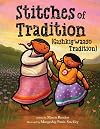
raditions stitch together generations with love.”
Nookomis (Ojibwe for Grandmother) sews a ribbon skirt for her narrating granddaughter to wear to a new baby’s naming ceremony. Time passes, and Nookomis makes the child new skirts to mark other occasions—the Fall Ceremony, a beloved aunt becoming a district judge, and, at last, the protagonist’s coming-of-age ceremony. The book ends with the child—now a young woman—welcomed into a circle of loving female relatives. Employing show more straightforward, matter-of-fact text that’s nevertheless steeped in meaning, Rendon (Ojibwe) beautifully pays tribute to the deep bond between elders and the next generation. She relies on a repetitive structure: Each time, Nookomis selects the right fabrics and colors and takes precise measurements before creating a new skirt. Poignant details, such as the child growing taller as Nookomis grows shorter, emphasize the passage of time. The repeated phrase “My granddaughter, live a good life” anchors the narrative as the years go by. Pawis-Steckley’s (Ojibwe) thick-lined art depicts sturdy, stylized characters sporting brilliantly textured garments that pop with color; readers will feel welcomed into the community alongside Nookomis and her granddaughter. Rendon expertly works information about Ojibwe culture into the narrative; her author’s note explains that ribbon skirts are a “sacred, spiritual, and political” symbol of Indigenous resilience, passed down by generations of women.
A radiant and joyful glimpse at an important Native tradition. (Ojibwe glossary, note from Heartdrum founder Cynthia Leitich Smith) (Picture book. 4-8)
-Kirkus Review show less
Nookomis (Ojibwe for Grandmother) sews a ribbon skirt for her narrating granddaughter to wear to a new baby’s naming ceremony. Time passes, and Nookomis makes the child new skirts to mark other occasions—the Fall Ceremony, a beloved aunt becoming a district judge, and, at last, the protagonist’s coming-of-age ceremony. The book ends with the child—now a young woman—welcomed into a circle of loving female relatives. Employing show more straightforward, matter-of-fact text that’s nevertheless steeped in meaning, Rendon (Ojibwe) beautifully pays tribute to the deep bond between elders and the next generation. She relies on a repetitive structure: Each time, Nookomis selects the right fabrics and colors and takes precise measurements before creating a new skirt. Poignant details, such as the child growing taller as Nookomis grows shorter, emphasize the passage of time. The repeated phrase “My granddaughter, live a good life” anchors the narrative as the years go by. Pawis-Steckley’s (Ojibwe) thick-lined art depicts sturdy, stylized characters sporting brilliantly textured garments that pop with color; readers will feel welcomed into the community alongside Nookomis and her granddaughter. Rendon expertly works information about Ojibwe culture into the narrative; her author’s note explains that ribbon skirts are a “sacred, spiritual, and political” symbol of Indigenous resilience, passed down by generations of women.
A radiant and joyful glimpse at an important Native tradition. (Ojibwe glossary, note from Heartdrum founder Cynthia Leitich Smith) (Picture book. 4-8)
-Kirkus Review show less
Marcie Rendon has created a series with such authenticity, and such a nuanced main character, that I want it to go on for a good long time. I would recommend these books to anyone who likes a good mystery, a strong main character, a superb sense of place, and a writing style that draws readers right into the heart of each book. You could pick up Sinister Graves and read it without feeling lost, but to get the full effect of Cash Blackbear and the life she's had to lead in the Red River show more country of 1970s Minnesota and North Dakota, I highly recommend reading the books in order, starting with Murder on the Red River and continuing with Girl Gone Missing.
One of the best things about this series is watching Cash Blackbear's world open before her very eyes. This nineteen-year-old has survived a series of abusive foster parents and back-breaking work as a farmhand (since the age of eleven). Her life only began to take a turn for the better when she became emancipated at the age of sixteen. She's had an apartment of her own since then, and she's been under the caring, watchful eye of Sheriff Wheaton, a man I would love to know more about.
With Wheaton's encouragement, Cash has started going to college. She knows when she must study. She knows when she needs to get her laundry and housecleaning done. She keeps in touch with the farmers in the area so she knows when there will be work, and when she's not driving her Ford Ranchero, she spends the rest of her time shooting pool in a local bar. She's quite good, and the money she wins helps pay the rent.
Cash is a young woman who knows a lot but doesn't want much. Why dream of things she can't have (or things that will be taken away from her)? This is what her life has taught her so far. But things can change, and they are during the course of this series. Cash has even begun thinking about buying her own house because, if she does, no one can ever tell her to leave. This young woman is sad, sharp, funny, and very intuitive. It's been a pleasure getting to know her.
In Sinister Graves, Cash works to find out what happened to the dead Native girls, and it's not easy. She's going to have to deal with a whole new kind of crazy as she searches for answers. This character and her investigations are so addictive that I can't wait for the next book in the series. Bring it on!
(Review copy courtesy of the publisher and Net Galley) show less
One of the best things about this series is watching Cash Blackbear's world open before her very eyes. This nineteen-year-old has survived a series of abusive foster parents and back-breaking work as a farmhand (since the age of eleven). Her life only began to take a turn for the better when she became emancipated at the age of sixteen. She's had an apartment of her own since then, and she's been under the caring, watchful eye of Sheriff Wheaton, a man I would love to know more about.
With Wheaton's encouragement, Cash has started going to college. She knows when she must study. She knows when she needs to get her laundry and housecleaning done. She keeps in touch with the farmers in the area so she knows when there will be work, and when she's not driving her Ford Ranchero, she spends the rest of her time shooting pool in a local bar. She's quite good, and the money she wins helps pay the rent.
Cash is a young woman who knows a lot but doesn't want much. Why dream of things she can't have (or things that will be taken away from her)? This is what her life has taught her so far. But things can change, and they are during the course of this series. Cash has even begun thinking about buying her own house because, if she does, no one can ever tell her to leave. This young woman is sad, sharp, funny, and very intuitive. It's been a pleasure getting to know her.
In Sinister Graves, Cash works to find out what happened to the dead Native girls, and it's not easy. She's going to have to deal with a whole new kind of crazy as she searches for answers. This character and her investigations are so addictive that I can't wait for the next book in the series. Bring it on!
(Review copy courtesy of the publisher and Net Galley) show less

i really liked this mystery and the characters, but i didn't think the voice or writing was anything special. (it was fine, just nothing better than that.) but the setting and the light being shown on missing and murdered indigenous women, and how it's so often the tribal members (in this story it's the women specifically) who do something about it or care about the fates of these women) is such an important story. the way she makes the story about how it's the women in the community that show more come together and make the tribal police do something, the women that come together and save each other, the women that come together and keep each other moving forward by running together. and how they run through the streets of the community, not around the track, so everyone can see them. they see these women doing something, and they learn that they can do it to. with the running, with the solid family, with the saving the other women. there is a really powerful message here about community and modeling behavior and the importance of being a part of something bigger than yourself.
there are so many good things to really like about this, i just wish i wasn't pulled out so many times by the repetition or the clunky writing. show less
there are so many good things to really like about this, i just wish i wasn't pulled out so many times by the repetition or the clunky writing. show less
This third Cash Blackbear outing is the best so far. It's been a while since a book kept me reading almost to the exclusion of everything else, and I've missed that feeling. Sheriff Wheaton asks Cash to venture out through spring flood waters to his office, to see what she would make of an unidentified body that had floated into the town of Ada on the the overflowing river. This requires finding someone with a boat and the skill to navigate the still turbulent water that has covered most of show more the roadways in the area. Cash often "knows things", and Wheaton trusts her intuition. With only one deputy, he is always short-handed when something out of the ordinary comes up, and calls on Cash frequently for unofficial assistance in his investigations. After viewing the body, Cash is certain that the woman is Indian, so between her college classes she heads for the White Earth reservation to see if anyone knows anything about a missing woman. In her travels, she learns about a country church with a charismatic pastor who has developed quite a following among young Indian women through his assistance with a GED program. It seems like a good place to make inquiries, and sure enough, it turns out one of the women who had been a regular attendee hasn't been seen at church in a while. And the church is the same one where Cash had by chance come upon recent graves of two babies at the end of [Girl Gone Missing]. After meeting the pastor and his wife, Cash finds herself both drawn in and repelled by them; and she cannot let the mystery of those lost infants alone, especially as she so often gets one of her visions---a shapeless dark threatening form hovering nearby--when she is in the vicinity. There's a lot of substance to this story; Cash begins to make new friends, and to interact socially more with her peers. We see her maturing gradually through little changes in her behavior and outlook, as she begins to realize her wretched past does not necessarily need to define her future. The writing style quibbles I had with the previous book have vanished; it's almost as though a different person had written this one, or maybe the same person had written [Girl Gone Missing] 20 years before writing [Sinister Graves]. I'm hooked on Rendon now. There isn't another Cash Blackbear book out there...yet. I'm pretty sure there will be, and I can't wait. show less
Lists
Awards


You May Also Like


Associated Authors
Statistics
- Works
- 16
- Also by
- 13
- Members
- 1,100
- Popularity
- #23,361
- Rating
- 3.9
- Reviews
- 57
- ISBNs
- 53
- Languages
- 1
- Favorited
- 1